Edito
Lisa De Visscher
Editor-in-Chief
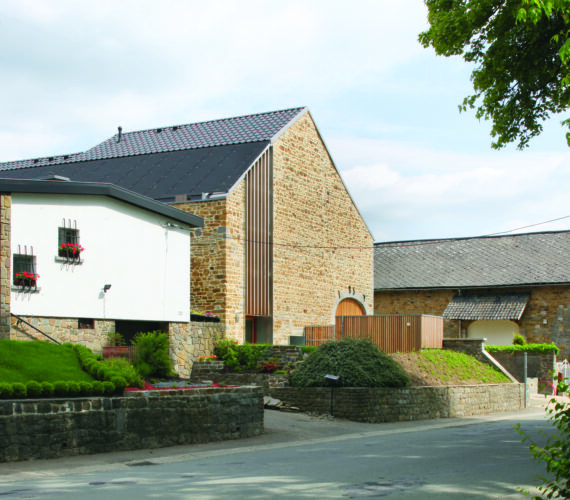
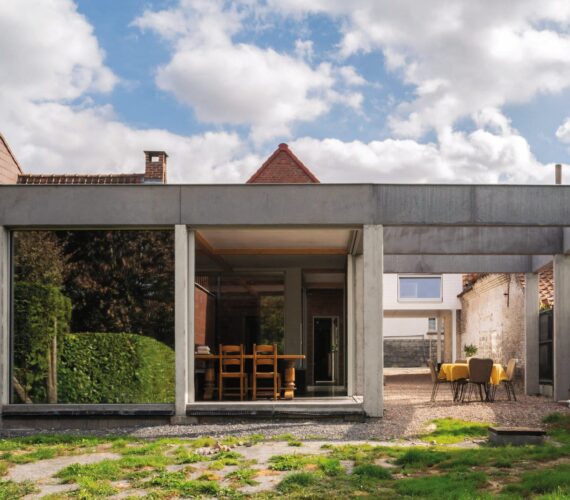
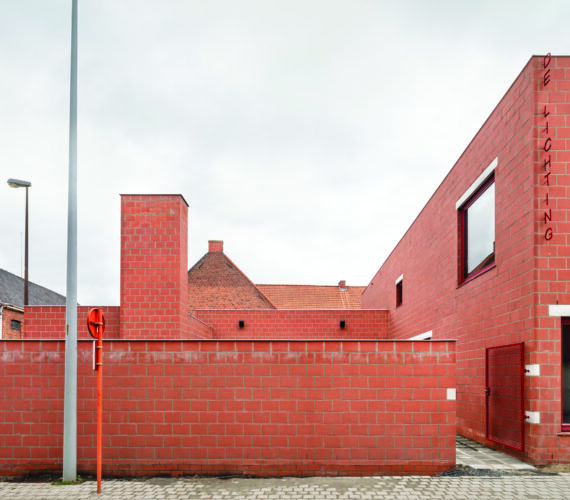
‘We are rapidly ruining our villages,’ read a headline in “De Standaard” at the end of last year. Now that the tentacles of ribbon development, land parcelling and out-of-zone housing have slowly encircled and suffocated the open space, it is the turn of the village centres. Under the guise of densification, iconic buildings in village centres are disappearing, making way for run-of-the-mill flats. This results in the loss of the village’s identity. Although ‘identity’ and ‘village character’ are vague and often misused terms.
What, actually, is a village? ‘When we speak of villages, we mean the whole spectrum of villages,’ writes Edith Wouters in this issue, following on from the research she is conducting with Ar-tur as part of the Kempenlab Village Architecture project. ‘We are referring to the shrinking hamlet or parish village, the village with hub potential and development opportunities, the autonomous, vibrant village with little hub potential, as well as the village that has long since become urbanised. It is precisely this contextual sensitivity that is essential. Aligning with the village’s character, carefully integrating into the surroundings, and ensuring recognisability and familiarity prove to be crucial principles for high-quality village architecture.’
Every village is different and therefore deserves a bespoke approach, even if the challenges are similar. Most villages, in fact, grapple with issues surrounding densification, mobility and a glaring lack of employment opportunities. Often, there is no clear village centre; churches are emptying and pubs, local shops and other amenities are closing down. These are precisely the places that forge the village community. To restore this sense of community, in addition to a policy that supports local associations, sustainable transport and forward-thinking master planning, you need buildings that give the village a new identity. These are often small-scale projects such as a school, a community centre, a co-working space or simply the redevelopment of a central square.
Seemingly simple tasks, but in reality they are like microsurgery: a delicate intervention that takes into account the sensitivities of the landscape and the site. Given the scale of a village, you only get one chance. One misstep can ruin the whole village. But who assesses the project, and how? What types of buildings does a village need? Can you assess a project using the same criteria in both a village and an urban context? Local authority officials often lack the right tools to make these assessments.
And this starts with their education. For years, architecture and urban planning students grapple with all manner of issues within an urban context. Yet half the country does not live in the city and does not want to live there either. In practice, there is a great need for knowledge on how to deal with the structure of a village, how to integrate into the existing fabric, and which typologies work and which do not. Meanwhile, various architecture programmes – La Cambre, KU Leuven, Liège – offer design studios in which the specific issues facing villages are addressed.
Various local authorities and architectural organisations are also making headway. For example, Lommel, Olen and Nijlen have already drawn up a visual quality framework, whilst the municipalities in the East Cantons have joined forces to seek the assistance of experts. Moreover, an increasing number of residents are taking matters into their own hands to realise high-quality projects through interesting bottom-up initiatives, as noted by “De Standaard”, in Munkzwalm. In a country where urban sprawl is on the rise, the village is regaining its identity.
Table of contents
Right of reply
Chantal Dassonville
AGENDA
In memoriam Juliaan Lampens
Christophe Van Gerrewey
Atelier Scheldeman
Lara Molino
Guide d’architecture moderne et contemporaine Namur-Luxembourg
Charlotte Lheureux
Villages following the “stop the concrete” campaign
VILLAGE
Studio Thys Vermeulen
Town hall extension, Langemark
he-architectes – Georges-Éric Lantair
La Berle, Berloz
Life in the Walloon countryside
Norbert Nelles
Graux & Baeyens
Ulysse, Tournai
Happel Cornelisse Verhoeven
De Blokskens, Zandhoven
An architectural idiom for villages
Edith Wouters, Evelien Pieters
Bouwmeester Scan
Youth meeting centre, Lichtervelde
LRA
Primary school, Vierset
Hart Berteloot
Crèche, Habay-la-Neuve
Murmuur
De Hoge Mote, Ronse
BoerenBruxselPaysans
Lene De Vrieze, Bram Vandemoortel
INTERVIEW – Monadnock
Pieter T’Jonck
STUDENT
Ugly village