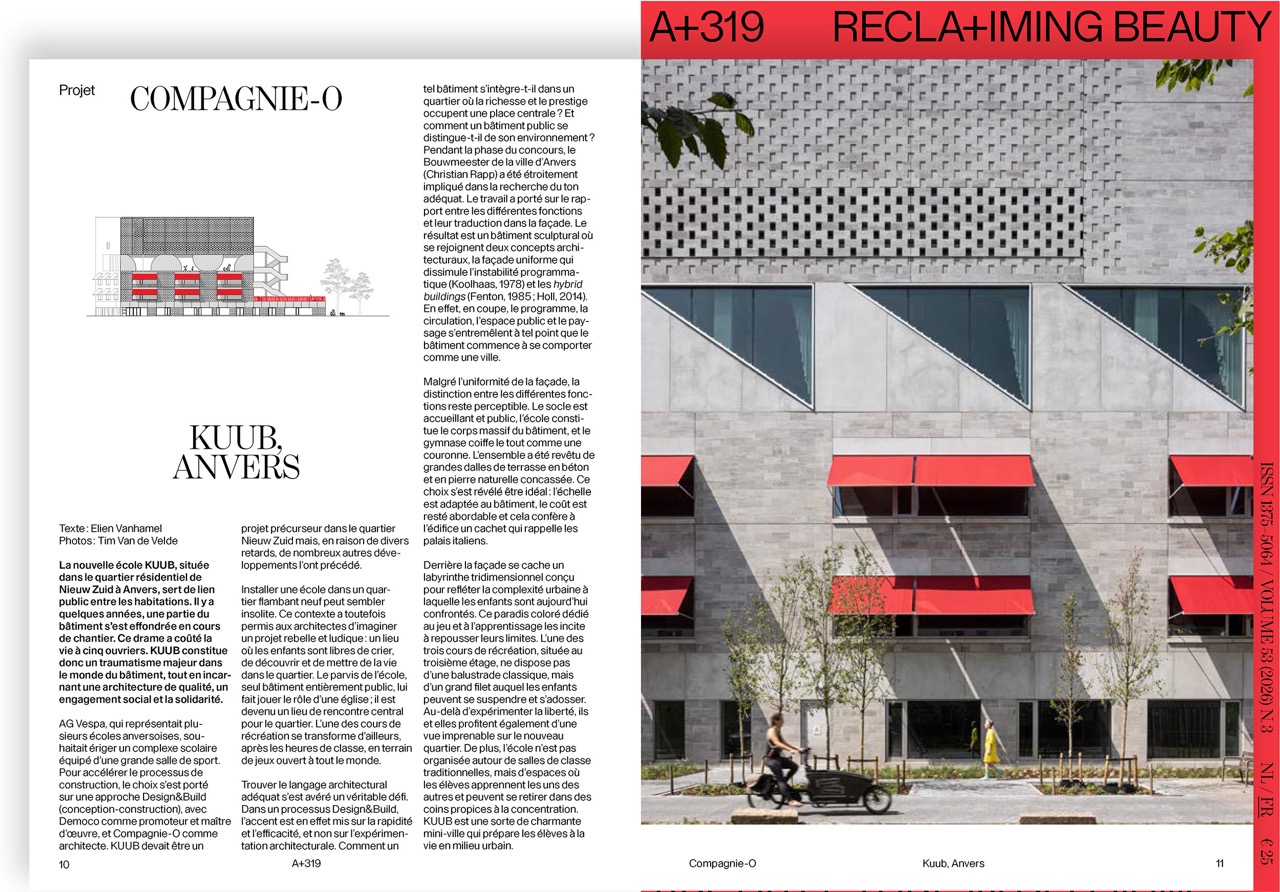
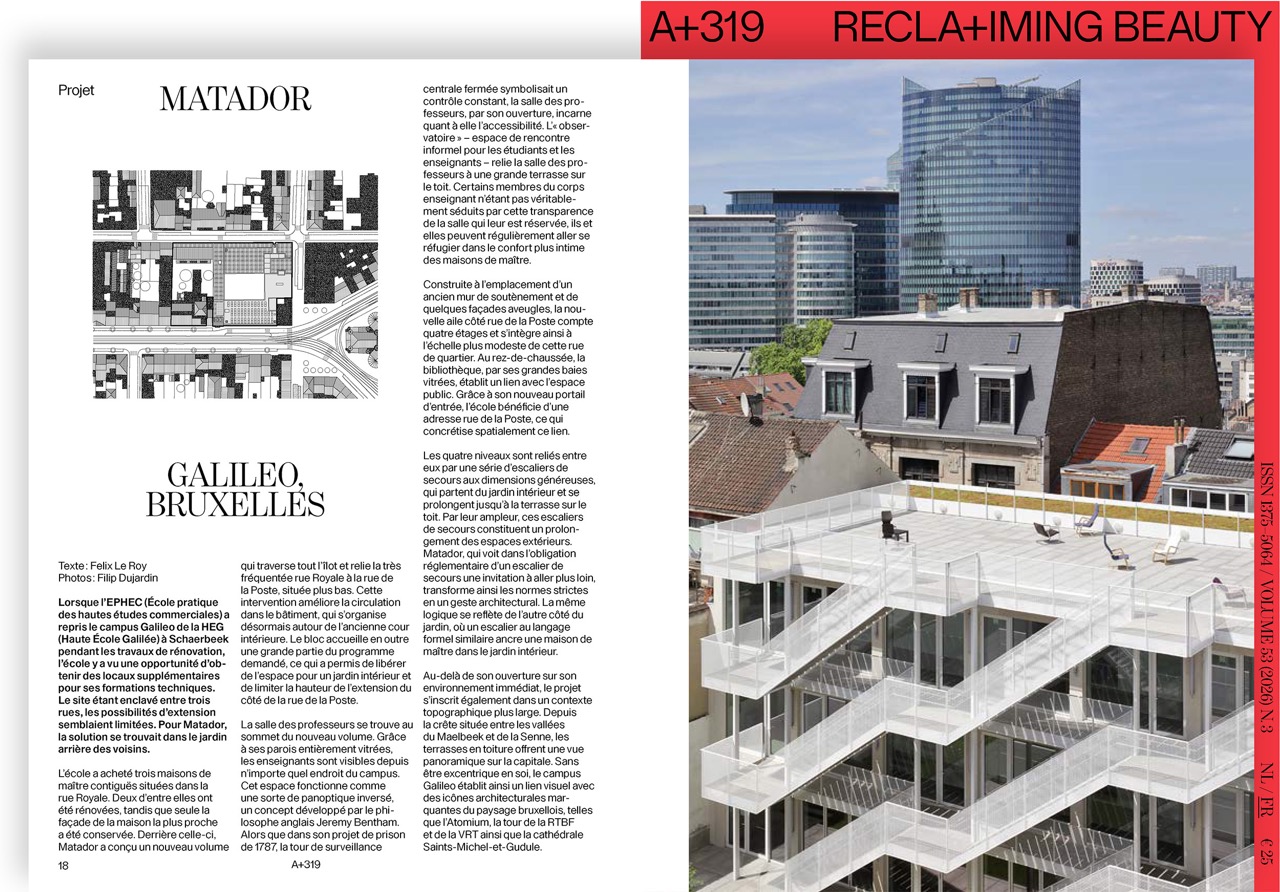
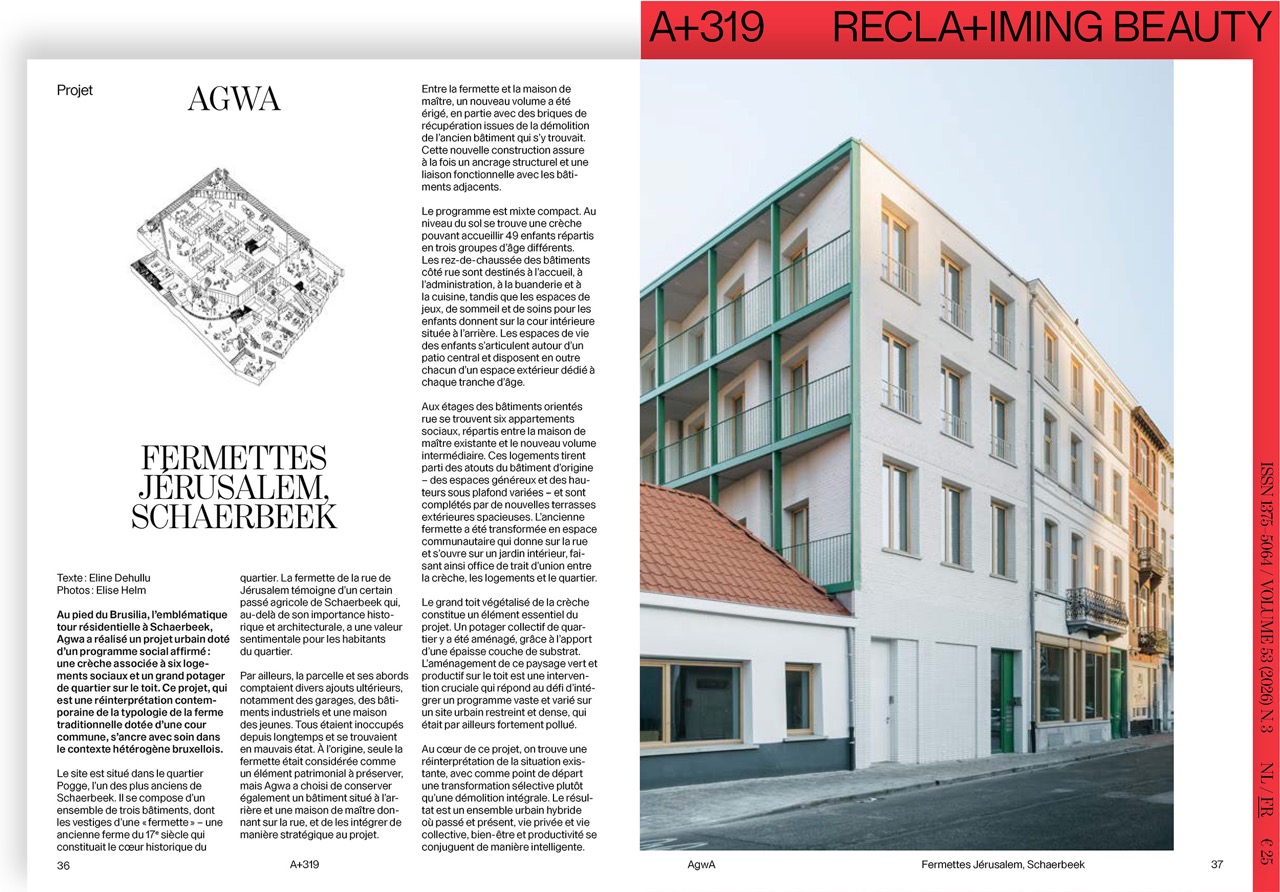
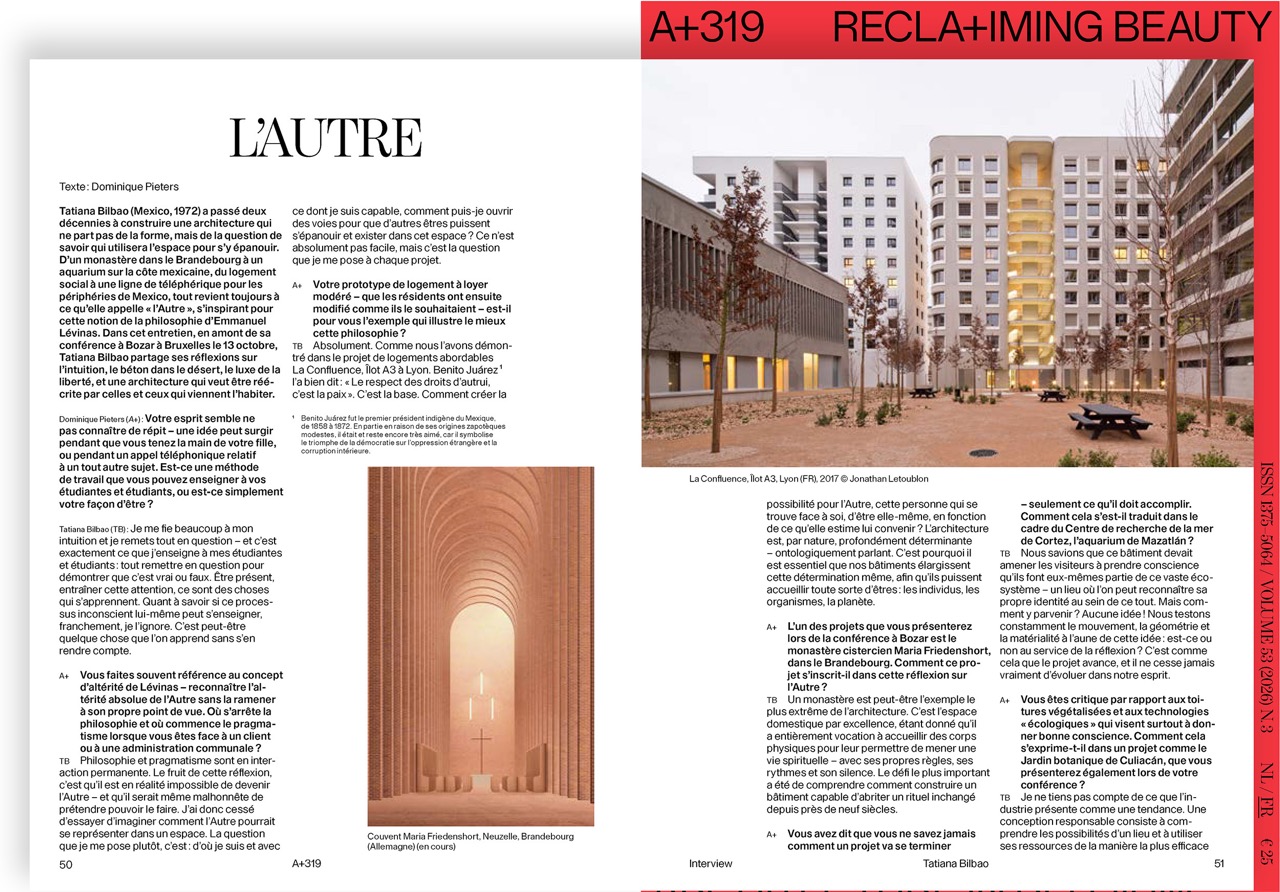
Edito
Eline Dehullu – Editor in Chief
On 16 September 2020, as she made her State of the Union address, Ursula von der Leyen, President of the European Commission, announced the launch of the New European Bauhaus (NEB) as the cultural and social component of the European Green Deal. In doing so, she emphasized that the ecological transition was not only a technical or economic project, but also a cultural and social one. The slogan chosen for the NEB was the following: ‘Building Europe’s Future: Beautiful, Sustainable, Together’.
After decades of absence from the architectural discourse, the European Commission once again placed beauty front and centre as the first of three core values. This, however, raises fundamental questions: What exactly is meant by beauty? How is it to be defined? What are its underlying components? Who determines what is considered beautiful? Can we speak of a shared concept of beauty in Europe, or do views differ according to time, place and culture? And to what extent is our idea of beauty timeless or subject to change?
The NEB posits that beauty cannot be reduced to aesthetics or the visual appeal of buildings. In other words, it is not just a question of a nice building or beautiful façade. For the NEB, beauty encompasses ‘spaces that people enjoy using, that offer a rich sensory experience, are connected to culture, heritage and art, and contribute to well-being, dignity and a sense of belonging’.
However, an architectural project is not automatically beautiful simply because it surprises, amazes or dumbfounds; according to the NEB, it must also be both sustainable and inclusive. In its view, true architectural quality emerges at the intersection of three core values: sustainability (good for the environment and climate), inclusion (accessible, affordable and participatory), and beauty (meaningful, pleasant and human).
Beauty therefore refers to the quality of the living environment as a whole. For architecture and urban planning, this means that beauty lies not only in buildings themselves, but also in the quality of the surrounding public spaces, the opportunities they offer for social interaction, the greenery and the integration of nature they involve, their human scale, and their cultural distinctiveness. The NEB regards beauty as an experience of quality of life: a place is beautiful when people enjoy spending time there and come together there, when people feel connected to that place, and when it functions in an ecologically responsible manner. This is in line with a broader European architectural discussion in which beauty is not seen as an autonomous design value, but as a combination of aesthetic quality, social justice and ecological responsibility.
It is of course remarkable that beauty is once again being given a place on the European agenda. Yet the European Commission’s approach raises questions. Is beauty not being linked too readily to other, more quantifiable values, such as ecology and inclusion? And is a description in terms such as ‘meaningful, pleasant and human’ really helpful, when even these concepts are difficult to define? Together with Maarten Delbeke, co-editor of Beauty in Architecture (Bloomsbury, 2025) and guest editor of this issue of A+ on beauty in architecture, we set out to gain a firmer grasp of this elusive concept. A delicate exercise, but also a necessary one.
After all, beauty touches upon imagination and empathy, faculties that remain inherently human and are irreplaceable. In an era characterized by efficiency, measurability and artificial intelligence (AI), beauty reminds us of that certain things cannot be reduced to their utilitarian function or profitability. At the opening of the New European Bauhaus Festival 2026 in Brussels, Mikel Landabaso, director of the commission, put it this way: ‘AI can hallucinate, but cannot dream. Caring for beauty is therefore defending humanity.’
Table of contents
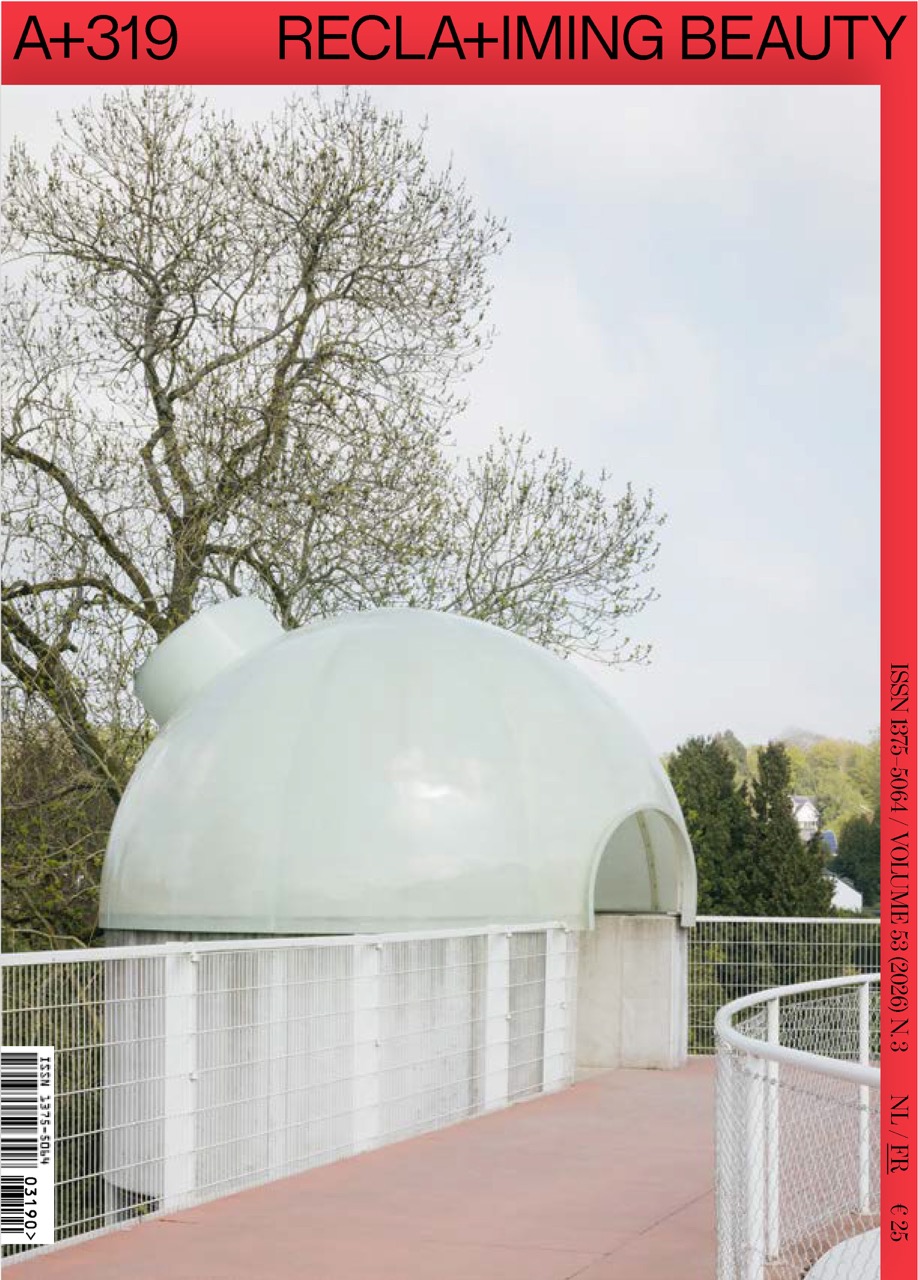
RECLAIMING BEA+UTY
PREFACE – The value of beauty
Eline Dehullu
EDITORIAL – The return of beauty?
Maarten Delbeke
ESSAYS
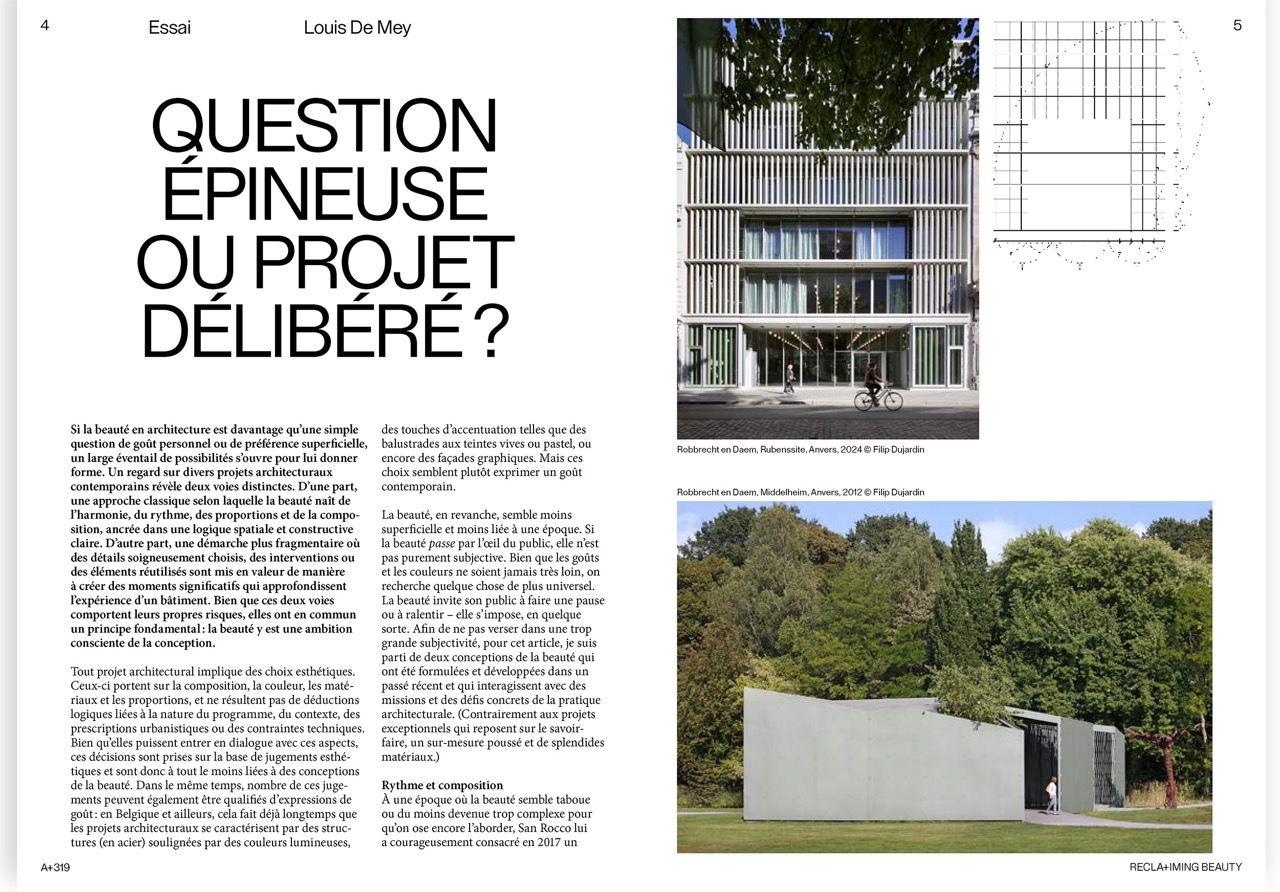
A thorny issue or an intentional project?
Louis De Mey
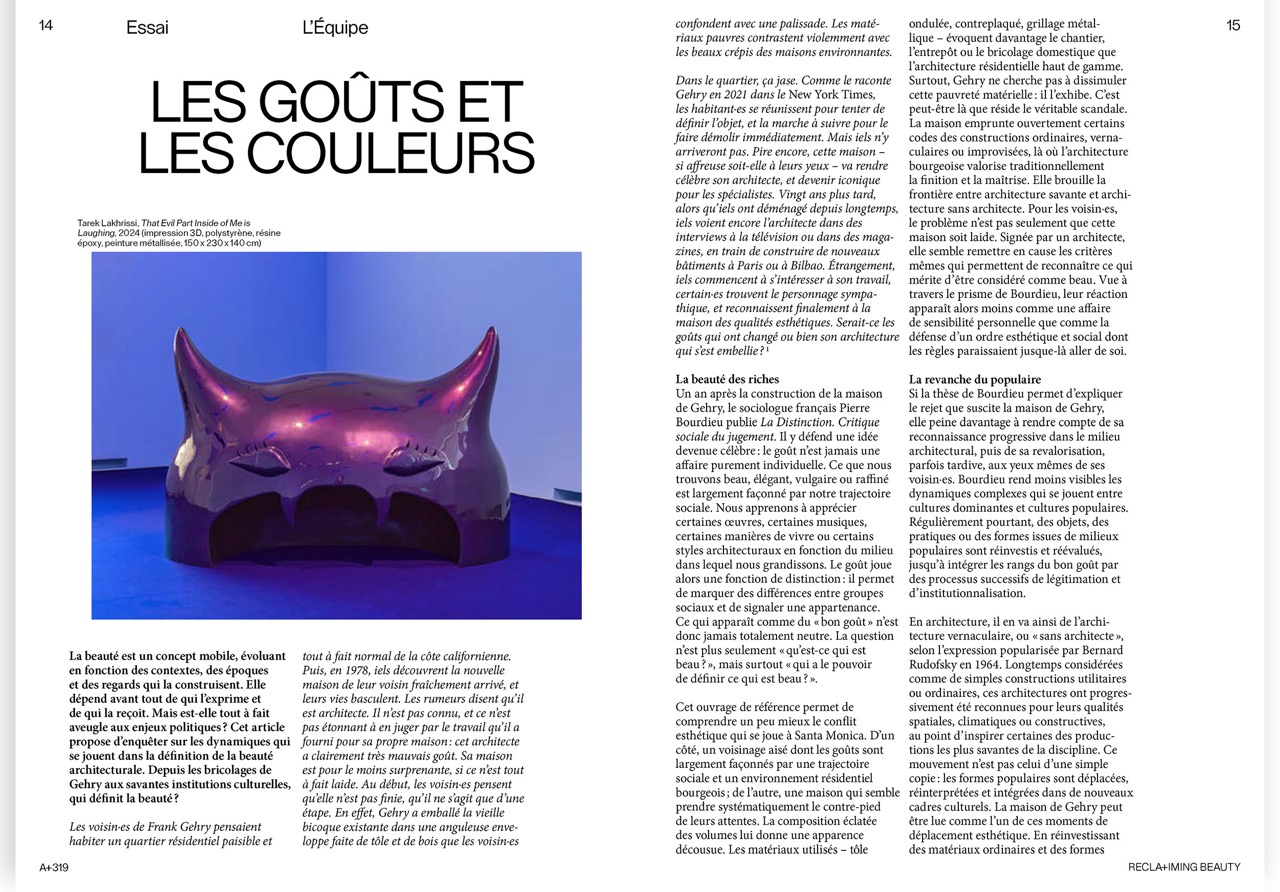
Matters of Taste
L’équipe
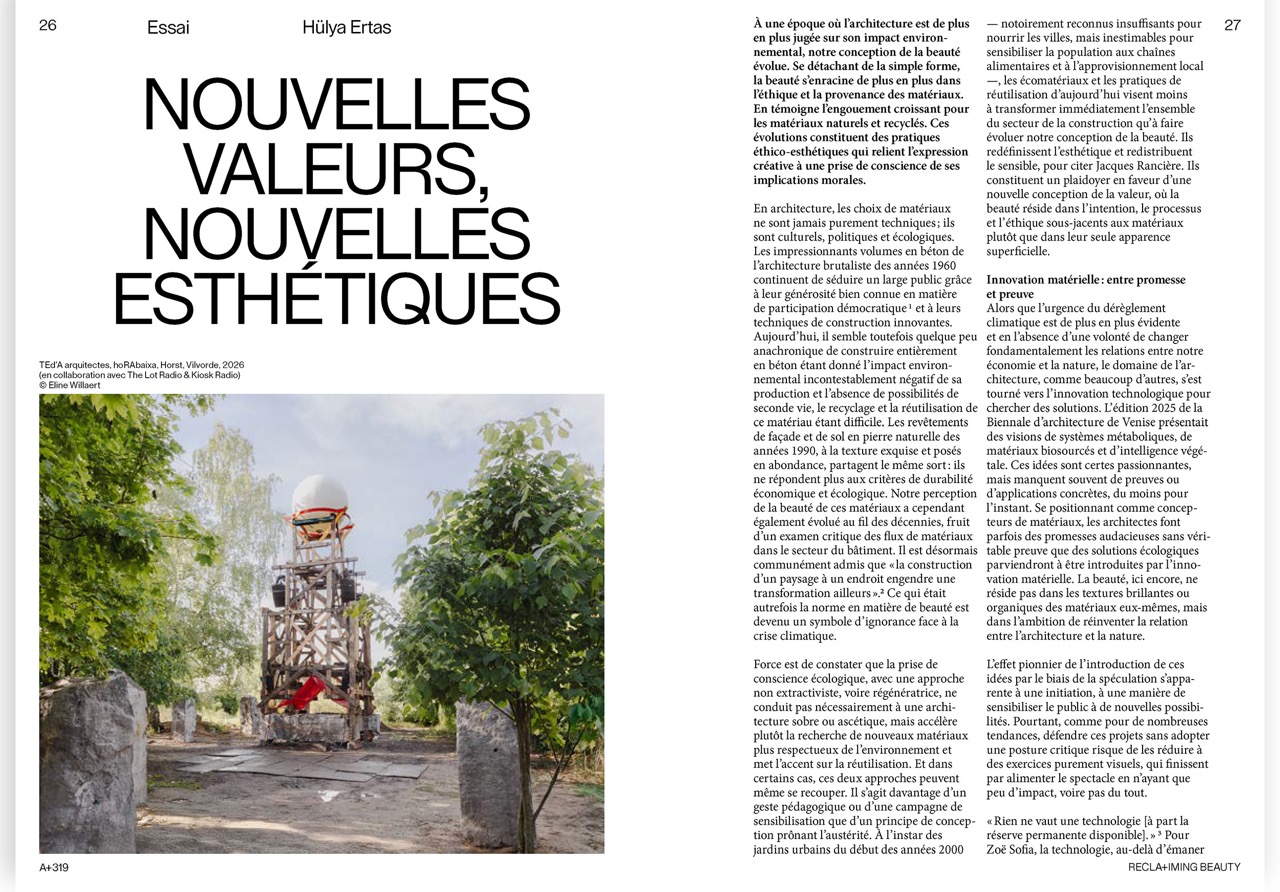
New values, new aesthetics
Hülya Ertas
Politicizing beauty
Michael Bianchi
What’s law got to do with it?
Stéphanie De Somer
The Authorship of Radical Transformation
Véronique Patteeuw
OPINION – The epithet as critical tool
Saar Meganck
PROJECTS
Label architecture
Love pt. III, Charleroi
Sampling
Augustine’s Garden, Riga (LV)
AgwA
Fermettes Jérusalem, Schaerbeek
Gafpa – TEd’A
Church, Herentals
INTERVIEW
Tatiana Bilbao
Dominique Pieters
COMPETITION
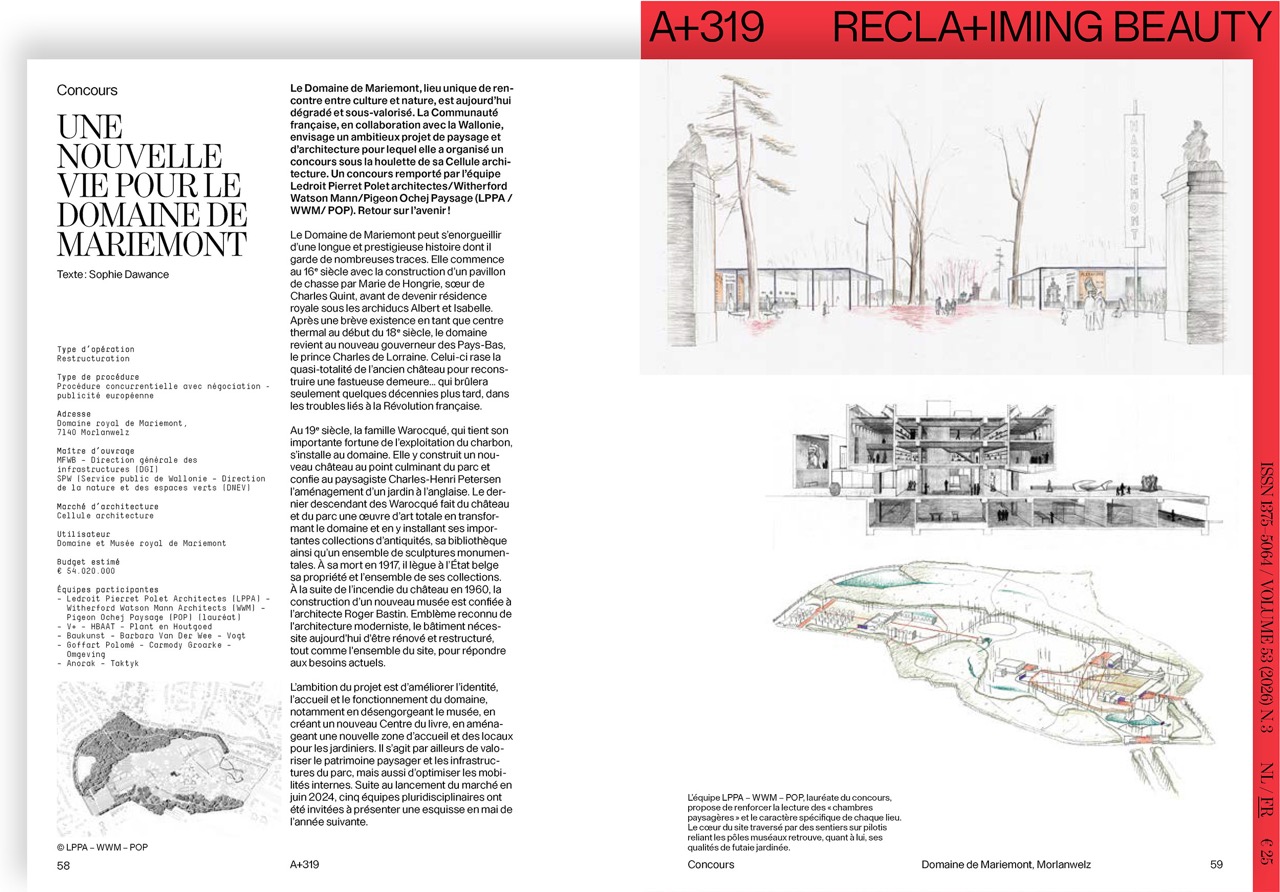
New life for Mariemont
Sophie Dawance
SPONSORED FEATURE
Technology, aesthetics and sustainability
Elien Haentjens