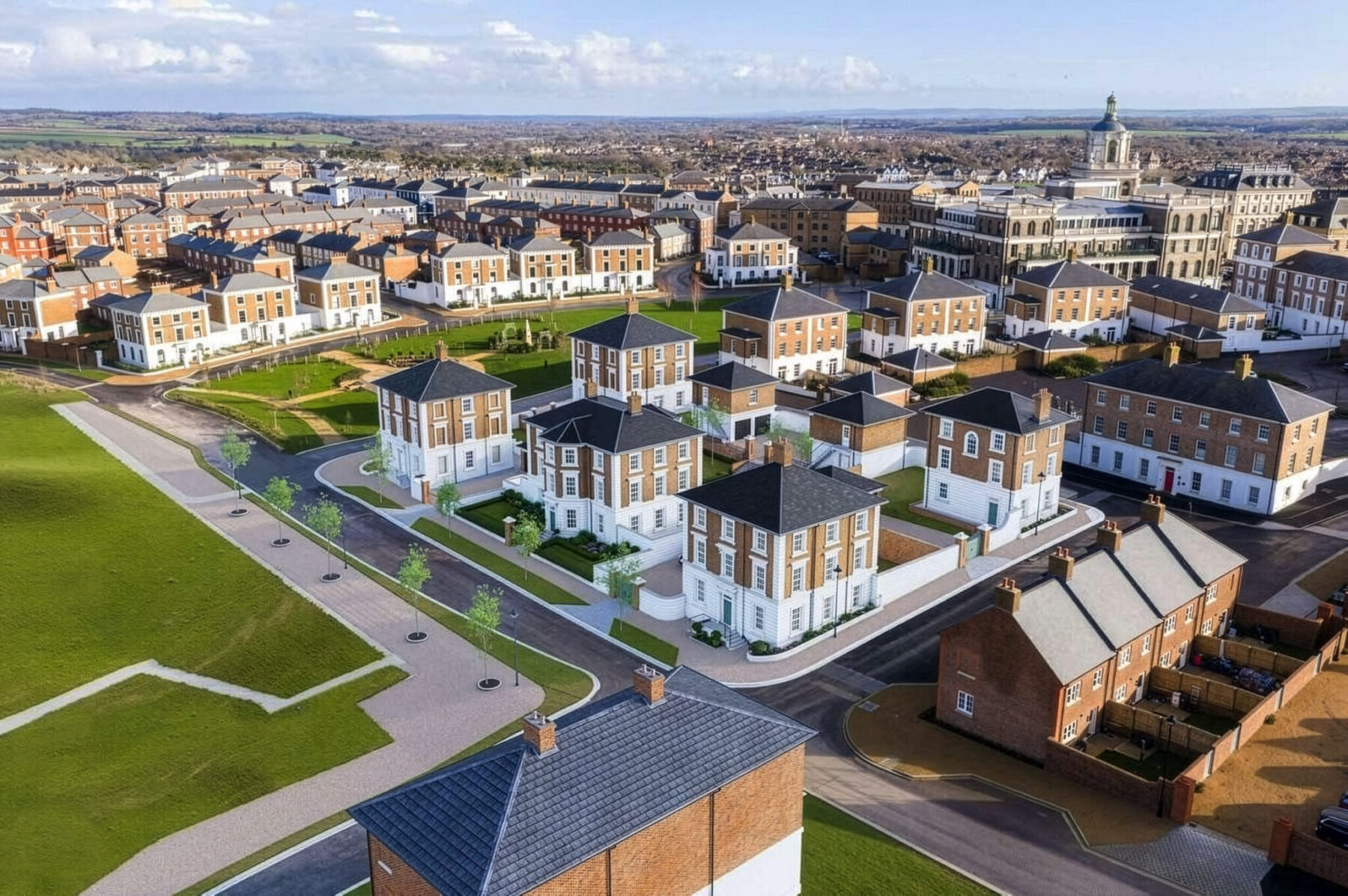
In 2009 conservative British philosopher Roger Scruton presented a BBC documentary entitled Why Beauty Matters. The film was an indictment: modernity, said Scruton, had ‘declared war on beauty’.1 For its part, contemporary architecture was nothing more than institutionalized vandalism. This narrative is that pushed by those movements today that advocate a return to so-called traditional architectural forms. ‘Beauty’ is always and exclusively presented as déjà-là, already there, something that already exists in the past, waiting to be rediscovered. In the United States, a presidential decree issued at the end of Donald Trump’s first term in 2020 drew direct inspiration from this idea, mandating the systematic use of ‘traditional styles’ in the architecture of public buildings. In French-speaking Belgium, the association La Table Ronde de l’Architecture has for several years been promoting this ideology in the public sphere, on social media and through full-page opinion pieces in La Libre. 1 Why Beauty Matters, documentary written by Roger Scruton, broadcast 28 November 2009 on BBC2.
I here propose to examine two recurring arguments in these discourses on beauty: their relation to the community and their relation to the past. The angle from which these relations will be approached is a materialist one: we shall focus on what these ideas about beauty actually produce and the social configurations in which they are embedded.
This article appeared in A+319, published on 28.09.2026.