Edito
Eline Dehullu – Editor-in-chief
Gideon Boie – Guest editor
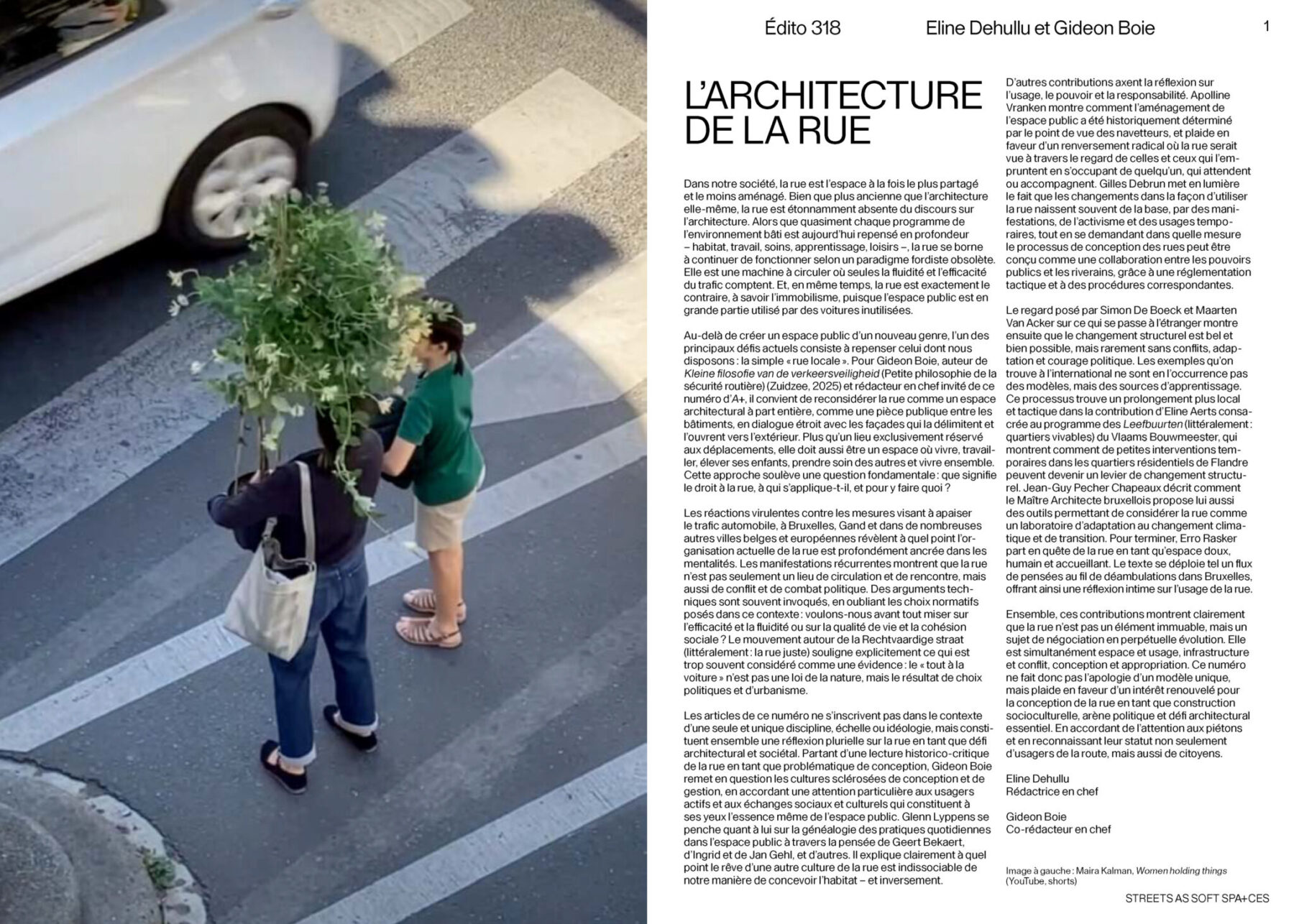
The street is the space in our society that is at once the most widely shared and the least designed. It is older than architecture itself, yet strikingly absent from the architectural discourse. While virtually every aspect of the built environment today is being thoroughly reimagined – living, working, caring, learning, relaxing – the street stubbornly continues to function within an outdated Fordist paradigm. The street is a movement machine; what counts is smooth and efficient circulation. At the same time, however, the street represents the very opposite: stagnation, with a large portion of public space serving as storage for unused cars.
One of today’s main design challenges is not only creating new public space, but reimagining the public space we already have, the ‘ordinary street’. As guest editor of this issue of A+, Gideon Boie, author of Kleine filosofie van de verkeersveiligheid (A brief philosophy of traffic safety), released by Public Space in 2025, argues that the street must once again be approached as a full-fledged architectural space: a public room between buildings, in close dialogue with the façades that border it and open it up. The street should not merely as be seen as a place to move through, but as a space where living, working, raising children, caring and coexisting intersect. This approach raises fundamental questions: what does the right to the street mean, who can lay claim to it, and for what purposes?
The fierce reactions that erupted against car-restriction measures in Brussels, Ghent and many other Belgian and European cities make clear how deeply the existing organization of the street is entrenched. The recurring protests show that the street is not only a site of movement and encounter, but also of conflict and political struggle. People often resort to technical arguments in its defence, but forget the normative choices involved: do we want to prioritize efficiency and circulation, or presence and social cohesion? The movement around the rechtvaardige straat (fair street) makes explicit what is all too often taken for granted: the dominance of the car is not a law of nature, but the result of political and design choices.
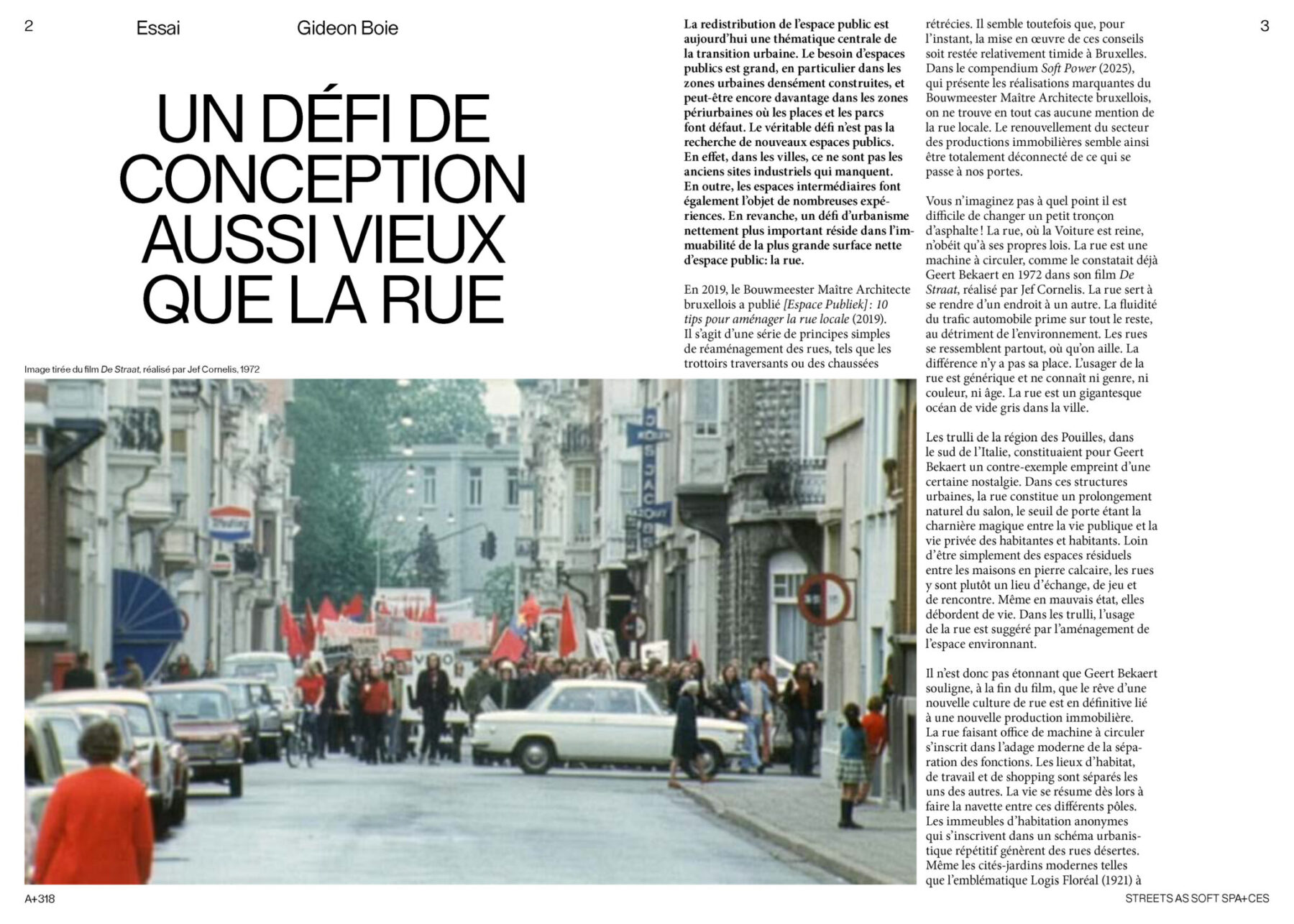
The contributions in this issue do not stem from a single discipline, scale or ideology, but together form a polyphonic exploration of the street as an architectural and social assignment. Drawing on a historical-critical reading of the street as a design problem, Gideon Boie questions entrenched design and management cultures, with particular attention to active road users and social and cultural exchange as the fundamental nature of public space. Glenn Lyppens delves into the genealogy of everyday practices in the public space through the thinking of Geert Bekaert, Ingrid and Jan Gehl, and others; he makes clear how the dream of a different street culture is inextricably linked to the way we design living in the city – and vice versa.
Other contributions shift the perspective towards use, power and responsibility. Apolline Vranken shows how the design of public space has historically been determined from the viewpoint of the commuting man; she advocates a radical reversal in which the street is viewed through the eyes of those who, as they move through the city, care for others, accompany others or simply wait. Gilles Debrun sheds light on how changes in street use often arise from the bottom up, through protest, activism and temporary occupations; he also asks to what extent the design process of streets can be seen as a collaboration between authorities and local residents thanks to tactical regulations and procedures.
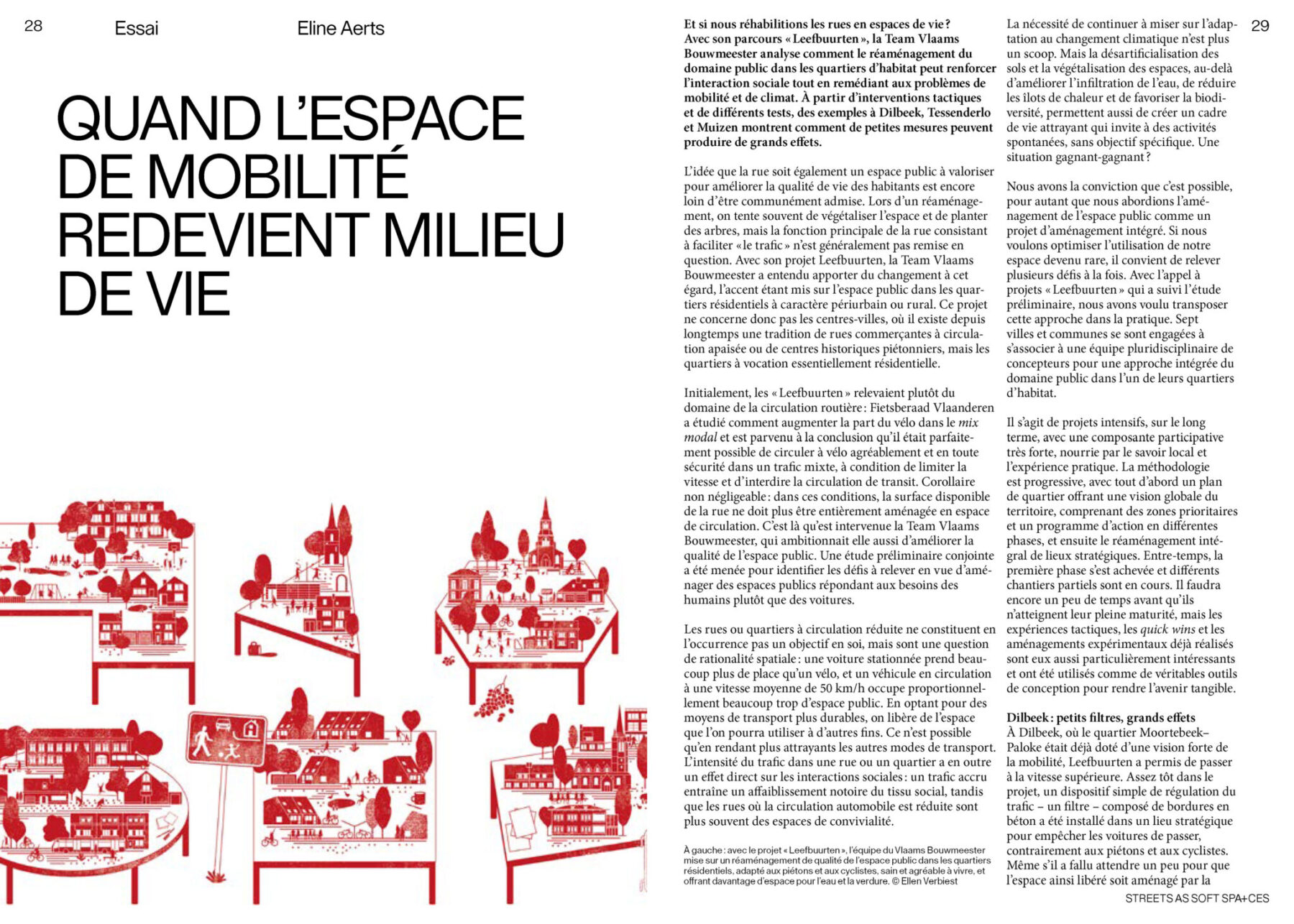
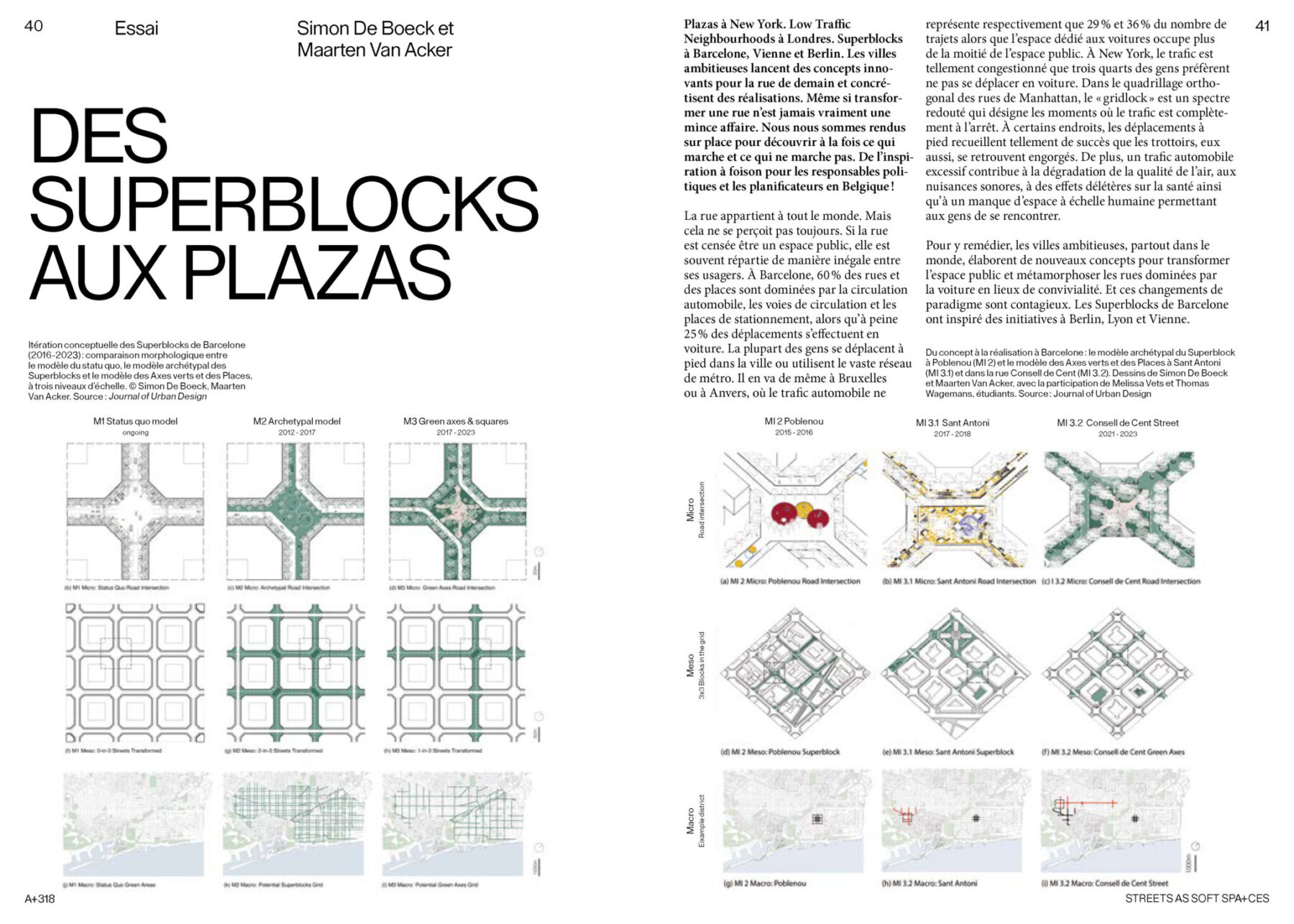
Turning their gaze abroad, Simon De Boeck and Maarten Van Acker point out that structural change is indeed possible, but that this rarely happens without conflict, adaptation and political courage. International examples may not provide a blueprint, but they can serve as a learning process. That process finds a more local and tactical continuation in Eline Aerts’s contribution about the Leefbuurten programme of the Flemish Government Architect; these ‘Living Neighbourhoods’ demonstrate how small, temporary interventions in Flemish residential areas can grow into a lever for structural change. Jean-Guy Pecher Chapeaux describes how the Brussels Bouwmeester Maître Architecte (BMA) also proposes tools that can be used to design the street as a laboratory for climate adaptation and transition. Lastly, Erro Rasker explores the street as a soft space, his essay unfolding as a flow of ideas on a stroll through Brussels, offering an intimate reflection on the use of the street.
Together, these contributions make it clear that the street is not a stagnant entity, but a subject of ongoing negotiation in flux. It is at once space and use, infrastructure and conflict, design and appropriation. This issue therefore doesn’t advocate a single model, but rather renewed design attention for the street as a sociocultural construct, as a political arena and as an essential architectural assignment. With attention for and recognition of pedestrians – not only as road users, but as citizens.
Table of contents
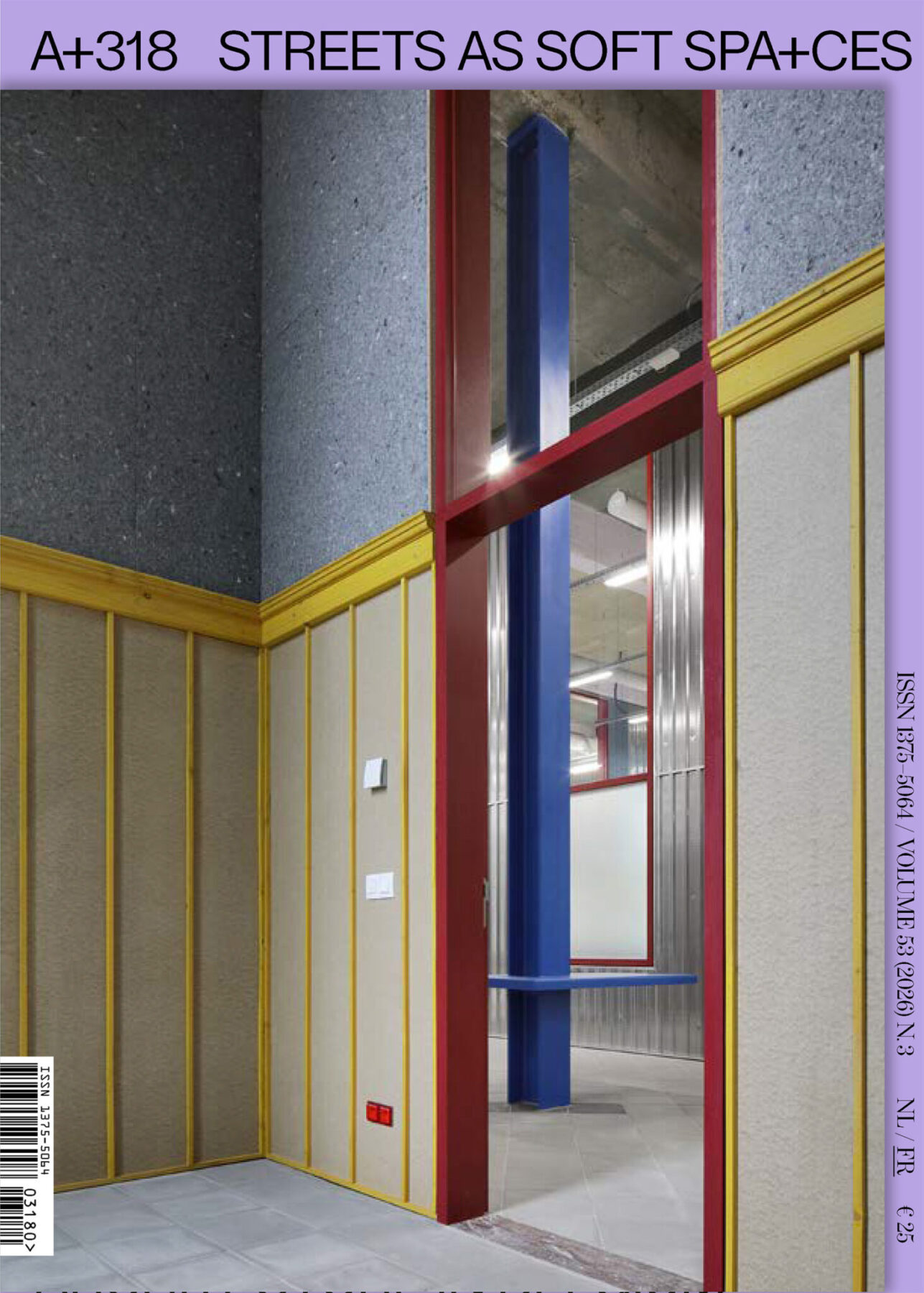
STREETS AS SOFT SPA+CES
EDITORIAL – The architecture of the street
Eline Dehullu and Gideon Boie
ESSAYS
A design challenge as old as the street
Gideon Boie
The residential street, a shared design assignment
Glenn Lyppens
More streets to call home
Gilles Debrun
Who owns the streets? We own the streets!
Apolline Vranken
From traffic space to living environment
Eline Aerts
Street labs
Jean-Guy Pecher Chapeaux
From Superblocks to Plazas
Simon De Boeck and Maarten Van Acker
OPINION – Offbeat soft street
Erro Rasker
PROJECTS
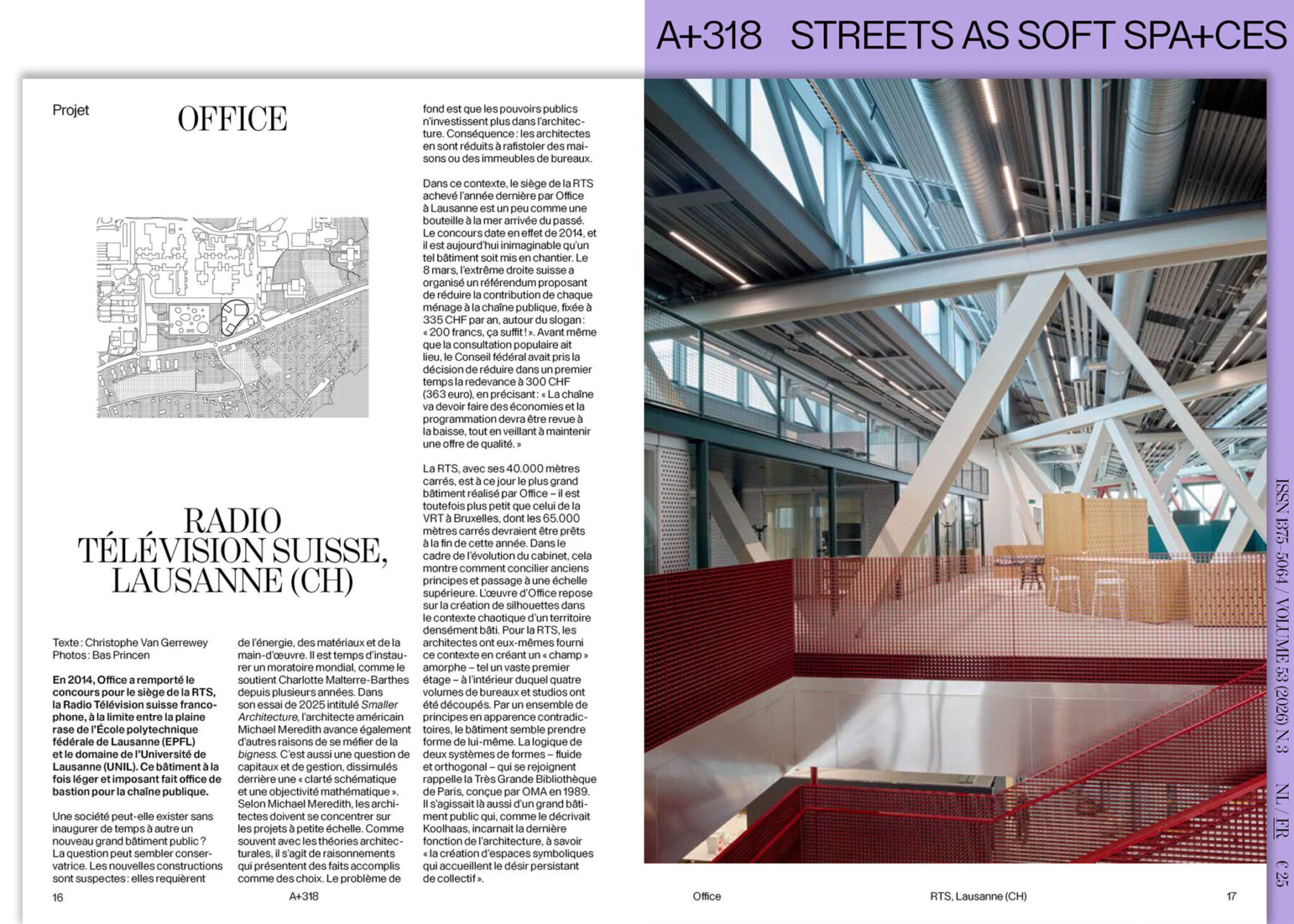
AgwA – S2JD
Community centre, Wandre
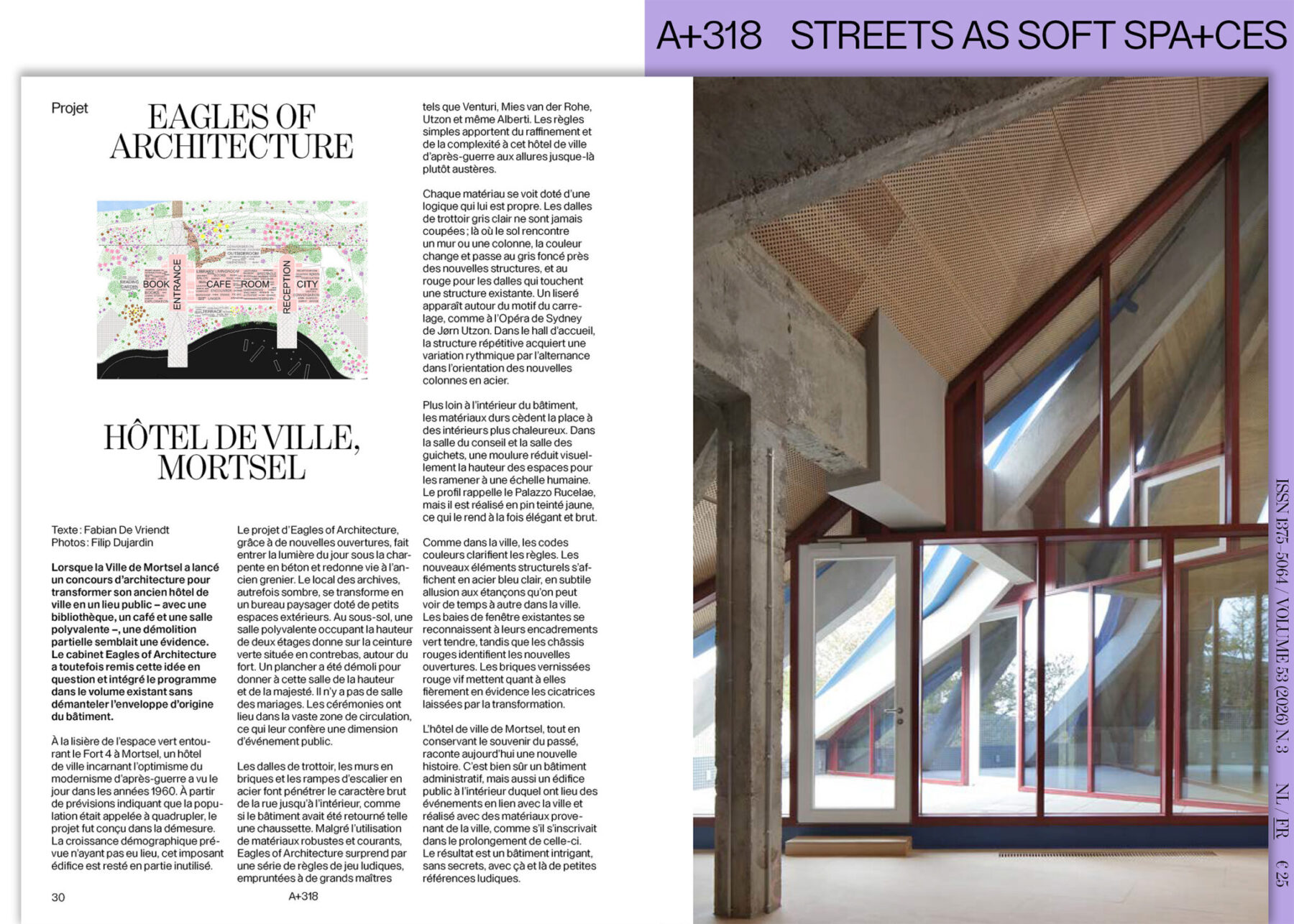
Eagles of Architecture
Town Hall, Mortsel
Gijs Van Vaerenbergh
Inverse Ruin, Policoro (IT)
INTERVIEWS
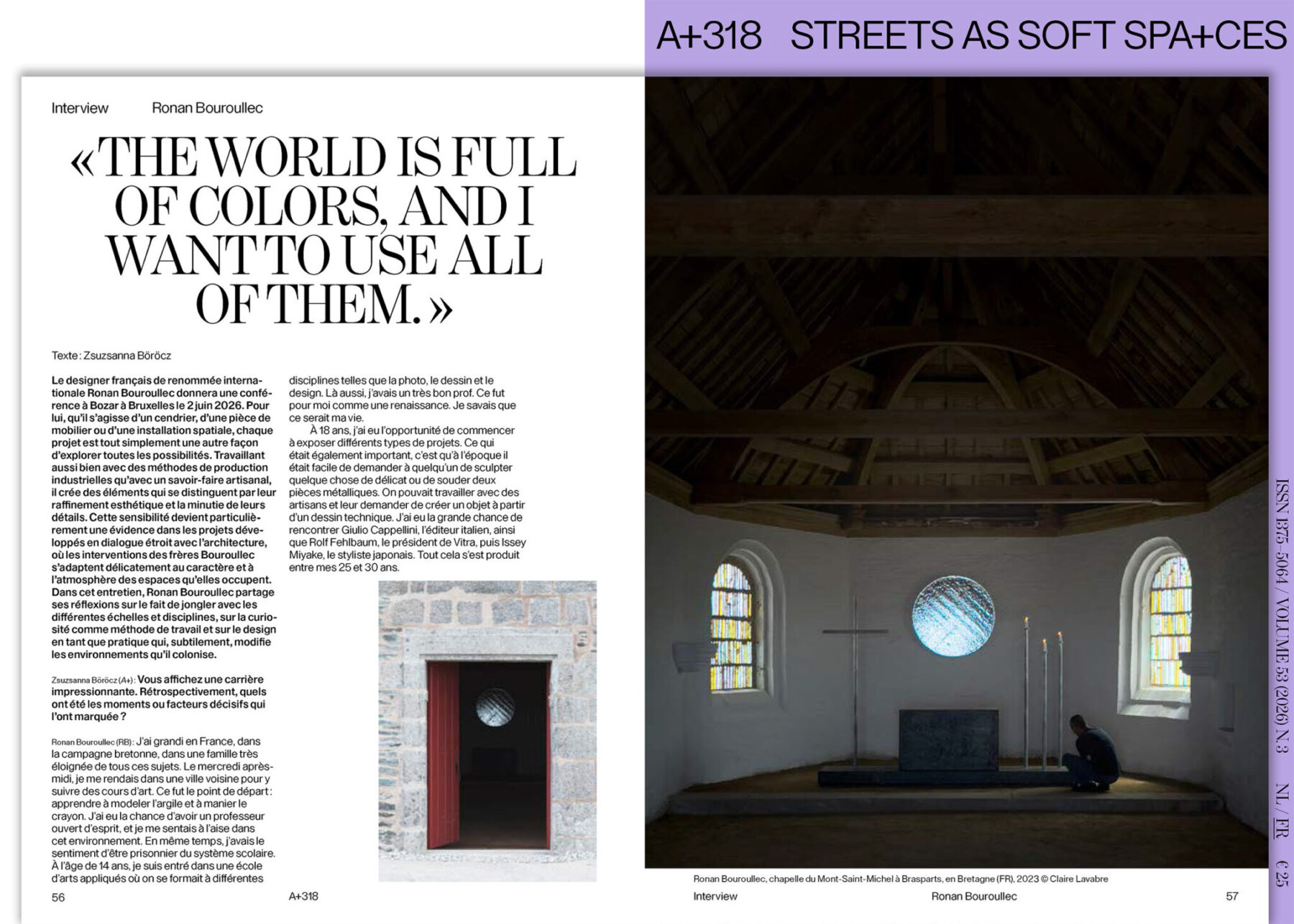
Ronan Bouroullec
Zsuzsanna Böröcz
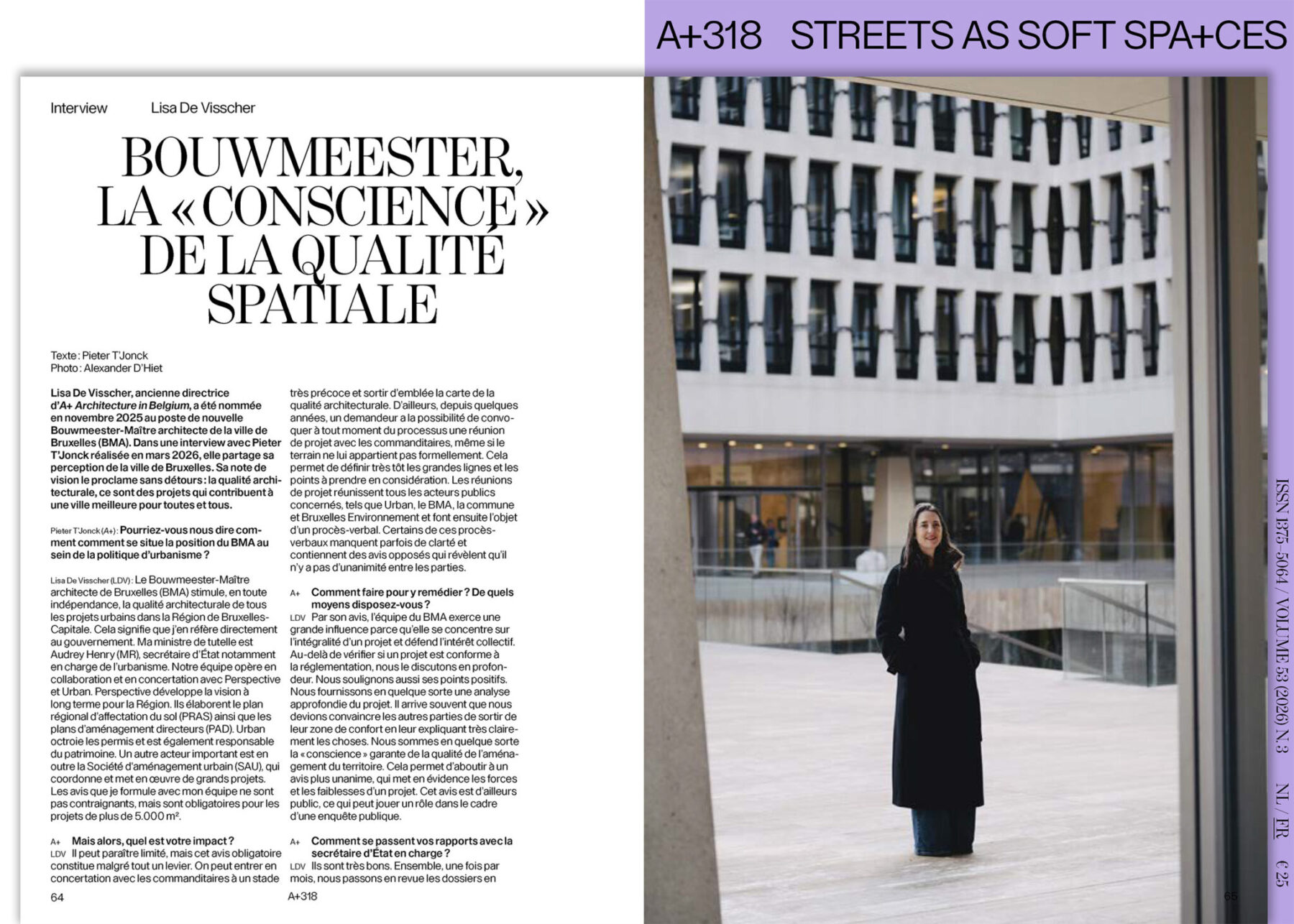
Lisa De Visscher
Pieter T’Jonck