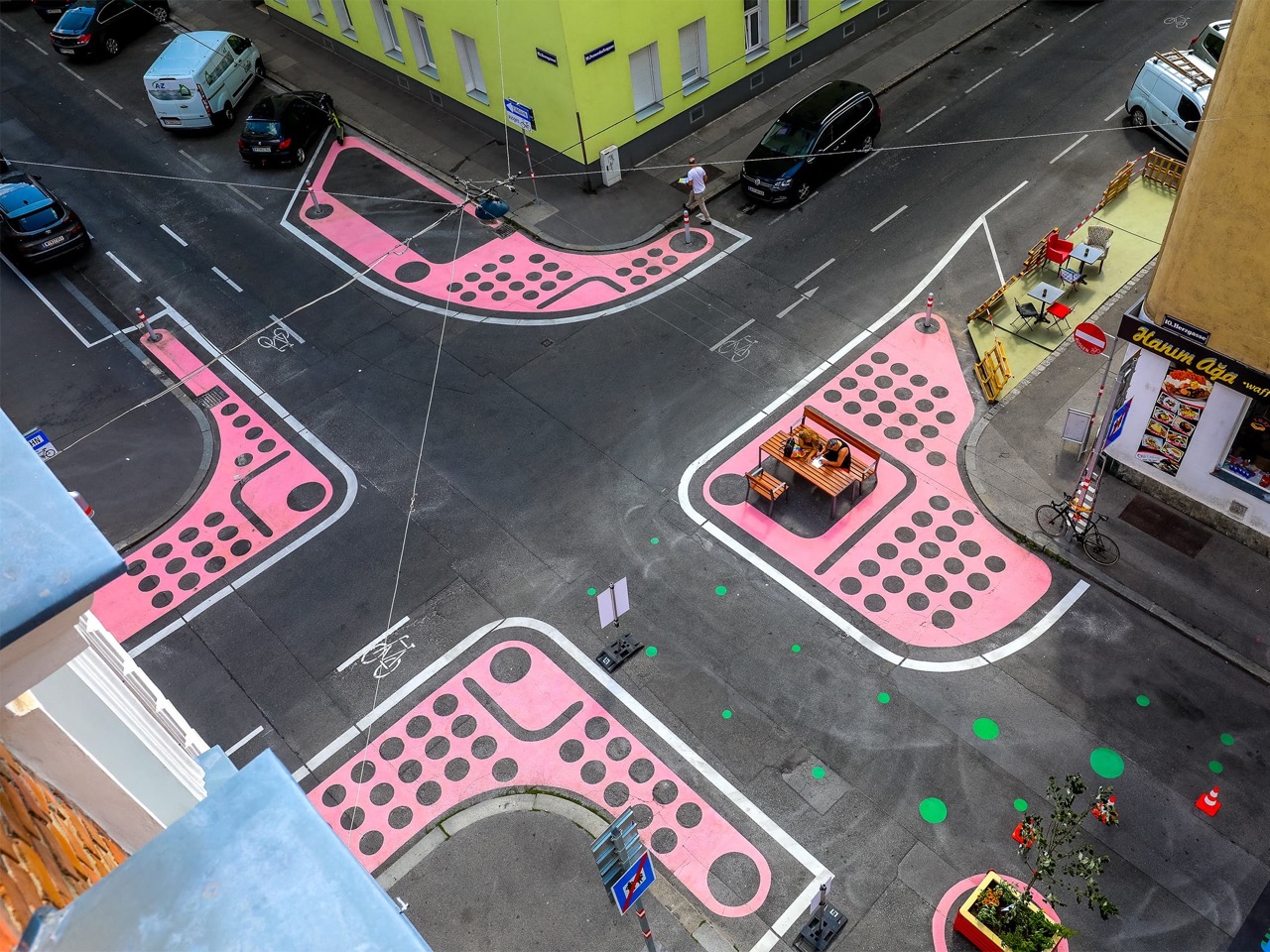
Plazas in New York. Low Traffic Neighbourhoods in London. Superblocks in Barcelona, Vienna and Berlin. Ambitious cities are both launching innovative concepts for the streets of tomorrow and carrying out concrete projects on the ground. For all that, transforming the streets is not all that simple. We set out to investigate on site and discover what works and what doesn’t. Plenty of inspiration for politicians and planners in Belgium!
The street belongs to everyone. Except it doesn’t always feel that way. The street may well be a public space, but it is often unfairly divided among users. In Barcelona, 60 per cent of all streets and squares are dominated by car traffic, lanes and parking spaces, even though barely 25 per cent of journeys are made by car. Most people walk or use the extensive metro network. Things are no different in Brussels or Antwerp, where car traffic accounts for only 29 and 36 per cent of journeys, respectively, while more than half of the public space is allocated to cars. In New York, too, traffic congestion is such that three-quarters of the people prefer not to travel by car. In Manhattan’s orthogonal street grid, ‘gridlock’ is the dreaded term for moments of complete standstill. In certain places, however, walking is so popular that the pavements can’t cope with the flows of pedestrians. Excessive car traffic also contributes to poor air quality, noise pollution, adverse health effects and a lack of space for social interaction on a human scale.