The redistribution of public space is a key issue in today’s urban transition. The need for public space is great, certainly in densely built-up urban areas and perhaps even more so in suburban areas where there is a shortage of squares and parks. The challenge doesn’t lie in the search for new public space. In the city, there are plenty of former industrial plots available. Lots of experiments are also being carried out on intermediate spaces. A far greater design challenge is the immutability of the largest net area of public space, namely the street.
In 2019 the Brussels Bouwmeester Maître Architecte (BMA) published Espace Publiek: 10 ontwerptips voor de gewone straat (Public space: 10 design tips for the ordinary street). These were simple principles for a different street layout, such as continuous pavement and a narrowed road design. However, it seems that implementation of these tips in Brussels has so far been limited. In any case, there is no trace of the ordinary street to be found in the retrospective publication Soft Power (2025), which looked back on notable projects of the BMA since 2015. Innovation in building development thus seems to be disconnected from what’s happening on our doorsteps.
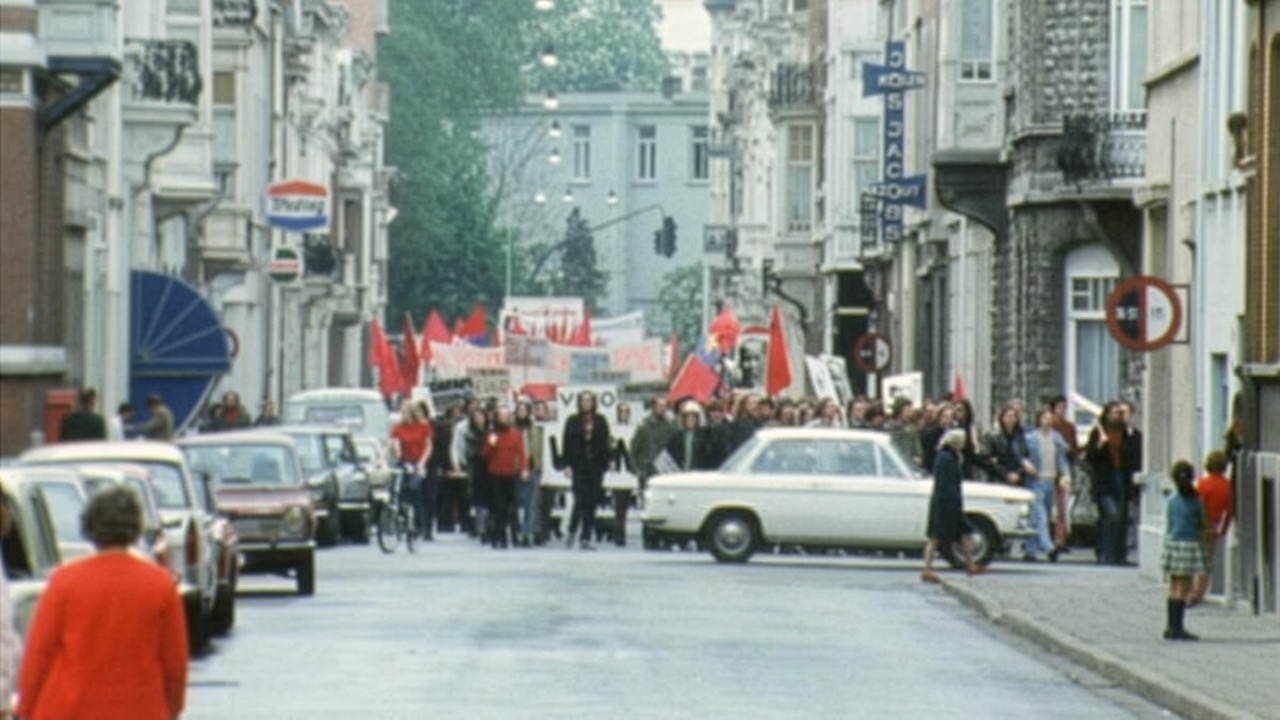
Changing an insignificant patch of asphalt is oh so difficult. The street serves the hegemony of the car and knows only its own laws. The street is a movement machine, as Geert Bekaert observed as early as 1972 in the film De Straat (The street), directed by Jef Cornelis. The street serves to move from one destination to another. Smooth car circulation takes precedence over everything else; the surroundings disappear in that perspective. The street looks the same everywhere, wherever you go or stand. There is no room for difference. The user of the street is generic, having neither gender, colour nor age. The street forms a vast ocean of grey emptiness in the city.
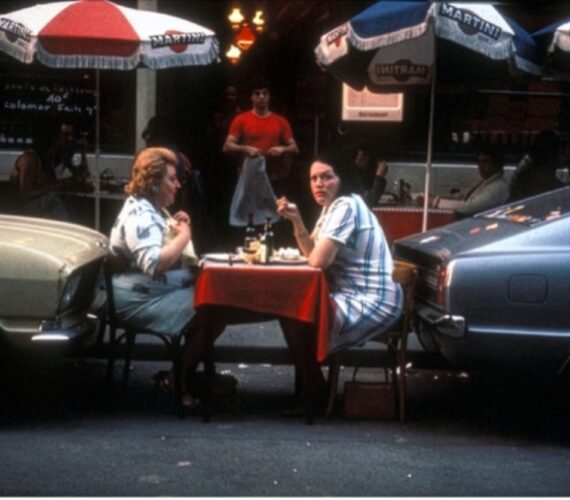
For Geert Bekaert, the trulli in the southern Italian region of Apulia provided a rather nostalgic counter-example. In these urban structures, the street forms a natural extension of the living room, with the threshold acting as a magical link between public life and the private lives of residents. The street is not merely a residual space between the limestone dwellings, but rather a place of exchange, play and encounter. Even when neglected, it teems with life. This use of the street is suggested in the design of the surroundings.
No wonder Geert Bekaert remarks at the end of the film that the dream of a new street culture is ultimately linked to new building development. The street as movement machine fits within the modern adage of the separation of functions. Living, working and shopping are completely separate from one another. Life consists in commuting between these cores. Anonymous blocks of flats in a repetitive urban pattern result in desolate streets. Even modern garden-cities, such as the iconic Le Logis Floréal (1921) in Watermaal-Bosvoorde, designed by Jean-Jules Eggericx and Louis Van der Swaelmen, are primarily composed of residential areas and lack space for social amenities and commercial activity.
The necessary coherence between the street and its surroundings presents us with an impossible question. After all, in practice, the design of the street has no connection with the surrounding fabric, if only because of the nature of the commissioning. Whether building development is public or private, authority over the street lies solely with the public authorities. Political responsibility goes hand in hand with disagreement and contestation. Few social issues are as politicized as the design of the public space, and the street in particular. The implementation of the Good Move mobility plan in Brussels demonstrates how the slightest resistance is enough to scupper good intentions.
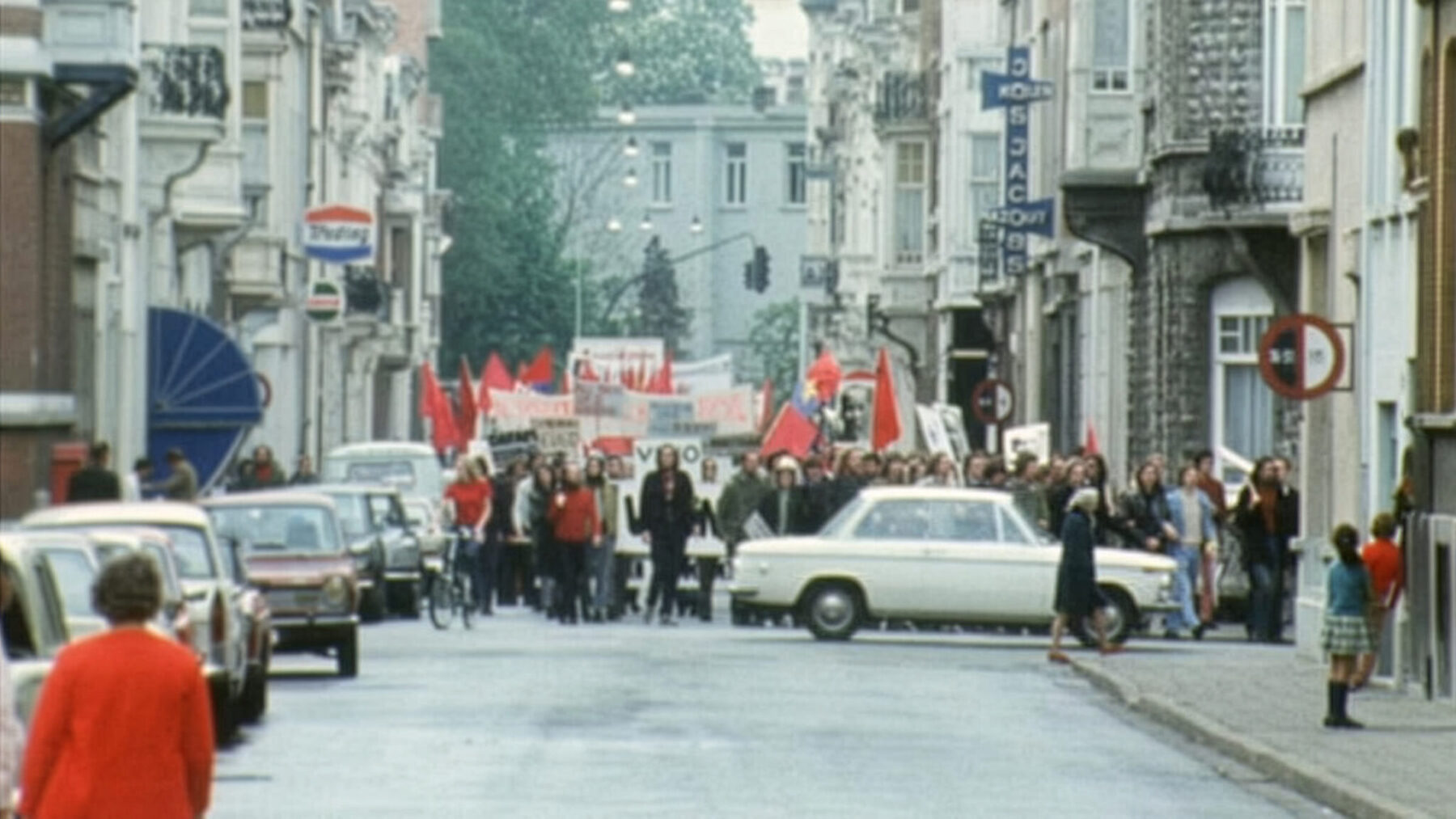
At the time, Geert Bekaert was still quite optimistic about reclaiming the street for everyday activities, by force if necessary – after all, the film was shot in the wake of May 1968. Times have changed; today, any proposed alteration to street design is viewed with suspicion. The removal of parking spaces often leads to neighbourhood objections. Violent protests have taken place against traffic-reduced areas in Brussels and in favour of maintaining the status quo. The protest is merely an intensification of the everyday attachment to the street as movement machine. Circulation and parking spaces are concerns in the city, but are just as much an issue in the suburbs and rural areas.
Moreover, the separation between the street and its surroundings has become a disciplinary boundary. Architects design buildings, while urban planners design the street. It You can easily win an architecture prize without giving the immediate surroundings a second thought. In the case of the Brussels Architecture Prize 2025 for Major Intervention, awarded to Baukunst and Bruther for their design FRAME (2020) at the Media Park, the jury, fortunately, did not take the design of the adjacent streets into account. Reyerslaan and Kolonel Bourgstraat both stand out as banal and indifferent movement machines that daily steer large volumes of commuter traffic right through residential neighbourhoods.
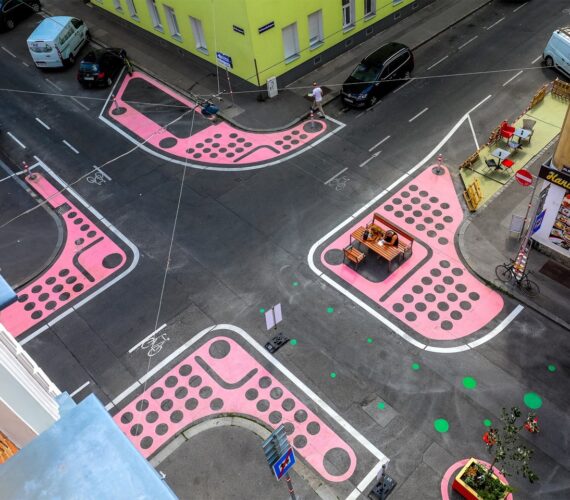
The joint design of street and surroundings is ultimately a utopian notion; it presupposes a tabula rasa. Tactical interventions, however, lie within the realm of the possible. What it comes down to is the use of the street in the sense of what former Flemish Government Architect Marcel Smets called an ‘integrated architectural project’ (2006). Designing a street is not just about mobility, but also makes it possible to address air quality, water management, social interaction, cultural exchange and much more. The question is: how can a road-engineering intervention transcend its own purpose while simultaneously contributing to a host of other social needs?
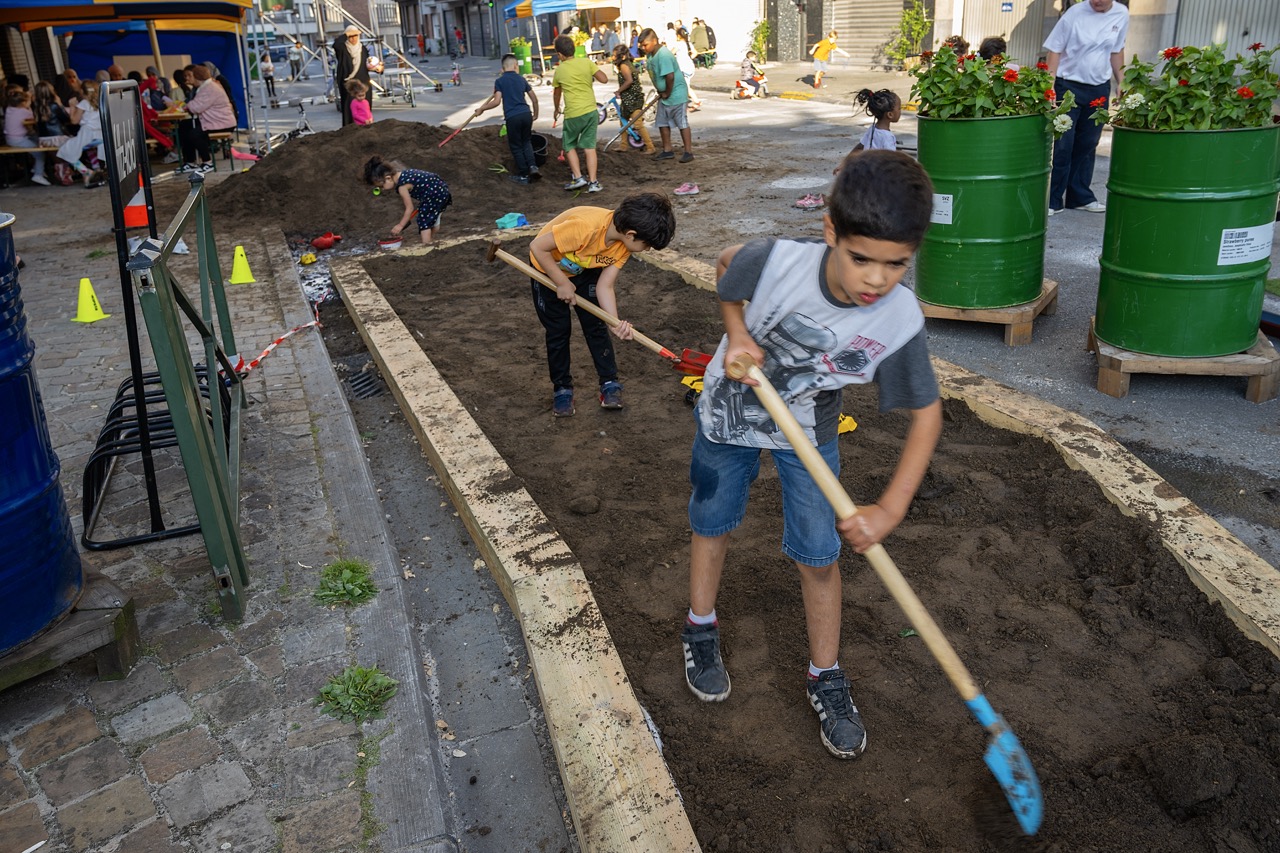
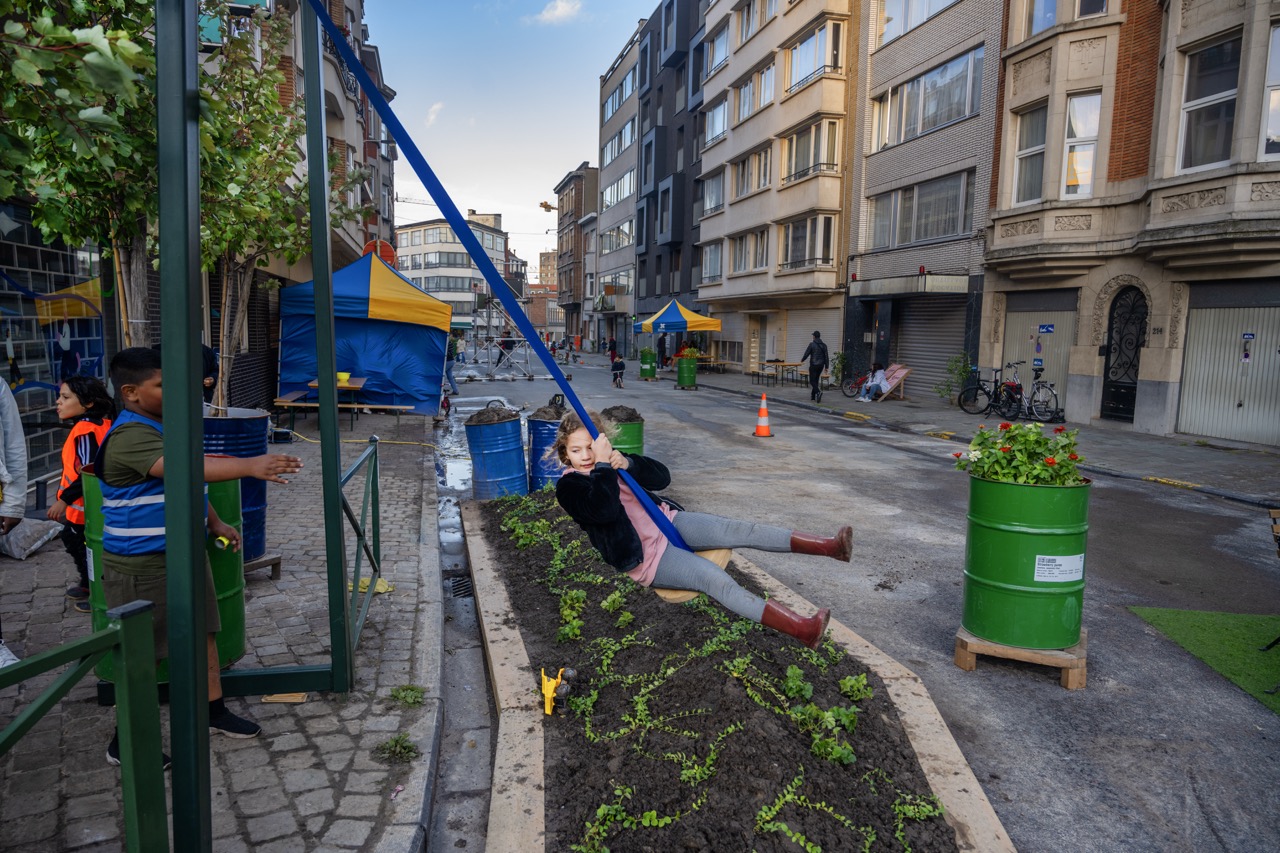
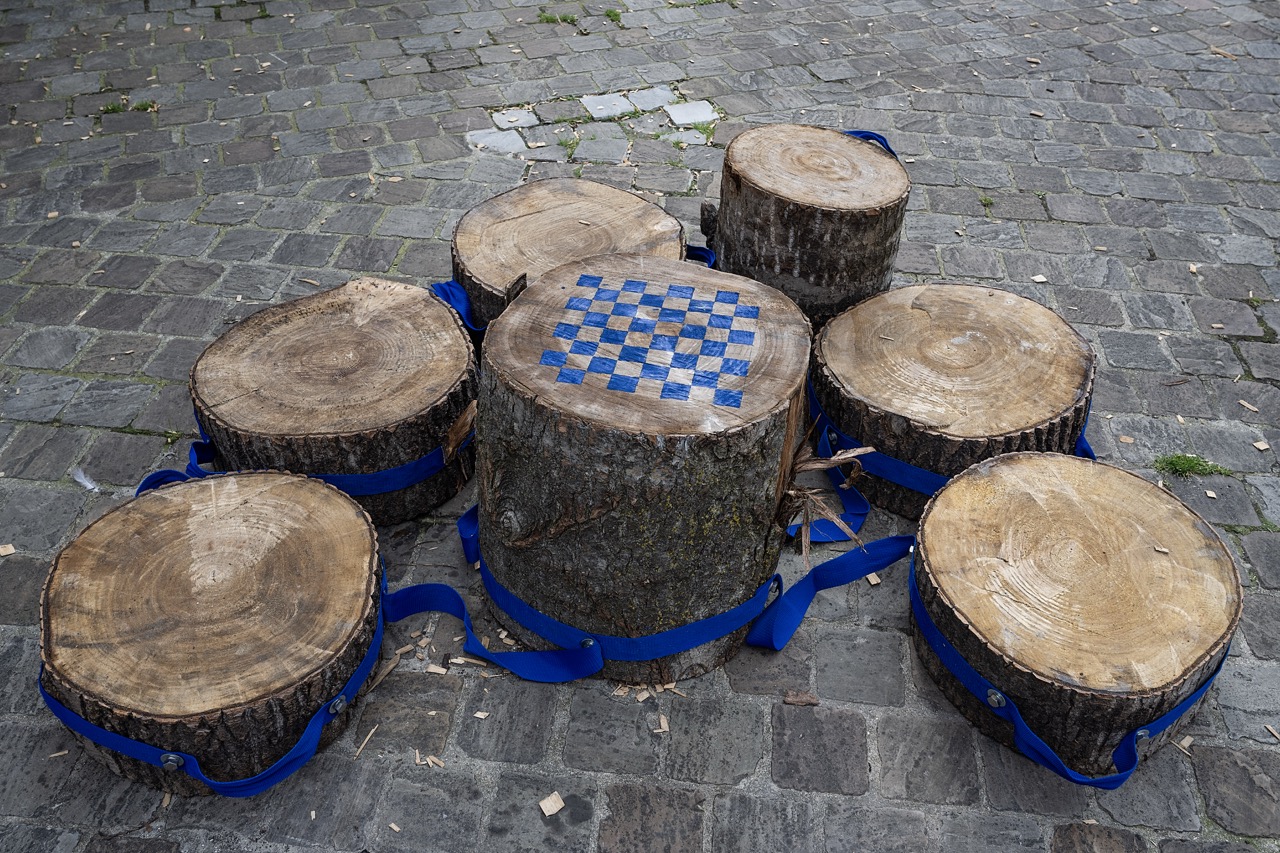
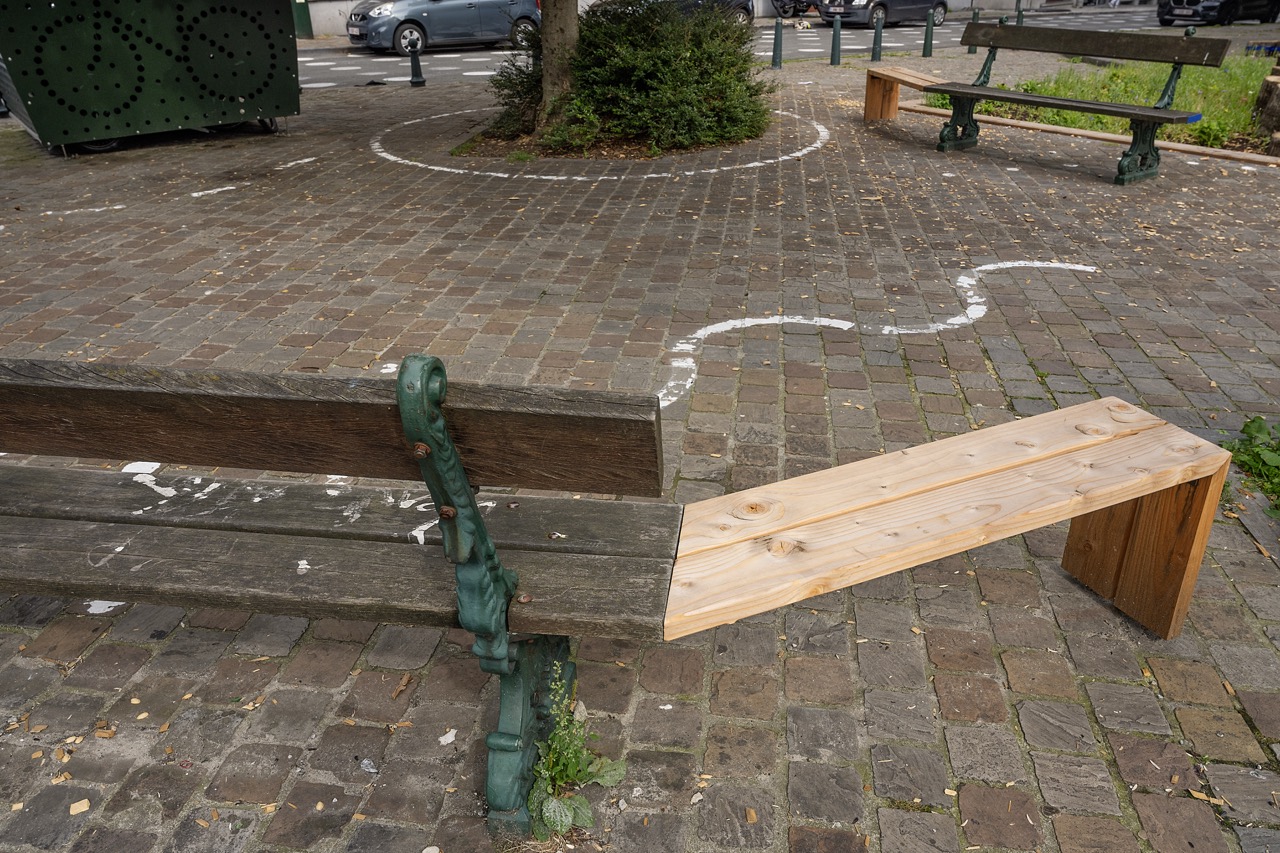
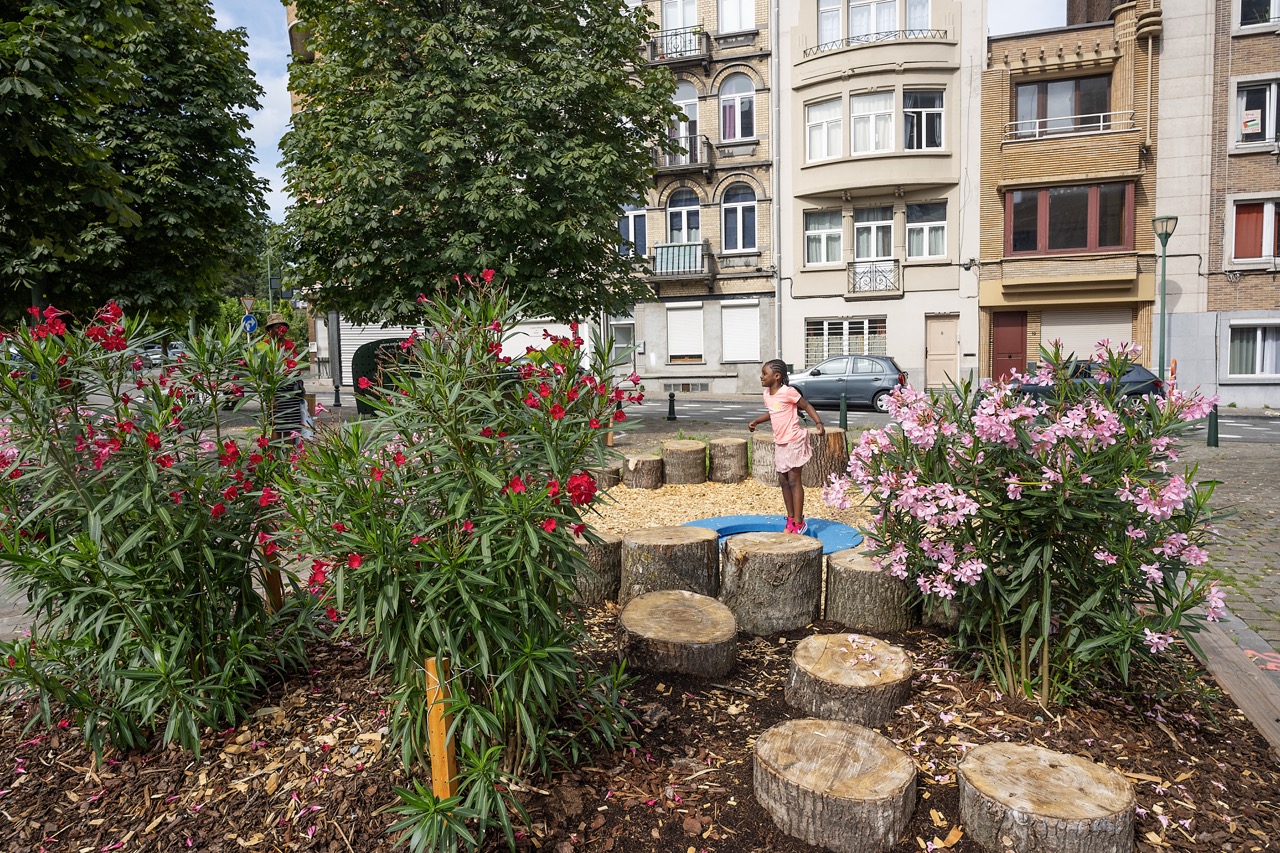
A good example of tactical urbanism are the micro-interventions carried out by Filter Café Filtré, organized as part of OpenStreets, the temporary summer streets in Sint-Jans-Molenbeek. For instance, the street corner at the Barmacie was augmented with greenery and a swing (2023). The unused street in front of the vacant St Remigius Church was transformed into an area with plants, benches and a trampoline (2024). Elsewhere in the neighbourhood, too, the temporary summer streets led to small but permanent interventions. These micro-interventions are modest road-engineering measures, yet they also revolve around social cohesion, cultural exchange, mental self-development and so much more.
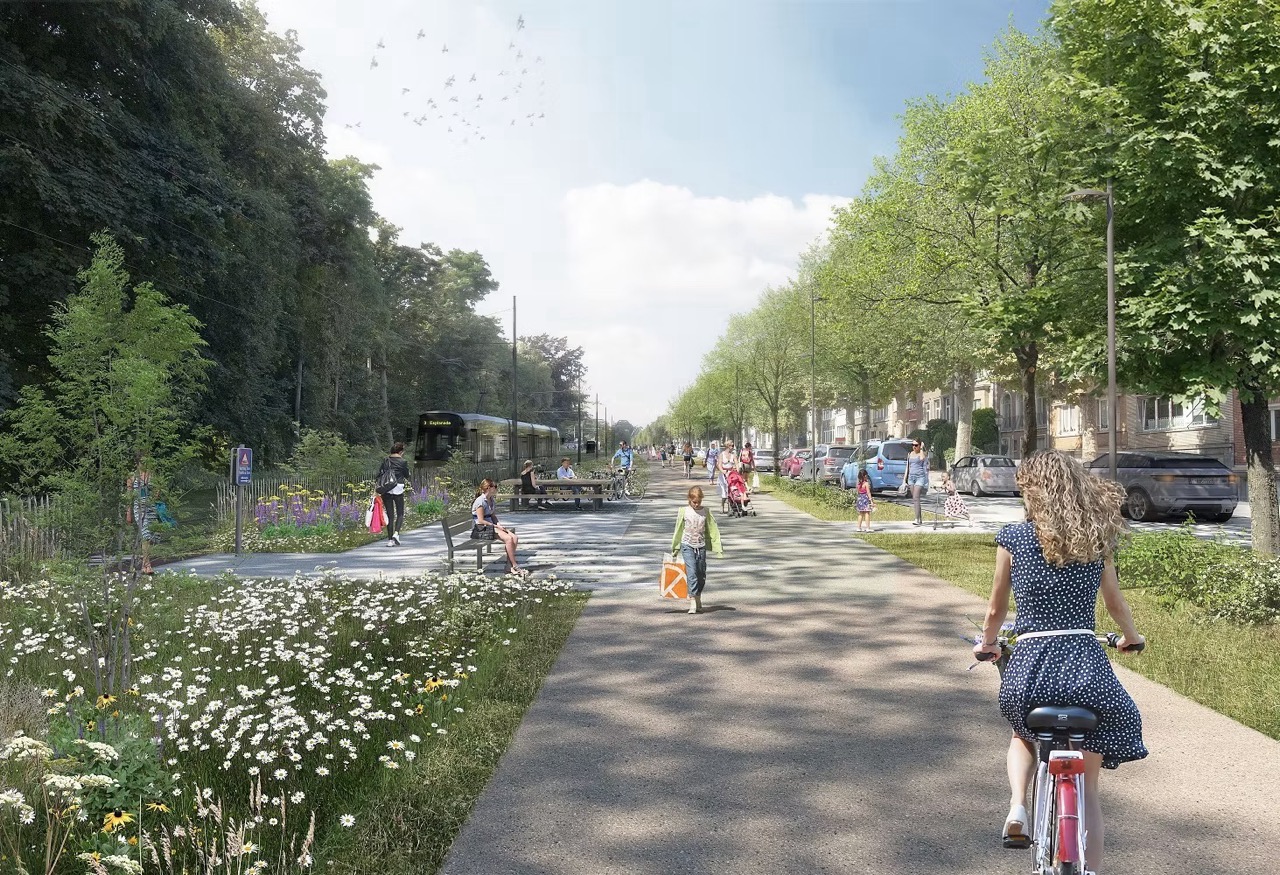
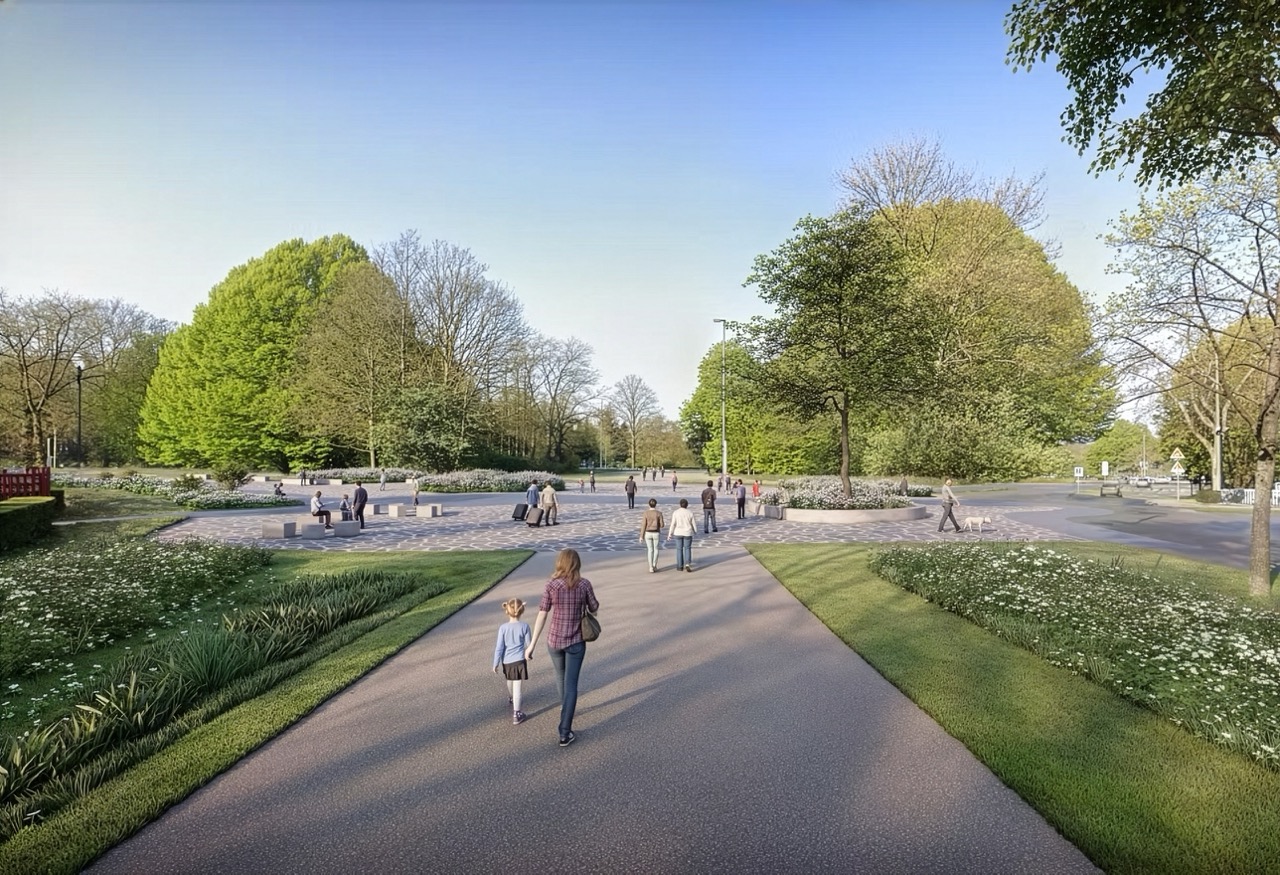
The redevelopment of Vuurkruisenlaan, part of the R21 ring road and an extension of the A12, a design by ARTER (2021), is of a completely different calibre. But the Parkway 21 design is no less tactical for all that. Traffic used to flow into the city via Van Praetlaan and out of the city via the parallel Vuurkruisenlaan, two sets of three lanes. In the redevelopment, the three lanes of Van Praetlaan serve both directions, while Vuurkruisenlaan accommodates a cycle and footpath alongside the tram. One lane remains reserved for local traffic. The redevelopment addresses the daily commuter traffic into the city. Equally important is that Vuurkruisenlaan is part of the green buffer zone, making this accessible to the neighbourhood.
What connects these two extreme examples is their recognition of the pedestrian as a citizen. The street is the key to an urban vision of the future in which citizens not only move around safely, but above all make use in a very concrete way of the ‘right to the city’ – a concept introduced in 1968 by Henri Lefebvre. The street gives form and meaning to this abstract concept. A term such as ‘active modes of transport’ shows that a redistribution of public space is still being justified on the basis of movement. Citizens are entitled to public space for moving around, but this doesn’t detract from the right to public space for social interaction. Public space remains the best place for meeting, relaxation and play.