Edito
Lisa De Visscher – Editor-in-Chief
And then there was the new Muhka. Or almost. The open call for the construction of a new Museum of Contemporary Art in Antwerp was unexpectedly halted last spring by Flemish Minister for Culture Jan Jambon. What happened? Despite years of preliminary studies and four proposals submitted by experienced, world-renowned teams of architects, the selection committee was unable to reach a unanimous decision. The reactions in the media were numerous and scathing. And rightly so. Hidden agendas were evident both in Flemish politics and at the local economic level. Opportunistic wrangling behind the scenes swept the work of many years and dozens of people, including the architectural teams, off the table in one fell swoop. The secrecy surrounding this entire competition – the projects are not allowed to be published! – runs counter to everything an Open Call stands for and makes the much-needed social and architectural debate impossible.
Suppose the MuHKA were not a museum, but a social housing project, an office complex or even a school: no one would have batted an eyelid. Both the procedure and the reaction to it would have unfolded quite differently. After all, because it carries so much prestige, a museum is always a project in which appropriation plays a significant role. Everyone wants to claim the project as their own: the architect, the museum director, the city and the funding authorities.
‘Museums are both major tourist attractions for cities and alternative social spaces,’ writes Pieter T’Jonck in his article ‘Museum architecture: friend or foe?’. Ever since Frank Gehry left his mark on Bilbao with the Guggenheim in 1997, we have known that a museum can be the trump card in the gamble of city marketing. Since Covid-19, however, we have also come to realise the high price of a tourist monoculture. “A museum doesn’t have to be a magnet,” argues Annette Gigon for that very reason. Together with Mike Guyer, she has designed a dozen museums, always seeking to strike the right note – from a healing effect on public space and public participation to the search for the right exhibition space with the right lighting.
Precisely because so many parties wish to claim the museum – as a building, as a collection, as a calling card for the city – the question of identity is never far away. KANAL–Centre Pompidou in Brussels and the Folklore Museum in Mouscron, for example, represent the two extremes of the spectrum when it comes to the collections on display. Yet, despite their international ambitions, both projects are firmly rooted in local identity, which is both embodied in their architecture and conveyed through it. In this issue, we show how architecture can not only materialise a museum’s ambitions, but also give them wings and breathe new life into them. Except at the MuHKA, that is: there, identity – in this case, the Flemish one – turned out to be its Achilles’ heel.
Table of contents
MUSEUMS
Editorial
Lisa De Visscher
Edith Wouters
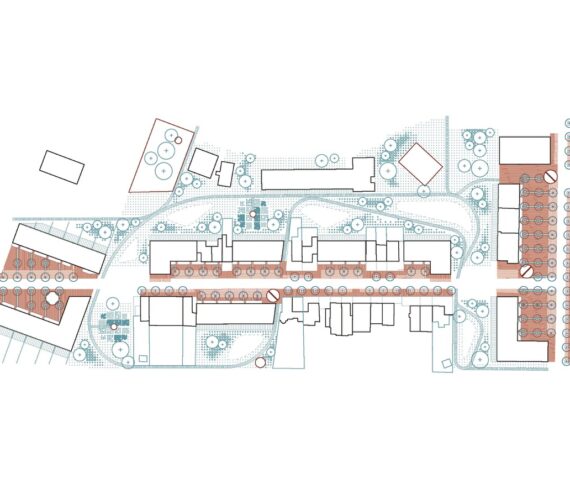
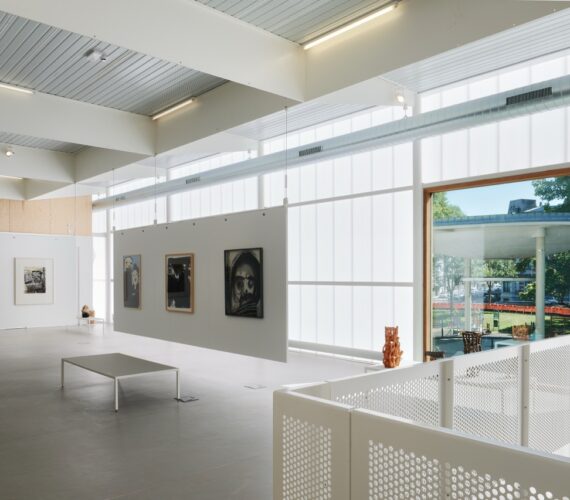
z33, Hasselt
Museum of Folklore, Mouscron
Museum architecture: friend or foe?
Pieter T’Jonck
Open Call: Design Museum, Ghent
Pieter T’Jonck
Ypres Museum, Ypres
Trinkhall MADmusée, Liège
Office Kersten Geers David Van Severen
Tim Van Laere Gallery, Antwerp
KANAL-Centre Pompidou, Brussels
Lisa De Visscher
THEATERS
Nona Arts Centre, Mechelen
Leietheater, Deinze
Le Delta, Namur
OPINION
Ten years after the integration of the universities of applied sciences: taking stock
Vincent Becue, Fabienne Courtejoie, Jean-Louis Genard and Jean Stillemans
NEWS
In Memoriam Christian Kieckens
Caroline Voet
Eline Dehullu
Mathieu Berteloot and Véronique Patteeuw
Lara Molino
Gitte Van den Bergh
Eline Dehullu
Architecture Year Book Flanders No. 14
Pieter T’Jonck
Laura Herman and Christophe Van Gerrewey
STUDENT
Eline Dehullu
Michiel De Cleene