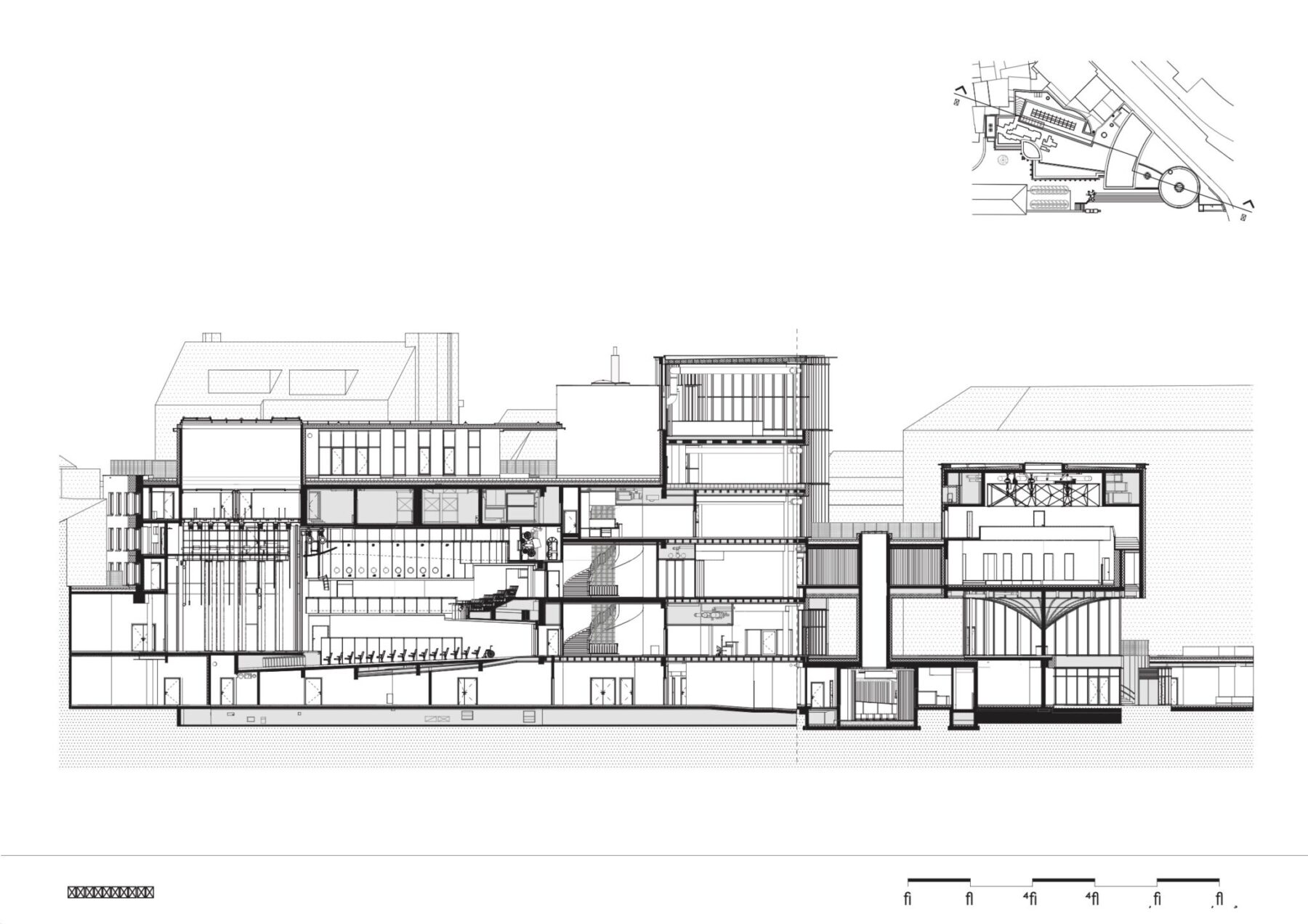
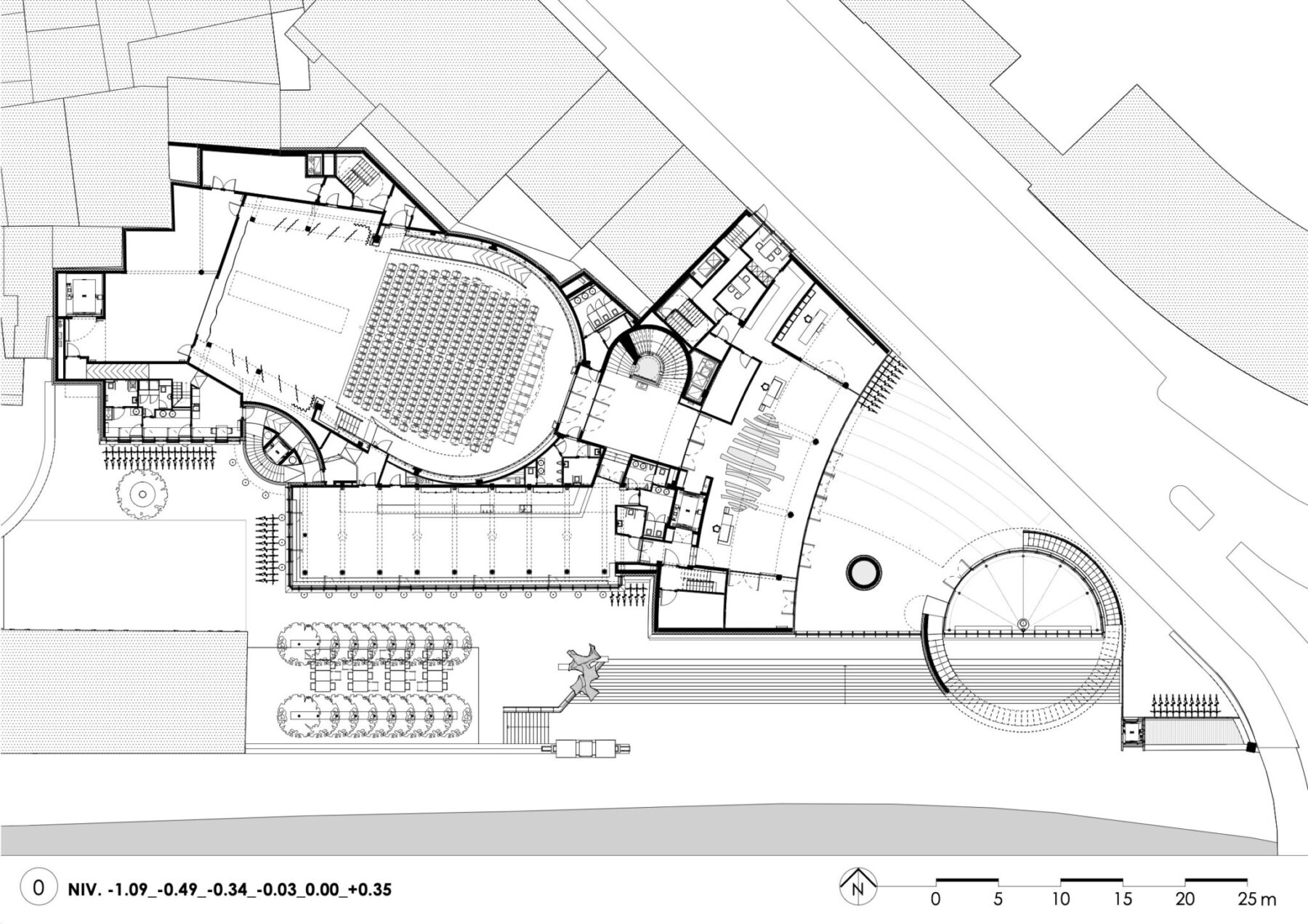
Since September 2019, Namur’s cultural centre, Le Delta, has been open to the public once again. Following an intensive study process, this distinctive building, designed by Victor Bourgeois, has been renovated by Philippe Samyn and Partners.
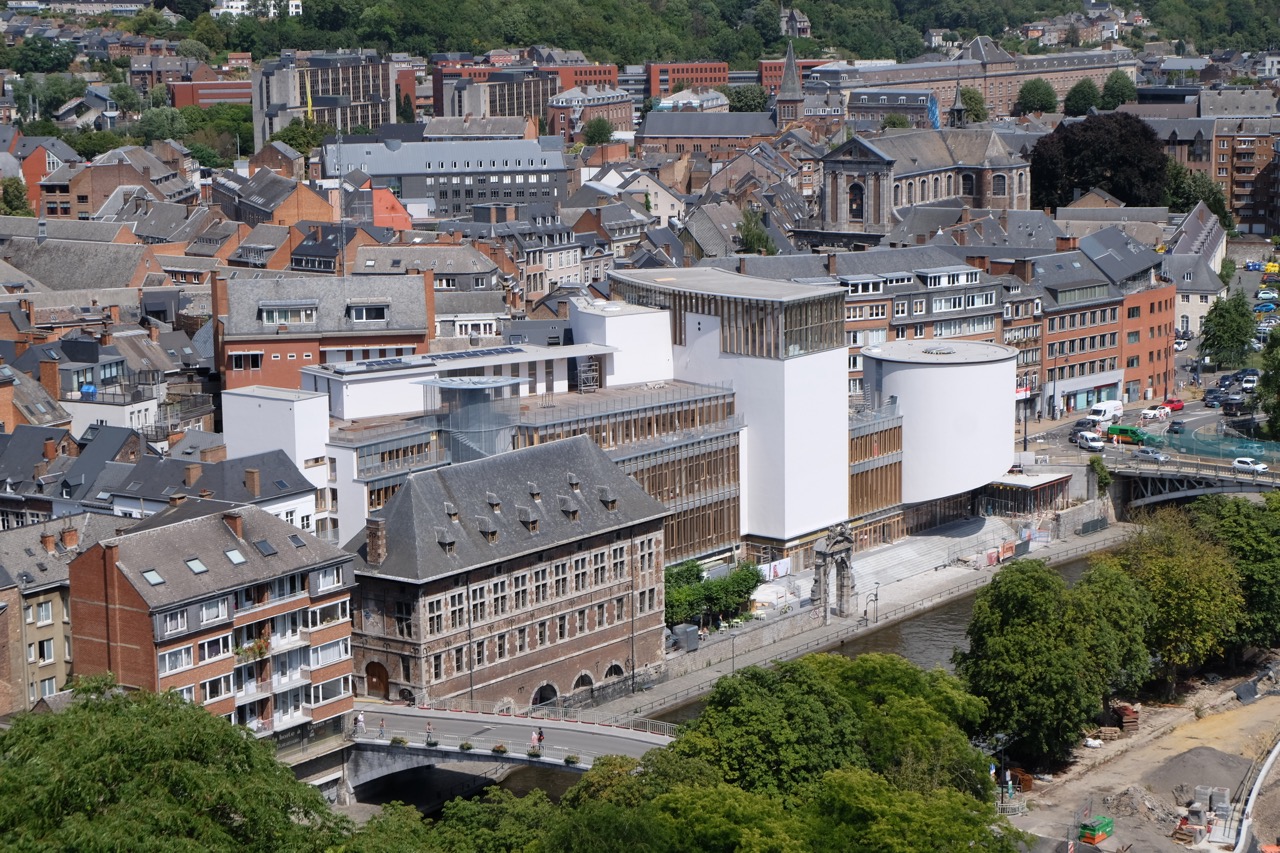
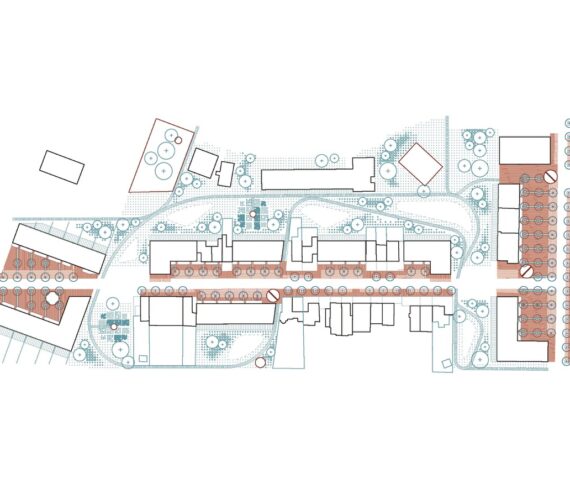
The building dates from 1964, two years after Victor Bourgeois’s death. The project was thoroughly imbued with his modernist style. From his very first sketches, the architect had envisaged the building as a complex combining a structure, a public space, art and garden architecture. The location of the new ‘Palais de la Culture’ in the very heart of Namur’s historic centre was also a success: at the confluence of the Sambre and the Meuse, next to the historic Halle al’Chair where meat was sold in the 16th century, flanked by the garden designed by René Pechère which acted as a buffer between the river and the building.
In front of it, an imposing square was laid out, adorned with works by various artists from Brussels and Wallonia. No expense was spared on the finishes: marble, walnut, copper details, grand chandeliers and Venetian glass gave the building an imposing presence.
In homage to the Namur politician and writer François Bovesse, the building – adjacent to the cultural centre where exhibitions and performances were held – had been designed as an (international) conference centre, complete with the requisite amenities (a very exclusive club, a chic restaurant). In the wake of May 1968, this place was seen as elitist and extravagant. Attention soon turned to a wider audience: in the years that followed, the building would host various initiatives aimed at bringing art and the public closer together through drawing studios and workshops, and later, a library.
However, by the start of the 21st century, renovation had become urgent. Like many examples of modernist heritage, the cultural centre was facing issues with the fragility of its building envelope, obsolete technical installations, as well as safety and accessibility problems. Furthermore, due to its location on the edge of the city’s historic centre, the building seemed somewhat cut off from the urban fabric. Nor had the large square ever really functioned effectively as a public space.
The renovation project began in 2009 with a participatory masterplan phase, aimed at mapping out all the requirements (technical, programmatic, urban planning) and piecing together an initial vision. This masterplan served as the basis for a competition won in 2015 by Philippe Samyn and Partners.
Today, when you cross the Rue du Pont bridge, you can see workers busy at work. The sight suggests that the best was sought for this corner of Namur. From the opposite bank, Le Delta looks like a new building oddly situated. And this is hardly surprising: nothing has been preserved of the original modernist façade. White volumes and wooden cladding have been used to clad the former structure. One can still make out the characteristic shape of the old concert hall and the curved exhibition building, which have been complemented by new volumes designed to accommodate the additional programme. The complex, which might seem somewhat disjointed, holds together thanks to the uniformity of the finishes. The white surfaces subtly take a back seat to the historic, Baroque Porte de Sambre et Meuse and the Halle al’Chair.
At its base, the building opens up luxuriously onto the river. Cleverly situated, the restaurant thus benefits from a terrace. This layout seems to work well, as even in December, students stop to enjoy a break in the midday sun on the steps.
At the level of the entrance to the square is the Salle Tambour, a circular concert hall. At ground level, a white cylinder blends into a base with clean lines. This space, which shelters the arrival area in front of the entrance, will soon become a bookshop.
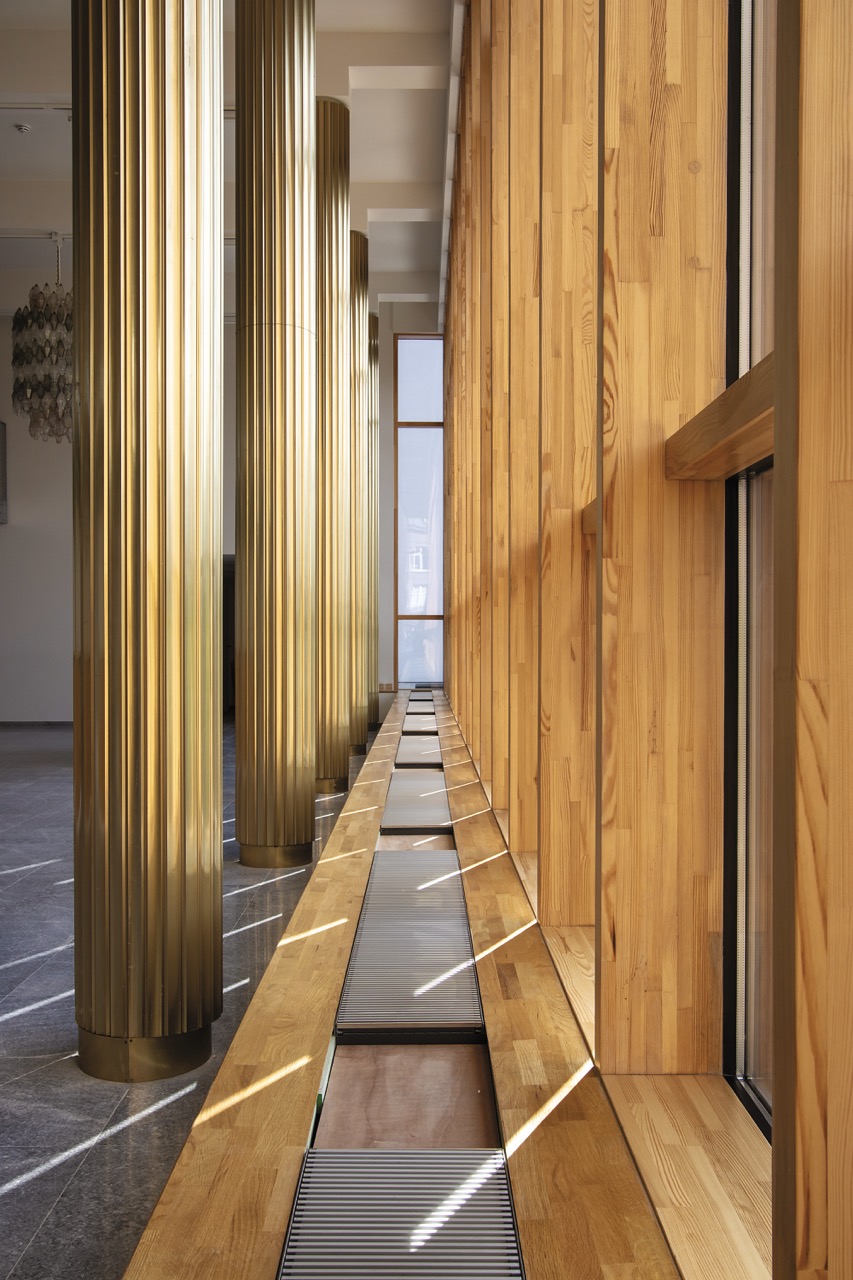
For the time being, the entrance still lacks order and furnishings. Tucked away in a corner, the ticket office is barely visible, and the entrance to the restaurant bears some resemblance to a service entrance. In the once-luxurious foyer, Venetian chandeliers and copper columns stand in contrast to the acoustic coffered ceilings and new steel balustrades.
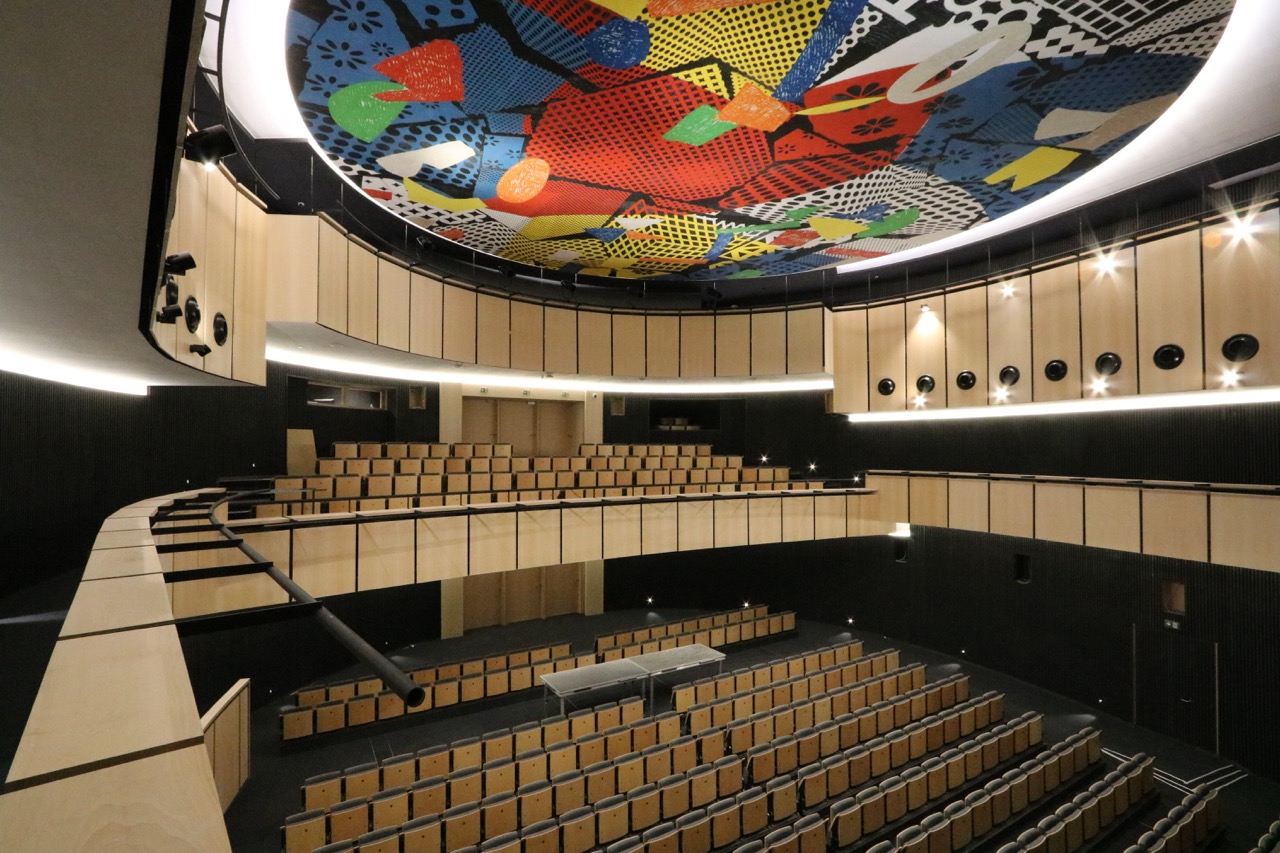
The Grande Salle, at the heart of the building, is the epitome of a modern concert hall. The animated fresco by the painter Yves Zurstrassen lends the space a touch of extra character.
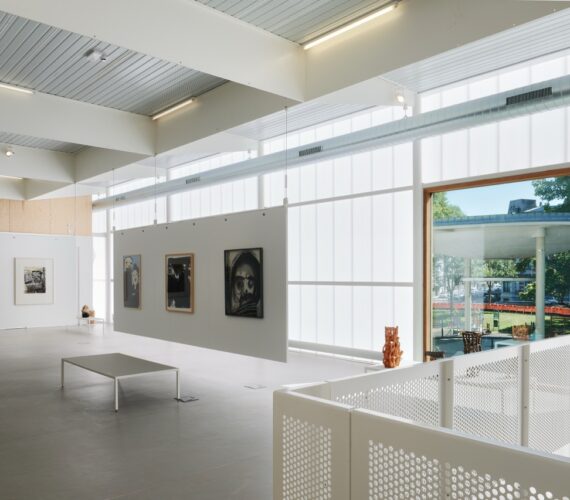
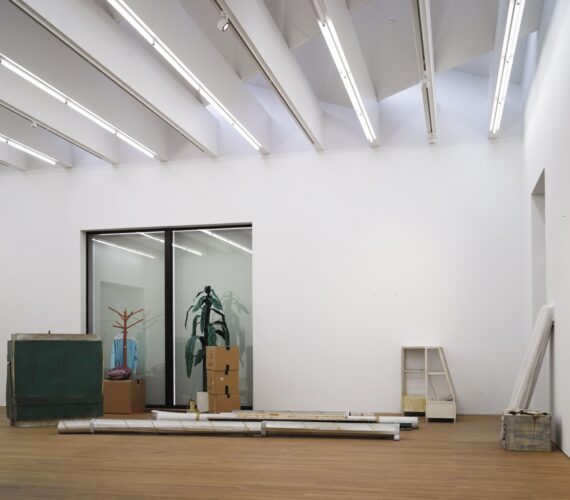
The delicate details of the wooden façade and the steel grilles of the external stairwells are absent from most of the exhibition halls. Le 7e Ciel is an exception in this respect: the highest room in the semi-circular volume offers a magnificent view of the confluence of the Sambre and the Meuse. Tucked away between the wings of the building, the roof terrace is also a very pleasant spot.
The building still shows a few shortcomings, notably a lack of signage and finishes that are at times a little flimsy, but in all the informal spaces – be it the foyer, the reading room or the restaurant – one can see people settled in to read and work. This suggests that a building such as Le Delta will indeed have its place within Namur’s urban fabric.
Architect Philippe Samyn and Partners
Website samynandpartners.com
Official project name La maison de la culture de la Province de Namur, Le Delta
Location Namur, Belgium
Programme Theatre hall, exhibition spaces, bookshop, offices
Procedure Design-build competition
Client Province de Namur
Lead contractor Coeur de Ville (Entreprise Thomas et Piron)
Structural engineering MC-carr.
Services engineering SIX Consulting & Engineering, DTS & CO
Building physics Cenaero
Sustainability SIX Consulting and Engineering, DTS & CO, SECO
Acoustics Altia
Completion September 2019
Total floor area 8,560 m.
Budget € 16,455,197 (excl. VAT and fees)
Product / Supplier Colt (solar shading systems), STO (facade)