
Edito
Lisa De Visscher
Hoofdredactrice
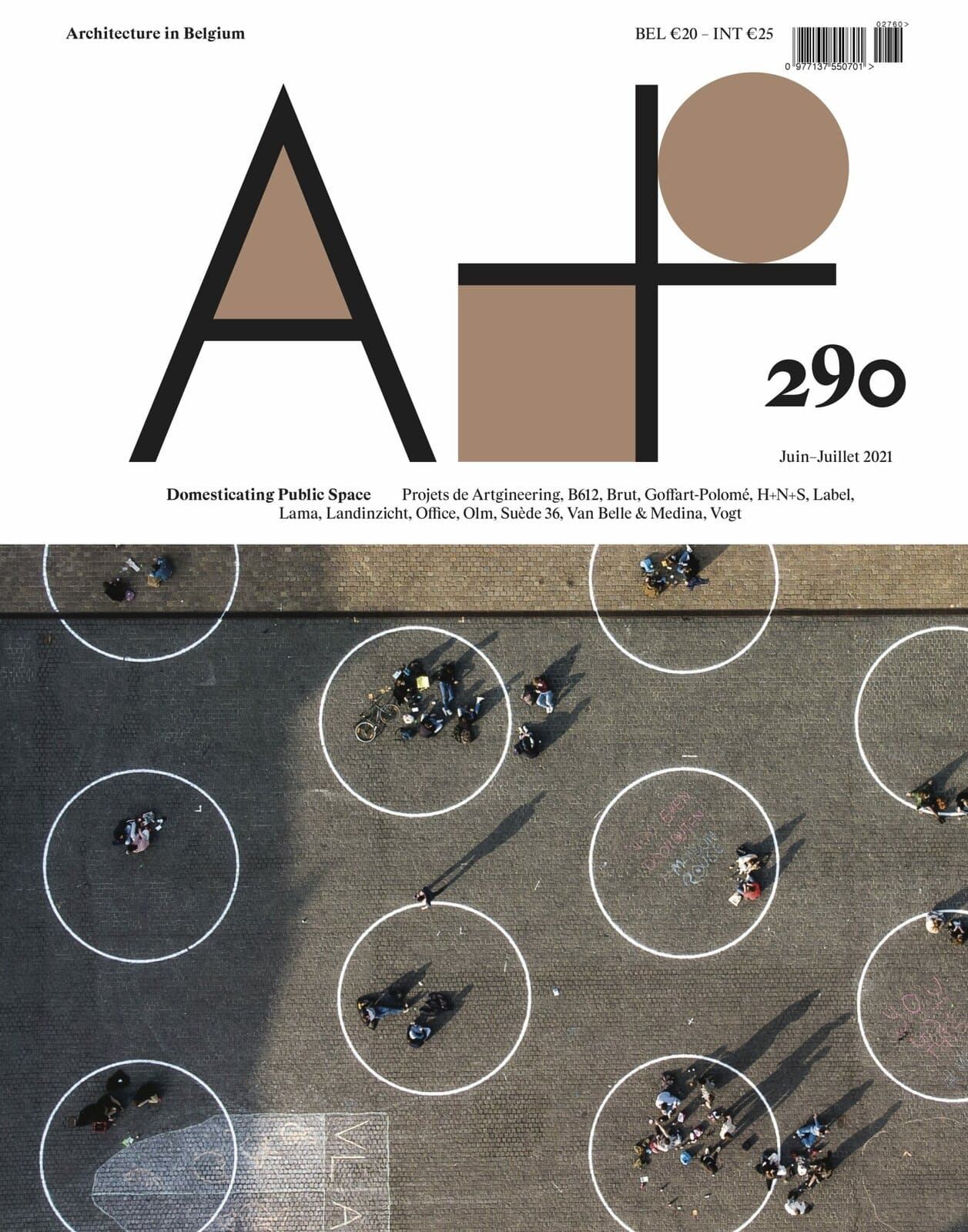
Lockdown. Curfew. Ban on gatherings. Chalk circles. Social bubbles.
The coronavirus crisis put public space under severe strain. Suddenly, it was stripped of its intrinsic public character: its self-evident accessibility and the freedom to make it one’s own, always, everywhere and for everyone. Mandatory working from home, travel restrictions, the closure of the hospitality sector and the resulting collective urge to go for walks made it clear once again just how much living, working, relaxing – in short, life itself – depends entirely on high-quality public space.
But we don’t need a pandemic to realise this; of course, we’ve known it for some time. Various cities have been working for years to transform the iconic spaces in their city centres: car parks are disappearing and being turned into parks and squares, watercourses are being reopened, and dead-end quays are becoming places to sit by the water. It is striking that the projects being realised today all bear witness to strongly developed spatial, social and ecological ambitions and embody an integrated vision for the future of public space. Or to put it another way: a pretty square or a nice park is no longer enough. Public space in 2021 is inclusive, climate-active and puts vulnerable road users at the centre.
For example, with Park Belle-Vue, Leuven is not only regaining a vantage point over the city but also gaining a new green lung that is reshaping mobility and forming a key hub in a network of cycle and footpaths. For the Grote Markt in Sint-Niklaas, the designers are focusing on a radical greening scheme that not only combats the urban heat island effect but also treats the car as a guest in a square that has been repurposed as a meeting place for residents. The Pannenhuispark in Brussels is – at last – creating a rugged playground for young people and, alongside its wild greenery, also offers a walking and cycling link between two parts of the city. In Saint-Hubert, a car park is being transformed back into the central square that fosters social interaction – a much-needed intervention that so many villages lack.
The projects still on the drawing board further illustrate the changing agenda for public space. Take, for example, the ‘dune-before-dyke’ construction in Westende, an example of systems thinking in which a gentle, water-retarding dune replaces a high dyke and makes room for walkers, wildlife and flora. Or the Tuinen van Stene in Ostend, Belgium’s first urban agricultural park, which – with its community-picking garden, wet meadow landscape, arable landscape and food platform – forms a new typology for public space. A hopeful vision of the future, then; post-Covid walks can only get better.
Yet these projects represent only a fraction of the total public space. They are the proverbial icing on the cake. But what about the cake itself? The everyday streets that often make up more than half of the public domain. The team at Brussels Bouwmeester Maître Architecte published a booklet on the subject, offering ten design tips for the ordinary street. It is a pragmatic plea for green, shared, car-calming, more accessible and easier-to-cross streets. It demonstrates once again just how closely public space and mobility are intertwined. Today, the street is a battleground between cars, cyclists and pedestrians, and its designer – the public authorities – is the only party that can settle this conflict in favour of its most sustainable, and therefore most important, user: the vulnerable road user. ‘Domesticating public space’ is about this: how public space acts as the driving force behind making and keeping a city liveable.
Table of contents
Lisa De Visscher
Gideon Boie
NEWS
Expo Across
Lara Molino
Urban Summer Brussels
Anne-Laure Iger
In Memoriam Constantin Brodzki
Maurizio Cohen
The Venice Biennale 2021
Véronique Patteeuw
PROJECTS
Office
Crematorium, Oostende
Label
PUBLIC SPACE
Vogt – Van Belle & Medina
Droogdokkenpark, Antwerpen
Van Belle & Medina
Traction Stations Brabo 2, Antwerpen
Before / After
City of Ghent Parks Department,
Fontainas, Brussels
H+N+S – Artgineering – Ara
Park Belle-Vue, Leuven
Pioniers van de publieke ruimte
Joeri De Bruyn
Artgineering – Lama – Sweco
Grote Markt, Sint-Niklaas
Lama – Brut
Schaliken Inner Region, Herentals
Suède 36
Town Centre Regeneration, Saint-Hubert
Public space in Liège
François Schreuer
V+ – Karbon – Menzel
STUDENT
Young Talent Architecture Award 2020
Eline Dehullu
Euregional workshop Kaleidoscope
Eline Dehullu
