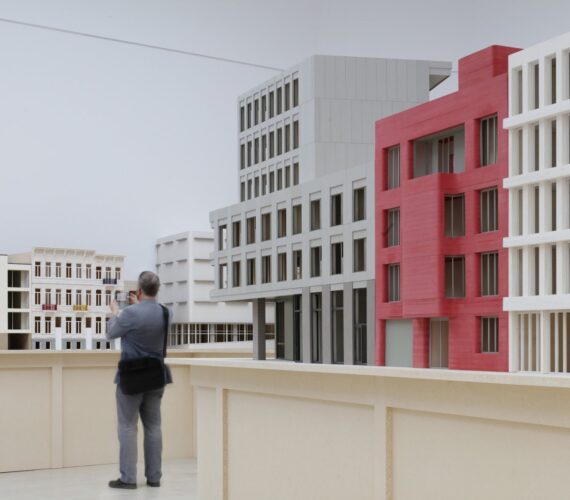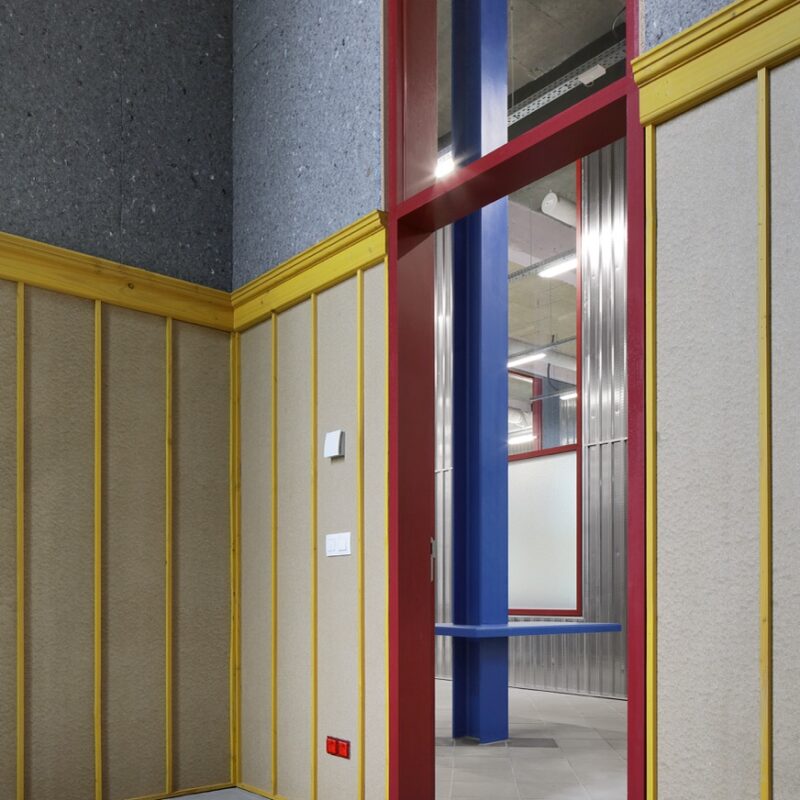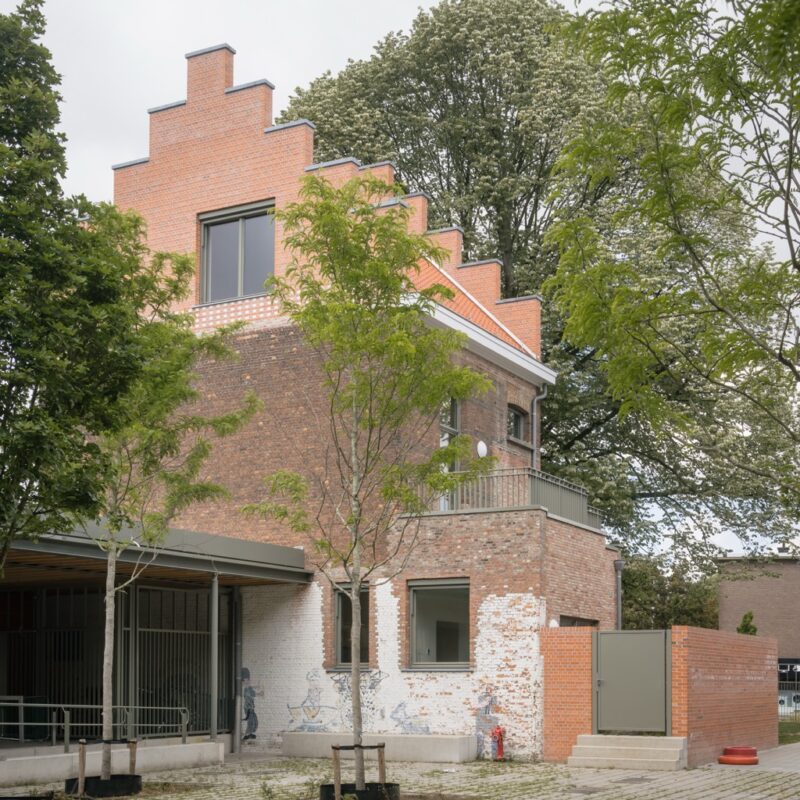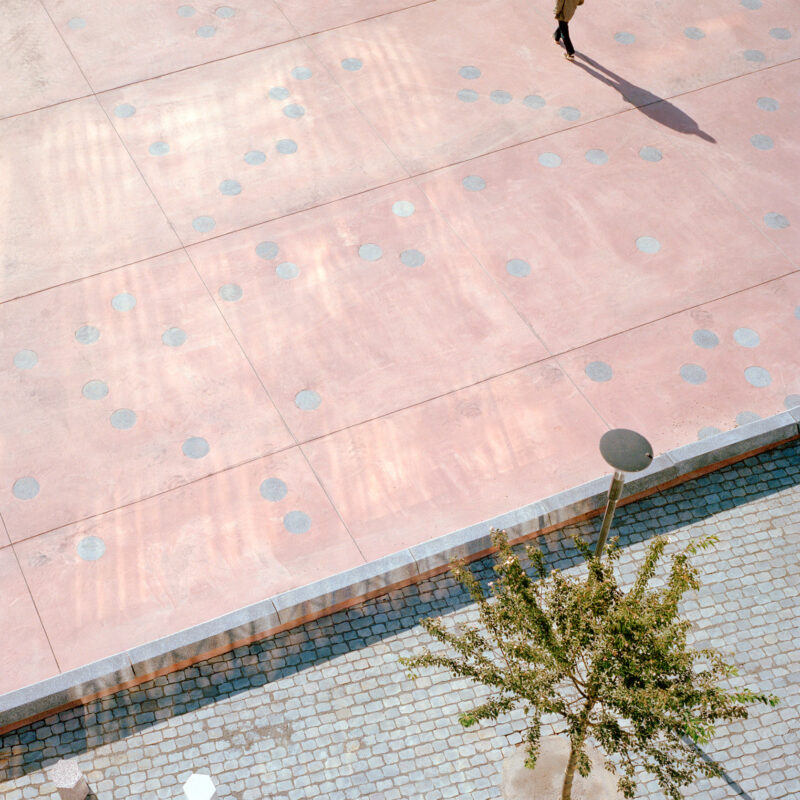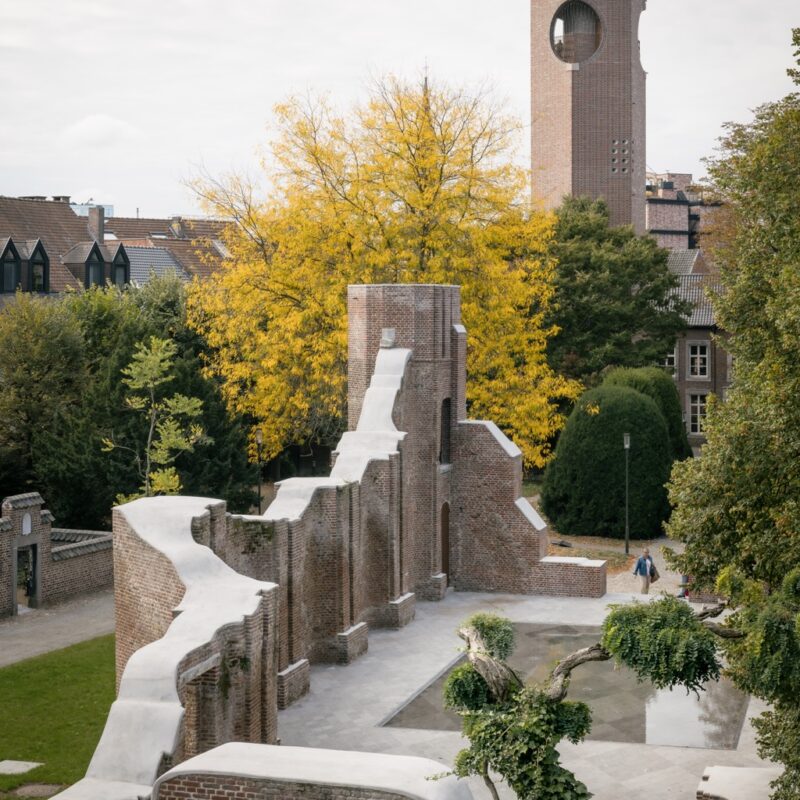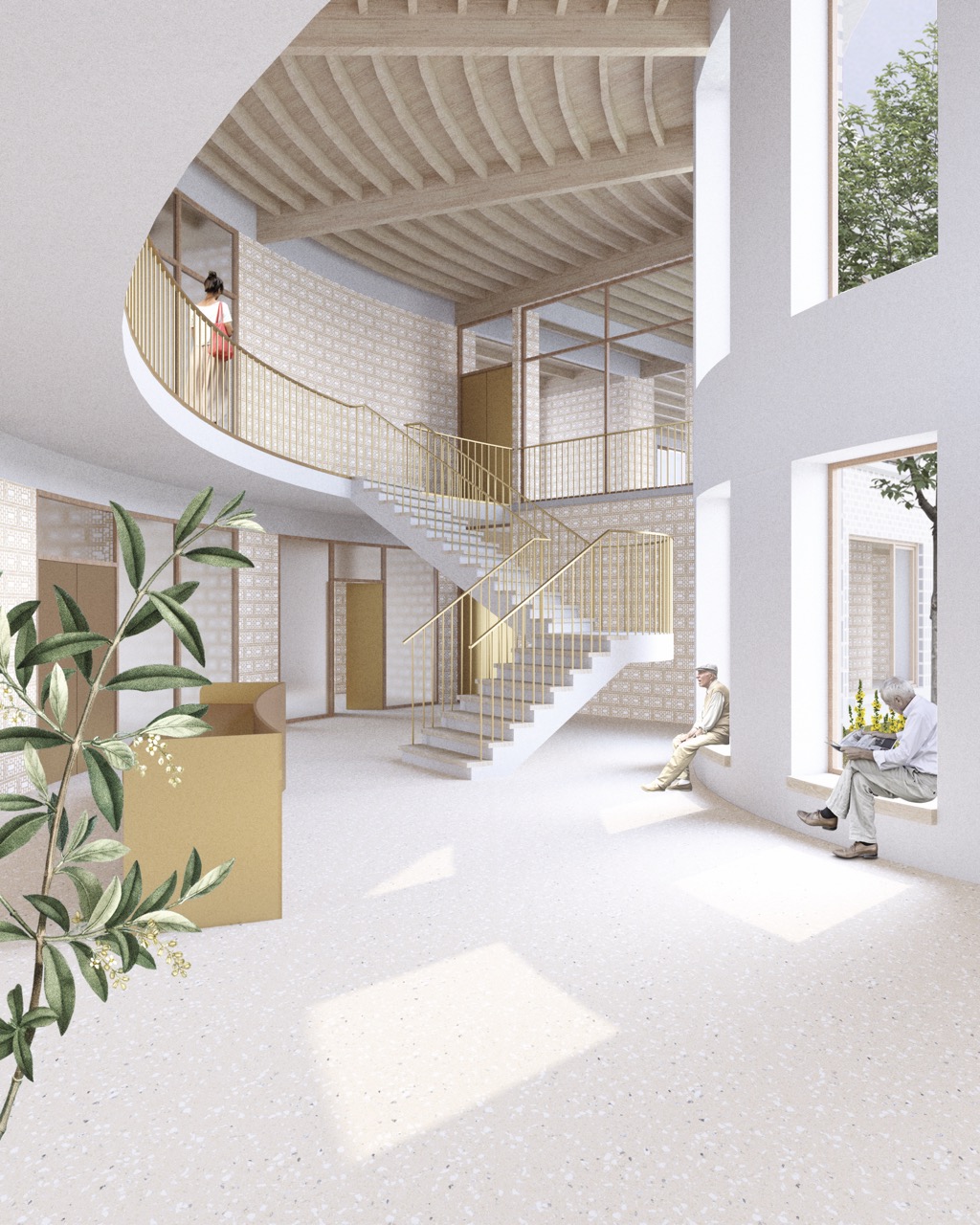
Awans and its distinctly contemporary eclecticism, a trait shared by many suburban towns. Amidst remnants of the countryside, self-contained villas and a town centre hollowed out by industrial estates, the village’s identity has become uncertain. The project to bring together municipal services and the CPAS therefore presents an opportunity to re-establish a strong sense of centrality. What should be retained, and what removed, from the former town hall? Karbon’ / V / Menzel, the winning team, puts forward a measured proposal that embraces the village’s ‘exquisite corpse’ DNA and strikes a balance between evolution and the preservation of the past.
Colin Rowe 1 and Renaat Braem 2 would have loved Awans, a typically Belgian rurban Frankenstein! A sleepy commuter town situated a stone’s throw from Liège, it consists of a constellation of five villages scattered between Bierset Airport, the Ikea in Hognoul and two motorways. Awans is truly characterised by this impure mix of elements: a few beautiful large farmhouses, 1950s terraced houses with discreetly ornamented brick façades, patches of orchards, meadows and then, above all, featureless, cosmocentric villas decked out in ‘SUV-thuja-trampoline-Netflix’ style. Finally, like many of its suburban counterparts, Awans, since the demise of its local shops at the hands of large retail parks, has been searching for a truly vibrant centre. 1 Rowe, Colin and Koetter, Fred, Collage City, The MIT Press, 1978. 2 Braem Renaat, Het lelijkste land ter wereld, Davidsfonds, 1968 (reprinted by VAI, 2018).