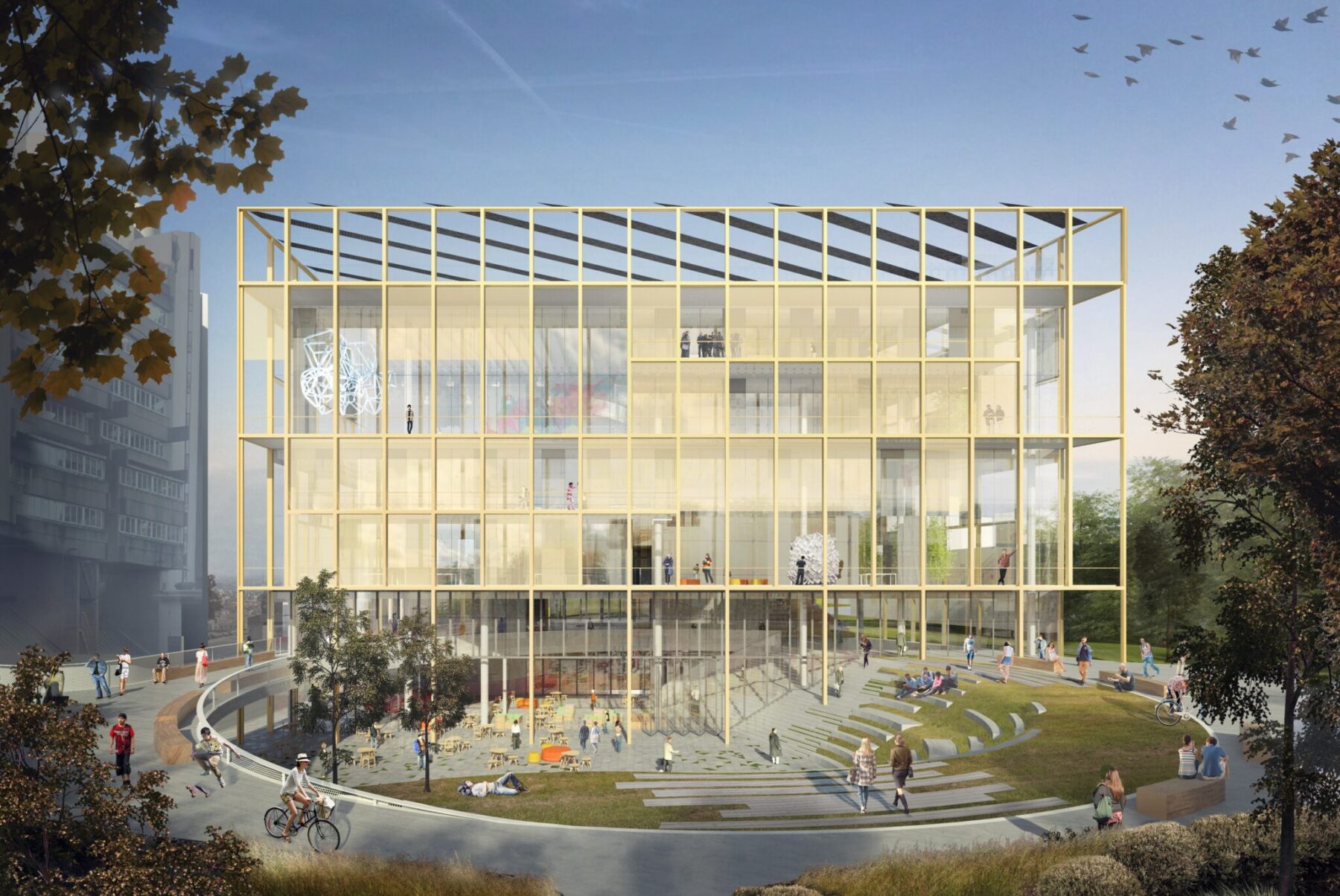
The evaluation of a competition design focuses on the visual representation of a possible future. At the same time, the presentation before the jury is also a social situation, in which images of architecture take on a rhetorical role. The competition for the Learning and Innovation Centre in Ixelles offers an insight into this double status of the design, in which Xaveer De Geyter Architecten and evr-Atelier 229 each used a different strategy.
Architectural criticism usually focuses on the architectural design – as a final image or as a completed building. As a result, the design and negotiation processes that precede it are generally overlooked. This is also the case with competition entries, which are published on the basis of plans and images, and are judged as if they were already completed buildings. However, it is conveniently overlooked that an intensive process takes place between the architect, the client and other parties involved, from the design proposal to realisation. Through consultation, they refine the design, adapt it and transform it. Whilst a competition design may point towards a future to be realised, it never fully coincides with it.