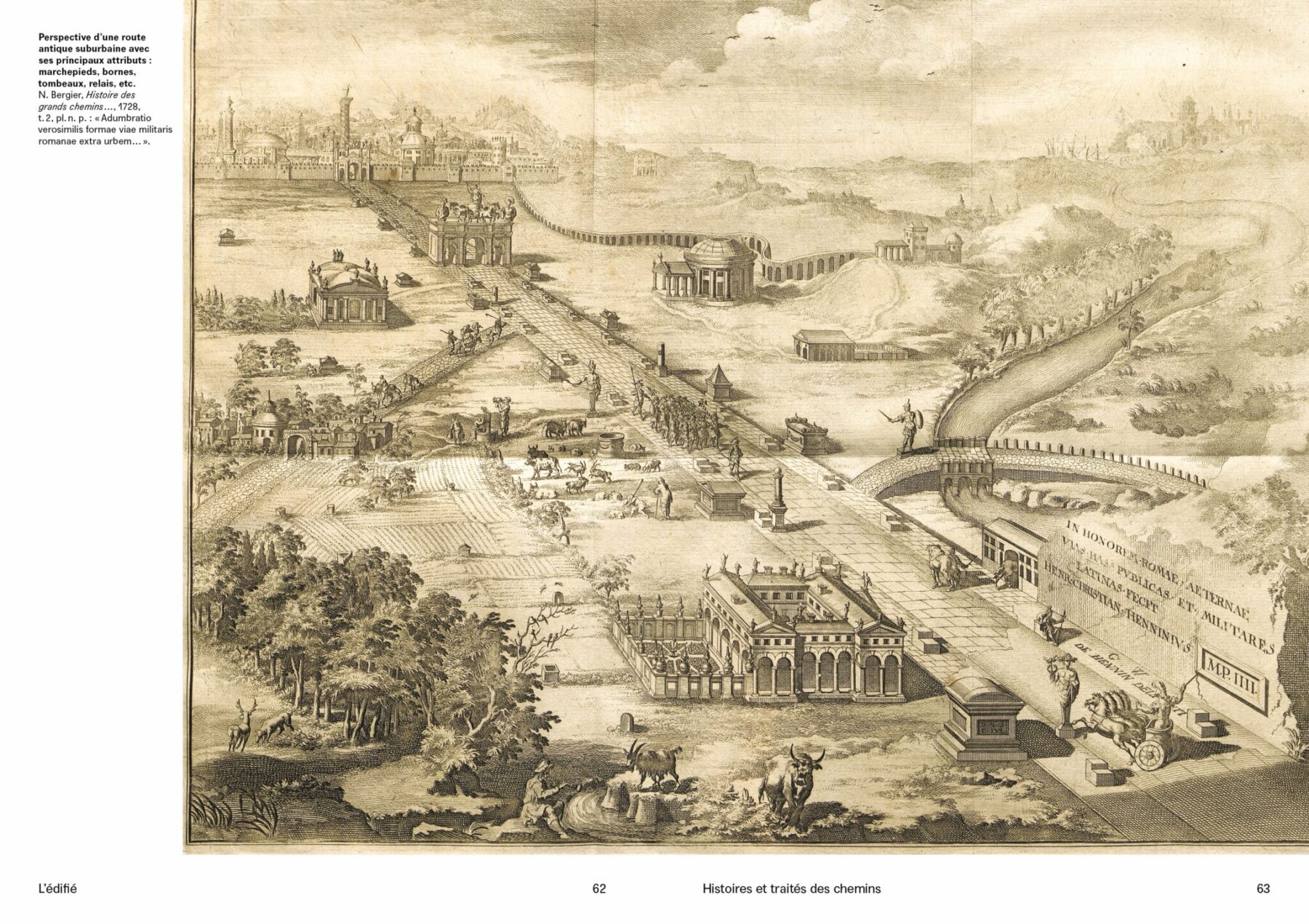
In *L’architecture de la voie. Histoire et théories*, Éric Alonzo presents an impressive genealogy of the road as an architectural project. The book, which begins with the Roman road and ends with infrastructure projects by Manuel de Solà-Morales and Alexandre Chemetoff in the mid-1990s, can be read as a prelude to *The Landscape of Contemporary Infrastructure* by Marcel Smets and Kelly Shannon, to which it bears a strong resemblance in its advocacy of architecture as a means of rescuing infrastructure.
“For, if in a mad flight, technology strays, architecture could help it find its way again,” Alonzo concludes on the final page. In other words, the discipline of architecture takes centre stage, and the publication is an academically grounded, meticulously compiled and graphically comprehensive overview, demonstrating how roads have been incorporated into architectural practice and discourse throughout history for various reasons.
This article appeared in A+277, published on 25.04.2019.