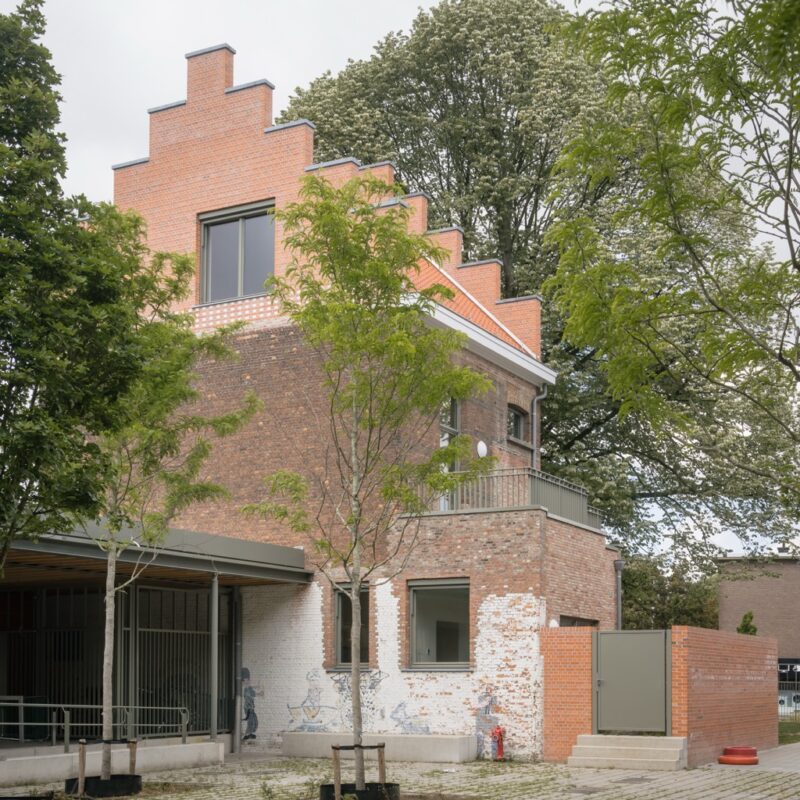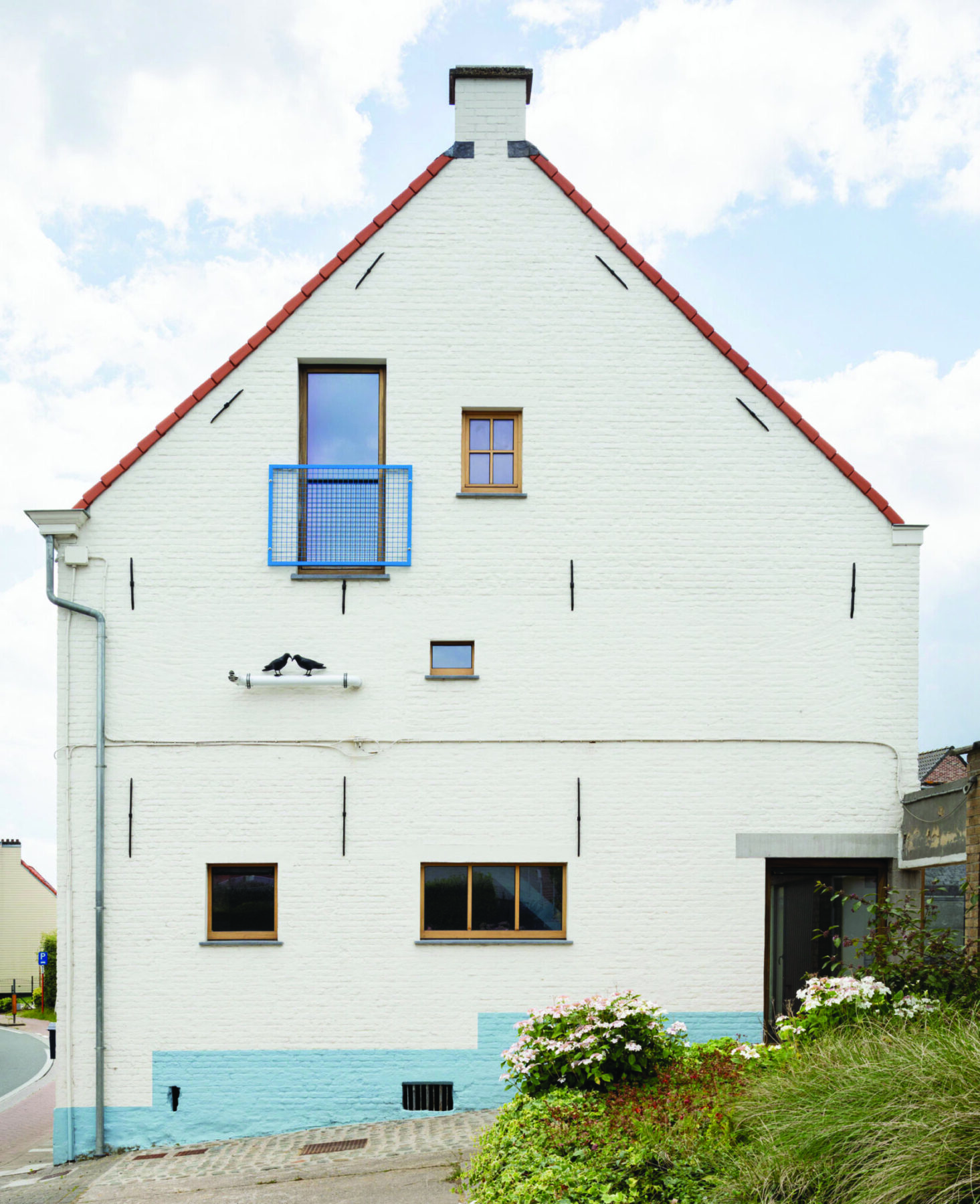
In 2020, architects Laura Muyldermans and Arian Schelstraete redesigned the layout of an old mayor’s residence in Gontrode. In doing so, they sidelined the front façade and invite the visitor straight to the kitchen table – a further erosion of what remained of twentieth-century bourgeois domestic culture.
There are few places where the wild side of Flemish living is more visible than in the ribbon development along the main roads that criss-cross its urbanised landscape. A drive along such a main road is rather like scrolling through the results of a Google Search without a search term: the dilapidated furniture shop stands next to the all-you-can-eat restaurant, a car dealership up for sale opposite an exclusive horse breeding farm, a part-time beauty salon a stone’s throw from a meadow where the last few cows graze. And amidst all this lie the remnants of a bourgeois residential culture, which once centred around a church tower or market square, but over the years has become increasingly scattered throughout the Flemish countryside. The metaphor above was not chosen by chance: the village circle has had to make way for the network model of an urbanity that is no longer confined to the city alone.
This article appeared in A+292, published on 15.11.2021.