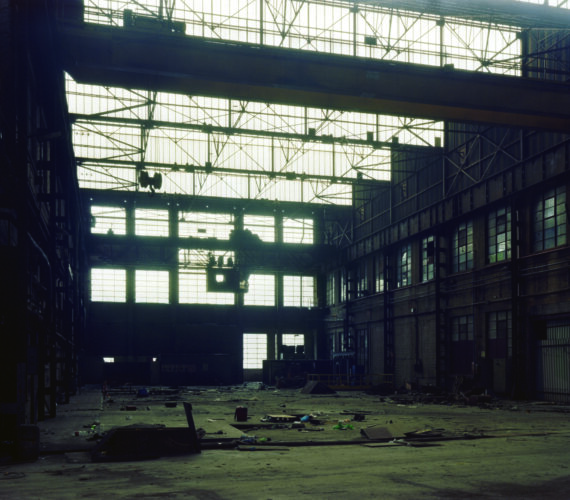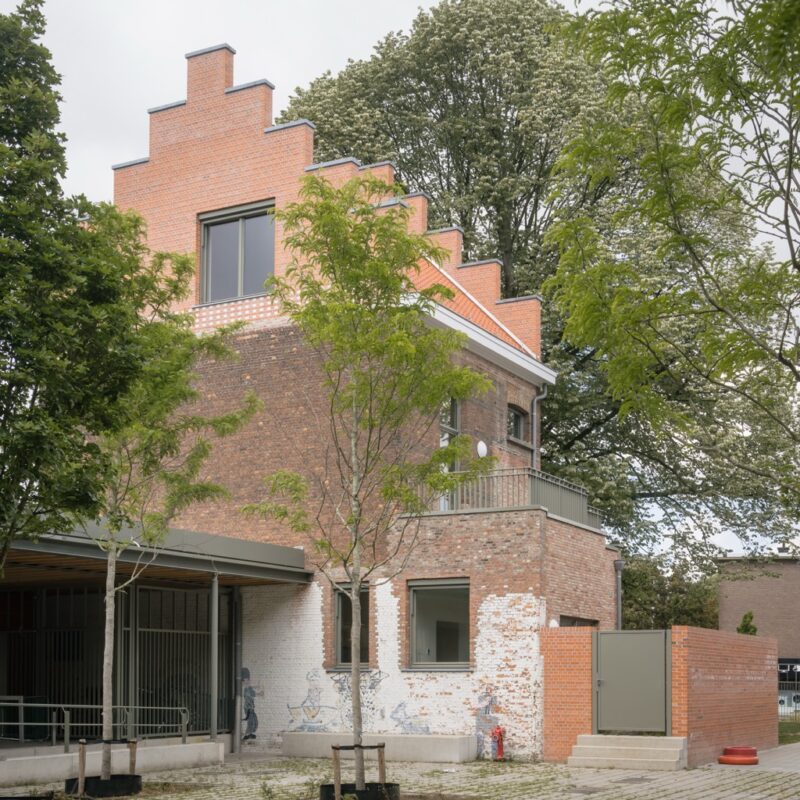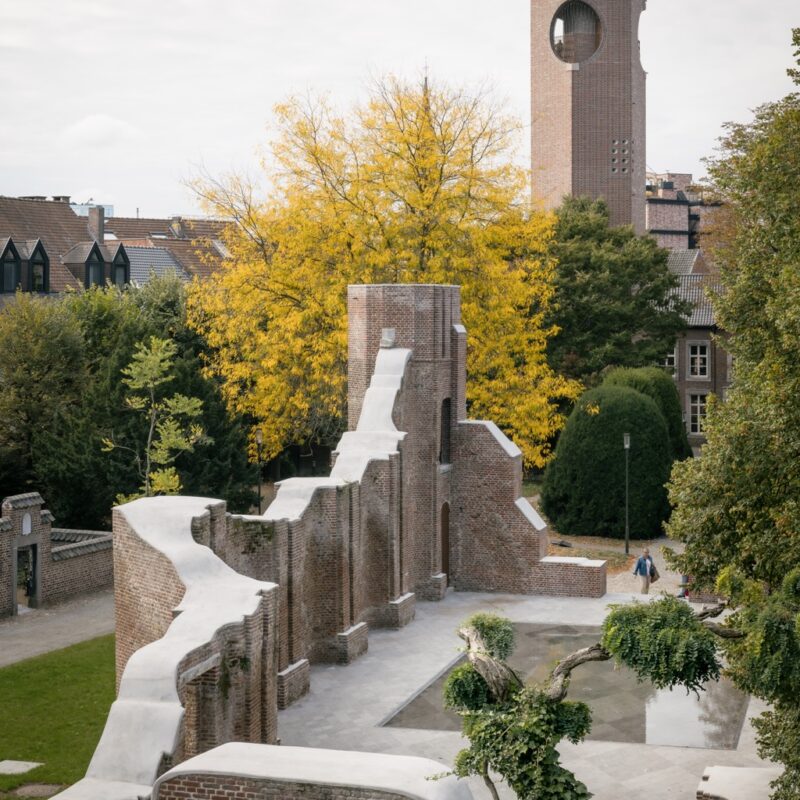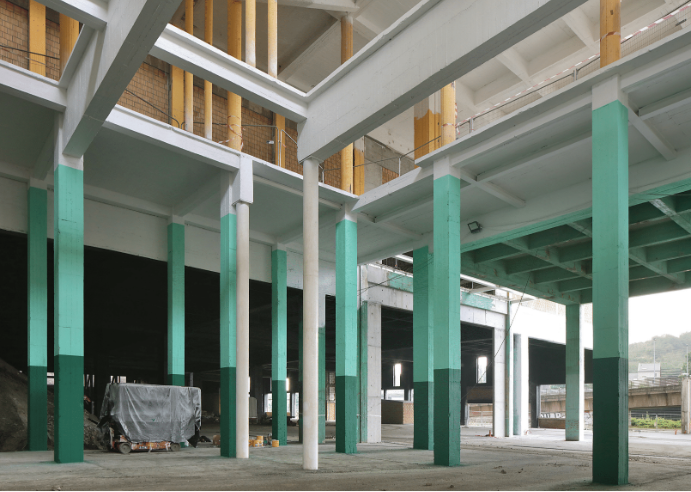
Excess. The word encapsulates the whole essence. There is too much. Too much volume, too much space, too much structure; in short: it is simply too big.
When repurposing buildings, you invariably face a clash between the programme and the space that never quite fits. Ceilings turn out to be too low, the staircases are poorly positioned, there are too few windows – or too many – which are never in the right place anyway. Excess seems to make the problem even worse. The reuse of very large buildings – former factory spaces, post sorting centres, exhibition halls, garages – immediately presents us with an economic and ecological dilemma. For where do you find the budget for the renovation and adaptation to current standards of thousands of cubic metres of vacant space? And do we really need to insulate them all? Benoît Vandenbulcke and Harold Fallon see the reuse of oversized buildings, given the current context of recession and degrowth, as offering highly topical opportunities: “How can you do more with less? (…) Excess frees up scope and invites other forms of spatial use. It is a planning opportunity, a reason to appropriate the space differently.” A good example of this is the approach taken by Baumans-Deffet architectes to the central workshops in Seraing. These former workshops were transformed into a transport hub, with a garage connecting to a public square and an events hall. The industrial scale here lends itself to added quality.