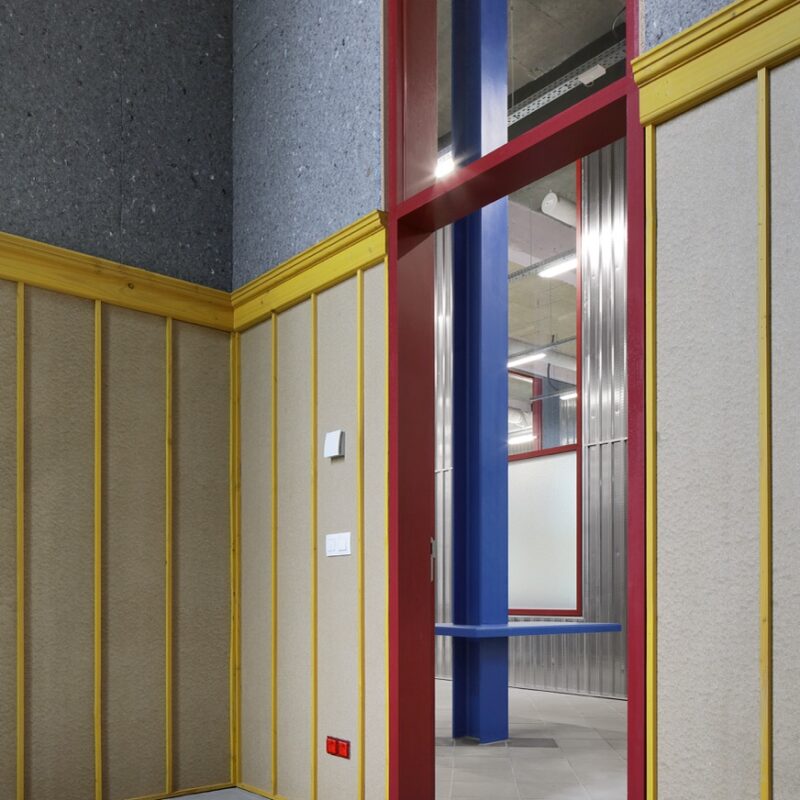
An urban laboratory, a community of communities, a soft global movement. Stemming from the concept of fablabs and makerspaces, the new venue for local non-profit organization Timelab in Ghent has farreaching ambitions. In 2017 Timelab was granted a long lease of a former vermicelli factory and decided to transform it into what they describe as ‘a flagship for cooperation’, a ‘futureproof’ workshop. Conceived as a place where new systems of local production and consumption can be tested and implemented, Timelab will host a variety of activities, projects, artists and organizations that, as coordinator Evi Swinnen claims, aim to ‘empower citizens with information, knowledge and skills’ in order to ‘change the behaviour of the city dweller’.
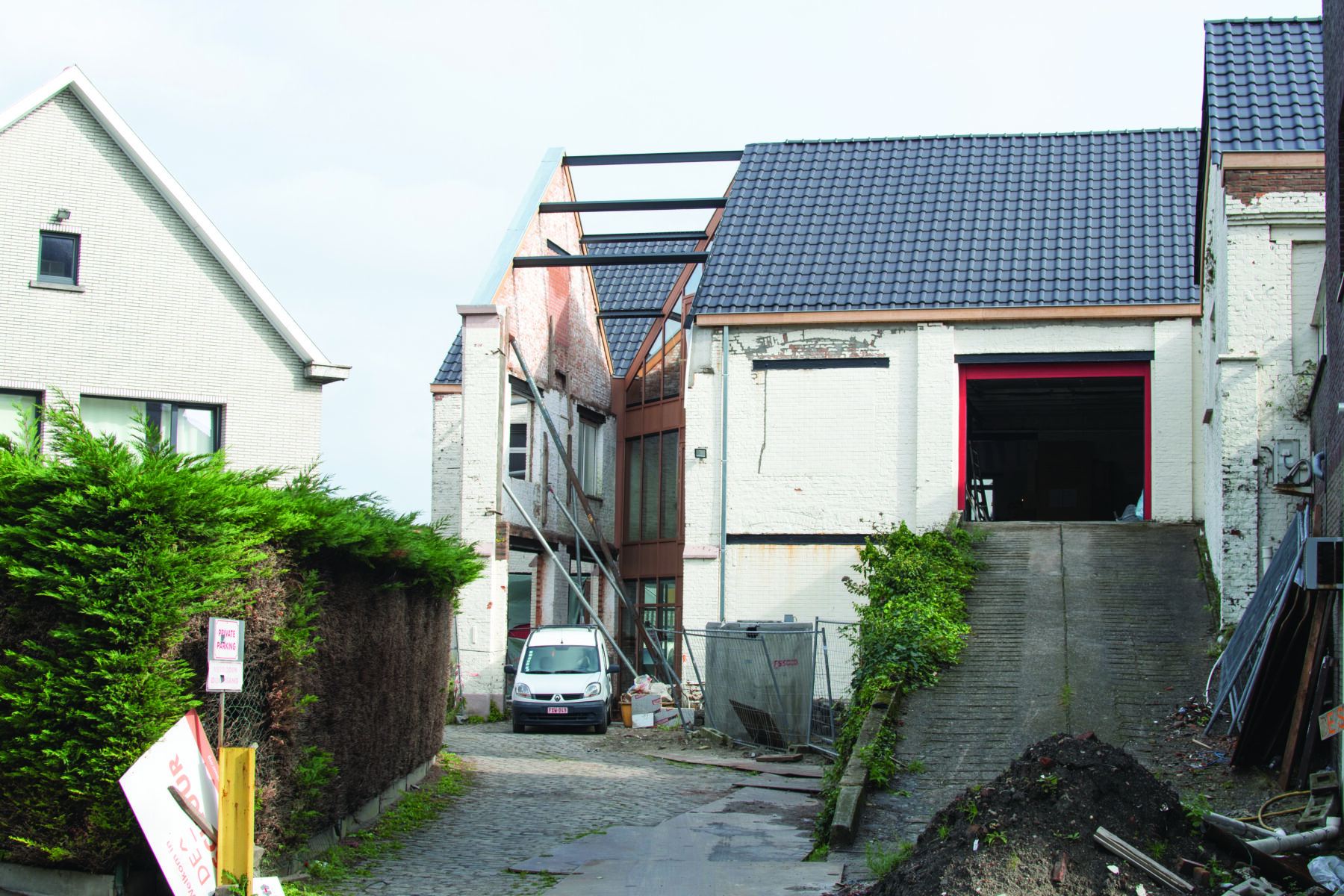
Situated in a residential area on an irregular plot with a house from the 1970s facing the street and two adjacent industrial sheds from 1934 at the back, Timelab aims to house an ever-changing range of activities. The most recent plans include a coworking space, a prototyping lab, an auditorium, a bar and a communal garden, as well as several studios that can be rented for a longer term. In the long run, 20 garage boxes on the site will be transformed into a small park. In this way, Timelab intends to become a creative hub where cooperation is stimulated while respecting the autonomy of each actor involved. The project also aims to reactivate this deserted industrial site as a productive space. Moreover, it deliberately reacts to the common practice in Belgian cities of filling such enclosed vacant areas with garage boxes or parking spaces which may be profitable for investors, but are detrimental to the neighbourhood. Instead, Timelab turns the site into a lively and inspiring public meeting place.