This is an automatically generated translation.
A wave of new or renovated museums and theatres, prime examples of what we mean by ‘cultural infrastructure’, but which also includes libraries and concert halls, seems to be unfolding today. The number of recent projects and projects in the pipeline is too numerous to count: the restoration of the KMSKA (Kaan Architects) and the ‘infrastructure leap’ of the MuHKA in Antwerp, the ‘de-duplication’ of the SMAK (51N4E and NU) and a new wing of the Design Museum (Atama) in Ghent, brand new theatres in Louvain-la-Neuve (Ouest) and in Leuven (Sergison Bates Architects), the renovations of the Museum of Fine Arts (XDGA and Barbara Van der Wee) and the Maison de la Culture (A Practice) in Tournai, the new Beer Museum in the old Stock Exchange building (Robbrecht and Daem, p. 20) and the prestigious Kanal Pompidou (noA – Sergison Bates – EM2N) in Brussels, which will open its doors in 2025. So there is no shortage of construction activity in the cultural sector. And this urge to invest seems to go hand in hand with a search for what the current social role of a cultural building could be.
Questioning and challenging the function of a museum – and, by extension, any cultural infrastructure – is not new. In the 20th century, art and culture underwent an identity crisis, and so did their appropriated spaces. ‘The day is not far off, I fear, when spectators will flock through the halls, wearing caps and waving flags, and sing their club song at the top of their voices in front of their favourite painting. In 1987, Rudi Fuchs, Dutch art historian and then director of the Stedelijk Museum in Amsterdam, lamented that museums were in danger of degenerating from pure places of presentation and contemplation into ‘experience centres’, as accessible as possible, for as broad and international an audience as possible. Cuts in arts and culture funding continue to force museums and theatres to focus on increasing visitor numbers through larger blockbuster exhibitions and performances.
The shift towards experience and entertainment is facilitated and accelerated by buildings that aim to be spectacular. Less than ten years after Fuch’s statement in 1997, Frank Gehry’s Guggenheim Museum opened in Bilbao. Suddenly, the glittering titanium building with its high wow factor put the sleepy northern Spanish city on the map. The model was soon copied all over the world: the architecture of our cultural institutions became a prime instrument of city marketing, designed to increase their attractiveness as destinations. The impact, not only on the architecture and functioning of the cultural institution itself, but also more broadly, on a societal and social level, is significant. Museums and arts centres that established themselves in impoverished urban neighbourhoods were almost always a harbinger of gentrification.
‘A top museum experience, that’s what matters to me as Minister of Culture and art lover,’ Flemish Minister Jan Jambon said in 2021 at the start of the construction dossier for the Museum of Contemporary Art in Antwerp. He has allocated a budget of 130 million euros for this. Nevertheless, a thoroughgoing form of ‘culture industry’ seems to be on the wane. The projects we showcase in this issue, from beer museums to libraries, are not spectacular buildings that serve only to attract tourists or herd visitors through. New types of cultural spaces are emerging, which may be at odds with – or at least parallel to – the commercialisation of culture. These are places where you can not only see or experience something, but also simply meet up with friends, get together and do something together in a relaxed atmosphere. Meeting places or neighbourhood spots, neutral and democratic. And as such a ‘third space’ (Pieter T’Jonck, p. 58), the cultural building can fulfil its true urban task: that of removing cultural barriers, connecting people, and promoting inclusion.
Extra-muros activities by conventional art institutions and bottom-up initiatives by citizens, such as the open-air cinema for refugees organised by a group of volunteers in Maximiliaanpark in Brussels, can make us believe that art takes on greater meaning outside the actual museum walls. ‘Could it be that culture only comes into its own when there is no building to draw all the attention to itself?’ wonders Gideon Boie (p. 37). Nevertheless, the multiple roles of museums and theatres are far from over. There will always be a new social role for them to play. The extent to which cultural buildings can truly fulfil their relatively new function as ‘third spaces’ will have to be proven time and again. And so too will the enduring usefulness of their architecture.
Theme
Building for Culture
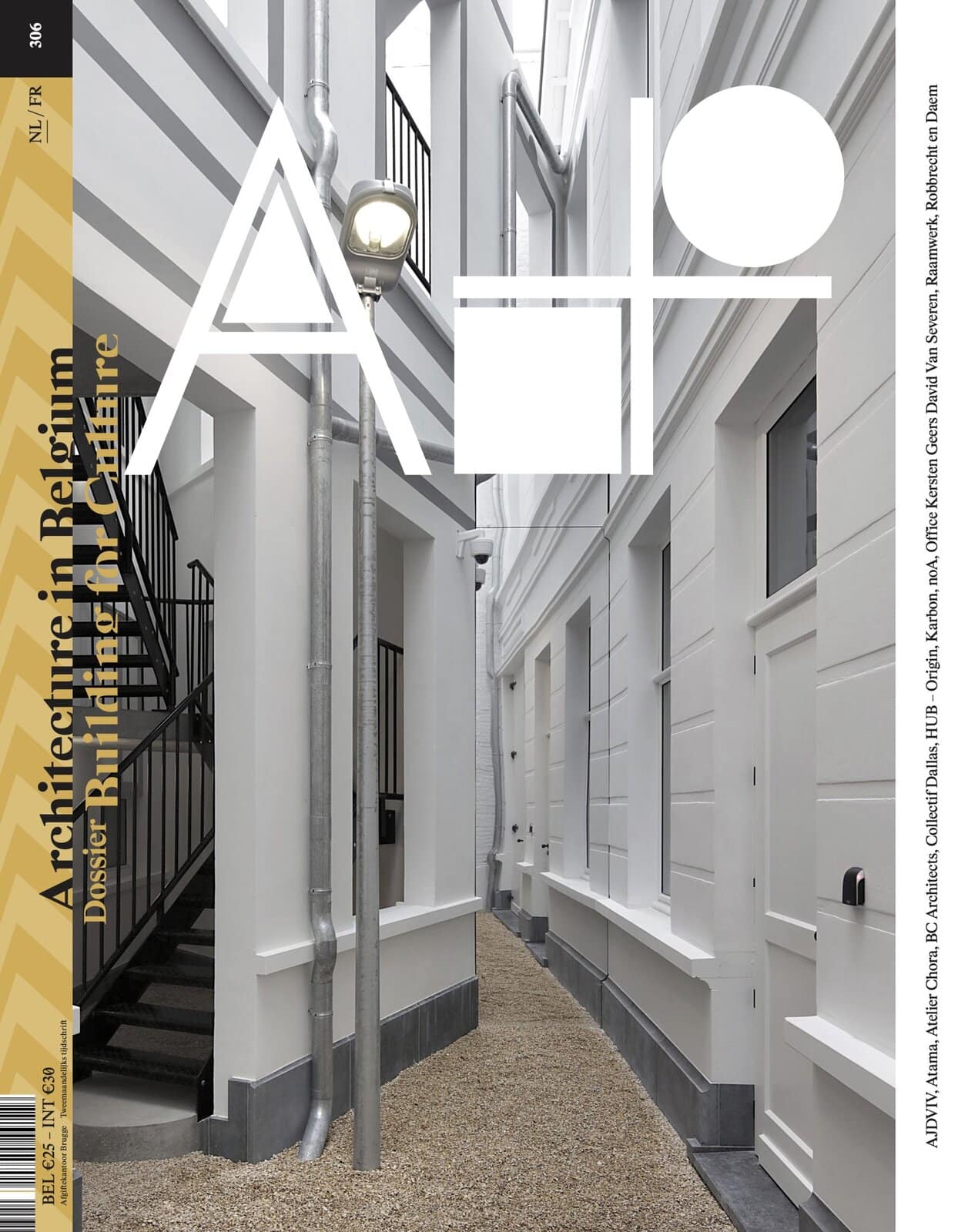
Cities are investing heavily in cultural infrastructure, from the M HKA in Antwerp and the S.M.A.K. in Ghent, to the new theater in Louvain-la-Neuve and the Beer Museum in Brussels’ former Stock Exchange building. But what exactly are these new emblematic buildings, and how do they reshape the city? What architecture represents cultural infrastructure today, and how does it relate to existing city marketing strategies? A+ dissects the architecture of new cultural buildings and analyzes how they can give the city not only a new face but also a new identity.
See all themesTable of contents
Vision – A+, Library and Garden
Editorial – Multiple roles for culture
Opinion – Antwerp, city of diamonds
DOSSIER: BUILDING FOR CULTURE
Office Kersten Geers David Van Severen
Robbrecht en Daem – BEAU – Popoff
Gilwe Community Centre, Geluwe
Twenty years of cultural infrastructure