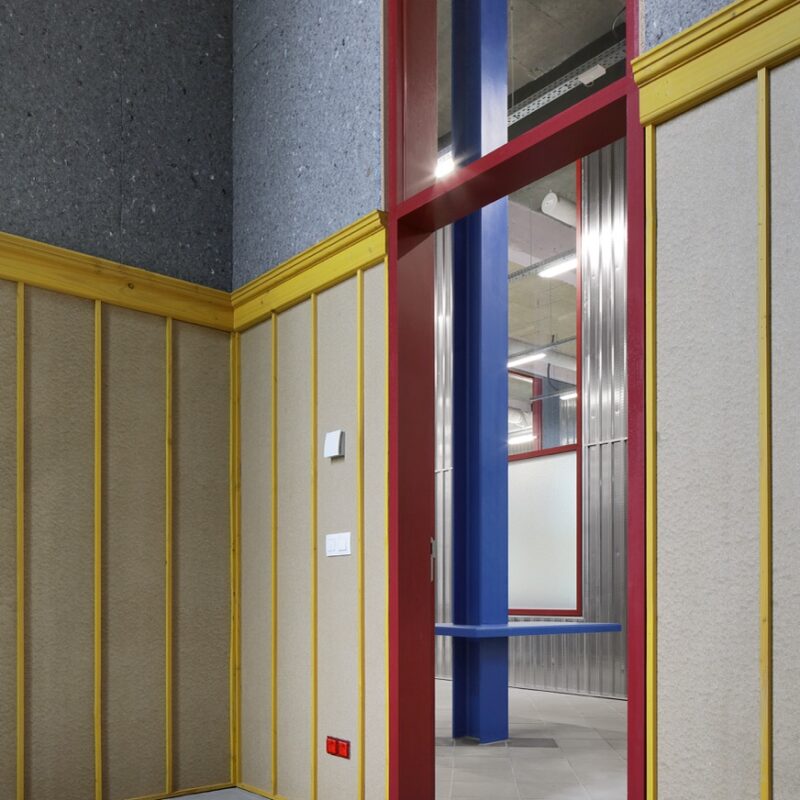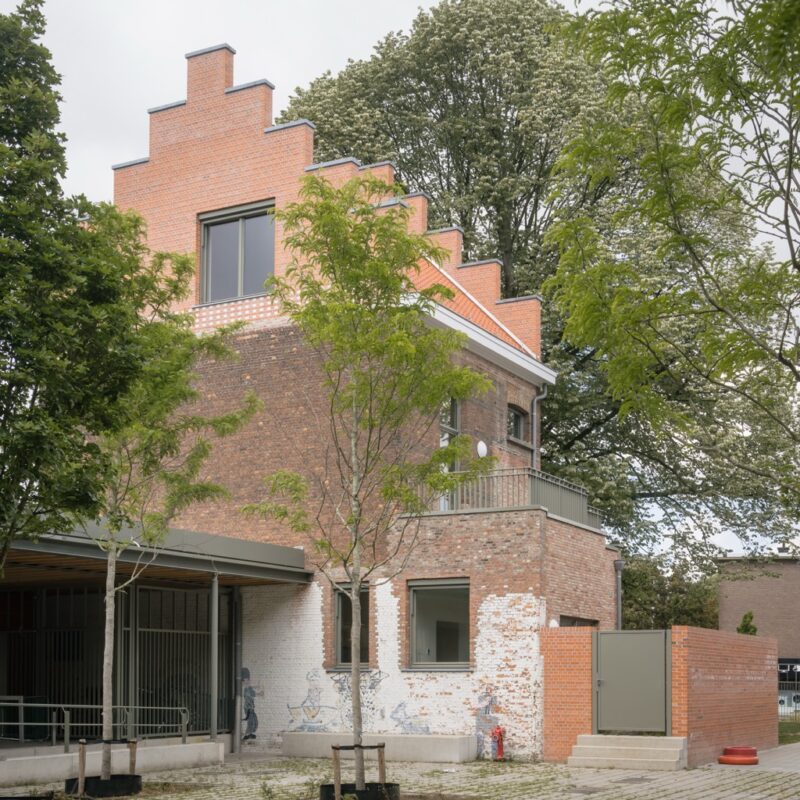
Klein Veldekens is a new residential care centre with assisted-living dwellings in Geel. Designed by Osar, it came into existence as an Invisible Care Pilot Project of the Flemish Government Architect. Hoping to make a change in the field of hospital architecture, the architects set up the non-profit association and parallel limited company, in which they appear at once as commissioner, investor and future operator of the residential care centre. Even though the architects’ courageous attempt to set to work themselves with the project definition and to rethink the role of the architect, the result shows the fate of innovation in the context of the lucrative ‘grey gold’ market. Klein Veldekens, therefore, functions as an important step in the learning process of how architecture can contribute to the future of invisible care provision.
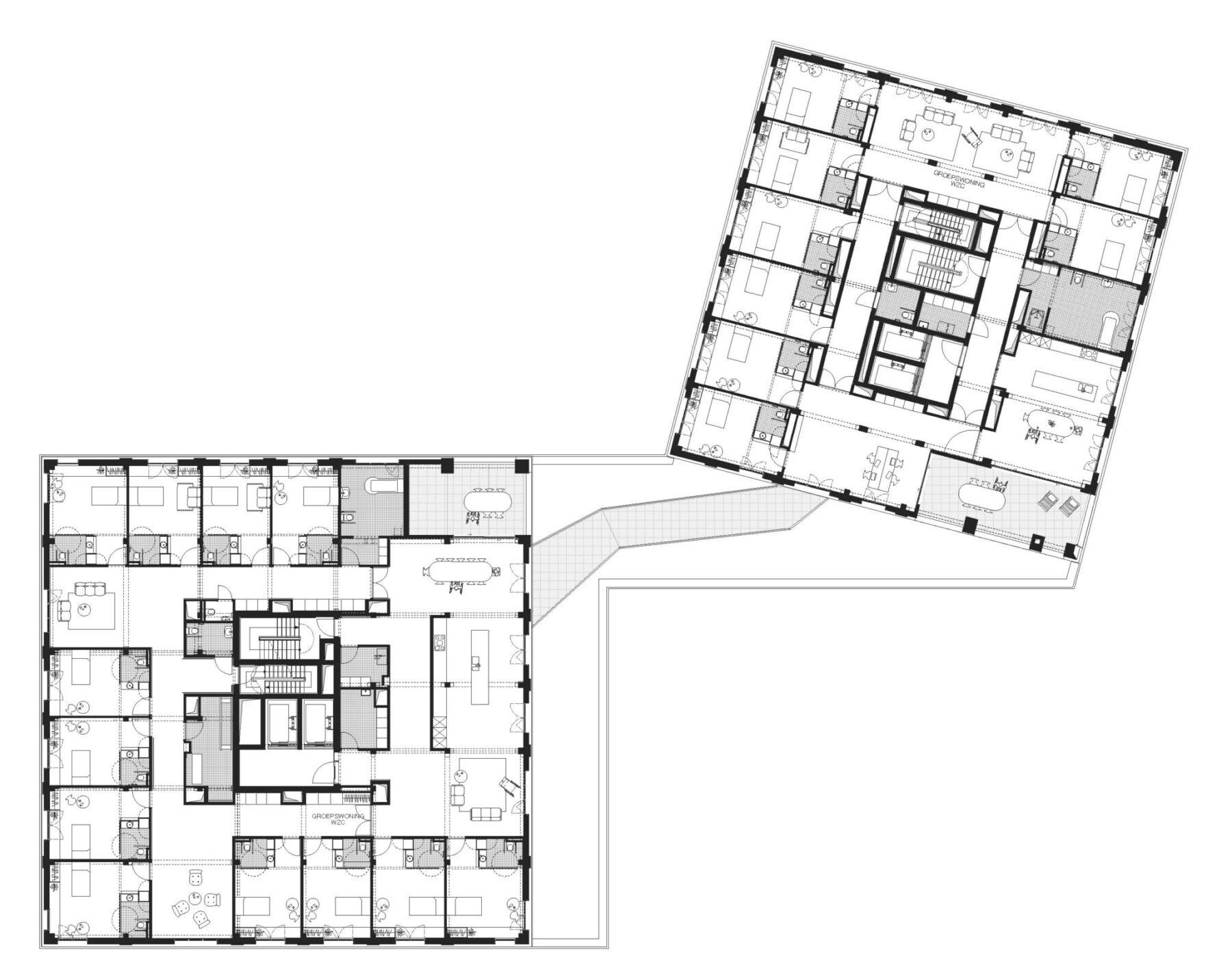
A sprawling residential care centre has emerged on a small fieldway in Geel, designed by Osar, which appears simultaneously as commissioner under the name of the non-profit Astor vzw. Klein Veldekens comprises no less than 168 beds in residential care for the elderly and 30 beds for the geriatric care of people with a serious mental and physical limitation.1 The centre is located on an open 3.2 ha plot in the midst of an allotment with one-family housing units. At its heart is a sturdy, 12-storey tower with individual care studios on a plinth that includes a restaurant and a services centre. Various buildings are spread across the plot, with a day-care centre, a crèche, commercial premises, care flats, guest rooms and care dwellings. 1 The 30 beds for people with a serious handicap concern a partnership with the Medical Pedagogical Institute MPI Oosterlo.