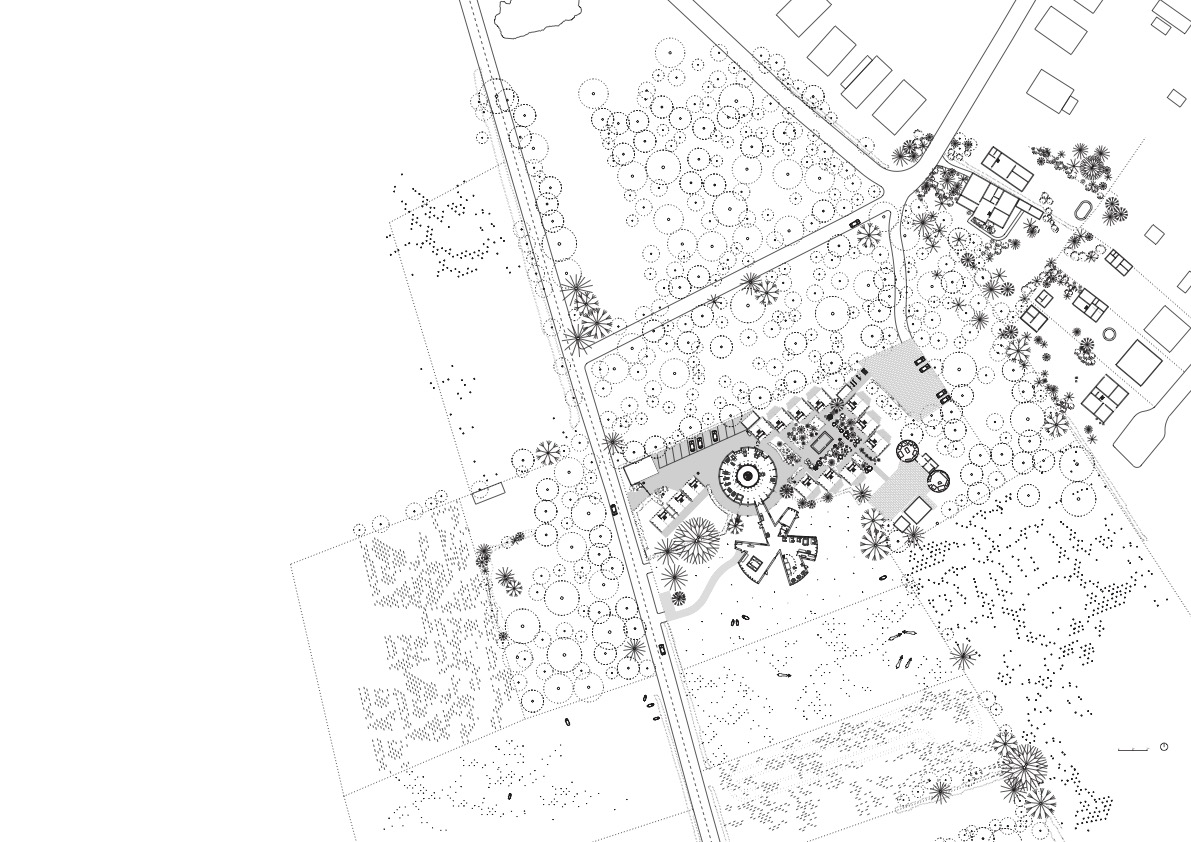
The new pavilion of the Frans Masereel Centre in Kasterlee, a collaboration between the architectural firms List and Hideyuki Nakayama, is anything but hierarchically organised. Designed as a street corner, there are barely any physical boundaries between the various, multi-purpose spaces, placing the focus squarely on interaction between all users. Artist Jean Glibert also literally highlights this unique experience.
Sheltered by the Kempen Ridge, nestled in the crook of the Kabouterberg in Kasterlee, lies one of the largest centres for printmaking and graphic art in Europe. The Frans Masereel Centre (fmc), a laboratory where national and international artists reside, create, experiment and meet in analogue studios equipped with, for example, screen-printing and etching tables, as well as a digital studio. The collaboration between the architects of the Paris-based firm List and the Japanese architect Hideyuki Nakayama resulted in a new pavilion that reinforces the centre’s contemporary function. From Belgian soil, Bureau Bouwtechniek oversaw the entire project, whilst painter Jean Glibert created an artistic intervention that affirms the pavilion’s connection to the graphic arts.
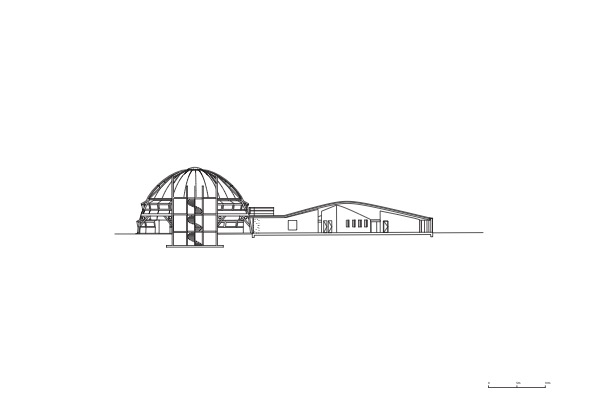
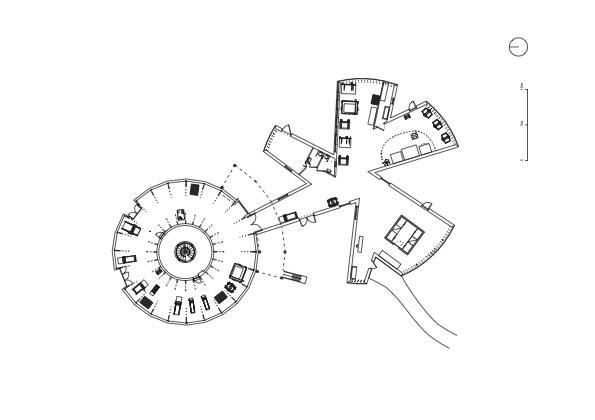
In 1972, founder Fons Mertens commissioned a new building designed by architect Lou Jansen. Inspired by the construction and shape of a windmill, the main building consists of a central, circular core to which a large domed space is attached. Later, a dozen triangular residential units were added to ensure a high-quality range of artist residencies. Together with the round main building and its dome – which house the main studio – and two narrow ellipsoids, the cottages give the fmc the feel of a village. The concept of the artists’ community is therefore a key pillar of the centre. The new pavilion – a ‘machikado’, Japanese for ‘street corner’ – also facilitates passage and spontaneous interaction.
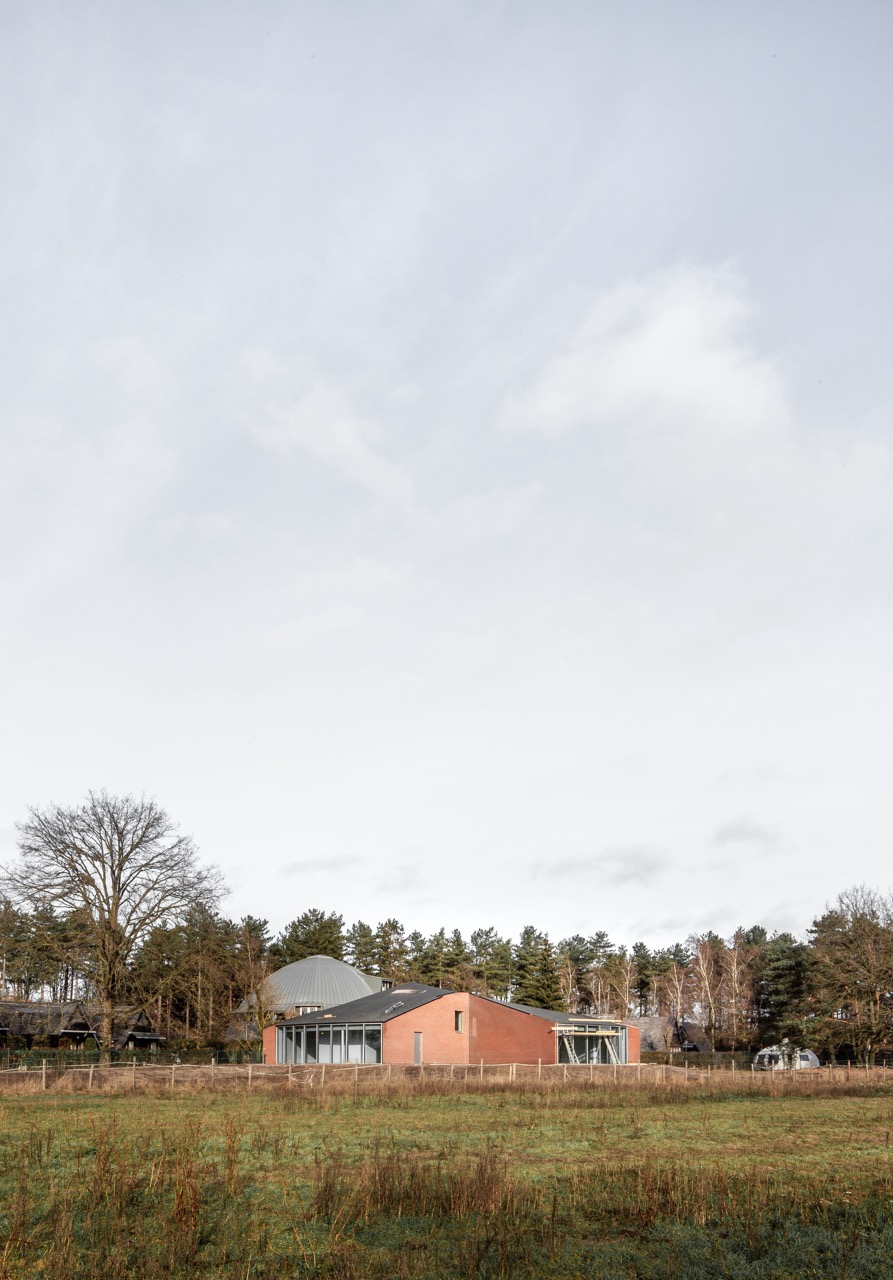
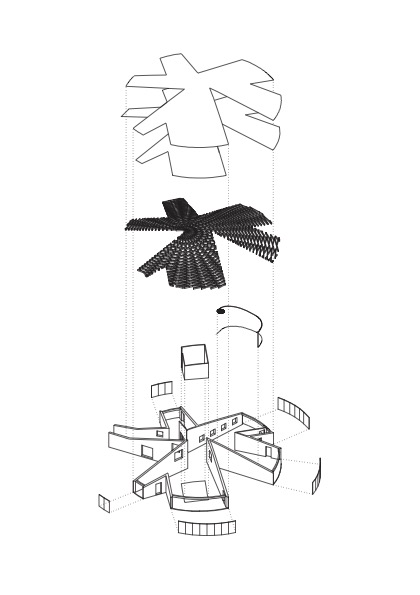
The contemporary functioning of the fmc, where exhibition, residency and studio merge, calls for a flexible configuration that does not force each of the programmes into a predetermined scheme, but offers a multitude of possibilities. The design introduces a geometric form, composed of a cylinder and a conical roof. By intersecting this form, interior and exterior spaces are created, each with its own character and atmosphere, united by a shared space. Whilst this heart stimulates collective life, the periphery enhances the individual experience, close to the rural greenery. The extension complements the existing concave spaces through the addition of a 120-metre-long vertical wall. Driven by curiosity, visitors explore the boundaries within the studio for themselves.
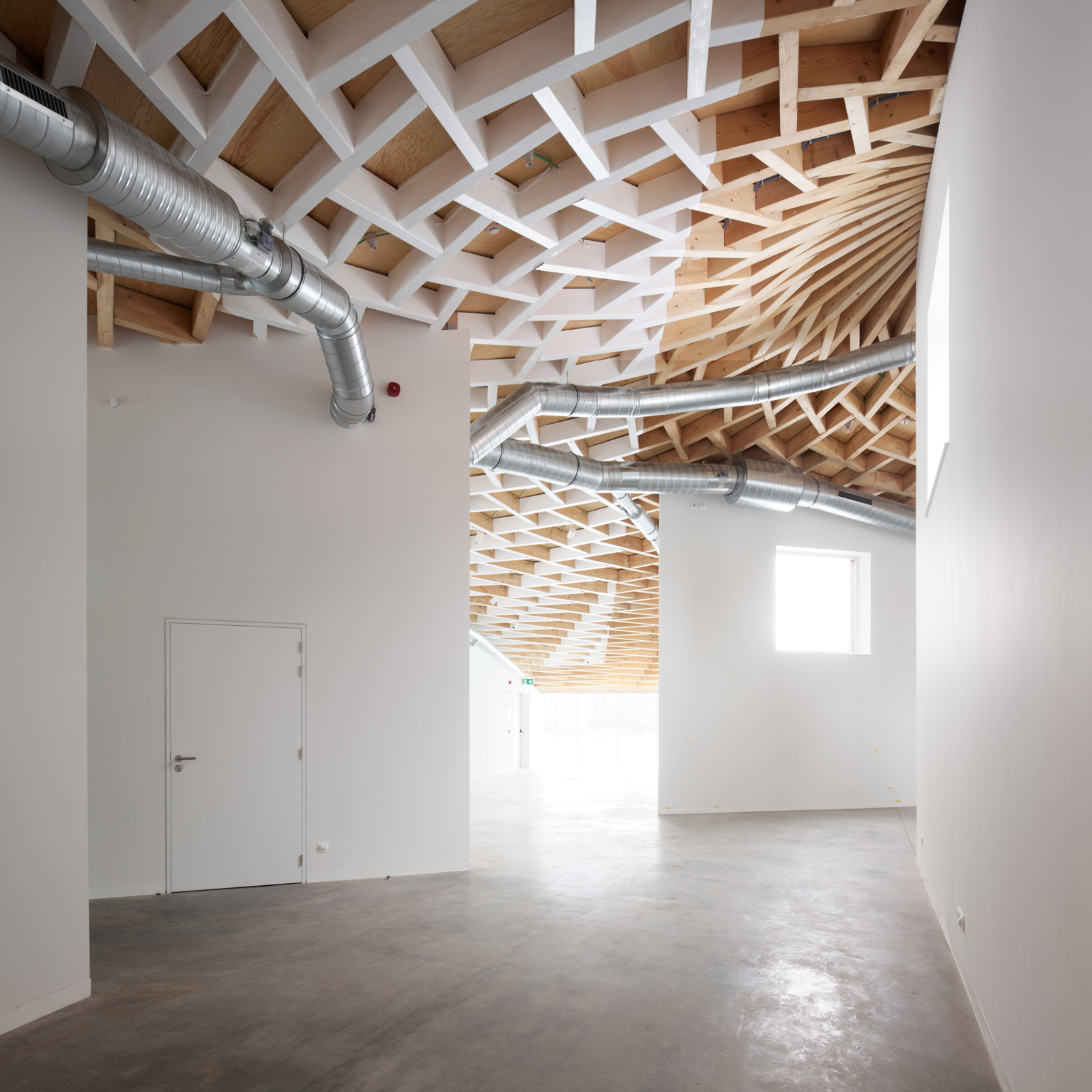
This non-hierarchical arrangement reaches its climax in the way the roof is conceived. Referencing a Renaissance technique, 762 solid wooden elements are connected in a unique manner. Each beam is supported by the one before it and supports the one after.
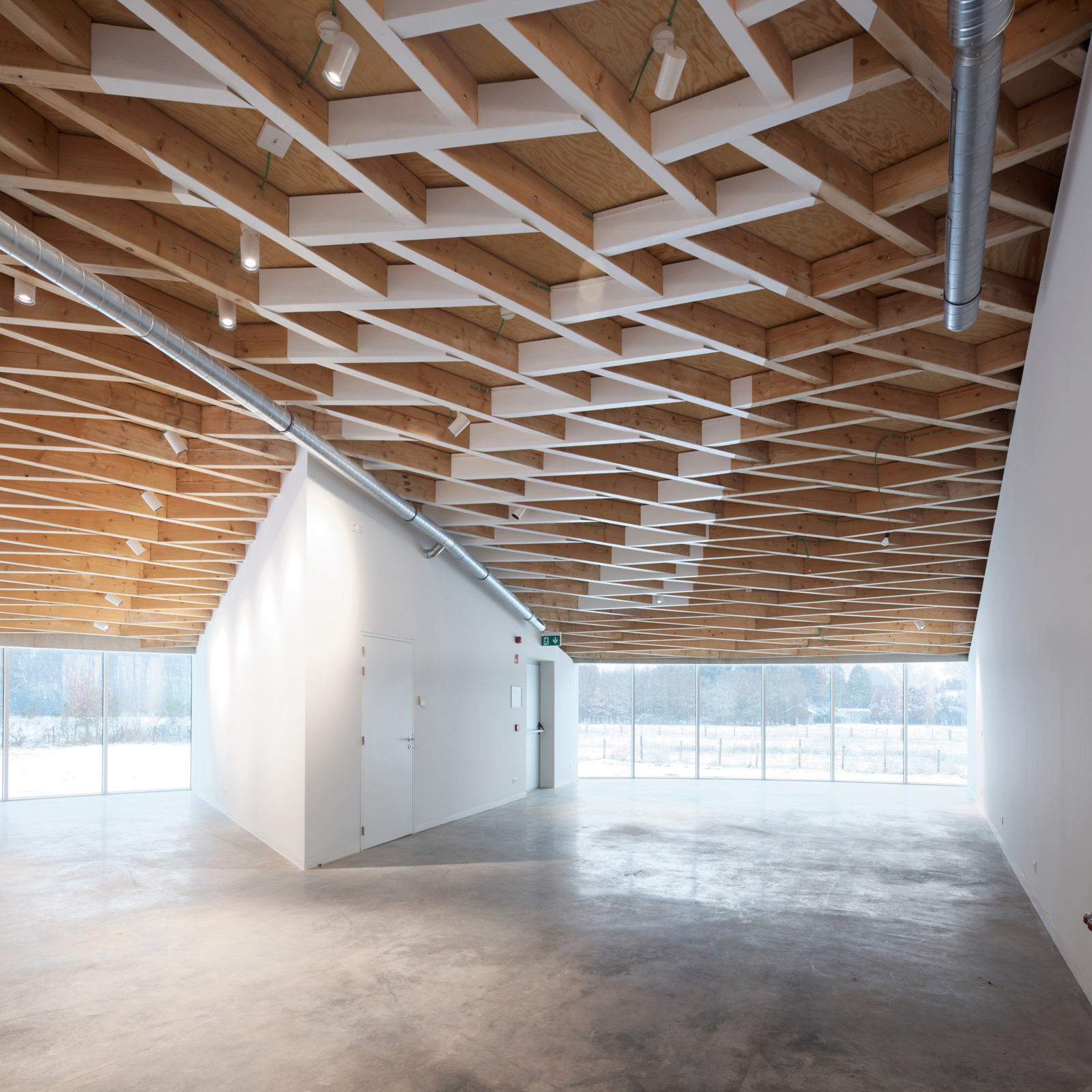
This gesture of solidarity is also palpable in Jean Glibert’s intervention. Right through the centre of the pavilion, he fixes a line on the wooden truss. As if it were simply a stroke of paint, applied with great precision, guiding the gaze towards the Antwerp Kempen. The refined composition of the painted surfaces sets everything in motion. The white presence cannot be grasped from a single perspective but changes constantly as you move. It is precisely this activation that Glibert seeks to set in motion. “The incidence of sunlight and the form of the building give shape to the colours. With my intervention, I aim to enhance what is already there.” Not only do the structural elements stand in solidarity, but the building and Glibert’s intervention also prove generous in the way they deliberately bring the works of the resident artists to the fore.
Architect List – Hideyuki Nakayama
Website list-oia.com – hideyukinakayama.com
Official project name Frans Masereel Centre
Location Kasterlee, Belgium
Programme Exhibition space, graphic studio, archive, workshop
Procedure Competition (Open Call)
Client Frans Masereel Centre – Flanders Department of Culture, Youth and Media
Execution architect Bureau Bouwtechniek
Lead contractor Vanhout.pro (timber fra- ming for roof structure)
Structural engineering Bollinger + Grohmann – Ney and Partners (execution)
Services engineering Bureau Bouwtechniek
Sustainability Bureau Bouwtechniek
Completion February 2019
Total floor area 417 m2
Budget € 1,100,000 (excl. VAT and fees)
Product / supplier Reynaers (window frames), Nelissen (fa- çade brick)