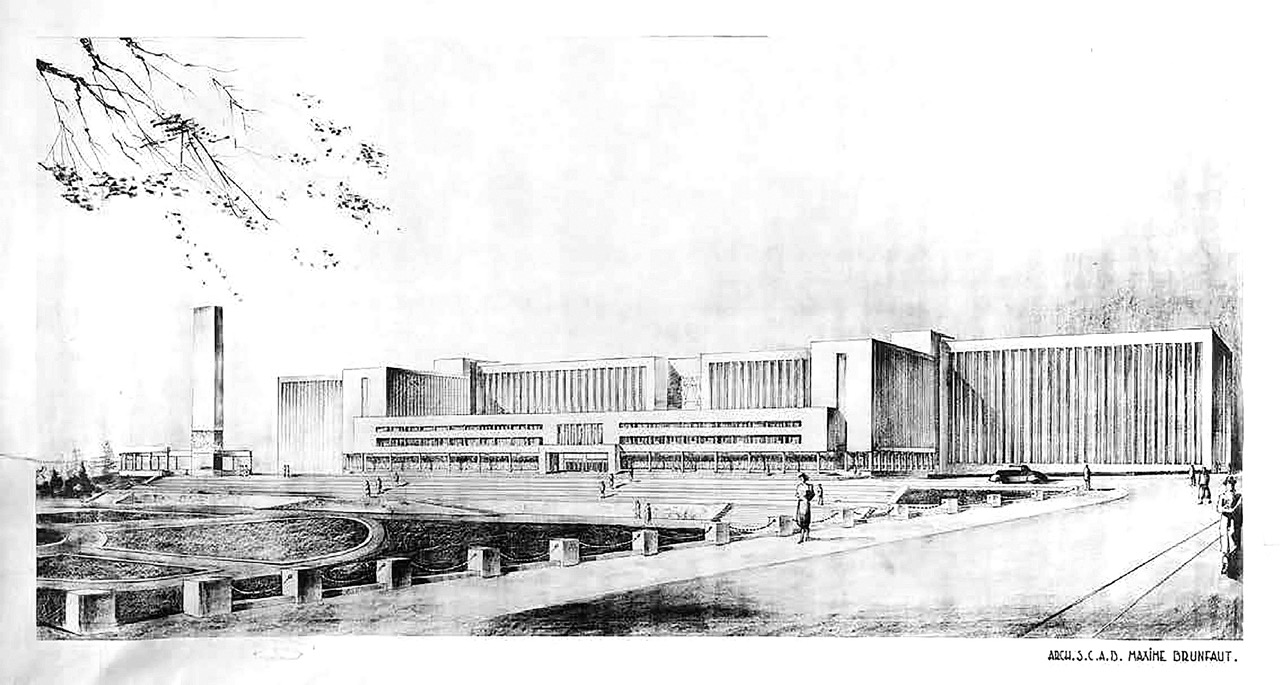
The exhibition (Re)Compose the City, at Civa, offers a fresh perspective on the North-South junction, setting it apart from ideological debates. By revisiting the key issues and bringing to light unrealised projects, this second instalment of the ‘Unbuilt Brussels’ series unravels the intricate layers of a constantly evolving urban landscape. It thus invites reflection on its future.
A railway ‘sea serpent’ that winds its way through the city blocks, rises above ground, disappears underground before reappearing – could the North-South junction be to Brussels’ urban planning what the Palace of Justice is to its architecture: a source of endless discord, a controversy petrified in the city’s mineral fabric? At the Arau site, a hotbed of protest against the city’s modernisation since the 1970s, one can still read the following about ‘this scar’: ‘A veritable rupture in the historic centre of Brussels, the railway junction between the Gare du Nord and the Gare du Midi (1902–1952) gave rise to the development of oversized boulevards lined with offices, a typical feature of the 1950s.’