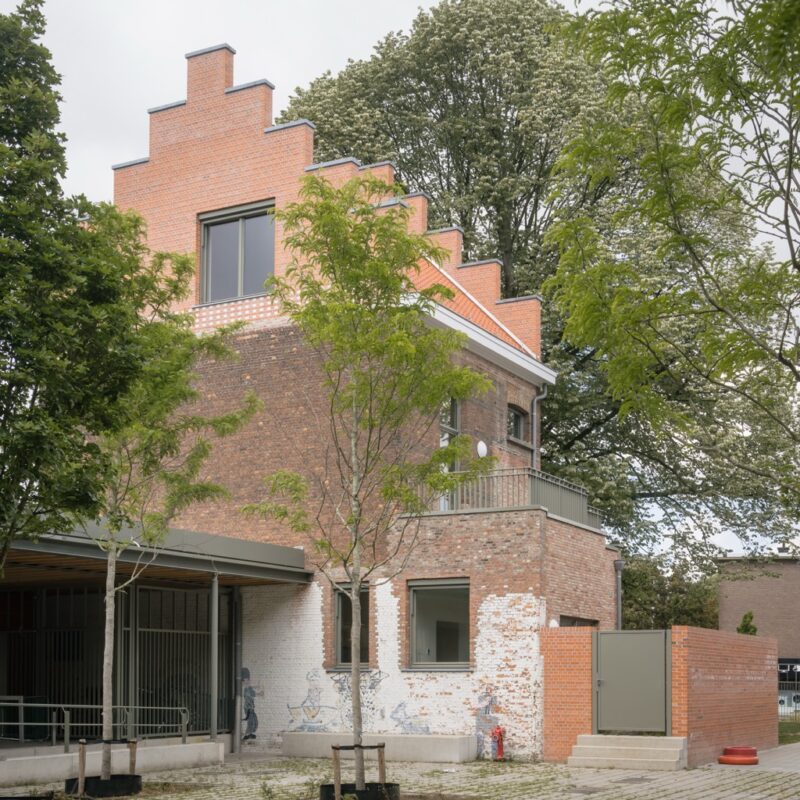
The Belgian education system is performing poorly in the OECD rankings, both in terms of quality and quantity. School drop-out rates and learning gaps are high, and there is an acute shortage of motivated teachers and infrastructure – in Flanders and Wallonia, but particularly in Brussels. The capital’s multilingual identity makes this problem even more complex, if that is possible. Fortunately, Brussels is slowly but surely catching up, and architecture has a vital role to play in this.
In the run-up to the elections, education was briefly one of the key issues. The OECD’s PISA reports sounded the alarm: the quality of our education is declining at an alarming rate. The old debate about the capacity problem was somewhat overshadowed. Now the focus was on equal opportunities versus excellence, on curricula and learning outcomes. The ‘net’ and ‘koepel’ school systems came under fire. Education had been rediscovered as an ideological battleground. At least, that was the debate in Flanders. In French-speaking Belgium, the reports were even worse, but the Pacte d’excellence – the major education reform that had only just been approved – managed to bring some calm to the debate.