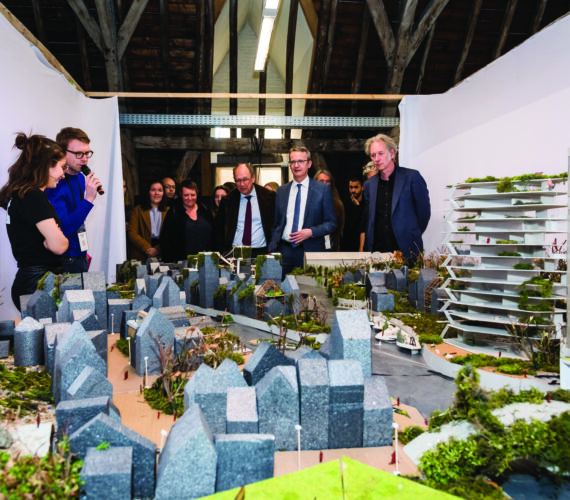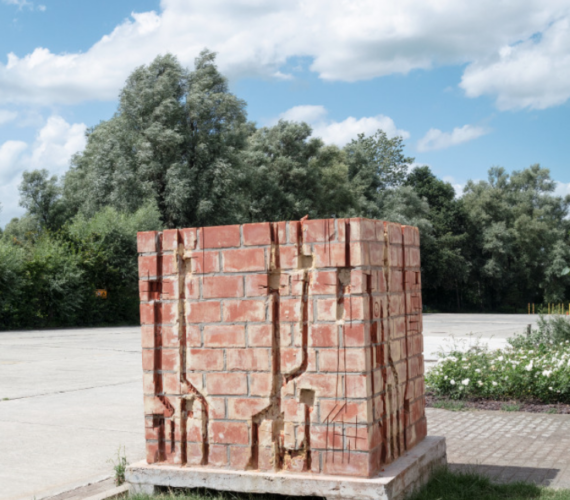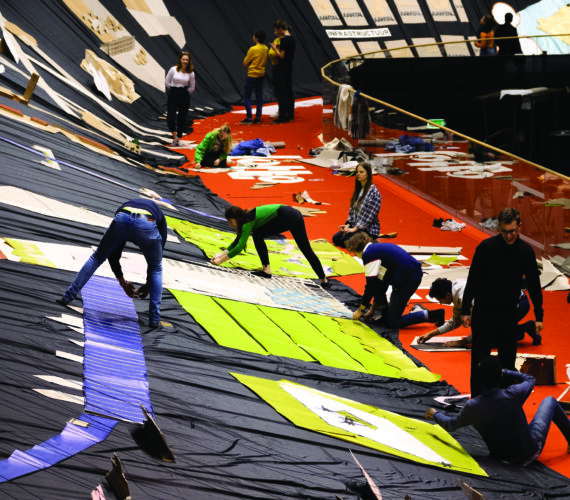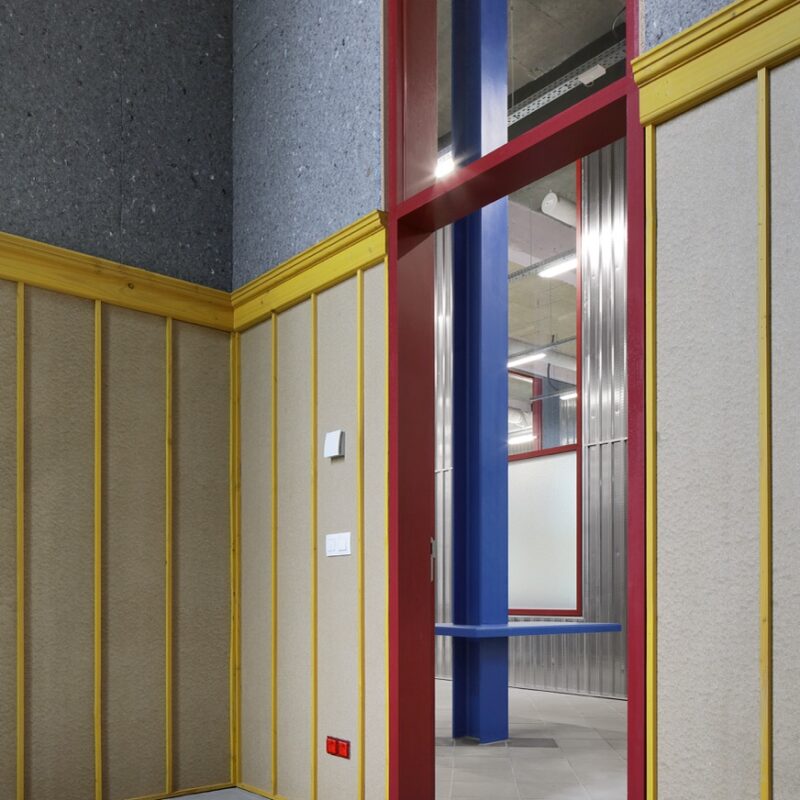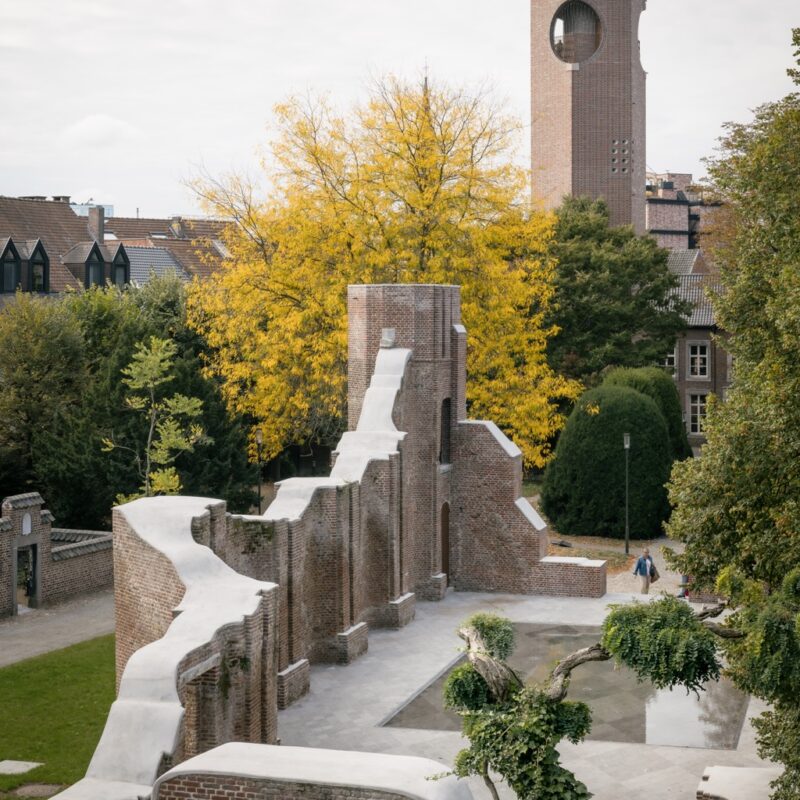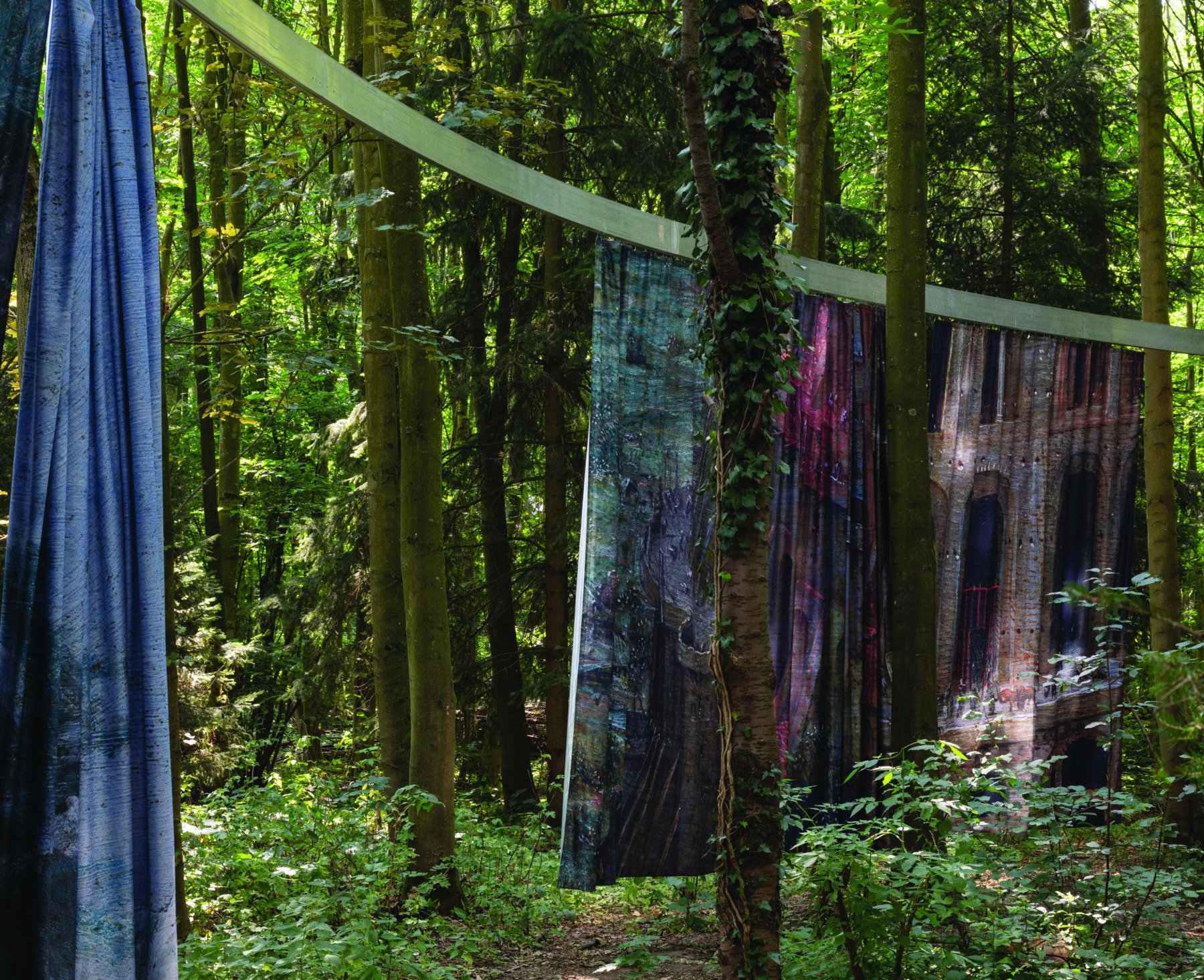
A centuries-old little church, a ‘curtain room’ in the woods, a fake rock in a maize field and a Western-style village. The spatial interventions in the open-air exhibition ‘De blik van Bruegel’ in Dilbeek allow us to see a seemingly ordinary and typically Flemish landscape through different eyes.
2019 is the Year of Bruegel, and we’ll certainly have noticed it: 450 years after the death of Pieter Bruegel the Elder, leading museums worldwide are showcasing his work. In the municipality of Dilbeek, too, a rather unusual exhibition is running until the autumn, focusing not on Bruegel’s works but on his view of the landscape. The inspiration for this came from the chapel at Sint-Anna-Pede and the watermill at Sint-Gertrudis-Pede, both of which feature in several of his paintings. Both buildings bear witness to the fact that the Pajottenland served as the model for the series of impressive constructed landscapes for which Bruegel is renowned. In these landscape paintings, he adopted a unique perspective, looking down from above onto an imaginary, scenographic landscape that he composed and distorted like a ‘Photoshopper’ avant la lettre.