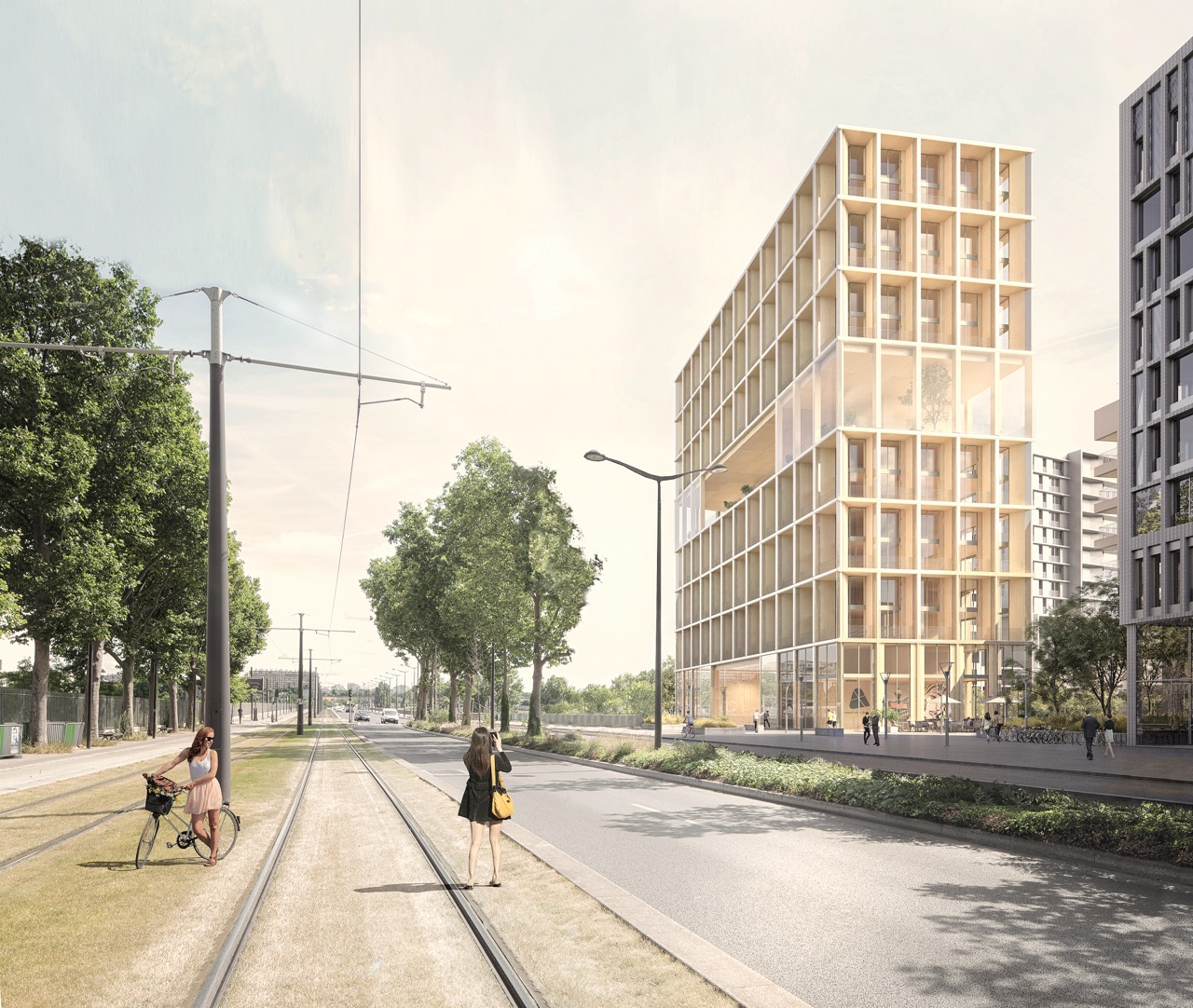
When the German firm Kaden Klingbeil became the first to successfully construct a seven-storey timber-frame building housing around ten flats in the heart of Berlin in 2008, the whole of Europe looked on in amazement. Until then, timber had been reserved for cladding, interior finishes or the occasional extension. As a structural material, its use was limited to low-rise buildings in peripheral or rural settings. However, the challenges of high-rise timber construction in the city lay not only in the material’s structural and mechanical capabilities, but also in finding new solutions to existing fire safety standards, which were based on traditional solid-core construction.
Meanwhile, influenced by changing economic and ecological conditions, both the visions of public clients and the technical possibilities within the timber construction sector evolved. A shorter construction period, the sustainability of the base material and its circular potential are contributing to timber increasingly becoming a valuable alternative to concrete construction. Technological developments have also made it possible to build ever higher.