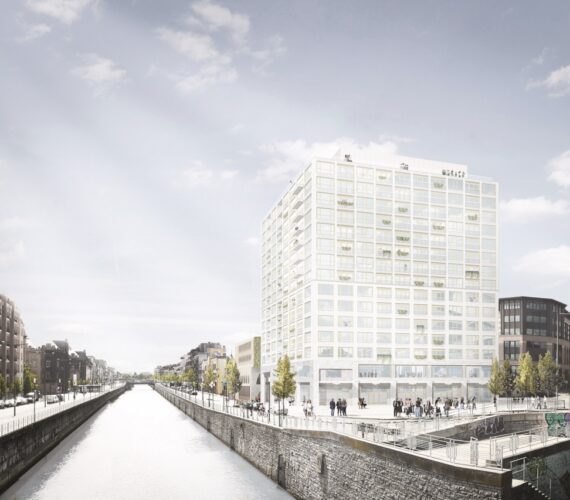
In 2015 the two founders of Epoc architecture were the driving force behind a cohousing project in Brussels where they could carry out their social and architectural vision of life in the city. Almost five years later, they and seven other families are going to move into the building. A collaboration with the authorities as facilitator and a well-considered evolutive housing concept mean that this project is unique in Brussels.
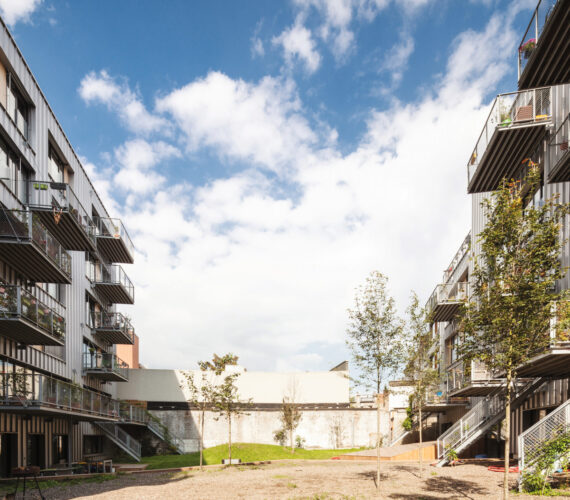
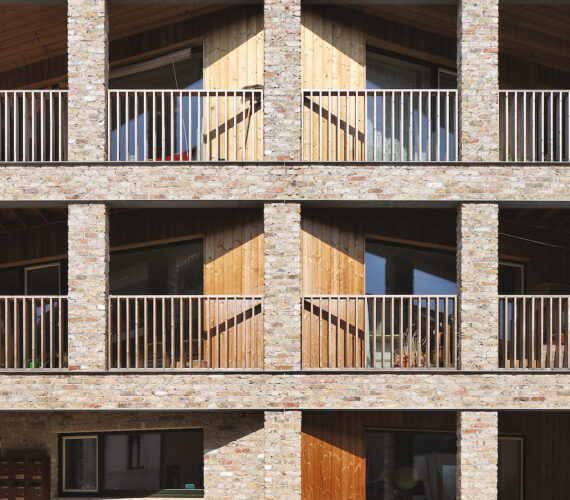
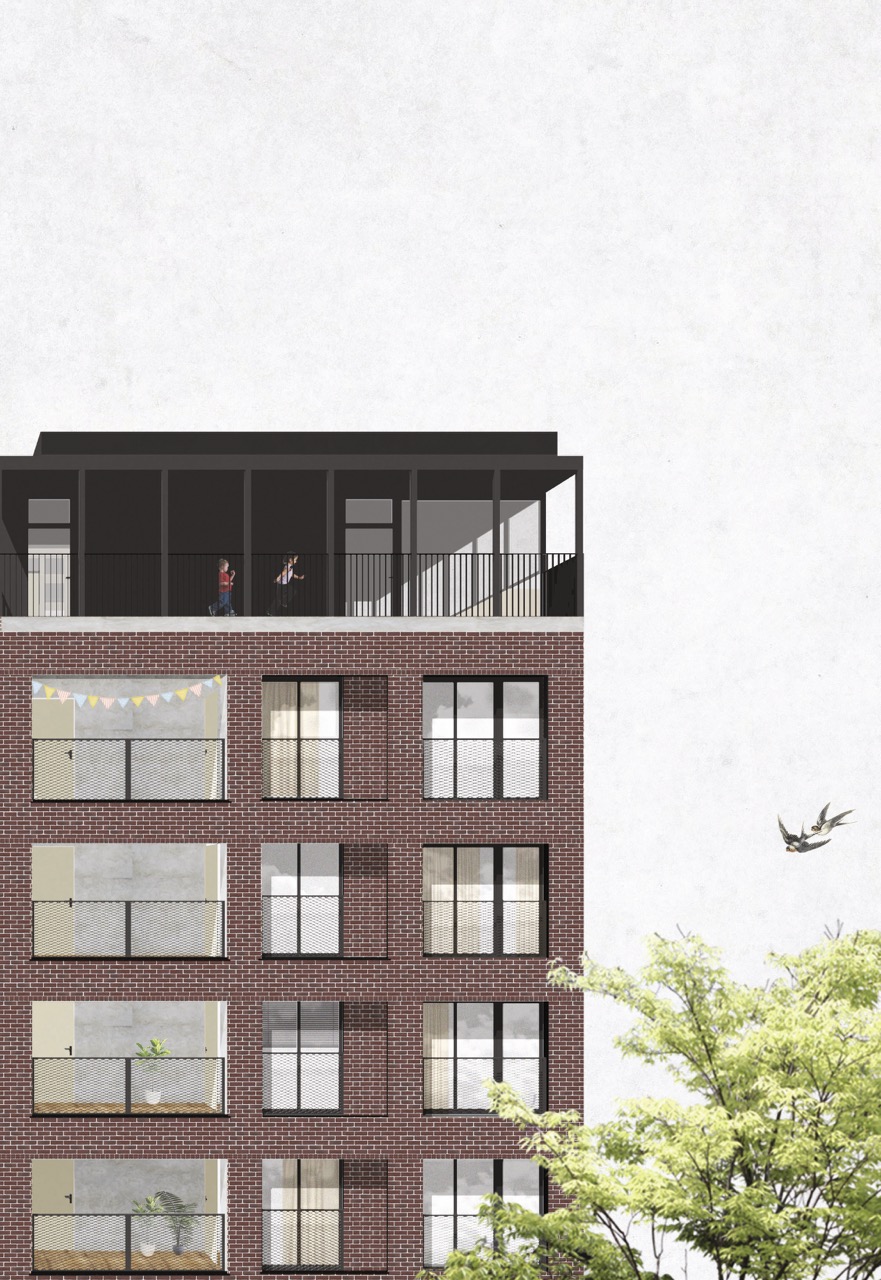
The building, under construction, looks robust, with a modular structure reminiscent of an old factory. An impressive brick façade grid dotted with large window frames acts as a load-bearing shell, thereby freeing up the floors. The building is a nod to the modernist office and factory buildings, precisely owing to the architectural and functional values of a free plan. Behind its rational parts, however, the building houses a highly poetic interpretation of urban housing. The eight individual apartments on the floors each have a wide outside gallery – covered or as a terrace – that functions as a buffer zone between inside and outside: living zones as British architects Alison and Peter Smithson imagined them, completed with twenty-first-century touches such as greenery. With two apartments per floor and one on the ground floor, each with three or four bedrooms, and each with three exterior façades, close attention has been paid to the quality of life. A communal garden offers an alternative to the ubiquitous narrow city gardens. In addition, the apartments enjoy a spacious collective roof terrace and a multipurpose room for communal use by families. With a versatile 50 m² space on the ground floor, the future residents want to build a bridge to the neighbourhood, for various uses such as homework classes or a community hall. With the free plan, the modular structure of the façade and the galleries, the architects are also anticipating the evolutionary character of the city and of housing. Nothing prevents the building from assuming a different function in the future, from having a different layout (since none of the interior walls are load-bearing, including the dividing walls between the apartments), from condemning, enlarging or shrinking windows and vice versa, or from changing the communal functions.