For the Charleroi fire station, the architectural practice Philippe Samyn & Partners has opted for an iconic form within the fragmented landscape of the city’s outskirts. Whilst the design promises a renewal of the building type, what of its ability to transcend convention and humanise functional architecture?
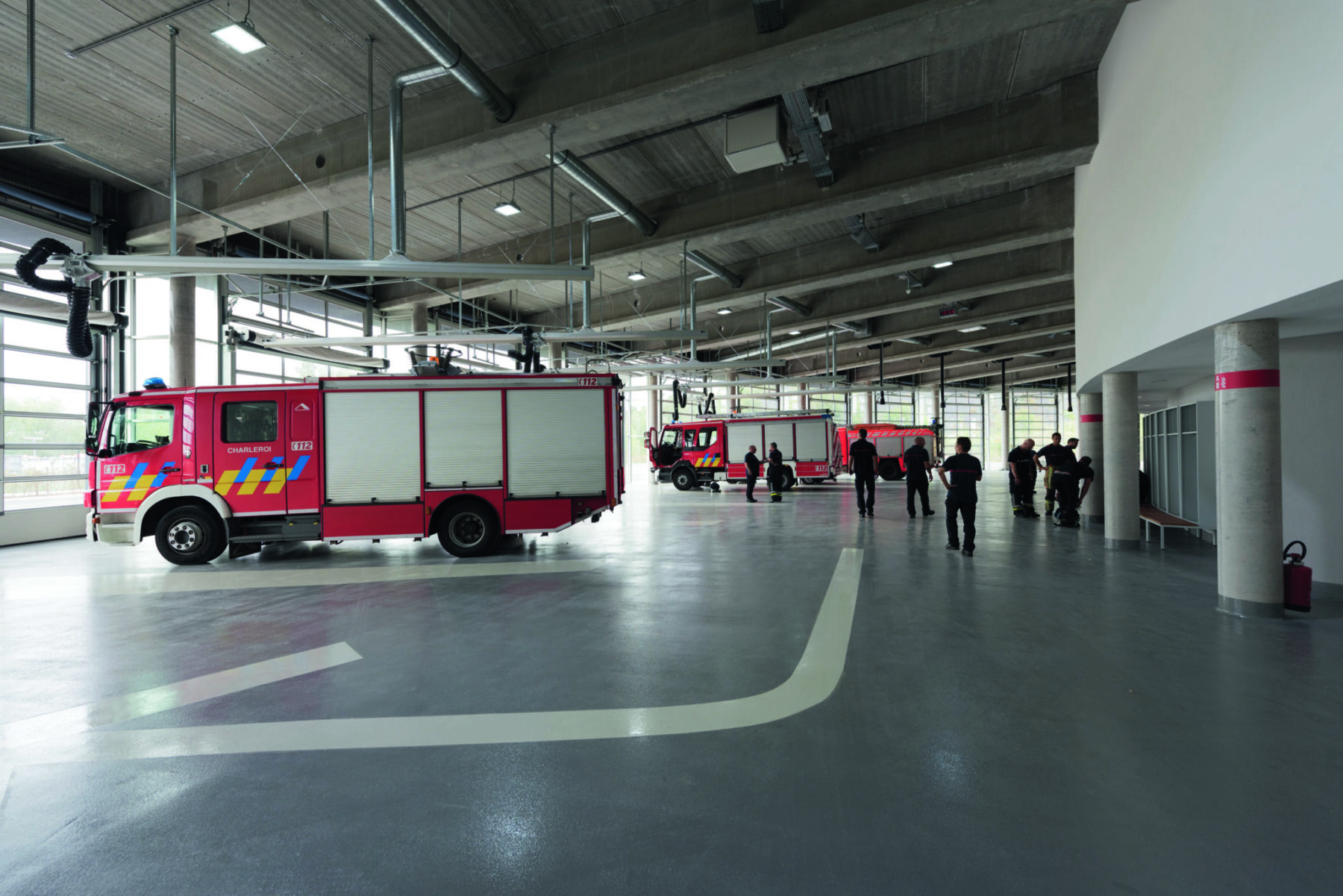
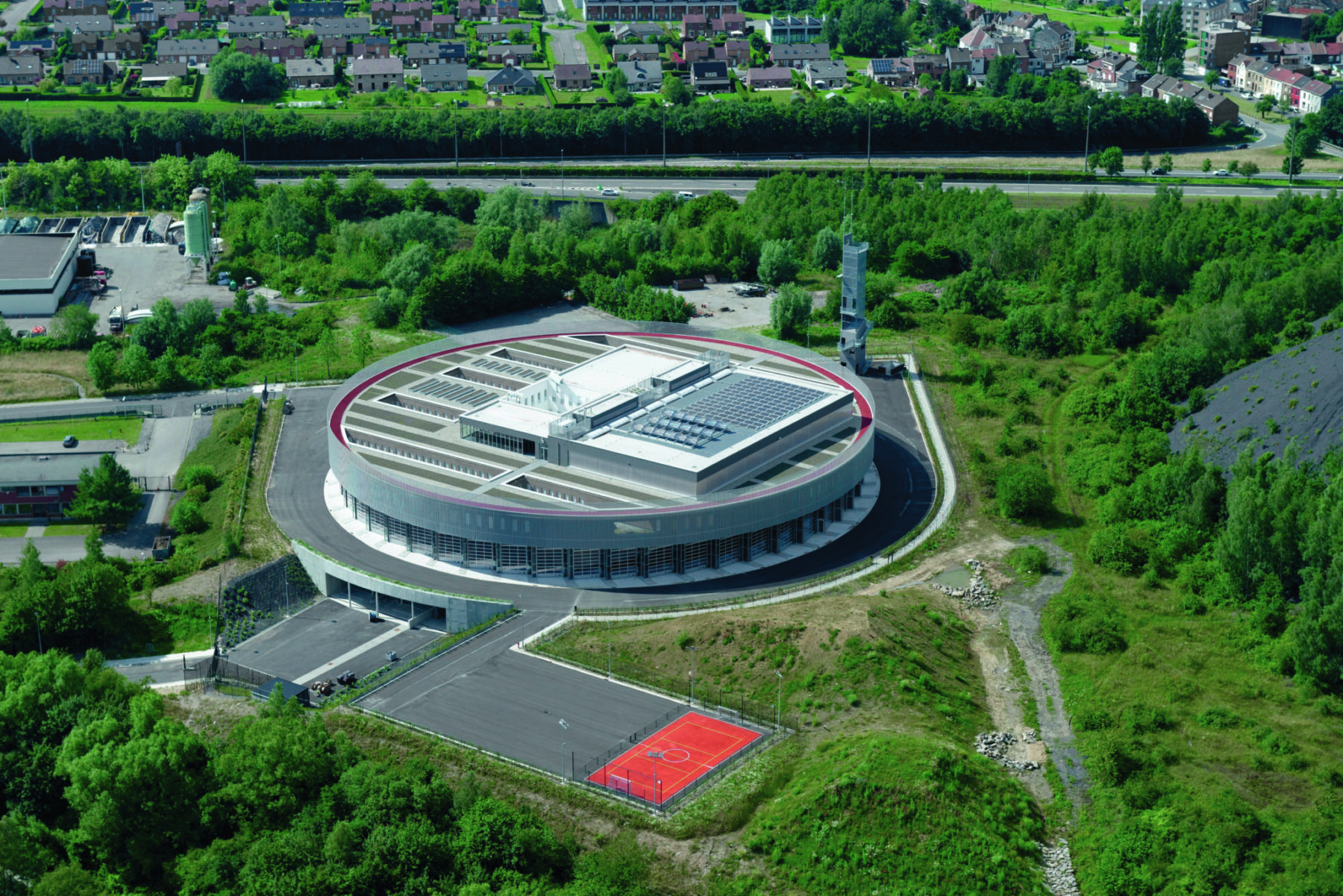
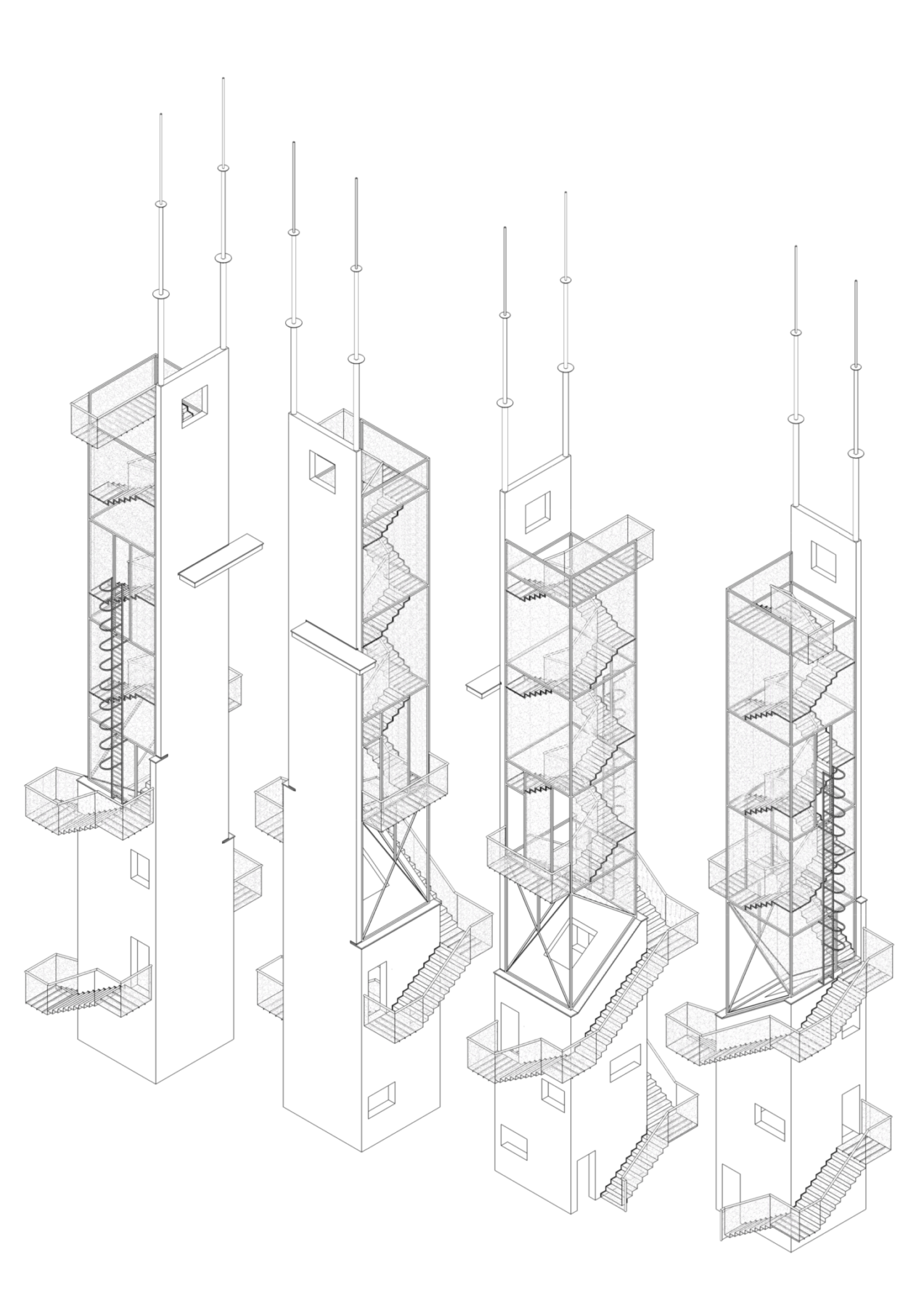
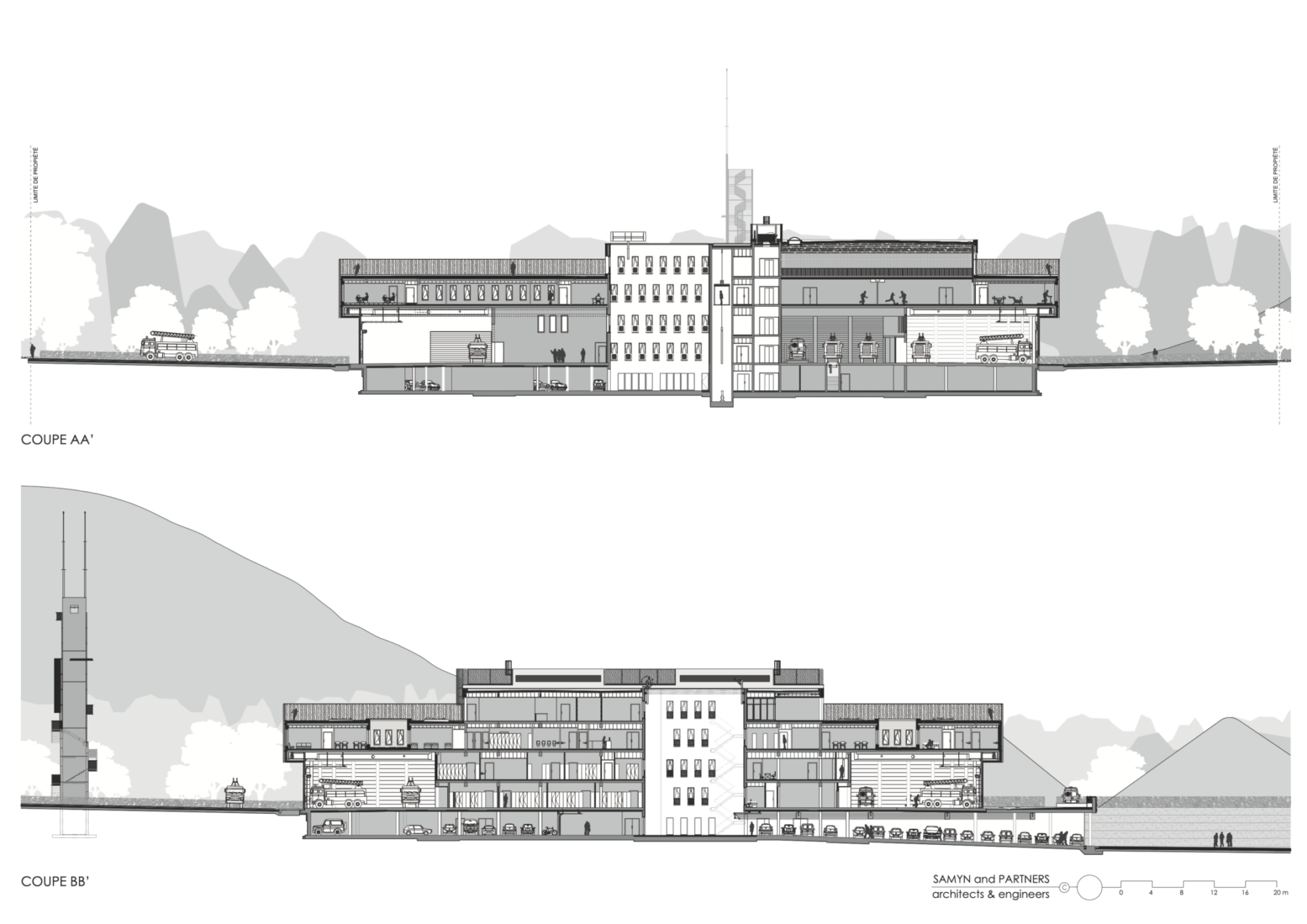
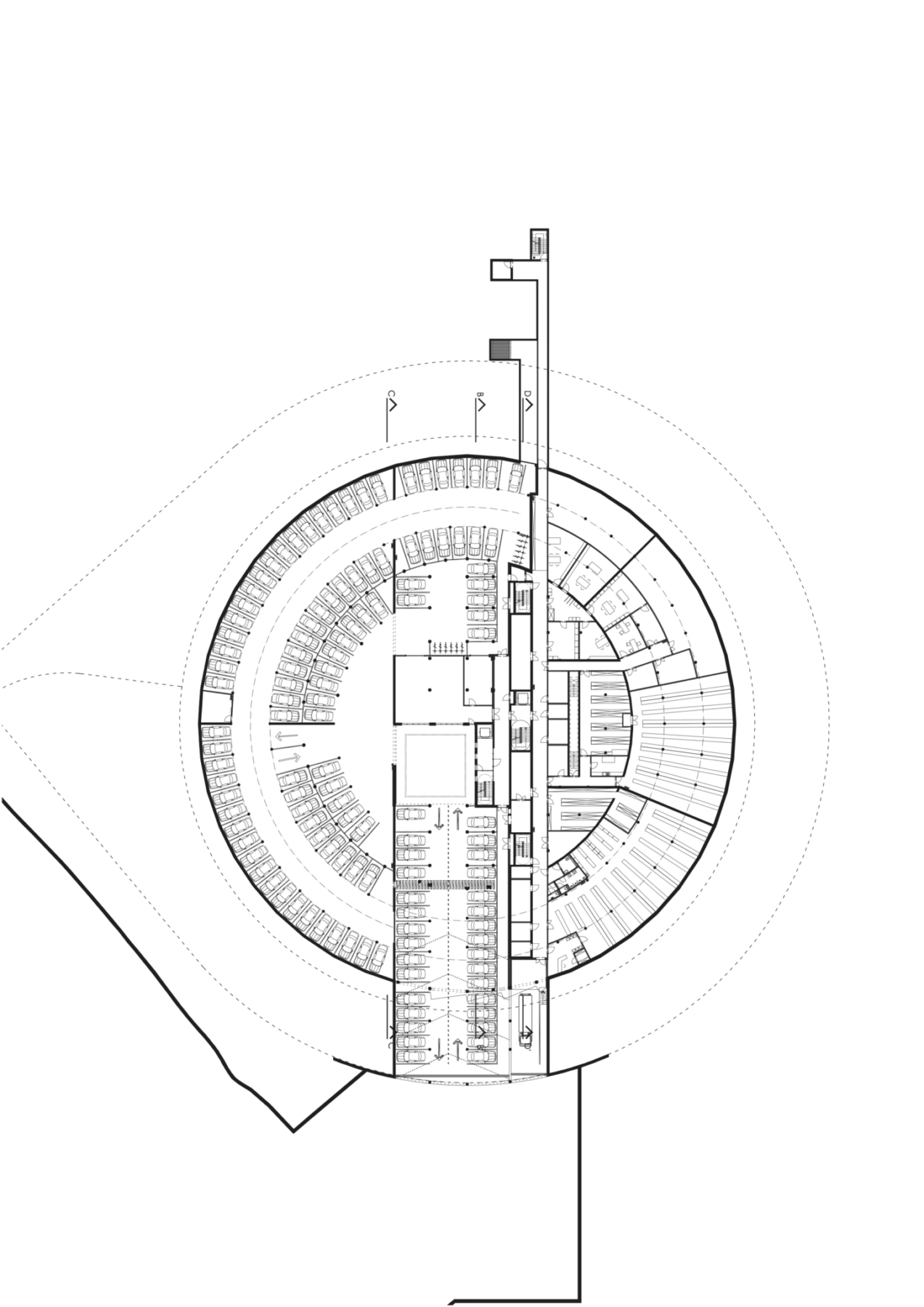
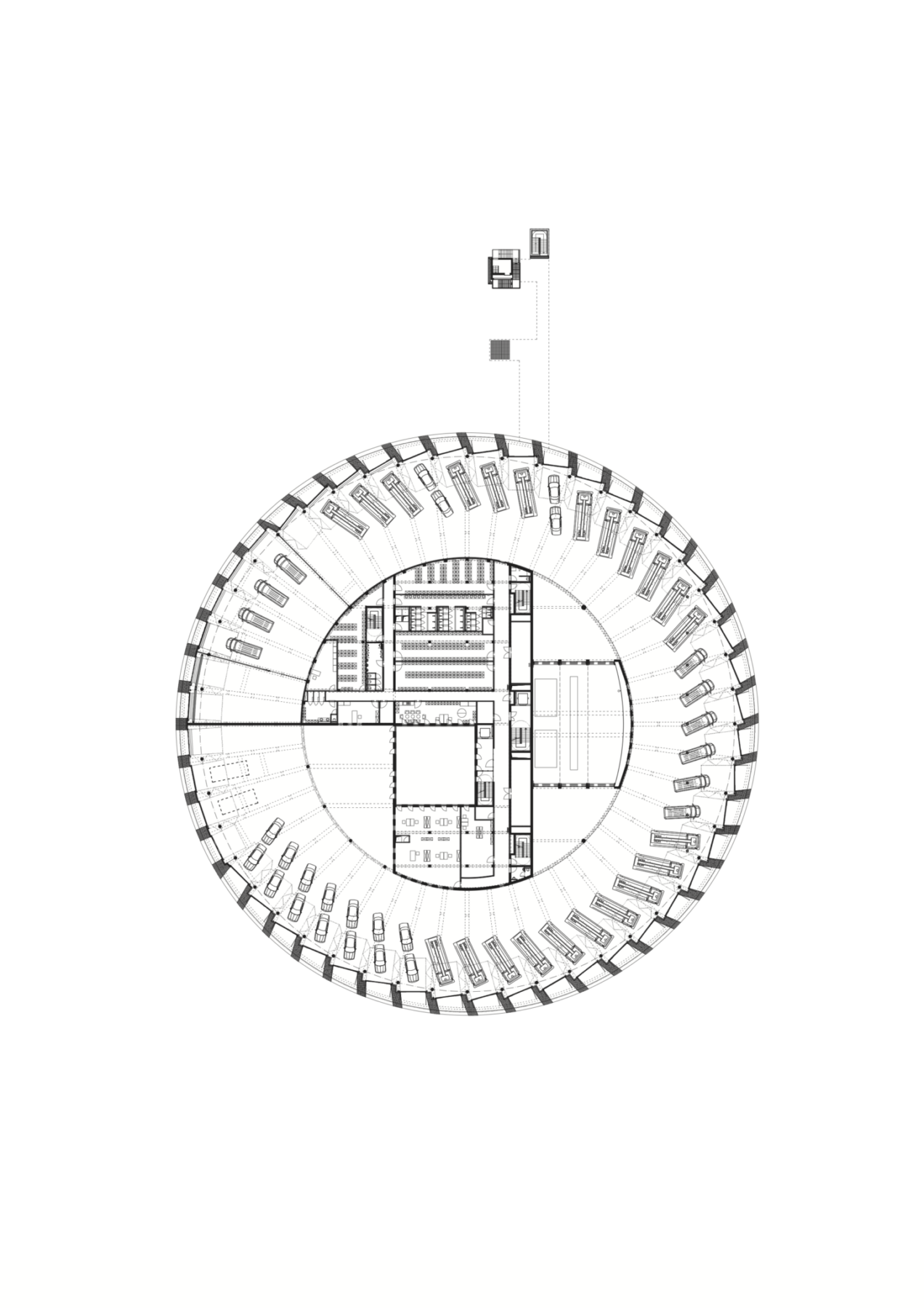
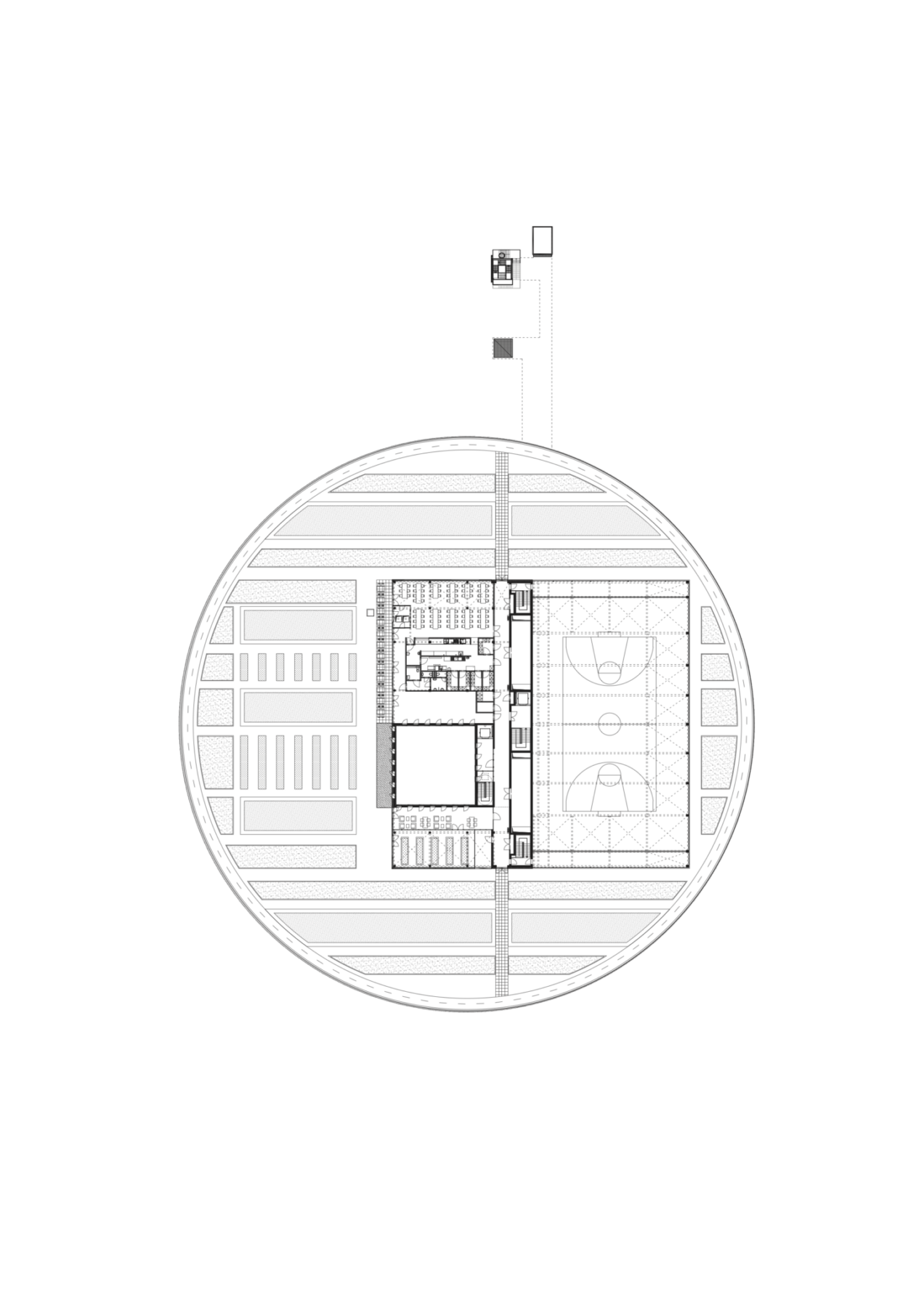
In the shadow of the Hiercheuses slag heap, a remnant of the region’s mining past, the sirens of the Charleroi fire station have been blaring since 2016. The building is a perfect circle 90 metres in diameter. A pure and recognisable form, situated on the edge of the city, between small workers’ houses and the motorway. The building has five storeys. On the ground floor, two levels of car park cleverly work with the site’s topography by providing two separate entrances: one for staff, the other for emergency response. In a fire station, incoming and outgoing traffic must not cross paths, and manoeuvring should be avoided. The circular layout quickly emerged as the solution to this quest for continuous movement, both outside and inside the building. The functions are organised concentrically on the floor plan, with a core of technical spaces around which the fire engines radiate, ready to respond in all directions. The exposed concrete structure emphasises this motif: the radiating beams are echoed on the façade by the row of columns that circumscribe the garage. Freed from its load-bearing constraints, the façade is simply defined by the succession of transparent sectional doors. The use of raw materials—concrete and metal—and the absence of finishing work to conceal the technical systems lend the space an atmosphere that echoes the imagery of a barracks. At the top of the building, the curve is utilised once more: an athletics track serves as a walkway, and the dining hall offers a panoramic view of the surroundings.
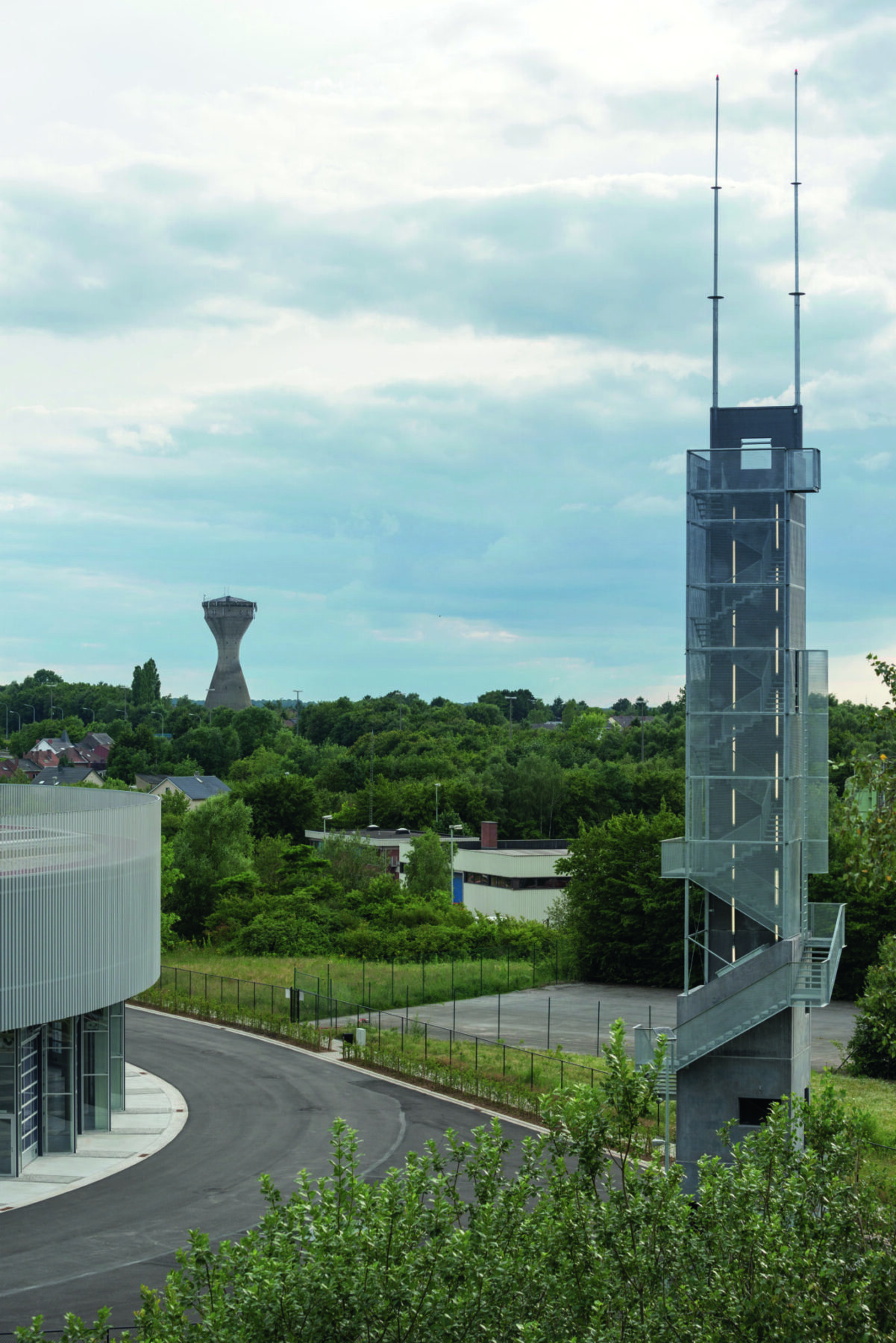
In between, the administrative floor breaks free from the circle by arranging offices, communal spaces and courtyards in a grid-like pattern. Here, the layout appears to stem from a fairly literal interpretation of a programmatic diagram. Corridors and offices; the workspaces are relatively ordinary and sit side by side without really taking advantage of the typological and spatial opportunities offered by the circular form.
In this dance with form, the architects unfortunately throw in the towel a little too soon. Their ambitions seem to lie elsewhere. On the firm’s website, we read that the layout aims to ‘maximise outdoor green spaces’, that the patios are designed to ‘enable rational energy management whilst improving thermal comfort’, and finally, we are delighted to learn that the galvanised sheet metal protects the façade from the sun, but with “a 51% perforation rate that makes it virtually transparent from the inside”. Pure moments of poetry. In this newspeak where objectification is the watchword, every component of a project (the site, the requirements, the materials…) presents an opportunity to provide an answer that aspires to scientific truth.
Faced with the proliferation of standards and the climate emergency, one must admit that the architect is overwhelmed by information and constraints that are sometimes at odds with one another, with undeniable aesthetic repercussions. It is therefore tempting to justify a piece of architecture through a long series of technical solutions, proof that one has done one’s homework. Take, for instance, the current approach to the insulation/ventilation balance. A building must be insulated to be heated efficiently, yet fresh air must be able to enter, so the incoming air must be heated. A deduction like a syllogism—the engineer’s aphrodisiac. Convinced that we have followed a logical line of reasoning, doubt nevertheless creeps in when it comes to installing humidity-controlled, air-preheating vents or unrolling kilometres of dual-flow ducting in false ceilings, when we could simply have opened the window.
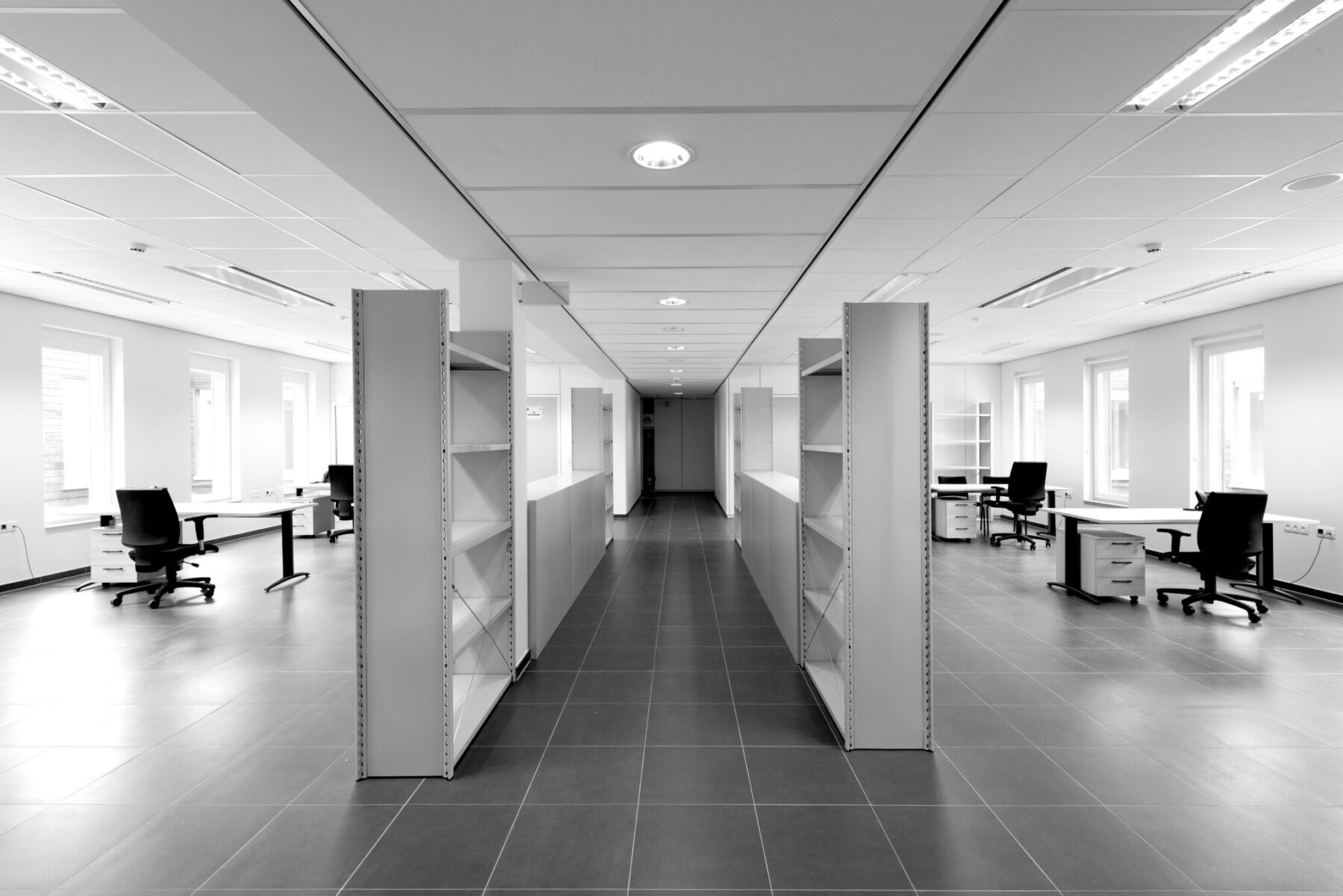
One must acknowledge that the architect deserves credit for having, over the past few decades, injected a dose of technical and technological experimentation—sometimes beneficial—into Belgian architectural production. One may, however, regret the coldness of his spatial expression. The Charleroi barracks is no exception. Despite its promising form, the majority of the workspaces feel sterile. The winning trio of anthracite porcelain stoneware, plasterboard and LED neon lights on a false ceiling does little to warm the atmosphere. Generally speaking, in these standardised spaces, one thing is certain: you feel neither the heat nor the cold. In fact, you don’t feel much of anything at all. And when the pandemic empties the offices, when digitalisation dematerialises workplaces and when video conferencing becomes the norm, what remains of these buildings other than the gentle hum of mechanical ventilation?
Architect Philippe Samyn and Partners
Website samynandpartners.com
Project name Fire station for the SRI of Charleroi
Location Charleroi
Programme Newly built fire station
Procedure Restricted tender procedure with architectural design competition for the limited-life partnership Thomas & Piron Bâtiment – Cit Blaton
Client City of Charleroi
Structural engineering Setesco Ingenieurbureau Meijer
Service engineering FTI
Building physics Neo & Ides
Acoustics D2S International
Lead contractor TA Thomas & Piron Bâtiment – Cit Blaton
Completion June 2016
Total floor area 19,721 m²
Budget € 25,000,000 (excl. VAT and fees)
Product/Supplier Assa Abloy Entrance Systems (sectional doors), Sto (insulated external façades), Schindler (elevators)
This article appeared in A+298, published on 14.11.2022.