For the Charleroi fire station, the architectural practice Philippe Samyn & Partners has opted for an iconic form within the fragmented landscape of the city’s outskirts. Whilst the design promises a renewal of the building type, what of its ability to transcend convention and humanise functional architecture?
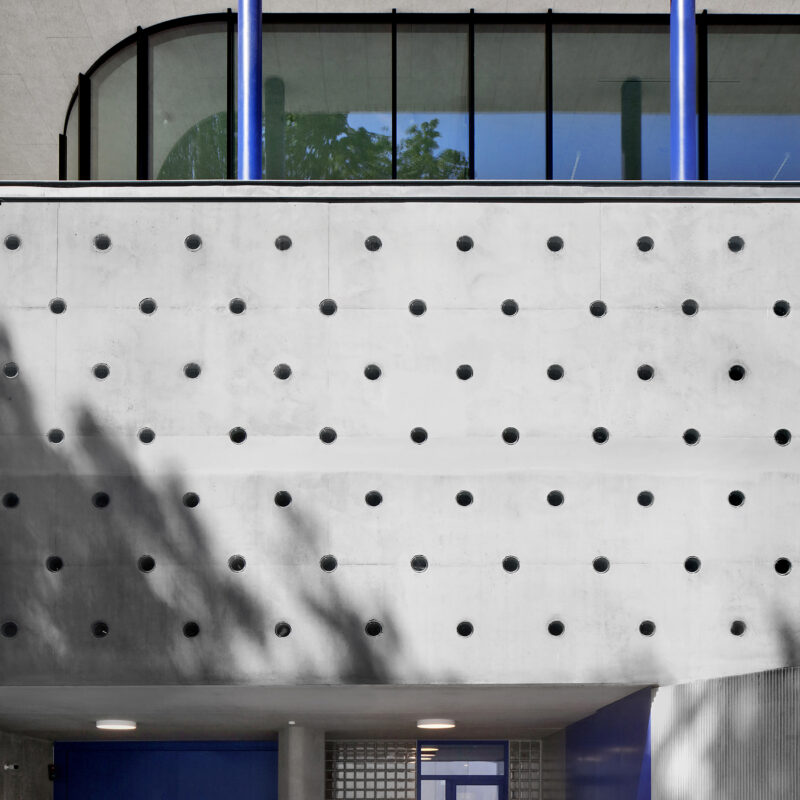
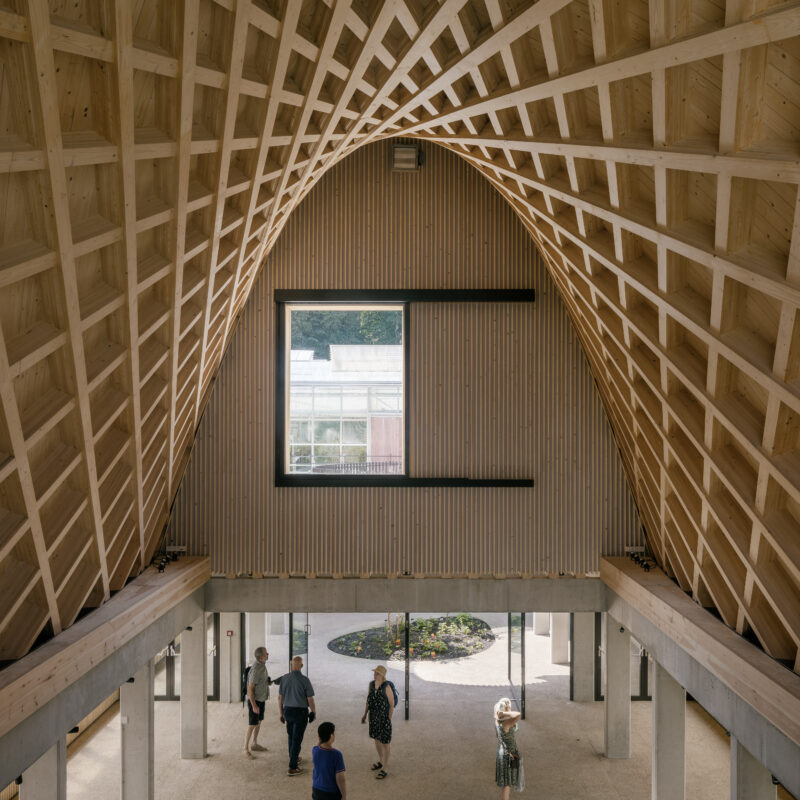
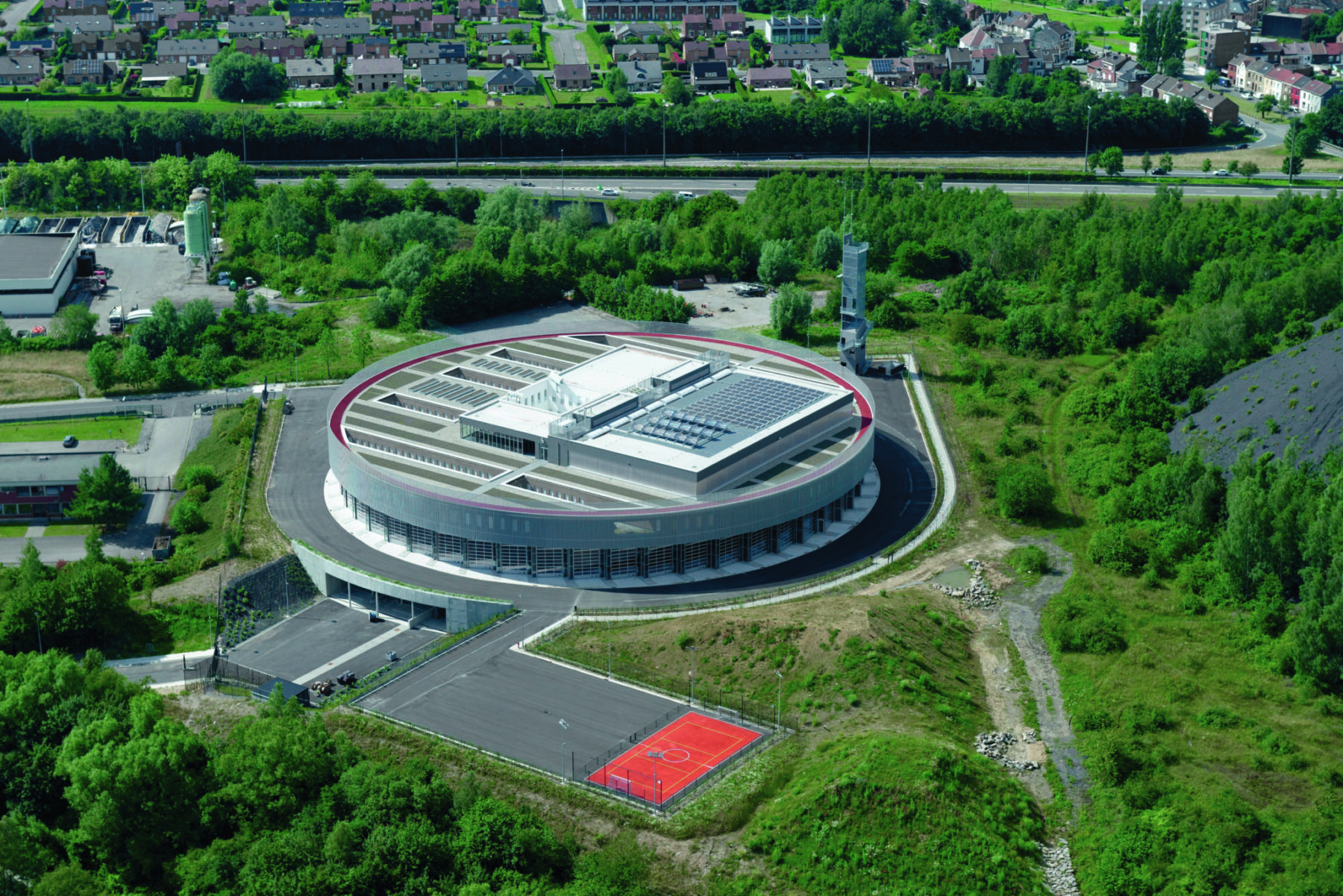
In the shadow of the Hiercheuses slag heap, a remnant of the region’s mining past, the sirens of the Charleroi fire station have been blaring since 2016. The building is a perfect circle 90 metres in diameter. A pure and recognisable form, situated on the edge of the city, between small workers’ houses and the motorway. The building has five storeys. On the ground floor, two levels of car park cleverly work with the site’s topography by providing two separate entrances: one for staff, the other for emergency response. In a fire station, incoming and outgoing traffic must not cross paths, and manoeuvring should be avoided. The circular layout quickly emerged as the solution to this quest for continuous movement, both outside and inside the building. The functions are organised concentrically on the floor plan, with a core of technical spaces around which the fire engines radiate, ready to respond in all directions. The exposed concrete structure emphasises this motif: the radiating beams are echoed on the façade by the row of columns that circumscribe the garage. Freed from its load-bearing constraints, the façade is simply defined by the succession of transparent sectional doors. The use of raw materials—concrete and metal—and the absence of finishing work to conceal the technical systems lend the space an atmosphere that echoes the imagery of a barracks. At the top of the building, the curve is utilised once more: an athletics track serves as a walkway, and the dining hall offers a panoramic view of the surroundings.