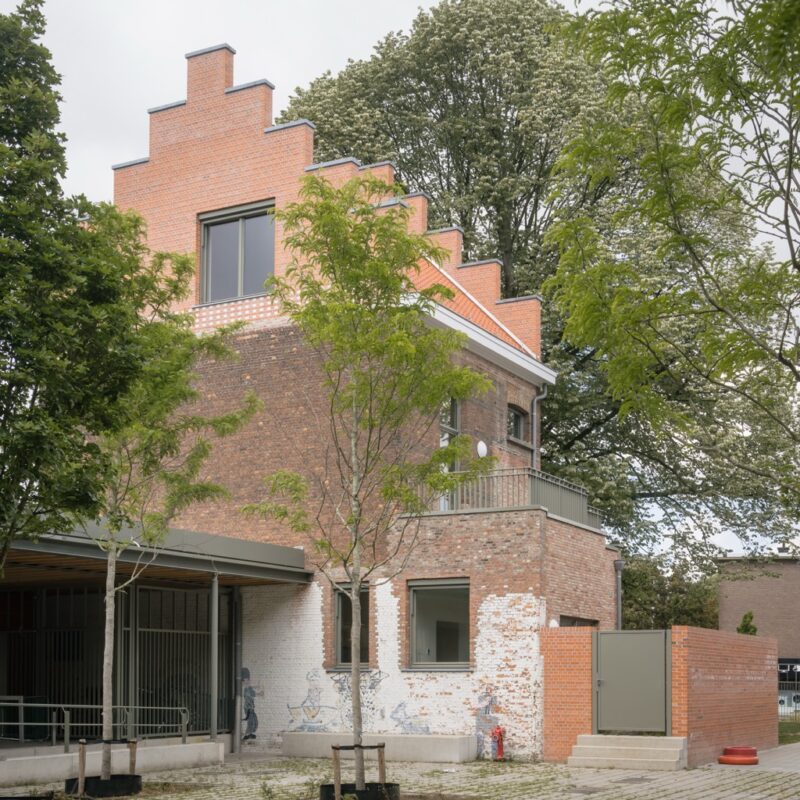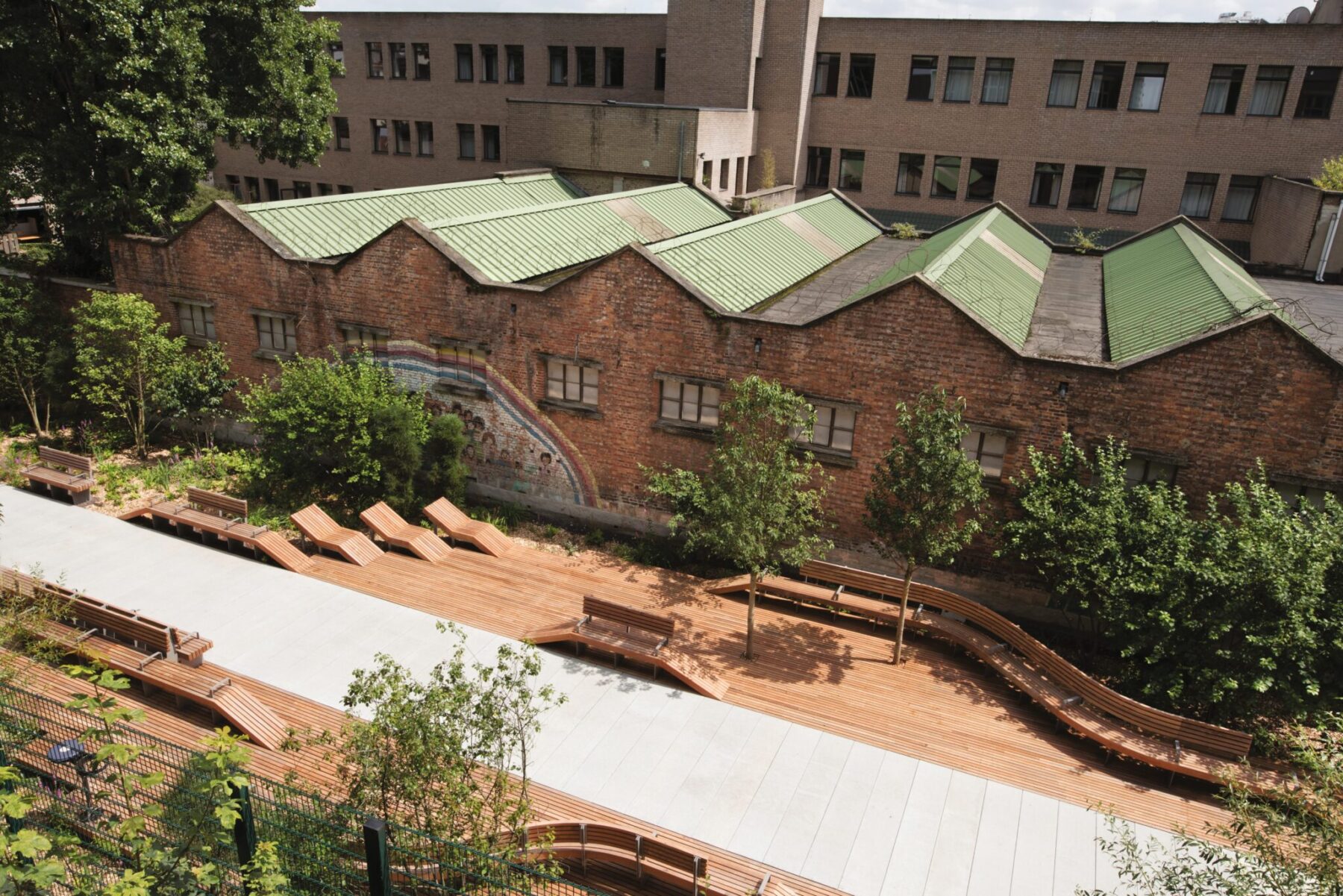
The Parc de la Senne, which forms the natural border between the municipalities of Schaerbeek and the City of Brussels, is not so much a park as an elongated garden. A ‘promenade’ for strolling, foraging and gardening, but all in public view. It is the first link in the new Green Small Ring to the north of Brussels.
As the name suggests, the park is situated on the former bed of one of the river Senne’s tributaries. In the nineteenth century, many businesses, breweries, laundries and industrial activities clustered around this meandering river that flows through Brussels. It became a popular neighbourhood, characterized by a medieval fabric of streets and alleys. Due to unhygienic conditions, epidemics and floods, this part of the Senne was covered between 1931 and 1935. At the start of the twenty-first century, the undevelopable land between the blocks of houses on the riverbed was left fallow. The soil was polluted and the area was neglected and returned to the wild.