Few European cities have embraced the car as enthusiastically as Brussels. After decades of muddling through, there is at long last a policy shift towards alternative mobility and a redistribution of the public space. Yet there is still a long way to go, and with political decisiveness in short supply, the key impulse often comes from the bottom up.
You are not stuck in traffic. You are traffic. This was one of the slogans that emerged in the summer of 2012 during the campaigns organized by ‘Picnic The Streets’, a citizen movement that was fighting for a car-free Place de la Bourse, the beating heart of the city.
A few well-attended picnics in the middle of the public road attested to the growing awareness amongst more and more Brussels residents that things simply couldn’t go on as they were in their city. Brussels was usually doing well in the wrong city lists, such as those with the worst traffic jams. A wider context of strong population growth and the continuing importance of work-related commuting fed into the doomsday scenario of total gridlock.
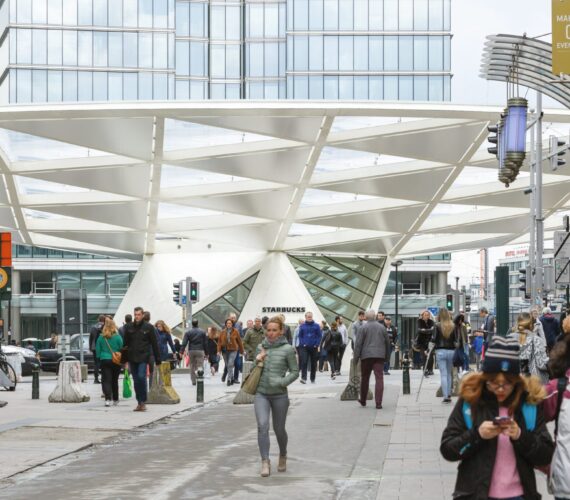
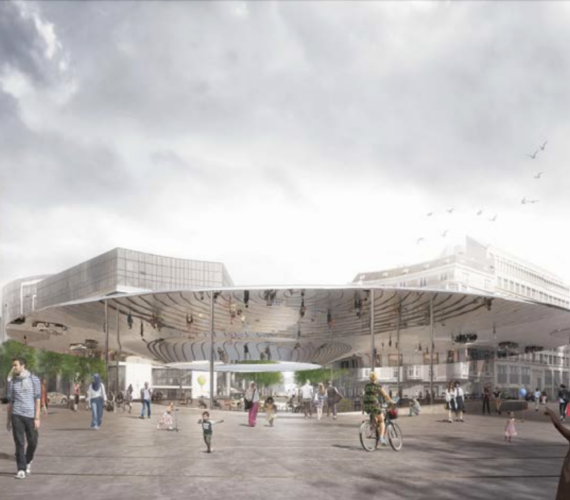
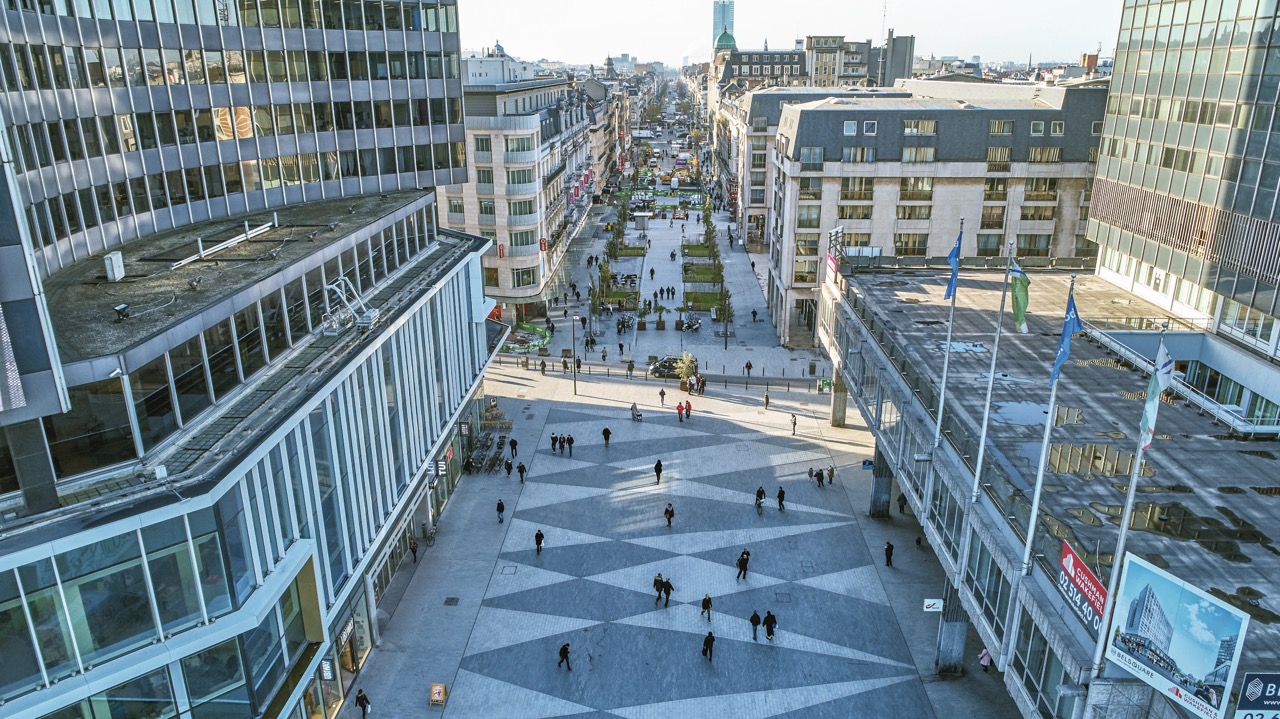
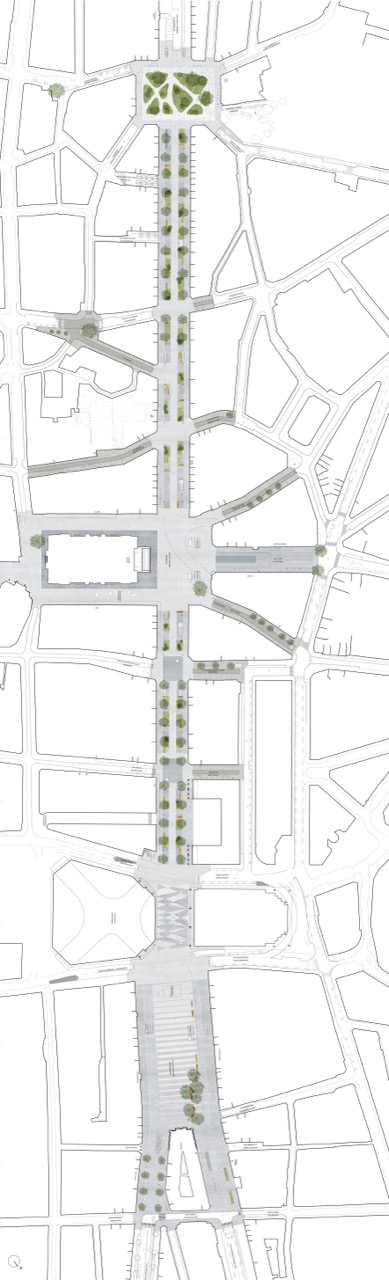
The picnickers’ message was heard loud and clear and the next city administration oversaw the creation of a large pedestrian area. Not only did Place de la Bourse become traffic free, but also a significant section of the Anspachlaan. When the tram was moved underground in the 1970s, this road was laid out as a four-lane highway cutting straight through the city centre. At its far ends, the Fontainasplein and Place de Brouckère were also slated for redesign. The city authorities claimed that together with the existing car-free streets around the Grand-Place, this was now one of the largest pedestrian zones in Europe.
In the meantime, the construction works are nearing completion and no one wants to go back to the days of the city motorway. Nevertheless, this was a hard-won revolution. The first temporary interventions provoked a raft of criticism and even legal proceedings, but all in all, despite these obstacles and the tardy start to the redevelopment work, the principle held up well. A few concessions were made, but there proved to be scant political will to turn back the clock.
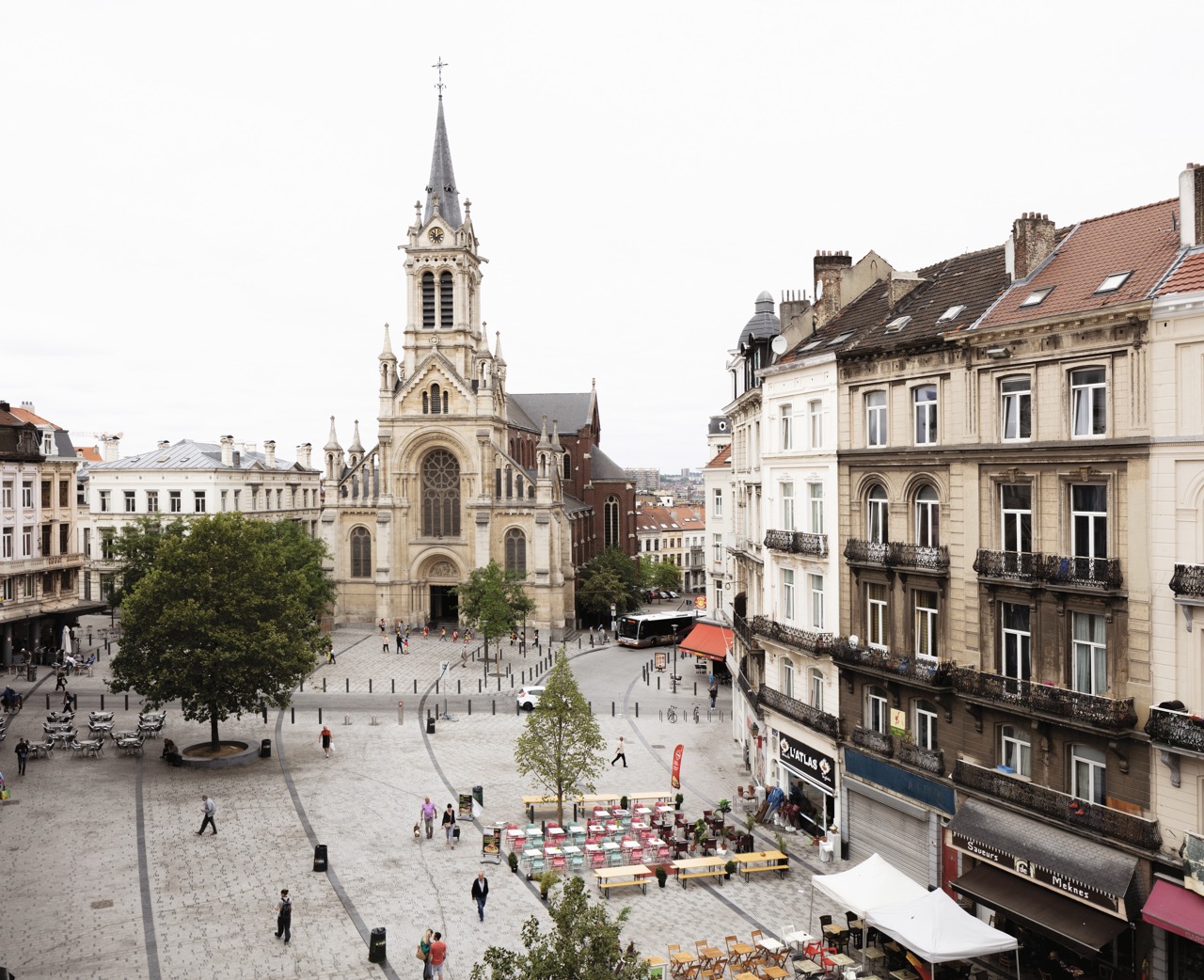
The pedestrian zone in the city centre garnered the most media attention. Now, however, steps have also been taken elsewhere in the city towards a different kind of mobility and reclaiming the public space from the car. The Reyers Viaduct in Schaarbeek was demolished and places such as the Parvis in Saint-Gilles and the Koningin Astridplein in Jette were transformed from car parks into multifunctional squares in which residents and visitors can meet.
In the latter case, the metamorphosis also went hand in hand with the construction of a new tramline, which proved an overnight success. After years of political deadlock, a tram was ultimately not introduced on Chaussée d’Ixelles, but the second most important shopping street only became vehicle-restricted. Other major roads were left undisturbed but generous cycle lanes were added. One was built along the Inner Ring road, for example.
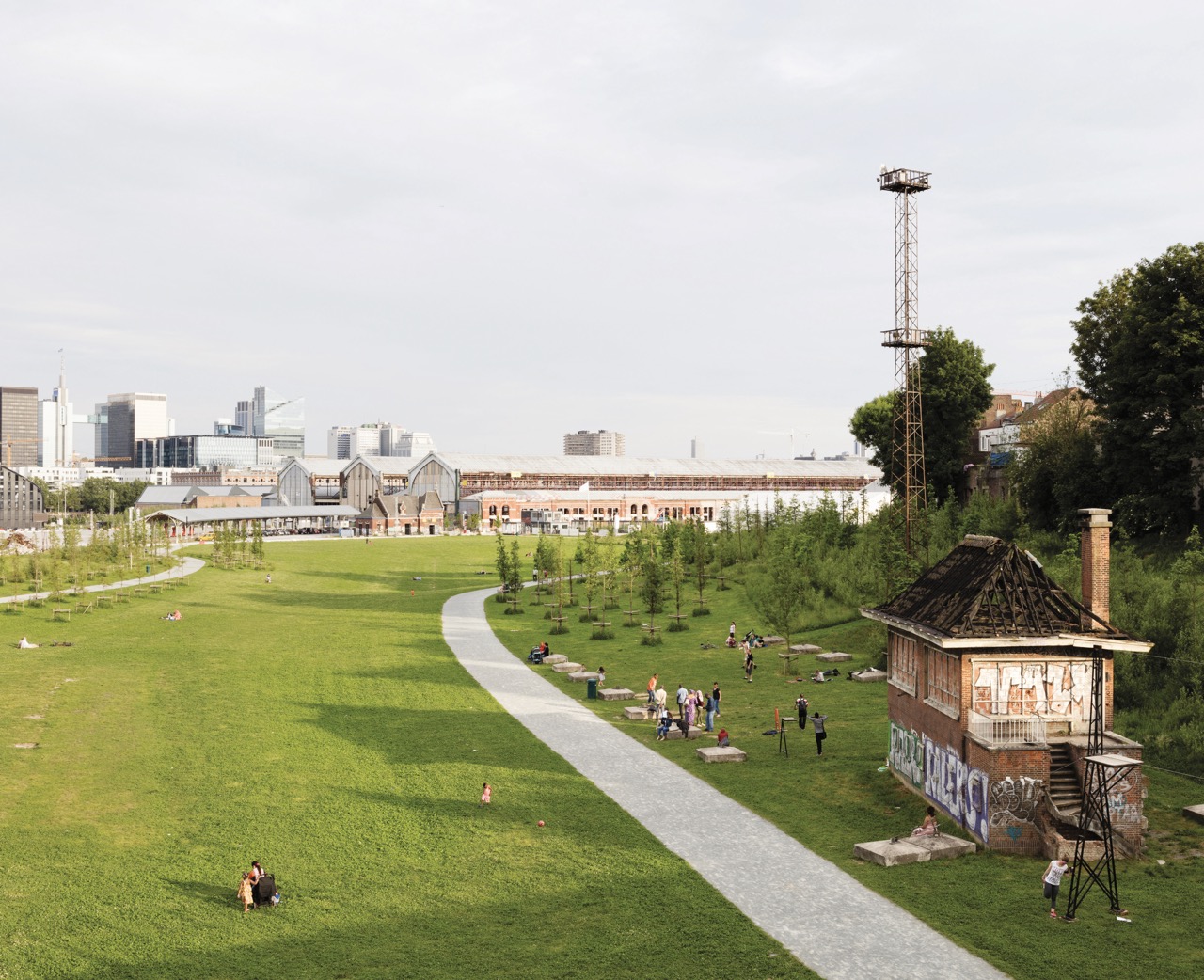
The city also gained some new parks, chiefly in the densely built-up neighbourhoods along the canal, such as the Parc de la Senne and the green network on and around the site of Tour & Taxis. At the Porte de Ninove, until recently a sinister no man’s land, a new park is currently under construction.
In the meantime, further new plans are being drawn up and citizen movements are keeping the status of the car firmly on the political agenda, in terms of both traffic safety and, in particular, air pollution. This has led to the creation of a growing number of 30 km/h zones and several streets will probably be closed to cars at the beginning and end of the school day. After residents came up with an idea to this end, Saint-Gilles’ new local authority is even keen to outlaw all through traffic from an entire neighbourhood around Brussels South Station. This will offer a foretaste of the new regional mobility plan entitled ‘Good Move’, part of whose remit is to create more liveable neighbourhoods.
It is not as though Brussels is suddenly abandoning cars altogether. The Bois de la Cambre, one of the city’s largest parks, still acts as an entry and exit road to and from the capital as an extension of Avenue Louise. Monuments such as the Cinquantenaire or the Palace of Justice are still being misused as car parks. A large number of dated traffic tunnels, which according to experts are the equivalent of rolling out a red carpet to cars, are also being renovated and will therefore continue to be used for decades to come, at a minimum.
Furthermore, a series of ambitious plans for the public space are proving very slow to get off the ground, such as the redesign of Avenue de la Toison d’Or, another important shopping street, or Rond-point Schuman in the European Quarter.
Despite the evident progress, much remains to be done if Brussels wants to keep up with international front-runners. Admittedly, the city has already come a long way. Indeed, few European cities have embraced the age of the car so enthusiastically. In the lead-up to the 1958 world fair, in particular, Brussels was equipped with new, car-based infrastructure in record time. At the time, this represented the height of modernity and played a starring role in the run-up to the expo, which crystallized Belgium’s post-war ambitions. Belgium aspired to be the crossroads of the Western world, literally.
The political will and rapid decision-making of that era stand in stark contrast to today’s slowly-dawning realization of the car’s problematic encroachment upon the city. Although minds are gradually focussing on the issues, the cultural shift is by no means complete and it is often still citizen initiatives that act as the catalyst for change. If decisions are made, putting them into practice can often still prove a major ordeal. This is sometimes due to a lack of political courage, but the complicated structure of the Brussels and Belgian governments are also to blame.
Brussels comprises 19 municipalities, each with its own mayor and councillor for mobility and public works. All too often the various agencies of the Brussels-Capital Region, which since its foundation in 1989 has gradually sought to increase its power, work alongside one another rather than together. Moreover, because of the poor financial situation, many projects are dependent upon federal funding. Mobility policy is also hopelessly fragmented between the different regions and the federal government. But collaboration is essential if Brussels is to get a grip on the key commuting flows from Flanders and Wallonia.