In Ixelles, close to the ULB in the Solbosch neighbourhood, a surprising gap has become the starting point for the MDW project. This gap between two gables leads to almost nothing except a few parking spaces. Yet the plot is situated along a busy avenue, nestled between two striking buildings: a medical centre with a neo-Gothic façade on one side and the modernist Solbosch residence on the other. The street-facing project seeks to draw inspiration from the two adjacent structures, thereby becoming a connecting element that reflects the context without sacrificing its own identity.
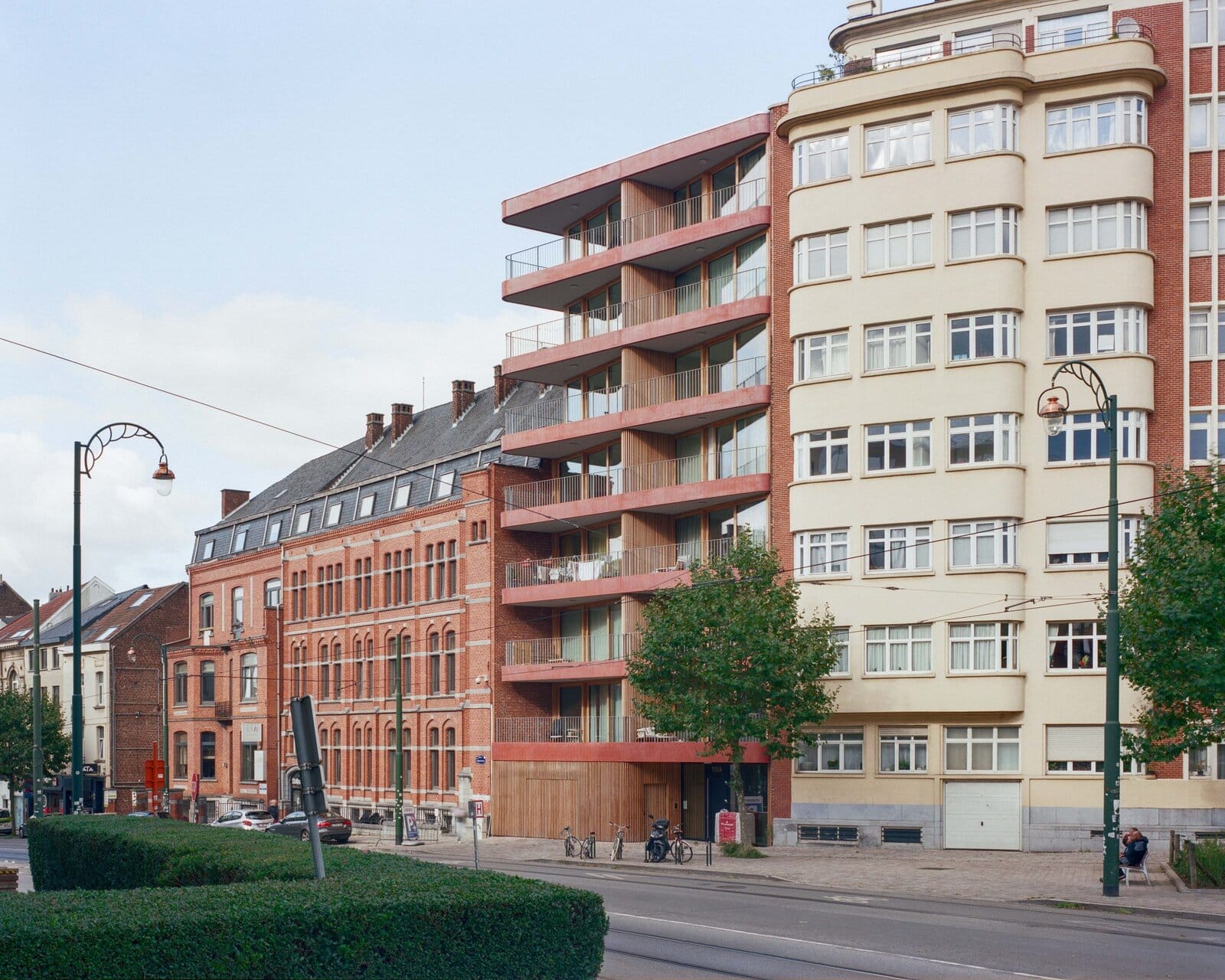
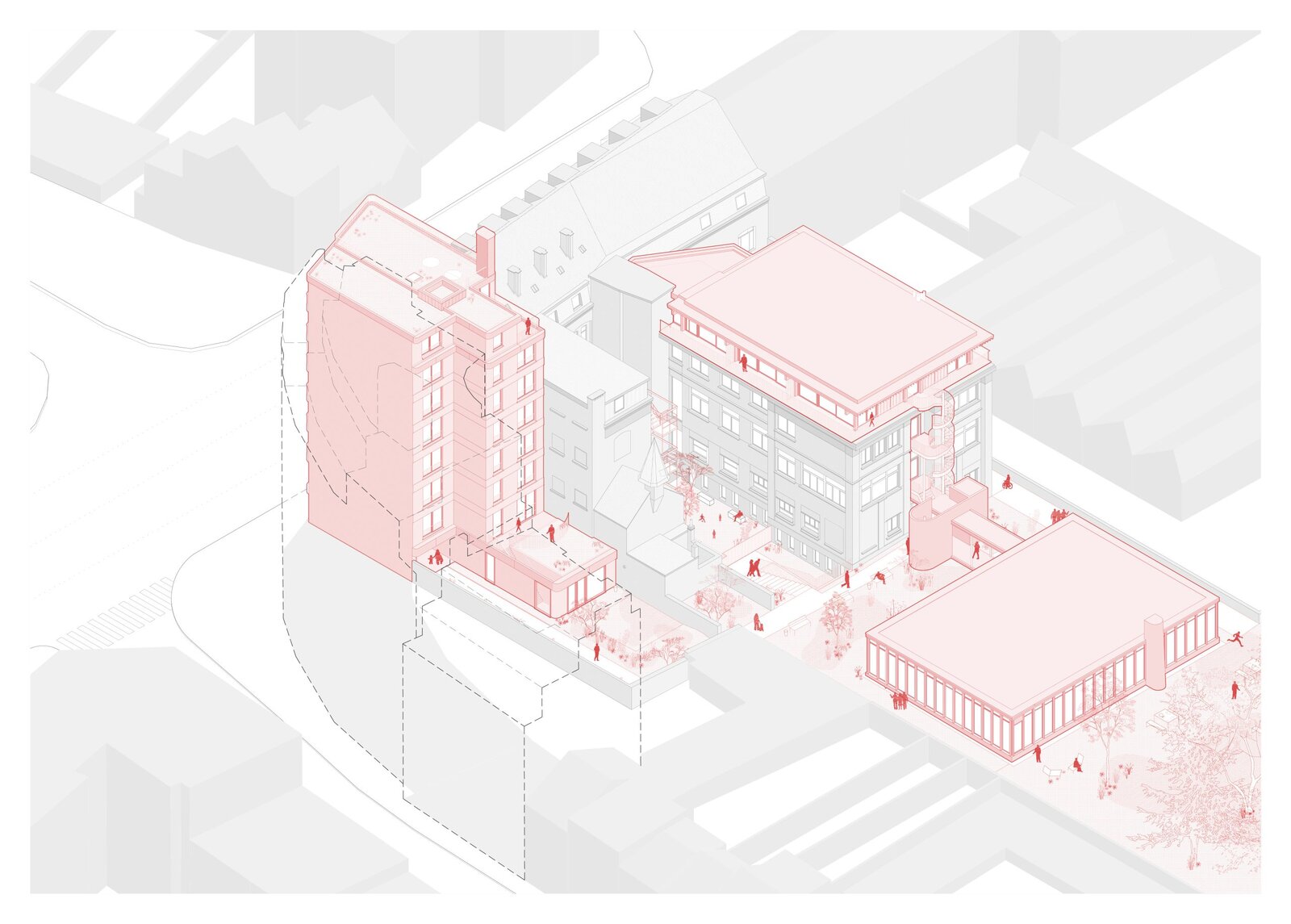
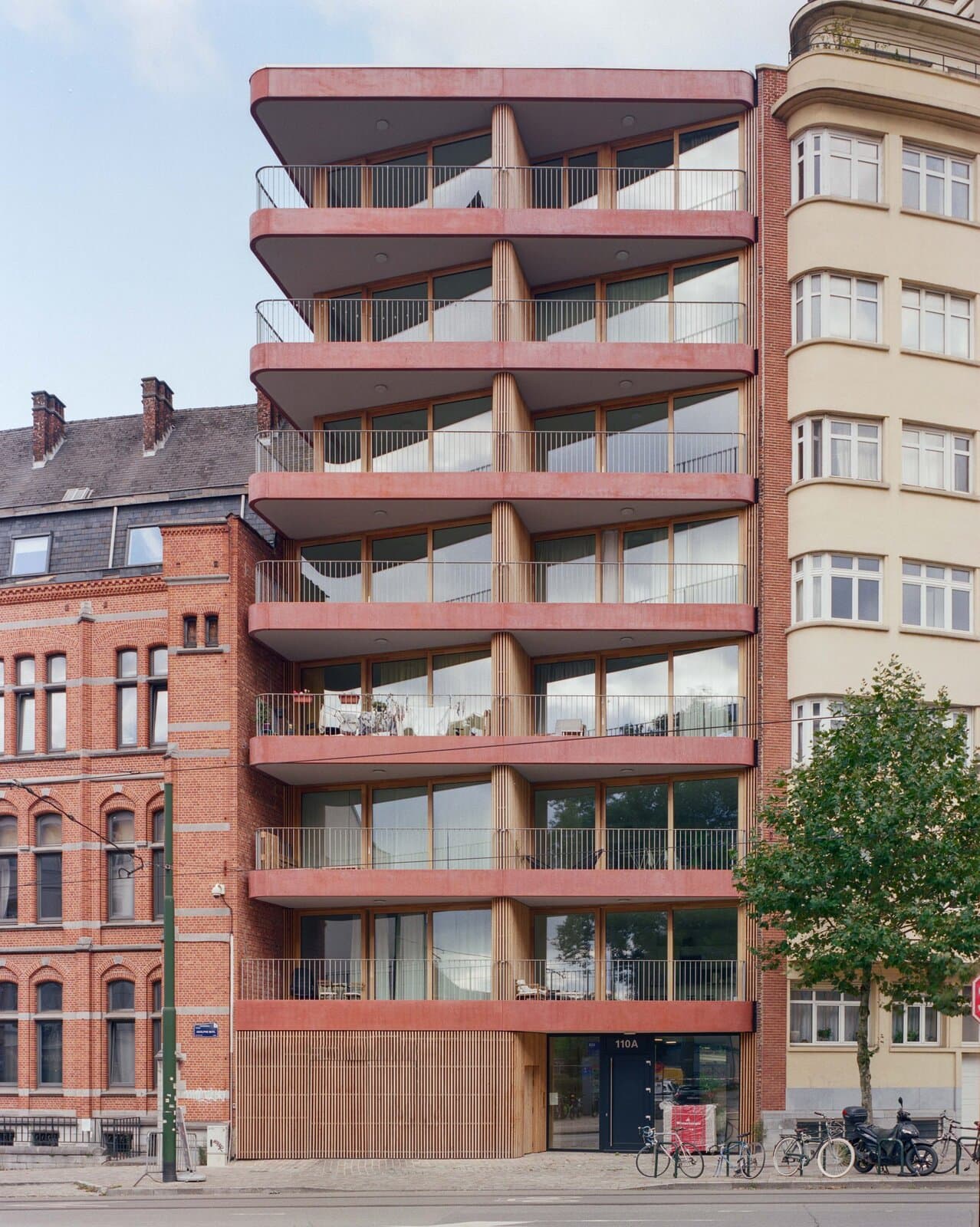
Through three major interventions – the street-facing building, the extension and the pavilion – the project clarifies the site. A slender building fills the gaping void and restores cohesion to the composition of the corner, at the junction of Avenue Brillat-Savarin and Avenue Adolphe Buyl. On the street side, each of the dwellings extends into a terrace with rounded corners that forms the façade. Like a symmetrical interplay, the concrete bands respond to the horizontal composition of the façade of the neighbouring Solbosch residence and echo the blue stone bands of the medical centre. As the building rises, a third façade emerges and reveals itself to the city. The colour tones of the medical centre’s brickwork are echoed in the tinted concrete of the façade. The project thus ensures both chromatic and structural continuity within the street’s composition, whilst embracing the contemporary nature of its intervention.
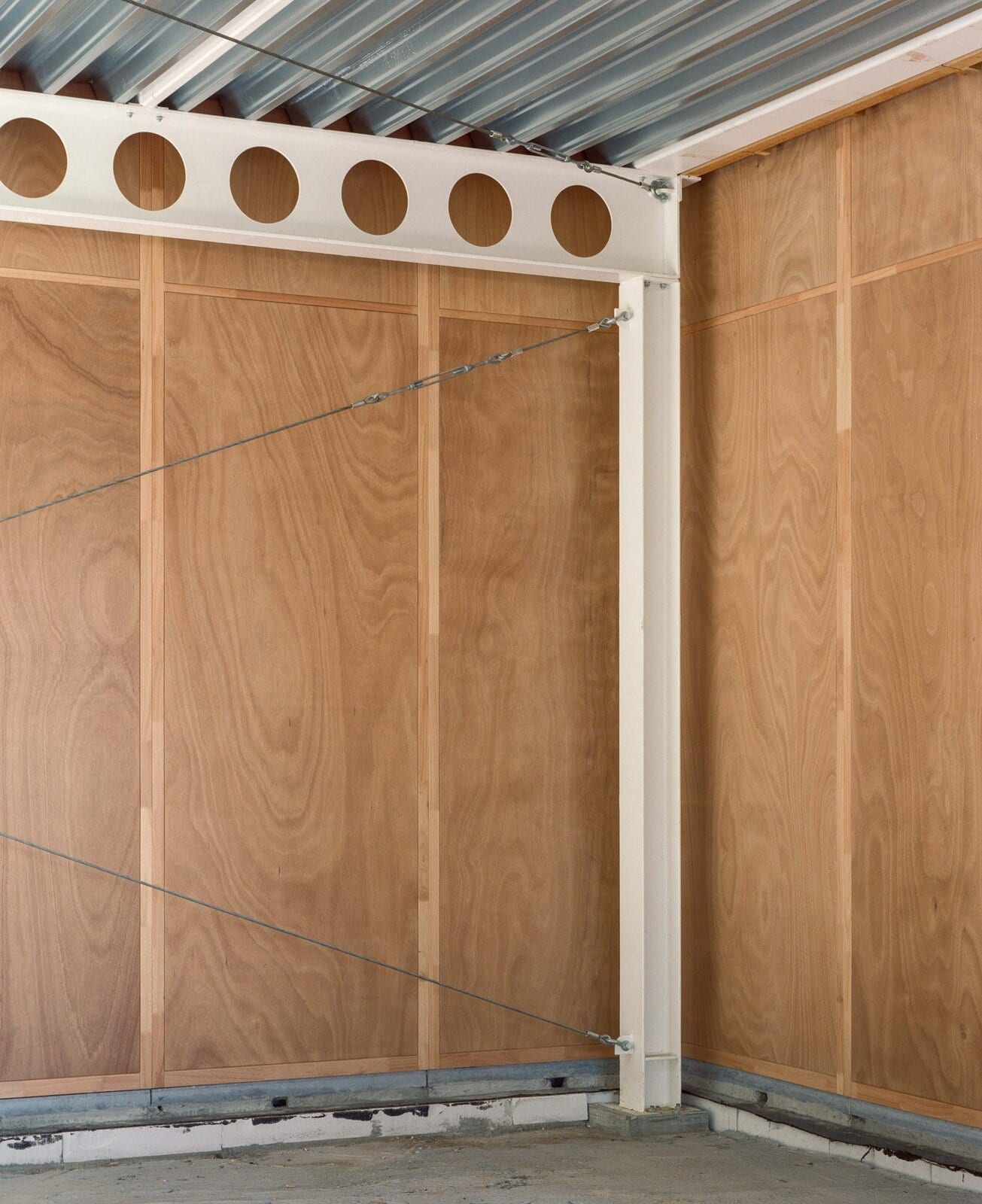
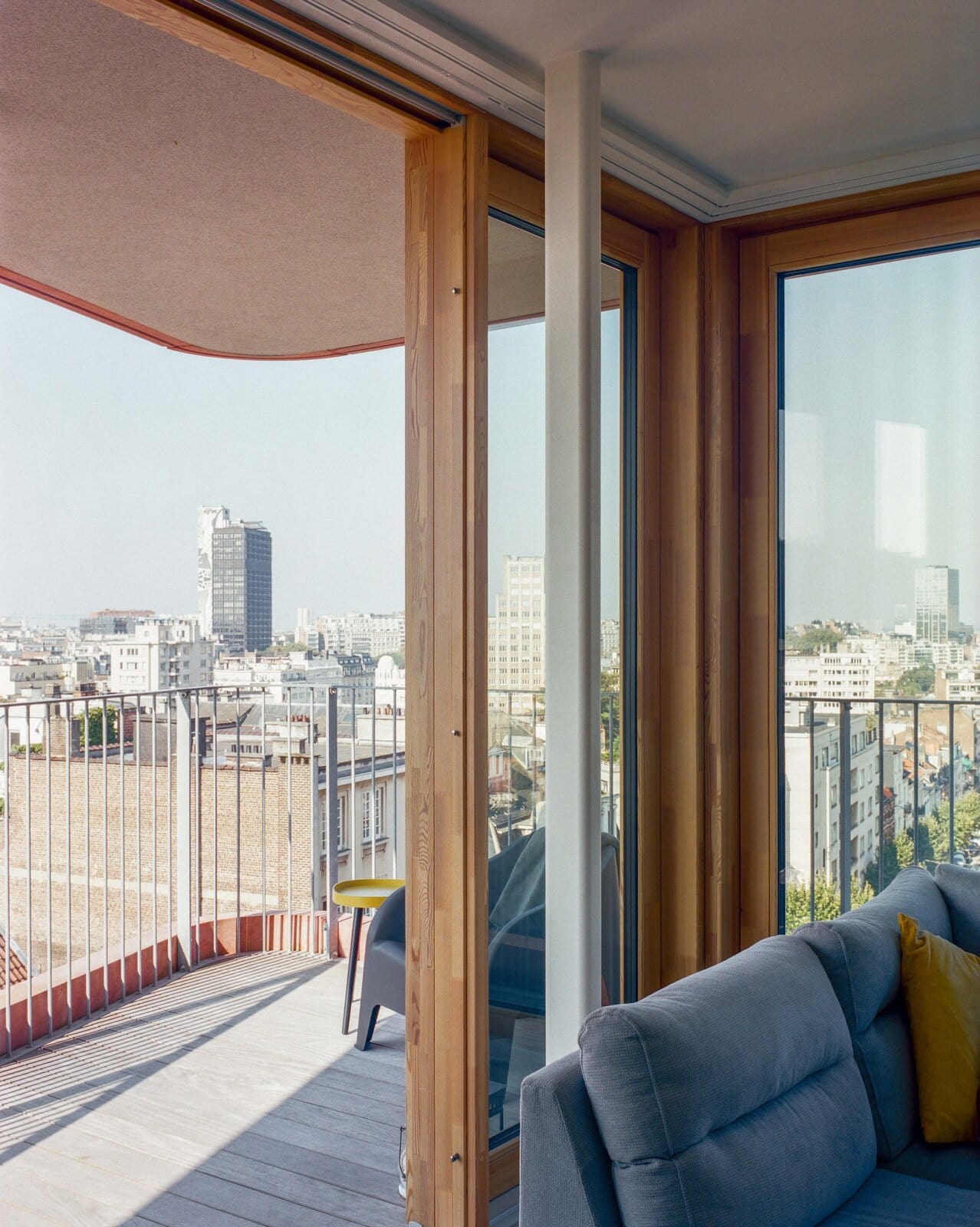
The extension of the building within the block accommodates student accommodation for the nearby Solbosch campus. Comprising a lightweight timber structure, the extension is supported by the existing building’s framework. The circulation layout, positioned at the centre of the plan, frees up the perimeter and allows for accommodation types offering maximum openness to students. Consequently, the compact apartments enjoy unobstructed views of the city. The pavilion, meanwhile, features an architectural design better suited to the activities of the medical centre. Its point-supported steel structure allows for flexible use, whilst its positioning enhances its connection with the inner courtyard.
These interventions demonstrate an architecture that is responsive to the existing environment, helping to highlight the site’s pre-existing qualities. Mindful of the architectural heritage present, the project draws on the context as much as it contributes to it. The street-facing building acts as a link between two scales and two architectural styles. This modest gesture of a building that bridges the gap and completes the street’s composition is not achieved at the expense of bright living spaces and generous outdoor areas.