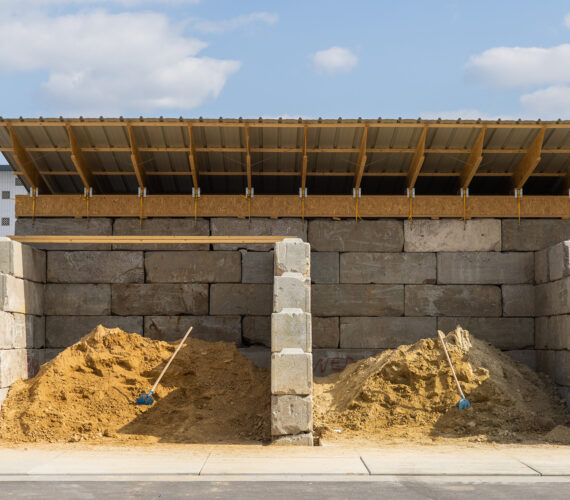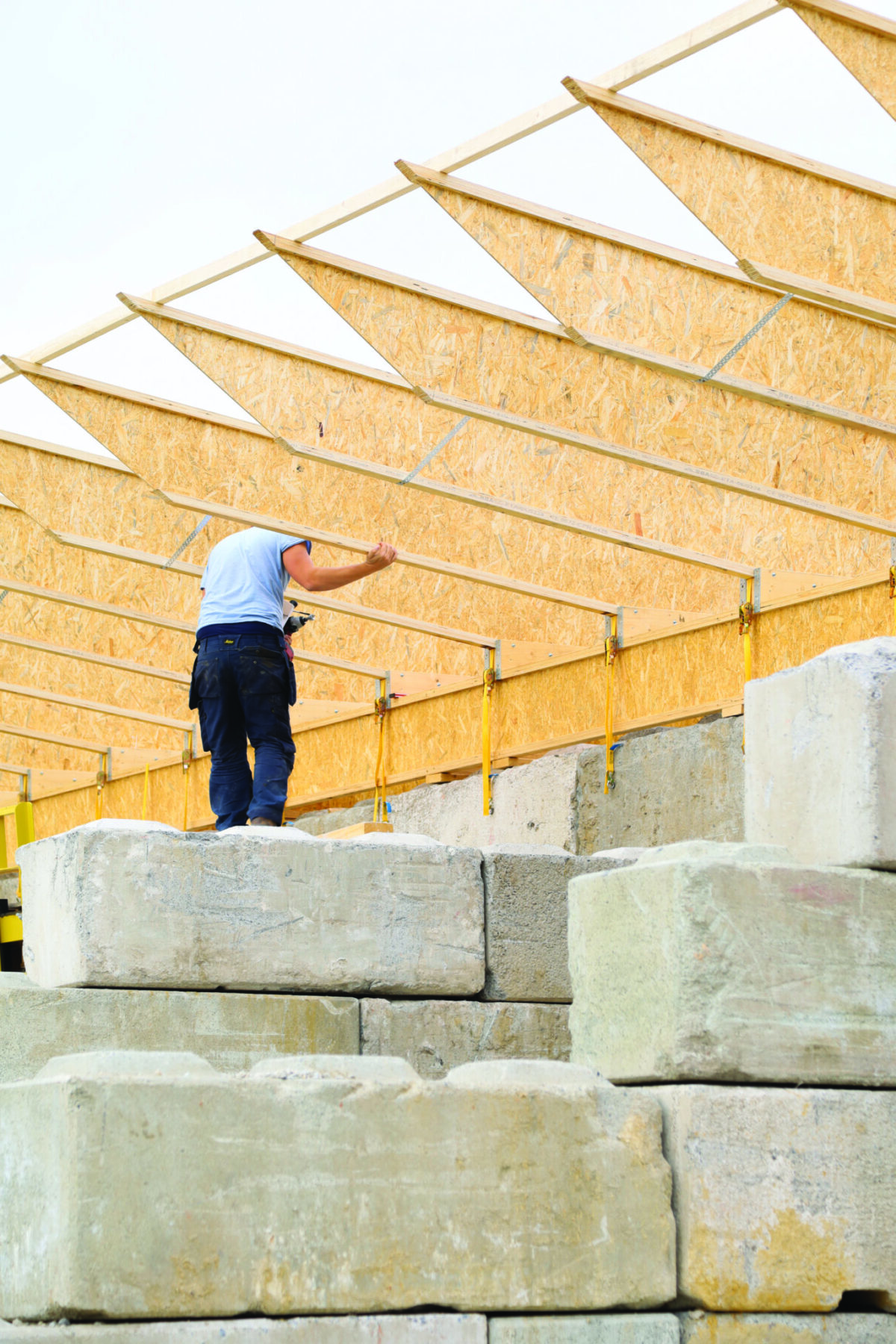
In Belgium, no fewer than 36 million tonnes of earth are excavated every year on building sites. Two million tonnes in Brussels alone. That material is not easy to keep, store and transport, so 60 per cent of it is thrown away as waste. Since 2019 BC Materials, a spin-off of BC Architects and Studies, has been recovering the raw earth from the ground to convert it into new building materials. That is why the designers’ collective built a small storage and production hall on the site of Tour & Taxis in Brussels. BC’s ultimate goal is not only to offer the manufactured loam bricks for sale, but to change no less than the entire conventional building culture.
In 1983 the Anglo-American historian Kenneth Frampton wrote his by now seminal essay ‘Critical Regionalism: Six Points for an Architecture of Resistance’. Frampton valued not only the importance of an embedded architecture within the given topography of a particular site, but also its sensibility towards local resources and materials: ‘In a climate where culture becomes a global concept, a certain form of resistance seems to develop that finds added value in the locality of a given.’1 While the current ecological transition confronts the architectural profession with an economy of means, Frampton’s plea for local materials, tectonics and tactile architecture is becoming more and more appealing if not necessary. 1 Kenneth Frampton, ‘Critical Regionalism: Six Points for an Architecture of Resistance’, in The Anti-Aesthetic: Essays on Postmodern Culture, ed. H. Foster (Washington: Bay Press, 1983), 16–30