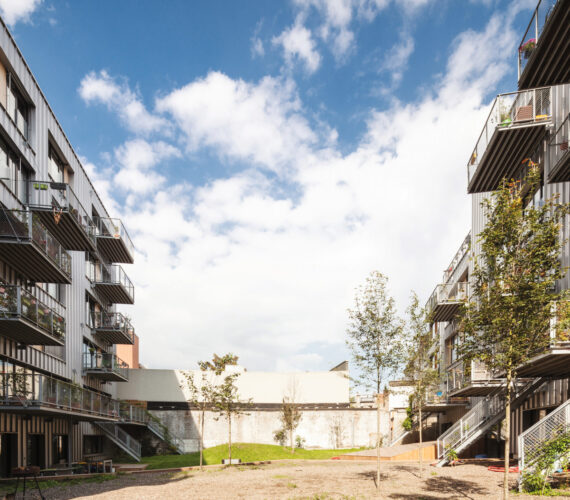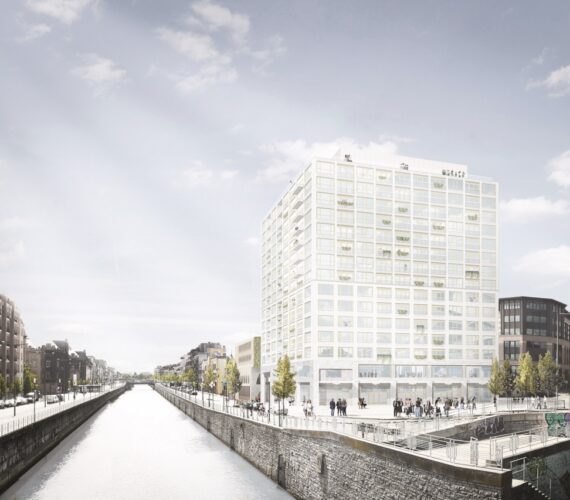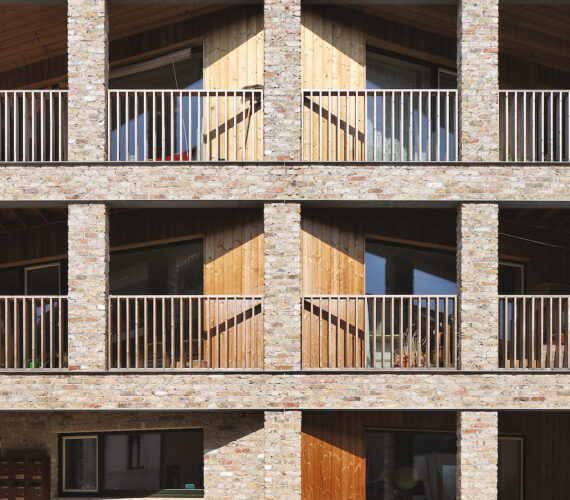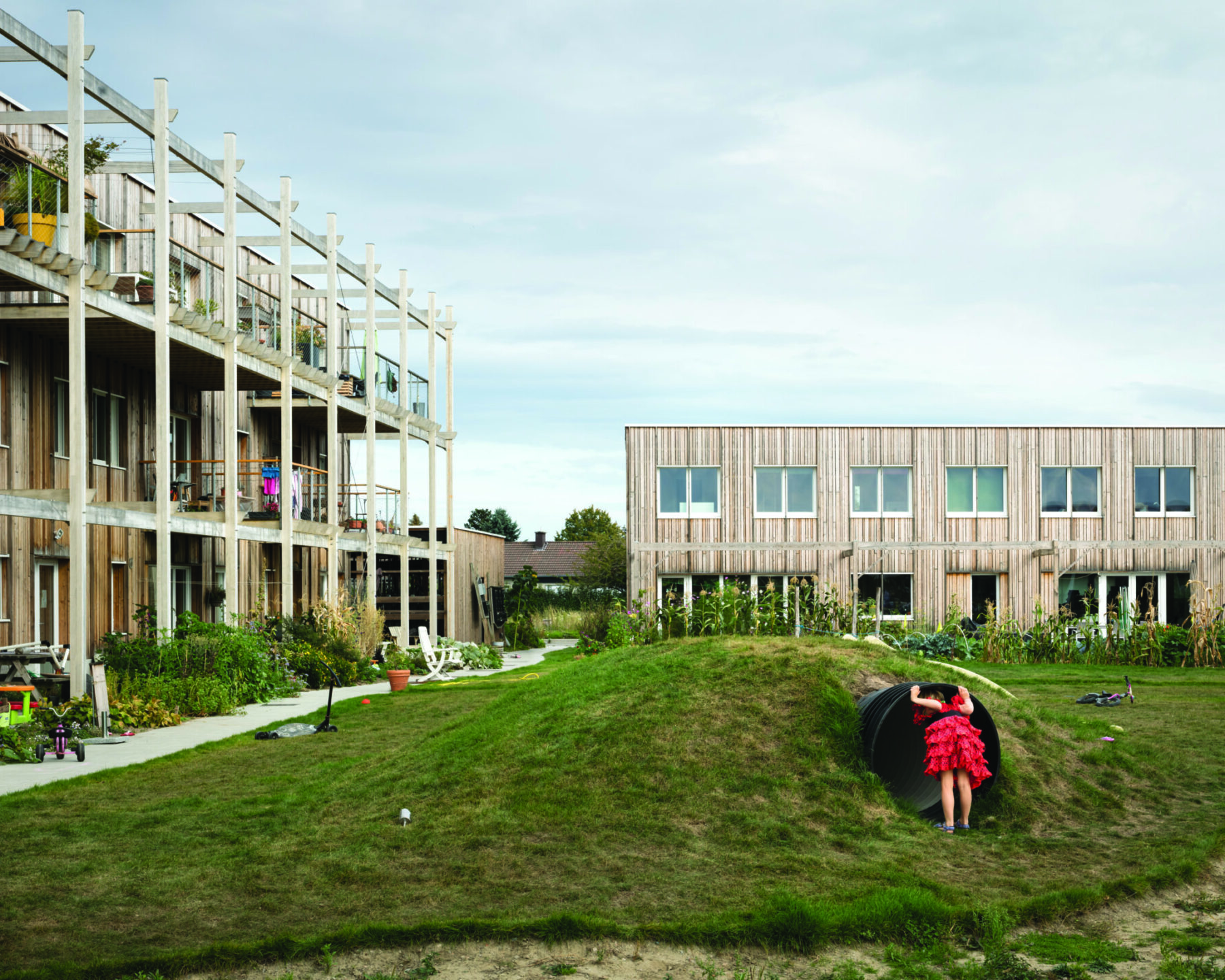
If we look at the city as an ideal polis, as a political entity, then the housing block within the city functions as social capacitor. The block divides up the city into me, us and them. The edge of the housing block is mine, the outside theirs, and the inside ours. The private spaces are on the edge. Together they surround a collective area that is only accessible to block residents. At the same time, the edge closes off this area from the rest of the city, the public space. In this way, housing blocks are seen as sociomorphological models. Through their form only, they induce a social relationship.
The tripartite structure dissolves in the traditional nineteenth-century block. The collective heart can sometimes be lacking in reality. The interior area is often a puzzle composed of private parts. Other models are seldom as transparent. The modern city, that contrasts the campus model with the housing-block city, lacks this clarity. The collective part is not determined unambiguously by the location of the buildings. It must therefore be added programmatically. We could say that the modern city tries to define the collective as a political entity but fails to translate it literally in spatial terms. The activity is not generated by the spatial condition but simply added as a programme. A few postmoderns briefly dreamed of a city in which building blocks coincide with buildings and the confusion reaches a pinnacle. The vagueness of the boundaries between what is private, collective and public is consolidated as an added value. The buildings become public spaces, even in the interior. The collective is completely absorbed in the public, and this is presented as multicultural entertainment. In reality, however, this rather seems to mean that the boundary between private and public areas has to be organized technically. Fences with access codes and cameras restore the lack of spatial clarity.