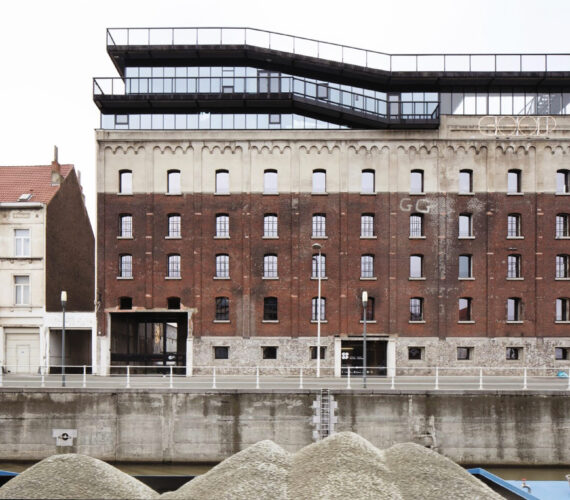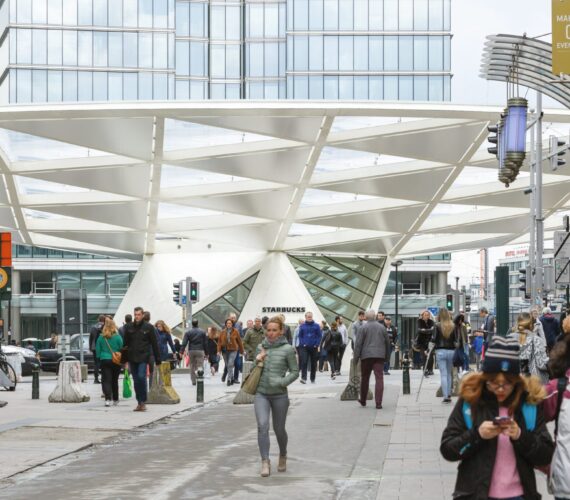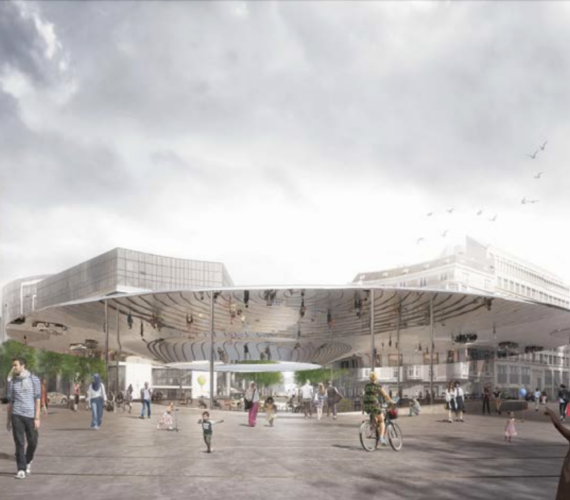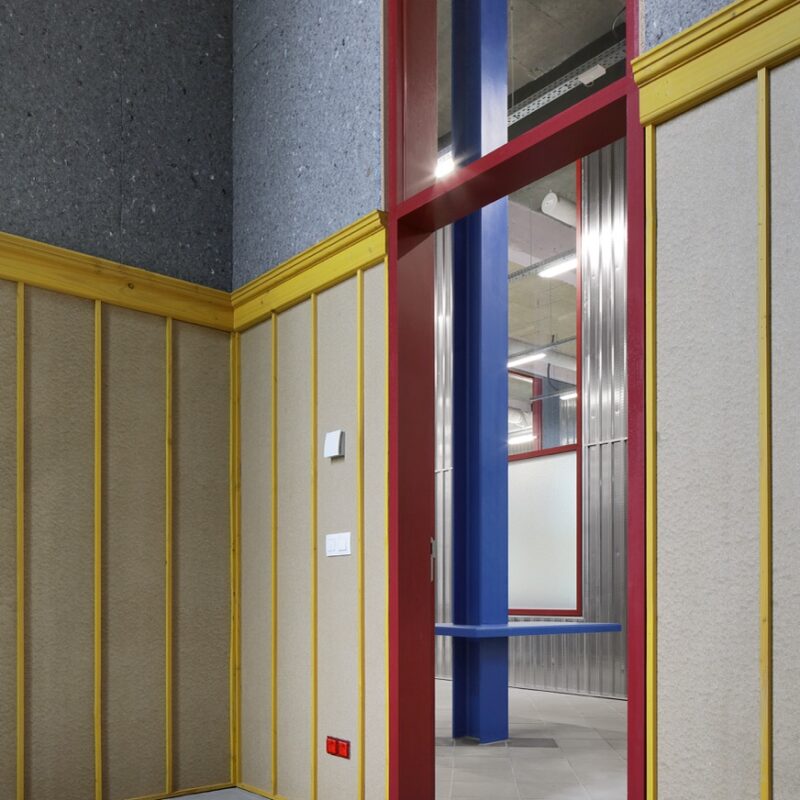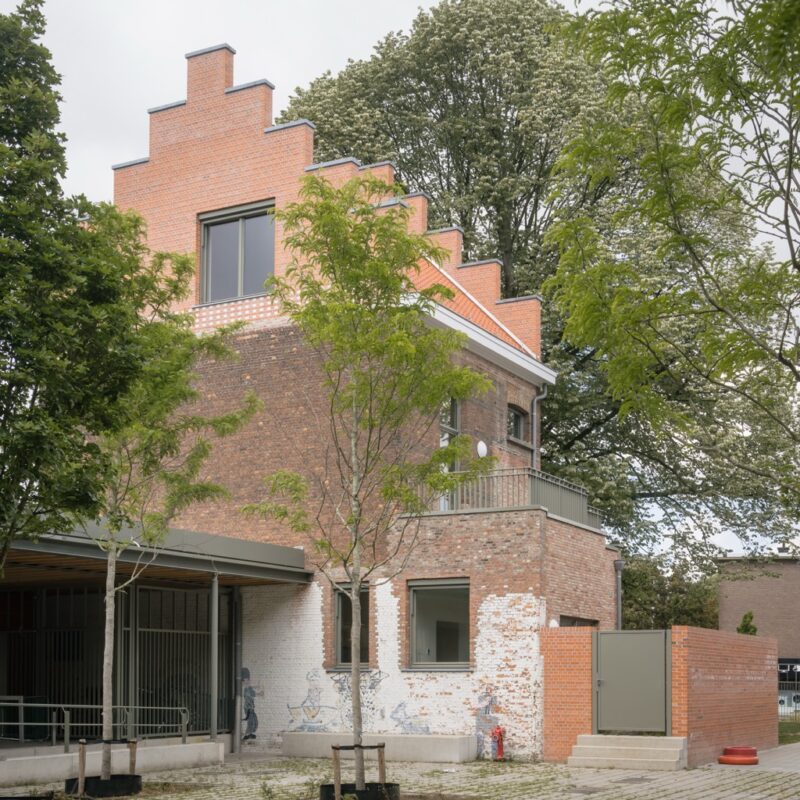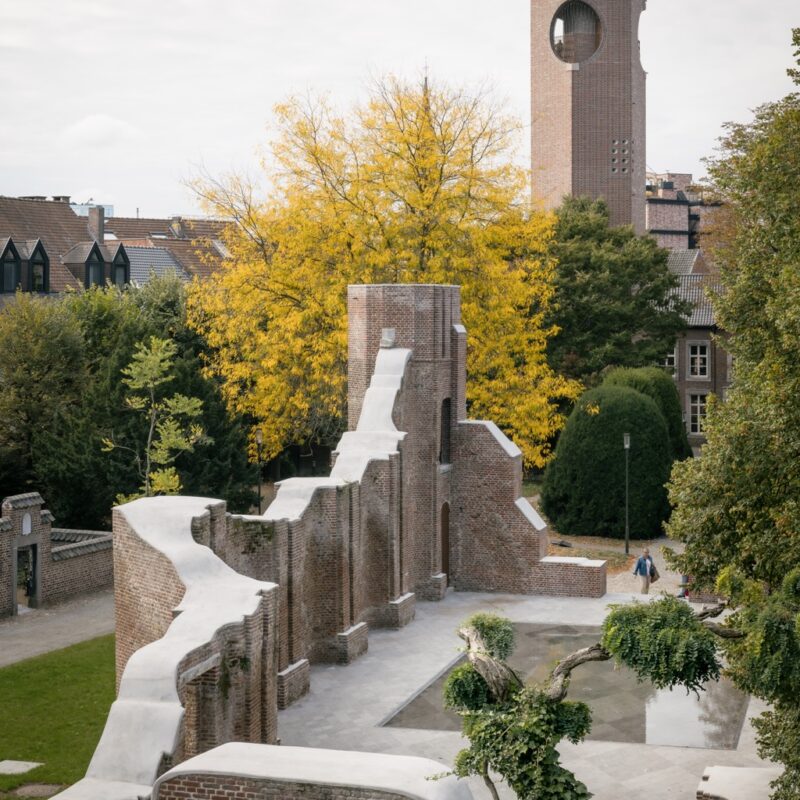
It happened so quickly. Fifteen years ago, sustainability was not a top priority in Brussels. But since then, one drastic policy decision after another has turned the tide. The first step was the obligation to build passively from 2015 onwards. This was followed by the insight that sustainability also requires a good living environment, jobs for everyone, and less traffic. These issues are closely related to our patterns of consumption and production, and thus to the flow of materials and goods. Since March 2016, the Regional Programme for a Circular Economy1 has been committed to a change of direction in this sense. Awards for exemplary buildings point the way. 1 The Regional Programme for a Circular Economyis a collabo-ration between Brussels Environment, Urban.Brussels and theBrussels Government Architect.
Everyone in the Brussels-Capital Region has been able to compete for the title of ‘exemplary building’ since 2007. Four criteria played a role: energy efficiency and renewability, environmental impact, feasibility and repeatability, and architectural and urban quality. The reason was obvious: in 2007, buildings were still responsible for 72 per cent of CO2 emissions, while transport ‘only’ accounted for 23 per cent. At 4 per cent, industrial emissions were almost anecdotal. If the Region wanted to be climate-neutral by 2030, the built heritage had to be adapted. This policy proved successful: passive buildings are no longer the exception but the norm, both for residential and office buildings.