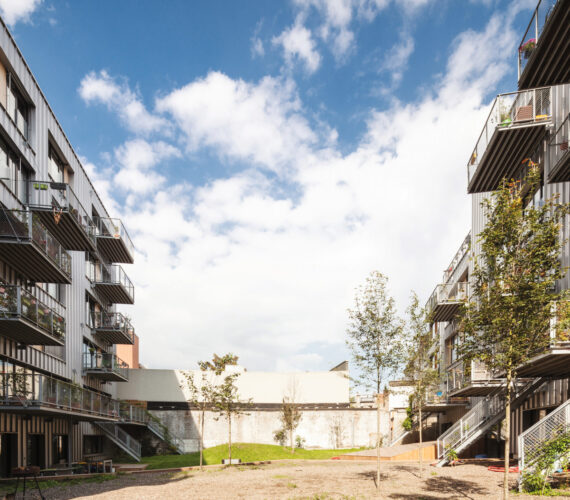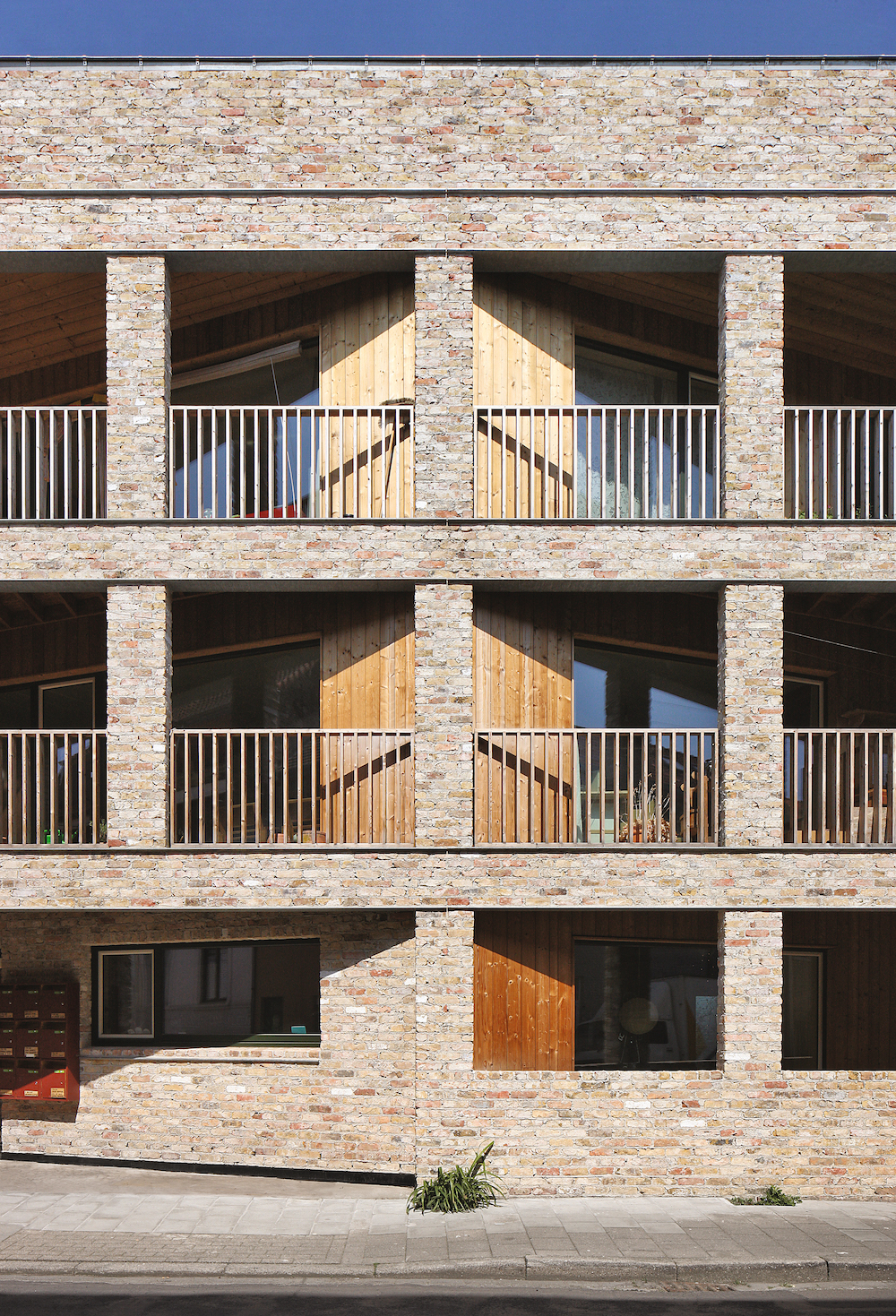
Havana architectuur is behind a cohousing project in the Schilderstraat in Ghent. De Schilders is a town house for eight families. Each family has its own individual dwelling. Together they share a garden, a communal kitchen and living spaces on the ground floor, and a laundry and storage in the basement. The course of a bent back elevation – determined by the building regulations – has been picked up in the frontage, a façade which otherwise suggests a regular arrangement of the individual dwellings. Nothing could be further from the truth, however. For this specific programme of collective housing, Havana threw the tacit codes of architecture over board and designed one big house that moves the residents to live together.
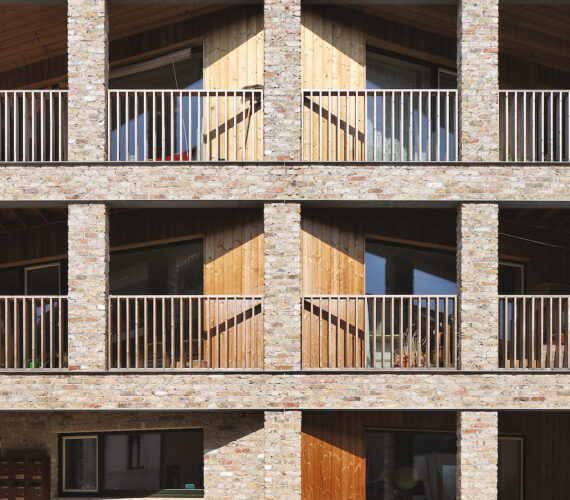
The building stands in the row with a tight rhythmic masonry façade of about 25 by 10 m, a grid of pillars and architraves in three layers. Little suggests that behind this vast, regular front there is a particularly disparate housing programme – little, except for the snake dance of what is to be found in the second row. Behind the bays of the frontage, the zigzag of an additional façade line makes way for triangular terraces. The foreground seems to be under pressure from the second plan. It looks as if the regular row model is being put under pressure by the unruliness of cohousing. This can also be seen from all the stuff that has been put away on the built-in balconies. But of course, the opposite is true. The usual urban building models have been tried and tested in the traditional housing forms. If they are interpretable and lend themselves to a different kind of habitation, then this is not without some resistance. Licence is only the leave to which the rule consents; freedom is allowed to indulge itself against a rigid background. That coercive agreement that architecture usually tacitly endorses was simply reversed. Here, freedom unfolds behind a countenance of strict order. It could be said that this swapping of background and foreground ultimately doesn’t matter, that in the end it all comes down to the same thing. But exposing an unspoken rule already implies its protest, and moreover, in doing so its effect is limited to the formal register.