Although Traumnovelle is best known for its conceptual tools, fictions and scenographies, the office delivered its first built project in 2019. But it would be a shame to see in the particularly enlightened architecture of the A6K project a turning point when, on the contrary, the project is a coherent continuation of the agency’s work. Let’s rather consider A6K as a precious continuity that contributes to deconstruct the theory-practice dualism which the discipline still suffers from and let’s take advantage of this project to question the output of Traumnovelle in terms of what the project extends and amplifies regarding their practice.
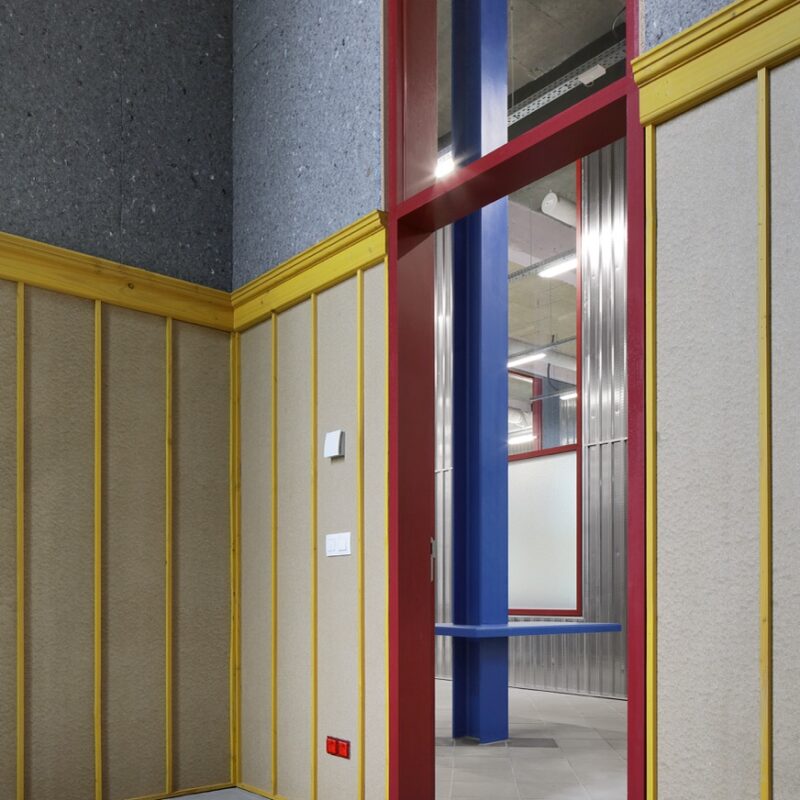
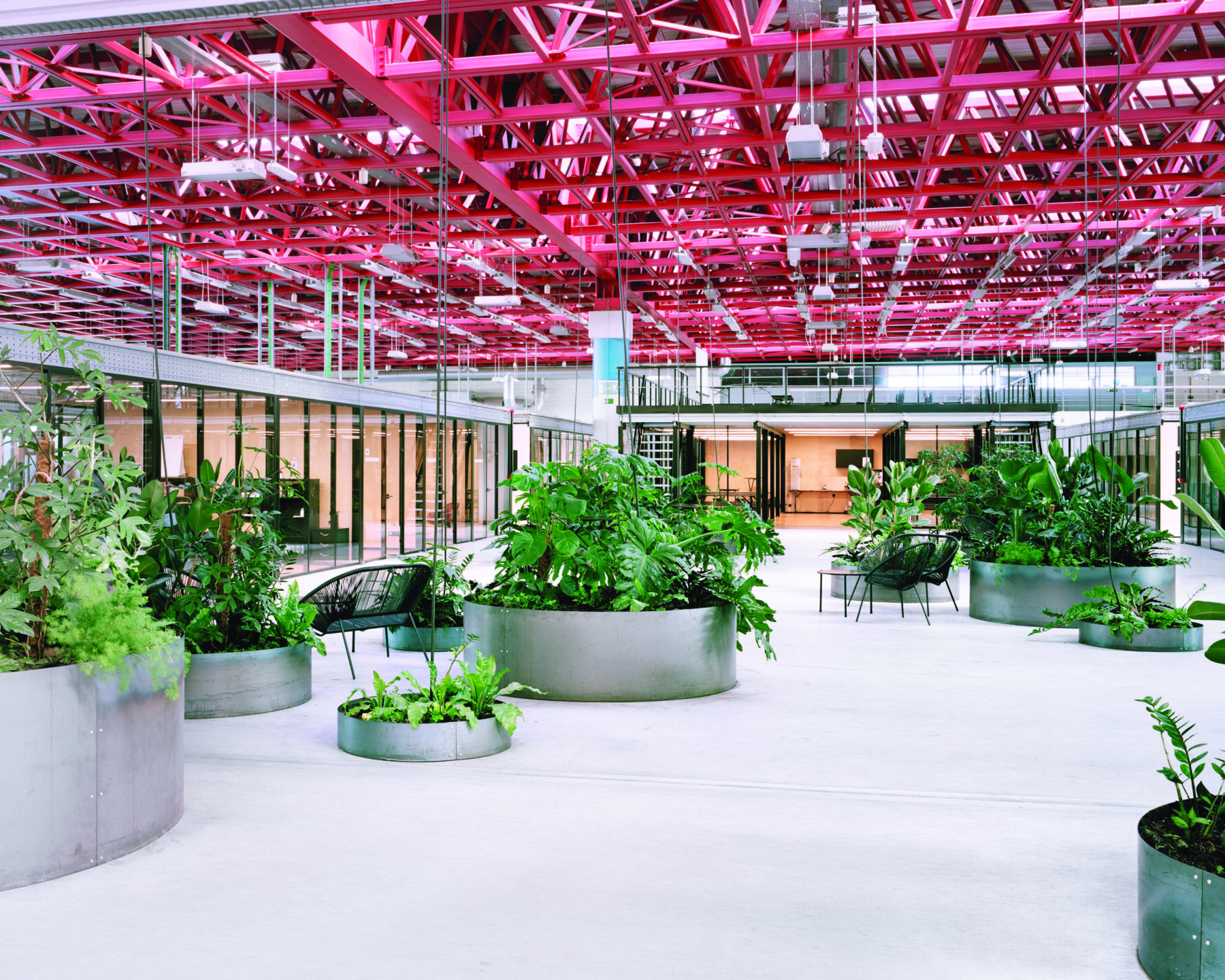
Considering architecture as a politically oriented discursive tale, the work of Traumnovelle evokes the notion of fiction. Here, the plot starts with the collapse of the Caterpillar company. The ‘public utility start-up’ Delivery Unit takes on the role of project manager commissioned by Charleroi to work with the private sector in order to ‘accelerate job growth’ and to organize the city’s ‘economic redevelopment’. Delivery Unit negotiates a five-year lease with the national railway company to convert the former Tri Postal premises into a co-working unit for engineering sciences. The architects take to the stage on the occasion of a public call for tender. Winning over the jury precisely through their fictional engagement, there was a surprising meeting of minds between the architects and the project manager over the issue of storytelling. Traumnovelle’s tale builds up over five years around the philosophical concept of the sublime, a concept which the A6K project interprets by repeating the carpentry and the joinery rhythms to the point of exaggeration. More specifically for A6K, the architects play with the programme of co-working and industrial heritage by attempting to embody them in industrial elements, but also by repurposing them through the addition of wooden panels or by contrasting them by introducing a ‘tropical garden’. For its part, the story told by Delivery Unit attempts to bring about an economic recovery on the grounds of a social tragedy and a lapsed industrial heritage. The tale has its happy ending. Despite the economic and temporal constraints, the space is infused with quality: convincing in its dimensions, in the functional simplicity of the design plans, in the generosity of the choice of materials and in the attention paid to the details of the implementation.