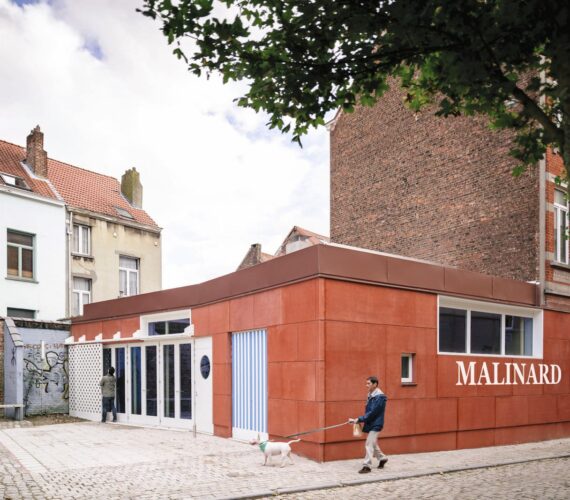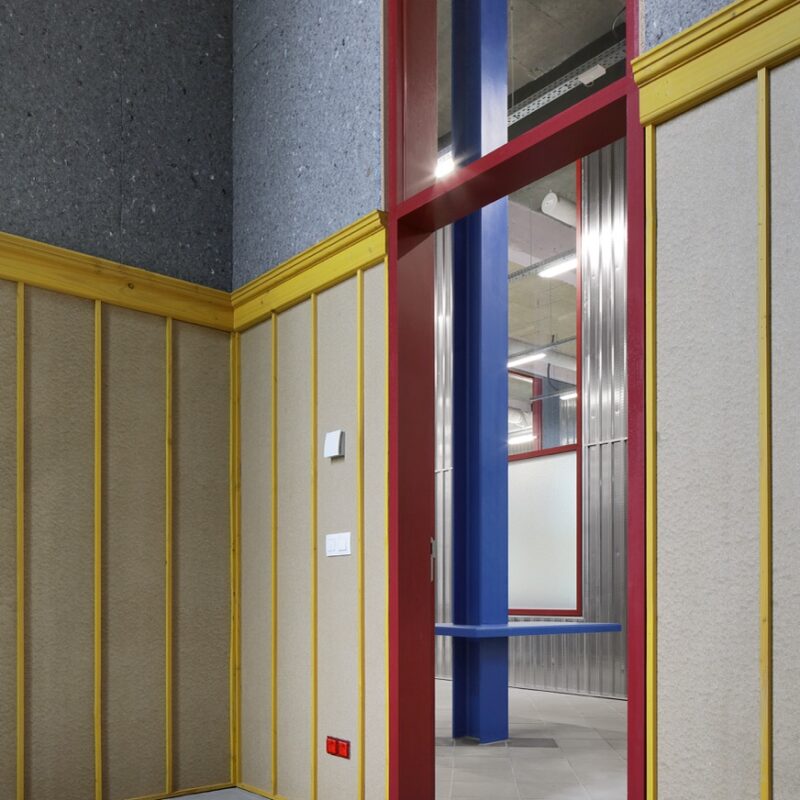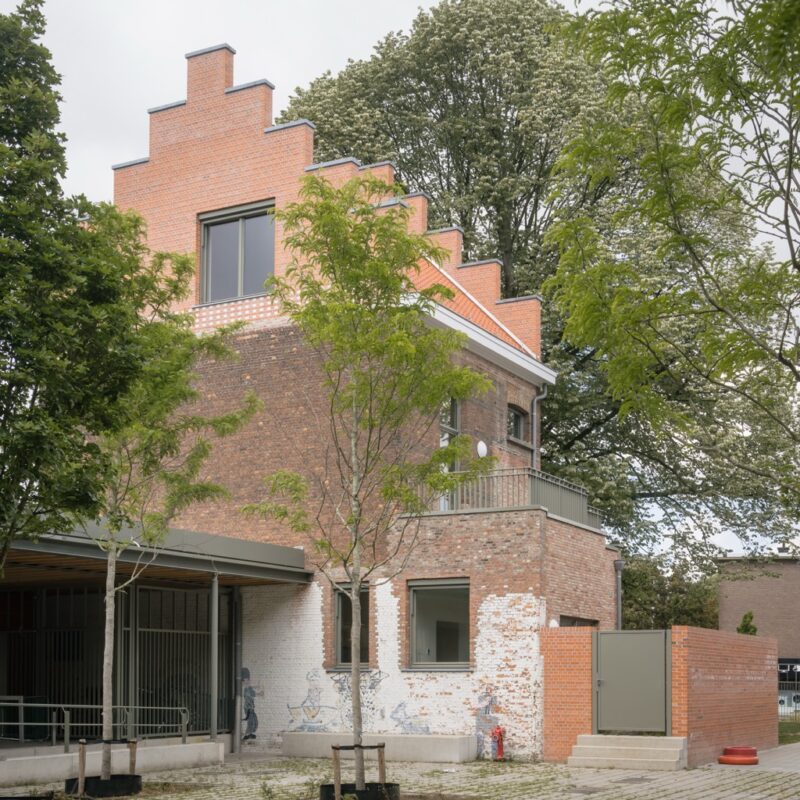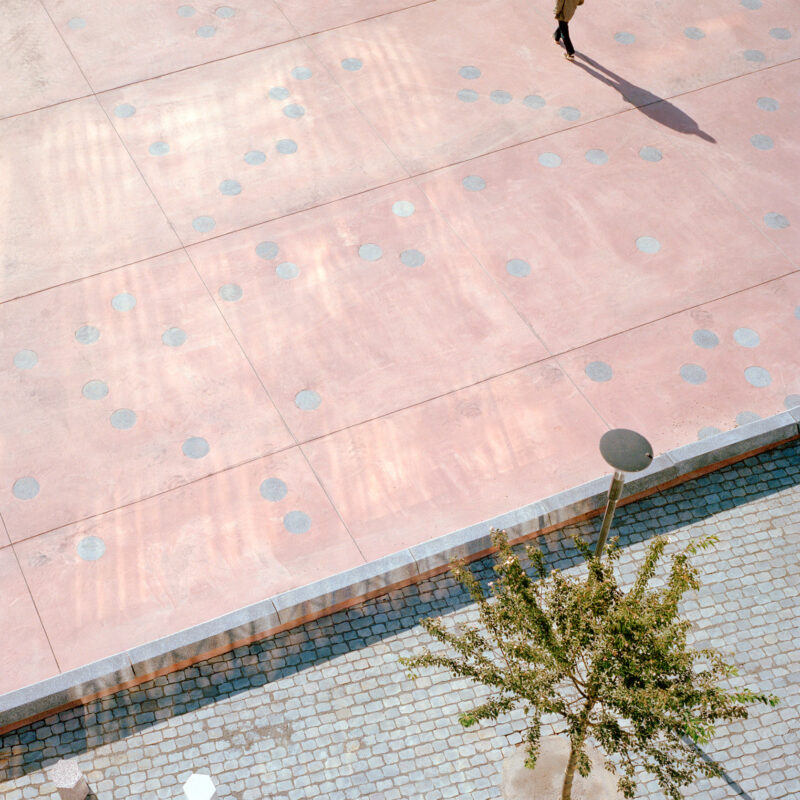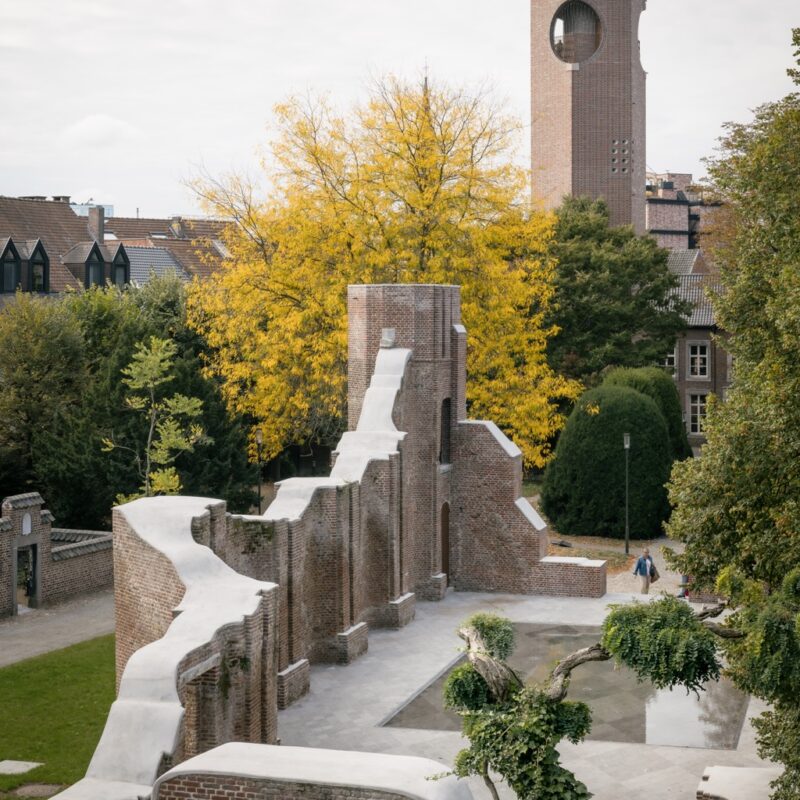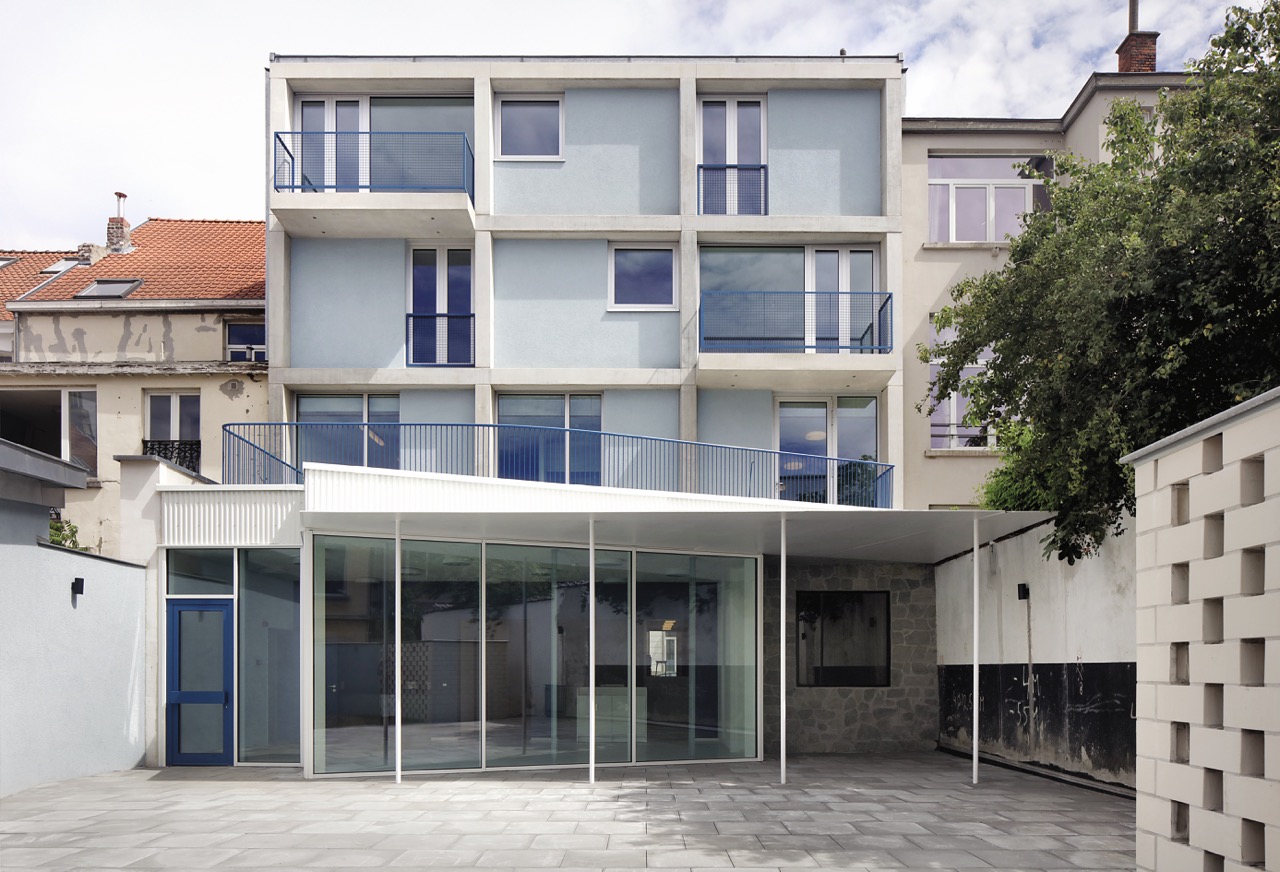
Just a stone’s throw from Jean-Félix Happark, there is a unique part of Etterbeek waiting to be discovered. The block nestled between Oudergemlaan, Fétisstraat and Waversesteenweg is now opening up to the neighbourhood. The municipality, in collaboration with the Brussels Chief Architect, launched a competition as part of a sustainable neighbourhood contract. Ura, in collaboration with Landinzicht, stood out with a masterplan that brings clarity to the intriguing tangle of this inner area.
Although this does not concern plots in distant Boston, this tangle, which is characteristic of Brussels, does bring to mind Kevin Lynch, who in *The Image of the City* states: ‘It must be granted that there is some value in mystification, labyrinth, or surprise in the environment. Many of us enjoy the House of Mirrors, and there is a certain charm in the crooked streets of Boston. This is so, however, under two conditions.’1 Firstly, according to Lynch, there must be no danger of losing one’s bearings. Furthermore, the labyrinth must possess a certain form that can be explored and, over time, come to be known. ‘Complete chaos without a hint of connection is never pleasurable’, he continues. It seems as though Ura were inspired by this, given how they use their architecture to fit an extensive programme into the whimsical composition of the existing plots. You no longer simply walk past the block but dare to step inside, gradually discovering a play library, garden, family spaces, playground, theatre and concert hall, multi-purpose foyer and crèche. All of this is woven between new and existing homes of every kind. 1 Lynch, K., (1960). The image of the city. Technology Press, Cambridge, pp. 5–6