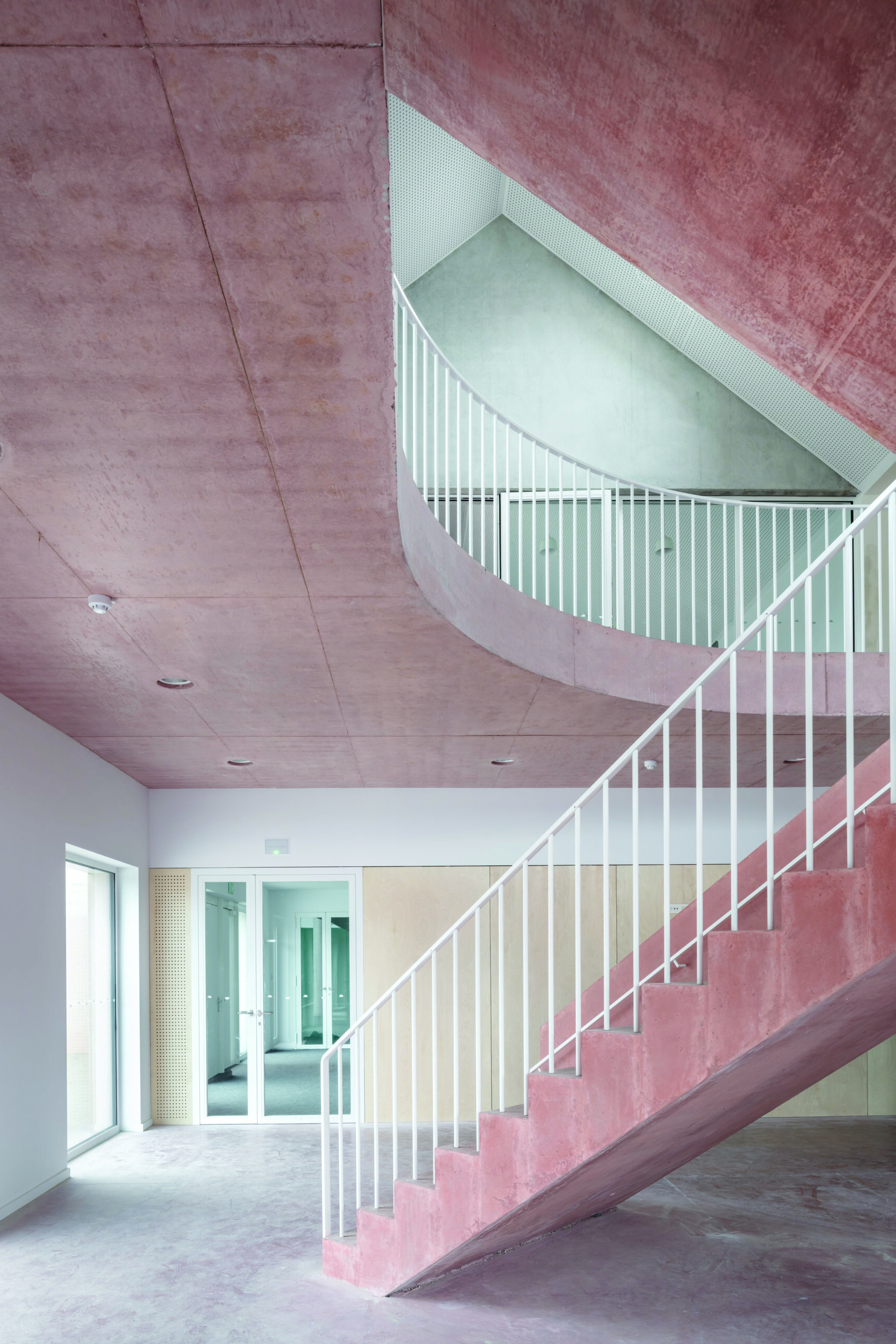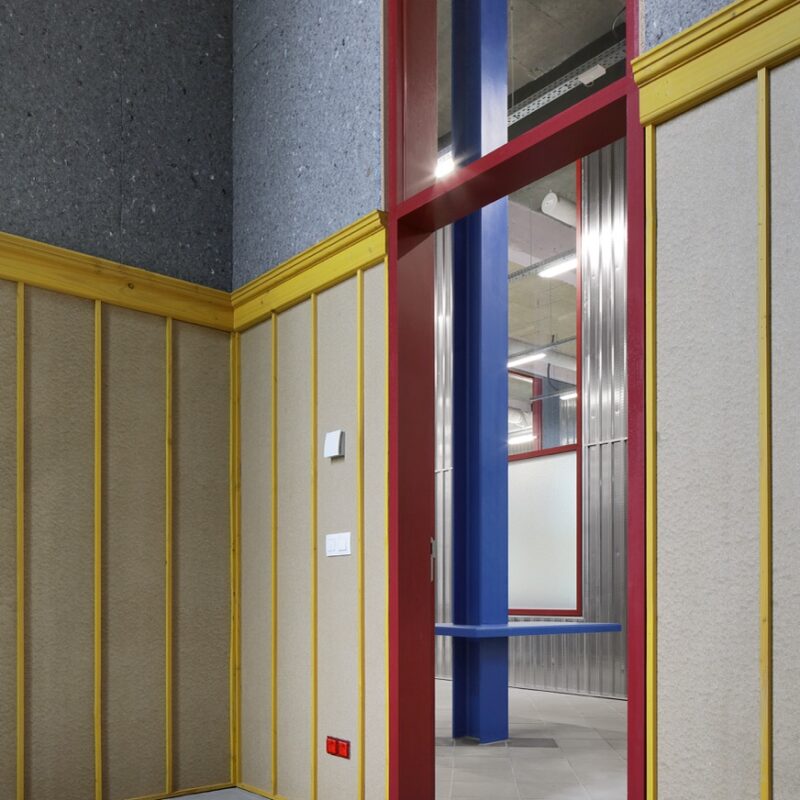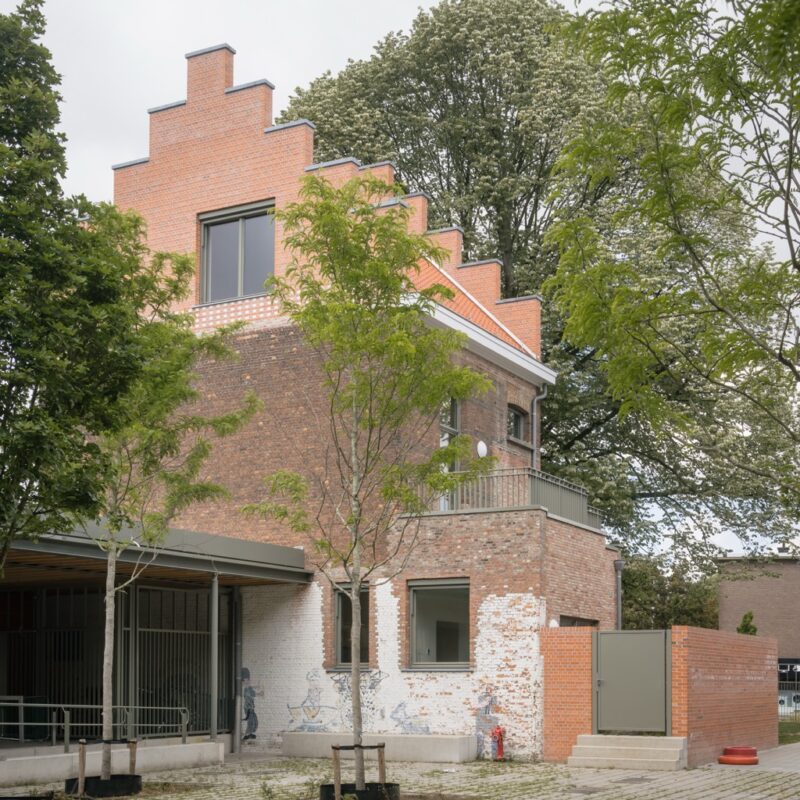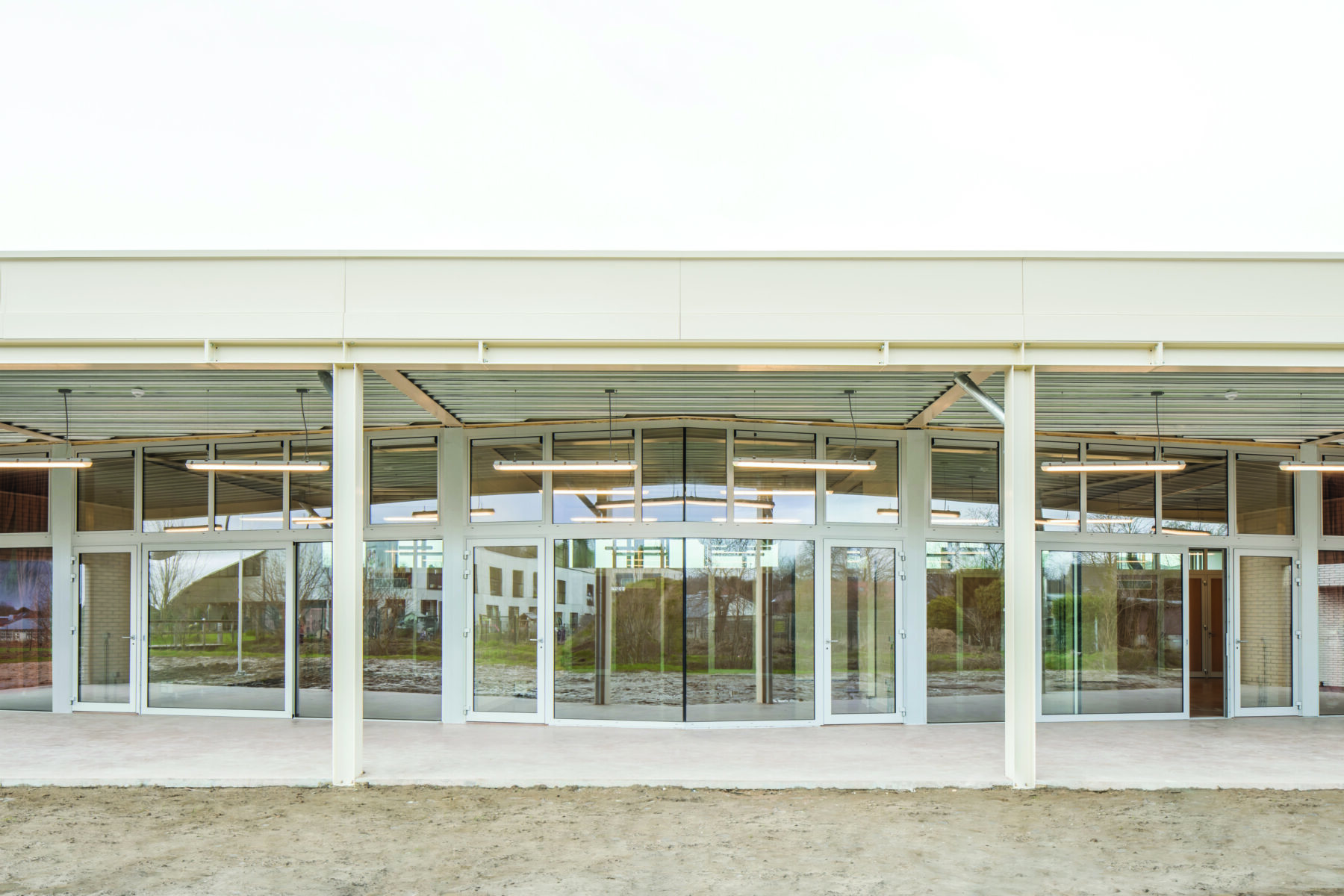
Few designers capture the messy everydayness of life so accurately within the intact geometry of a ground plan as Brussels-based B-ILD Architects. For the multipurpose Warot building in Winksele, the office once again designed a stunning plan. Despite its near tyrannical symmetry, the building elevates as a matter of course the rural banality of the small municipality.
A small sandstone pilgrimage church tries to preserve the appearance that Winksele is a picturesque hamlet. But over the past centuries, the surrounding banks were penned in between the Mechelsesteenweg and the Brusselsesteenweg, two major roads to Leuven. A railway line cuts through its main street, the Dorpsstraat. At the level of the bus stop named ‘Winksele schoonzicht’ (‘Winksele nice view’), the Brusselsesteenweg crosses the Hogebeek. It is one of the many unsightly rivulets that were forced in the eighteenth century by French and later Austrian engineers into the straitjacket of a culvert, at the site where their course crossed the route of the new connecting road. The brook makes its way almost secretly from the south-west to the north-east through the parcelling murmur of Winksele. Crossing under the paved road, running through fields, along the gardens of a ribbon of detached houses, past the new school at whose back stands a recently erected apartment project with a supermarket, to the sports fields, the sports hall and the car park, under the Warotstraat leading to the new residential area, and then round the back along the row houses in the Dorpsstraat.