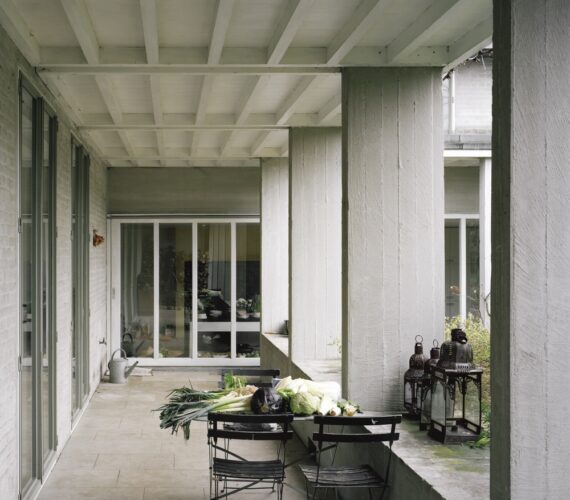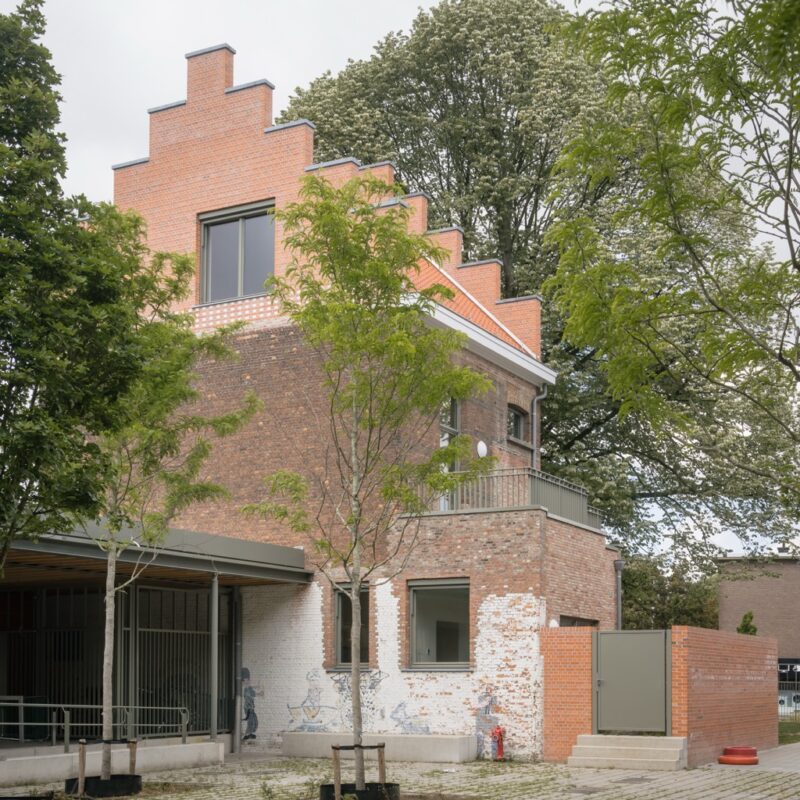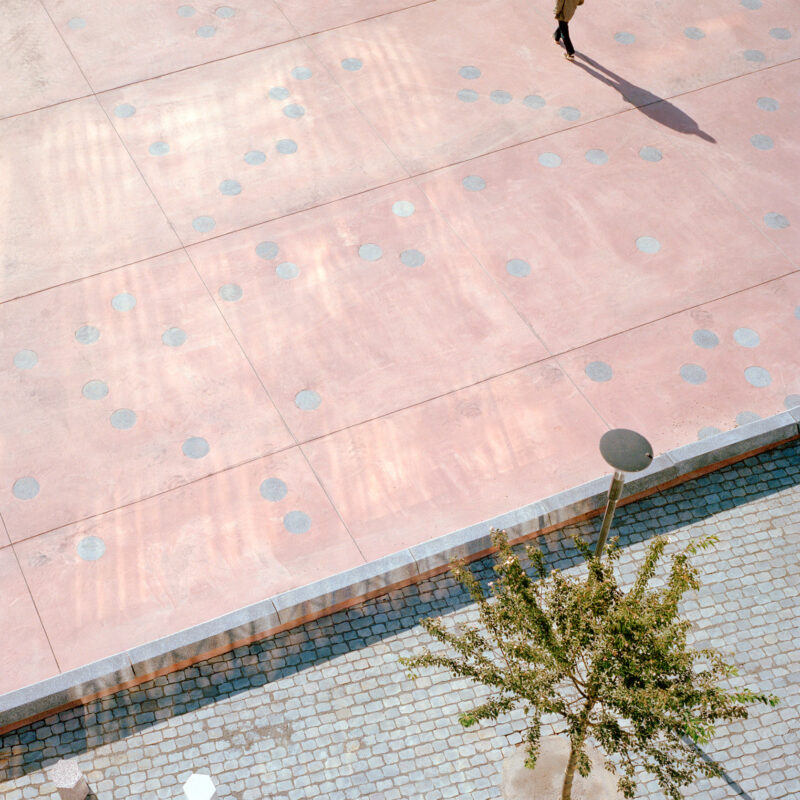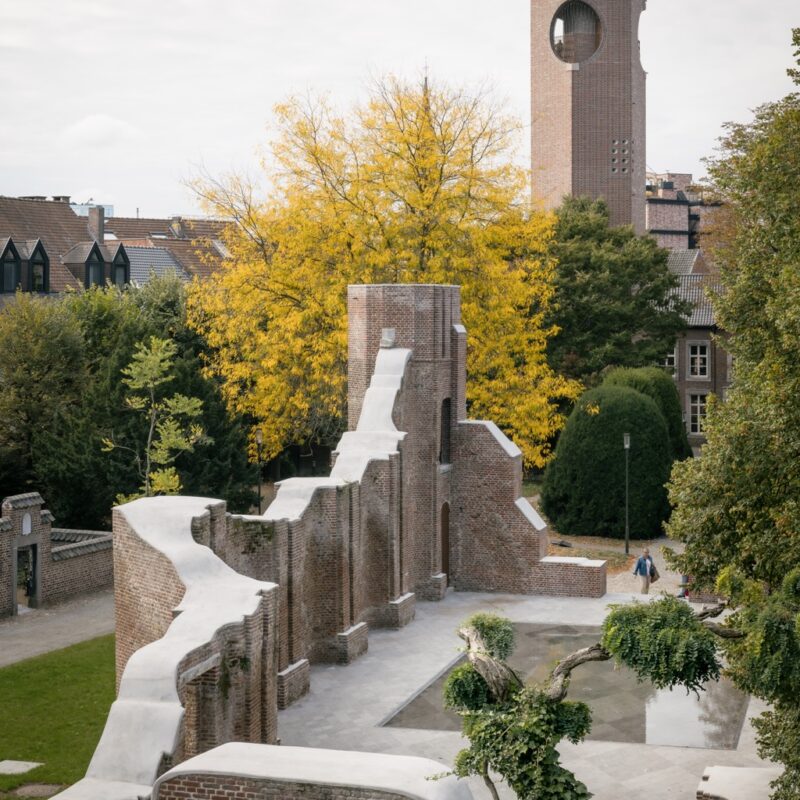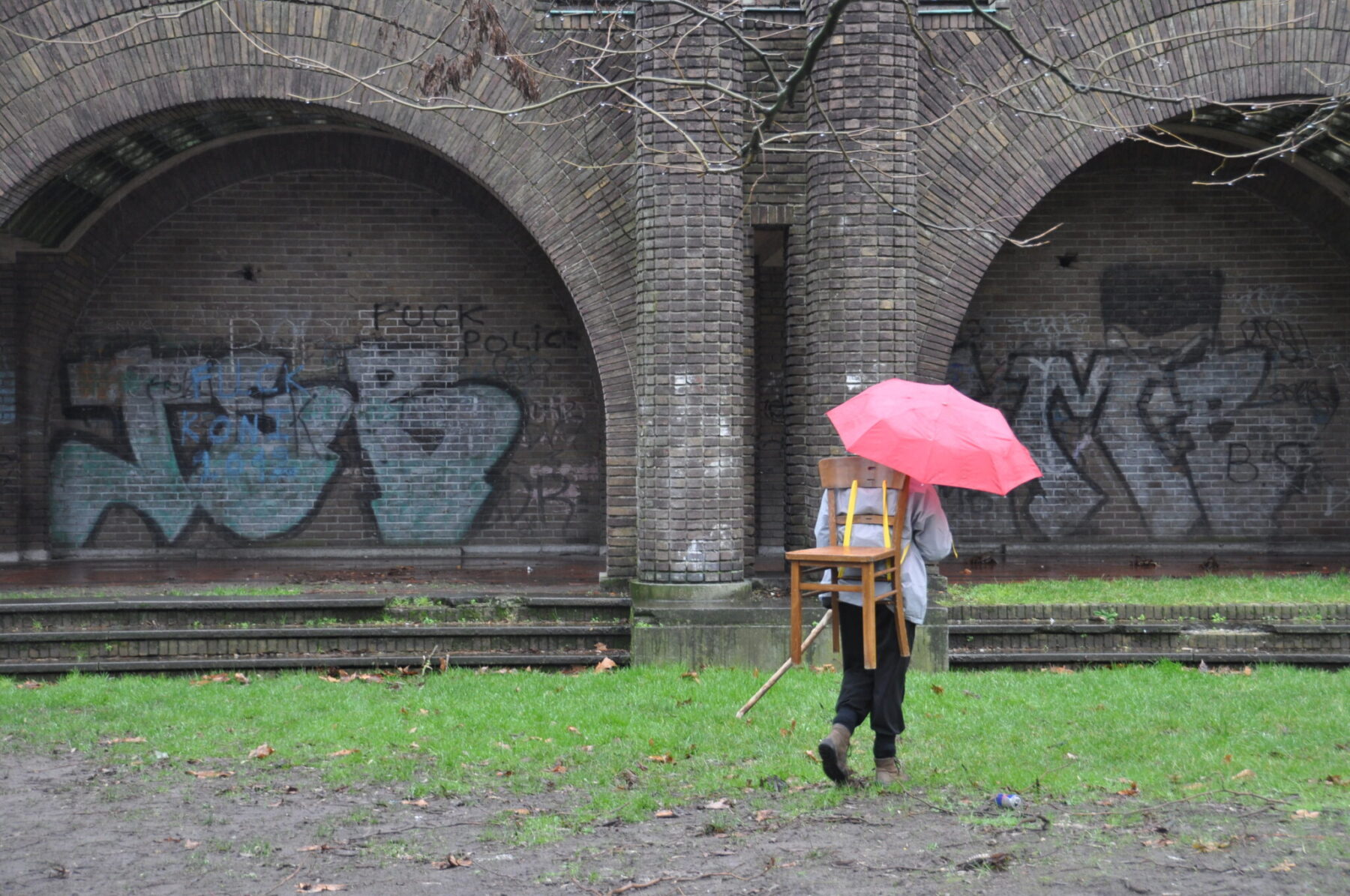
There is a widespread focus on quality silence. As early as 1882, Friedrich Nietzsche noted in his book *Die fröhliche Wissenschaft* (*The Gay Science*): ‘Someday, and probably soon, there will be a need for what is particularly lacking in our large cities: quiet and spacious open spaces for reflection, places with tall, long colonnades for inclement or sunny weather, where no clamour from town criers penetrates.’ Meanwhile, our urban context has become highly densified and there is no longer any room for expansive spaces and long colonnades. The need for silence and tranquillity as an essential part of a living environment that contributes to physical and mental well-being is all the greater.
Since 2012, students from KU Leuven’s Faculty of Architecture have been carrying out interventions in public spaces under the name ‘Urban Silence’. In 2015, architects Geert Peymen and Pleuntje Jellema explored the subject further by linking spatial qualities to the experience of silence and tranquillity in the city. They identify a number of processes of change in our society that are partly responsible for the current need for silence and tranquillity. 1 1 Geert Peymen and Pleuntje Jellema, ‘De luwteplek – a spatial study of silence, tranquillity and space in the city’, peymenjellema, Ghent, 2017