Danish architect Søren Pihlmann, who contributed to the 2025 Venice Architecture Biennale with the “Build of Site” project in the Danish pavilion, will be giving a lecture at Bozar on 31 March 2026 at the invitation of A+. He has developed a practice based on reuse, detailed analysis of existing structures and constant attention to the inherent capabilities of materials. Through his projects, he questions contemporary construction logic, the role of cladding, industrial processes and how architecture can be transformed by working with what is already there. This interview explores a way of thinking about projects where action precedes form and where materiality becomes a critical driving force.
Léone Drapeaud (A+): In your description of House 14a, you mention a series of actions – exposing, covering, cutting, joining, stacking, casting – used to transform an existing composition. These verbs do not seem theoretical, but almost practical, as if they relate to the building site. I would like to start from there: how do these actions, rather than forms or projects, structure your work and your way of transforming architecture?
Søren Pihlmann (SP): Our practice is, to a certain extent, more based on actions than on predefined objectives. We accept the fact that we work in a complex reality, where many materials are already present, and that strategies must be devised to deal with all of these resources. It is not a question of favouring one material over another, but of introducing actions that can reconfigure what we find. Working with existing buildings requires a certain attitude: a way of relating to the building that allows us to remain open and flexible. We want to see how far architecture can go by extracting as much information as possible from what we encounter and responding to it in turn.
A+ It’s interesting that you mention information before anything else.
SP We must move away from a linear view of architecture, where new resources are constantly extracted to build new environments, often at the expense of what already exists. Existing buildings have enormous potential; they can, to a certain extent, even regenerate themselves from their own materials. Today, the industry imposes a logic of standardisation and documentation. Materials must be certified in order to be reused. When they are not, the only legal option is often to throw them away, even though we know that these materials are still perfectly usable. So, if we want to go as far as possible without introducing new resources, then gathering information becomes central.
A+ “Exposing” can be understood as showing what is there, but in your projects, it also seems to involve analysis and documentation. What did you do for the Danish pavilion at the Venice Biennale in 2025?
SP Exposing serves several purposes. It highlights existing materials and systems and creates a direct link between how they are constructed and how they are perceived. Once this link is established, people react to what they see: some discover a form of beauty in what already exists, while others reject it, which can be just as productive in encouraging them to seek other solutions.
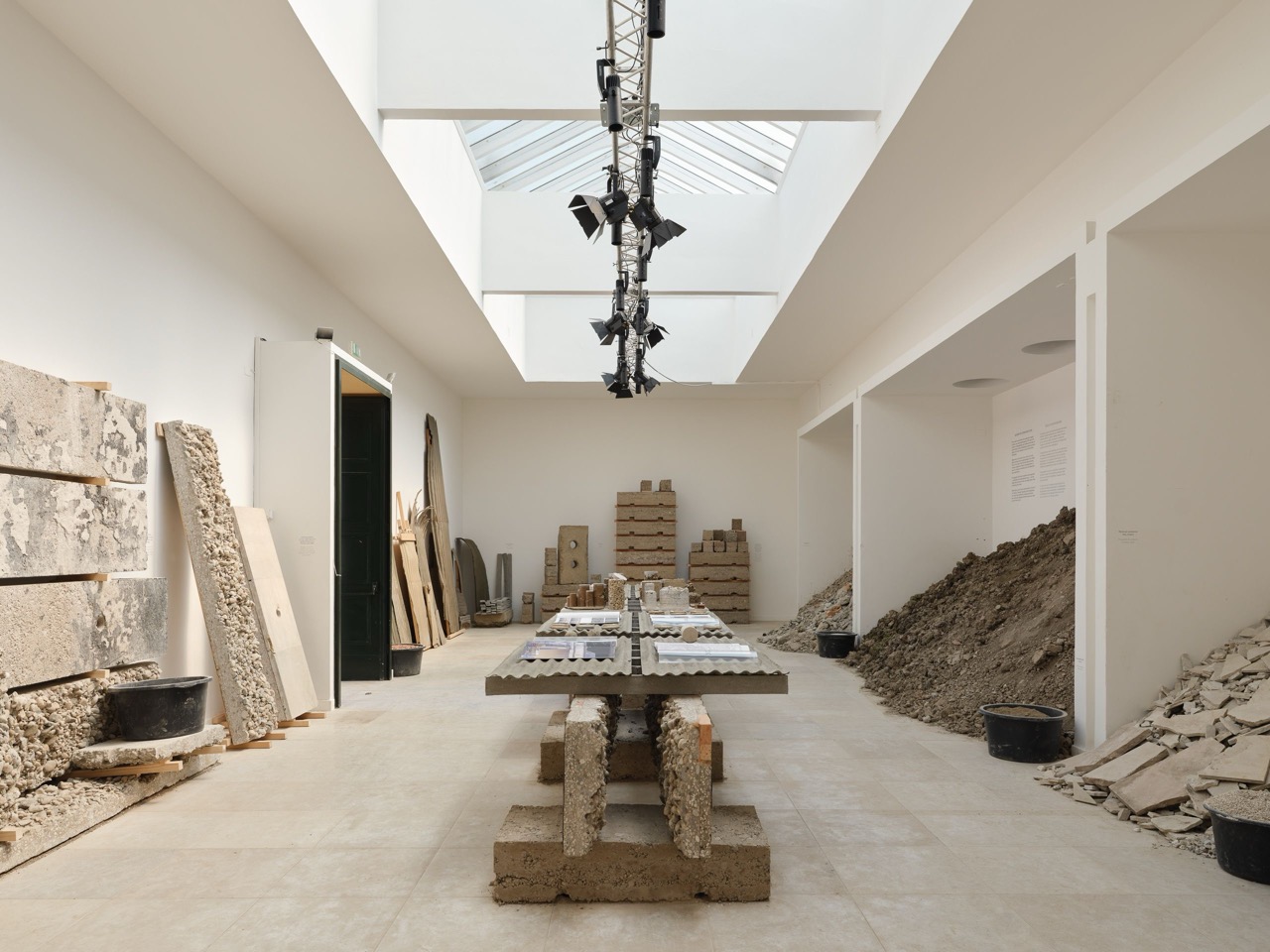
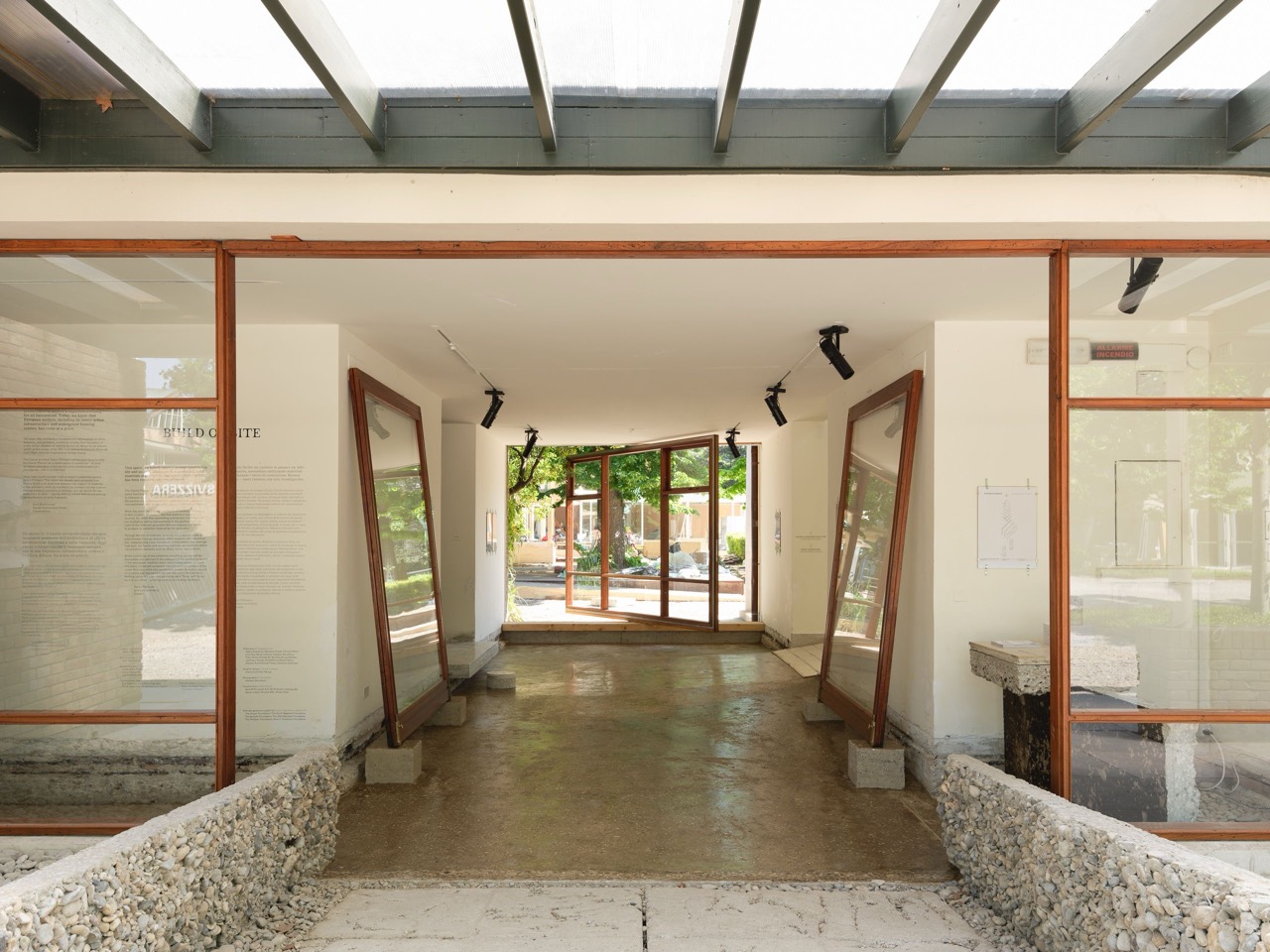
For the Biennale, rather than installing a temporary exhibition, we studied the pavilion itself. This approach revealed there was a lot of work to be done: part of the building was prone to flooding, and some of the structures from the 1950s, cast without reinforcement, were cracking. These material limitations determined the possible loads and uses. The exhibition thus became a means of sustainably repairing the building while documenting the transformation process. Soil specialists, structural reuse engineers and a researcher in organically sourced materials used non-destructive analyses, compaction processes and experimentation with natural binders from the lagoon to transform the earth, concrete and waste from the pavilion into new building elements, without introducing any external materials.
A+ You just mentioned the exhibition and how it reveals materials and their constraints. How does the idea of “covering” fit into this same process?
SP We almost never seek to cover in the conventional sense. In contemporary Western architecture, we have moved from the beauty of construction to the beauty of cladding. We build in a certain way, then add layers to mask this reality and meet expectations, which often breaks the link between construction and architectural quality.
Vapour barriers are a very clear example of this. In many recent buildings, plastic membranes are introduced that literally transform buildings into waterproof envelopes. People wouldn’t just accept that they are living inside a plastic bag, so we hide this fact behind layers of finish. That’s why I don’t consider covering as a neutral gesture: it’s an active decision to suppress information.
A+ Yet you mention “covering” as one of your actions. Are there any situations where this gesture plays a positive role?
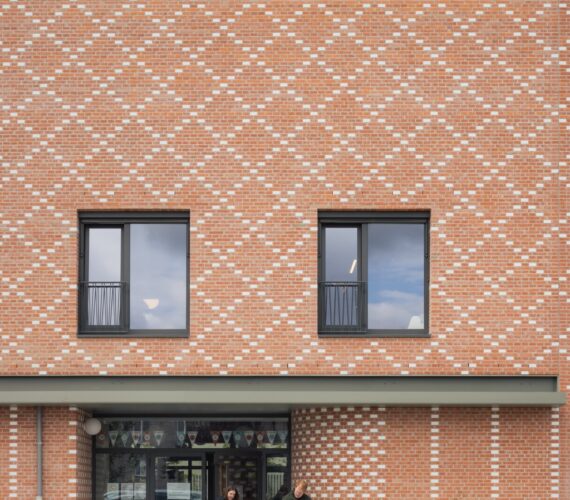
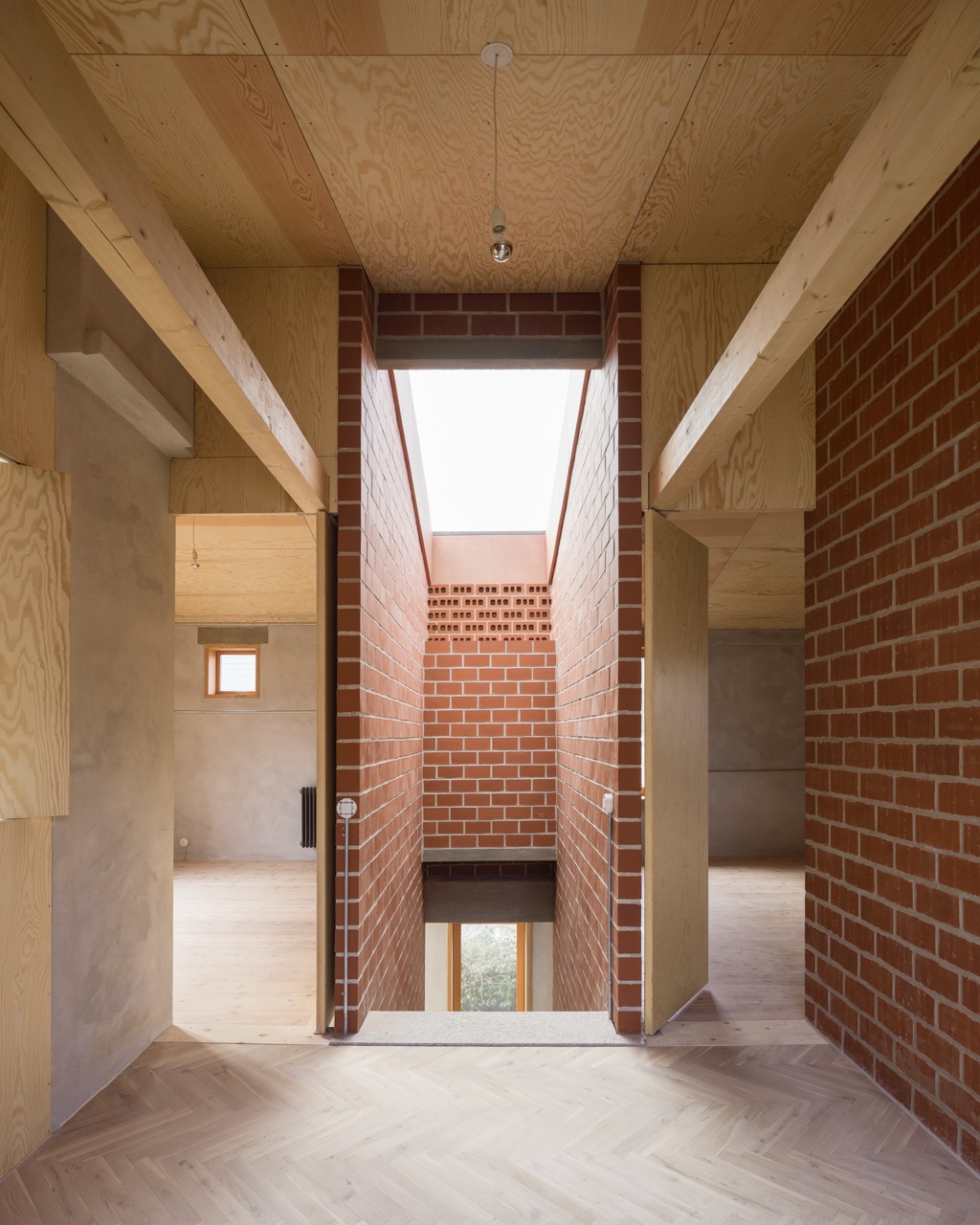
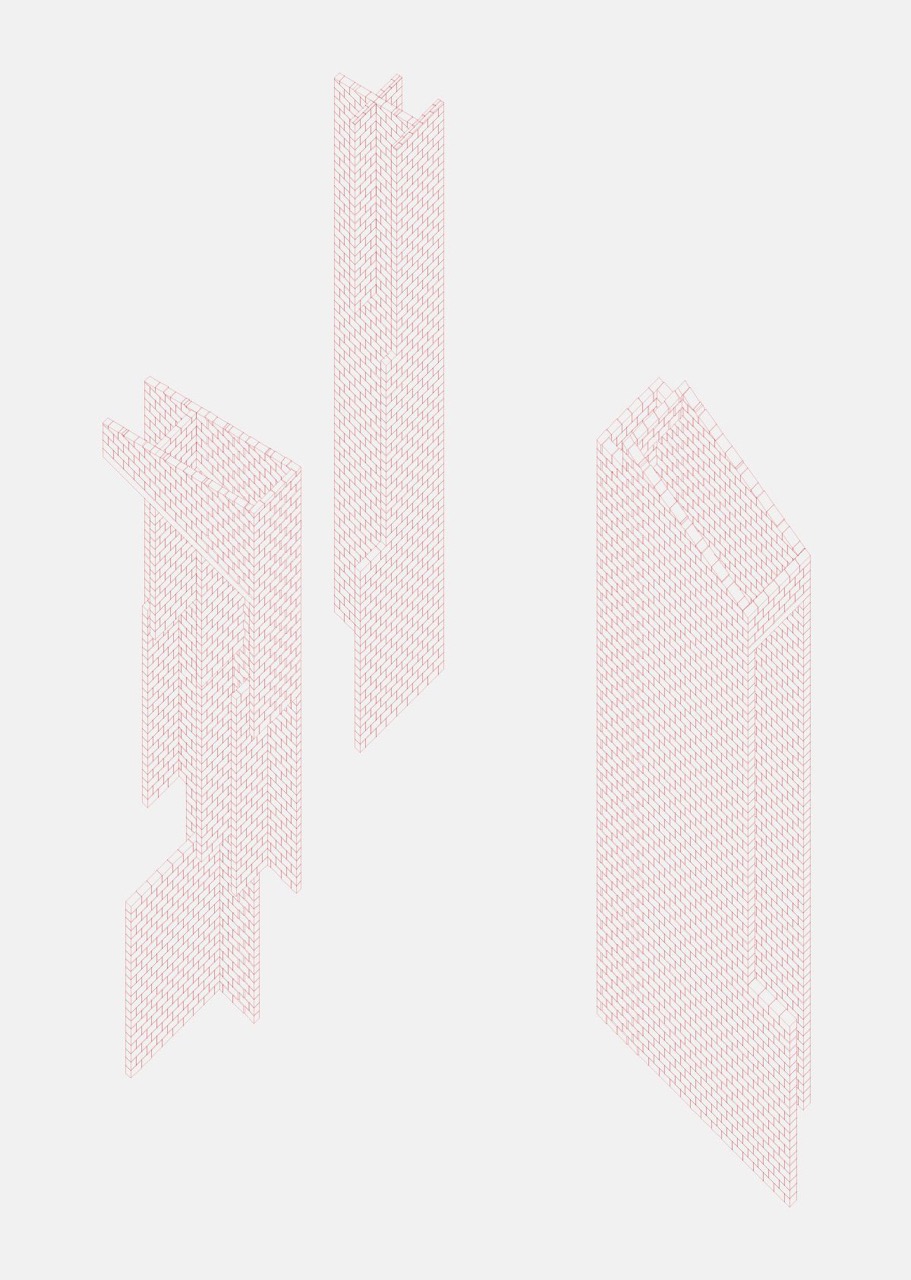
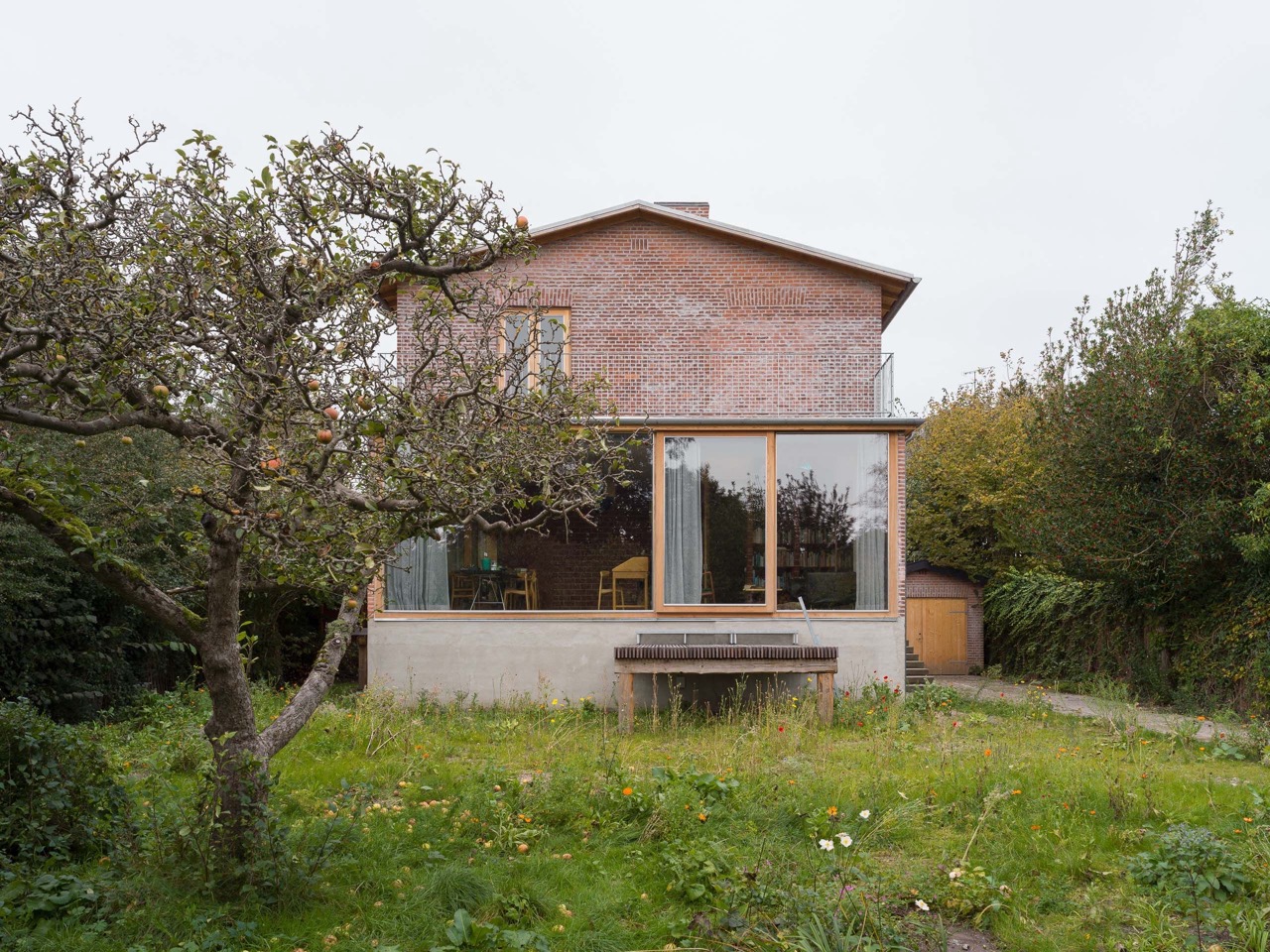
SP Yes, but in very specific cases. At House 14a, we worked with the existing facades without using new bricks. We moved the ones that were already there to close some openings and open up others, to create new spatial hierarchies and relationships. Here, covering becomes an architectural adjustment, not a cosmetic gesture.
The idea that an architect should “fall in love” with materials is very romantic — and also problematic. It establishes hierarchies that fuel overconsumption. Attachment comes instead from understanding a material’s capabilities: what it can and cannot do, and in what situations. This is where a material’s agency becomes apparent and where covering it up becomes difficult to justify.
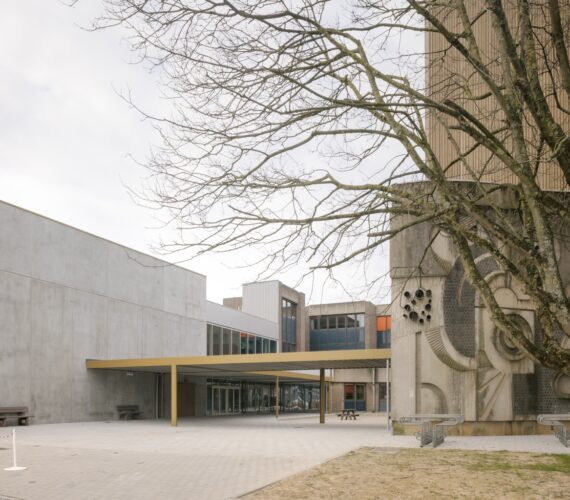
A+ For the Thoravej 29 project, you’re working with a generic concrete building from the 1960s. How does the act of “cutting” come into play here?
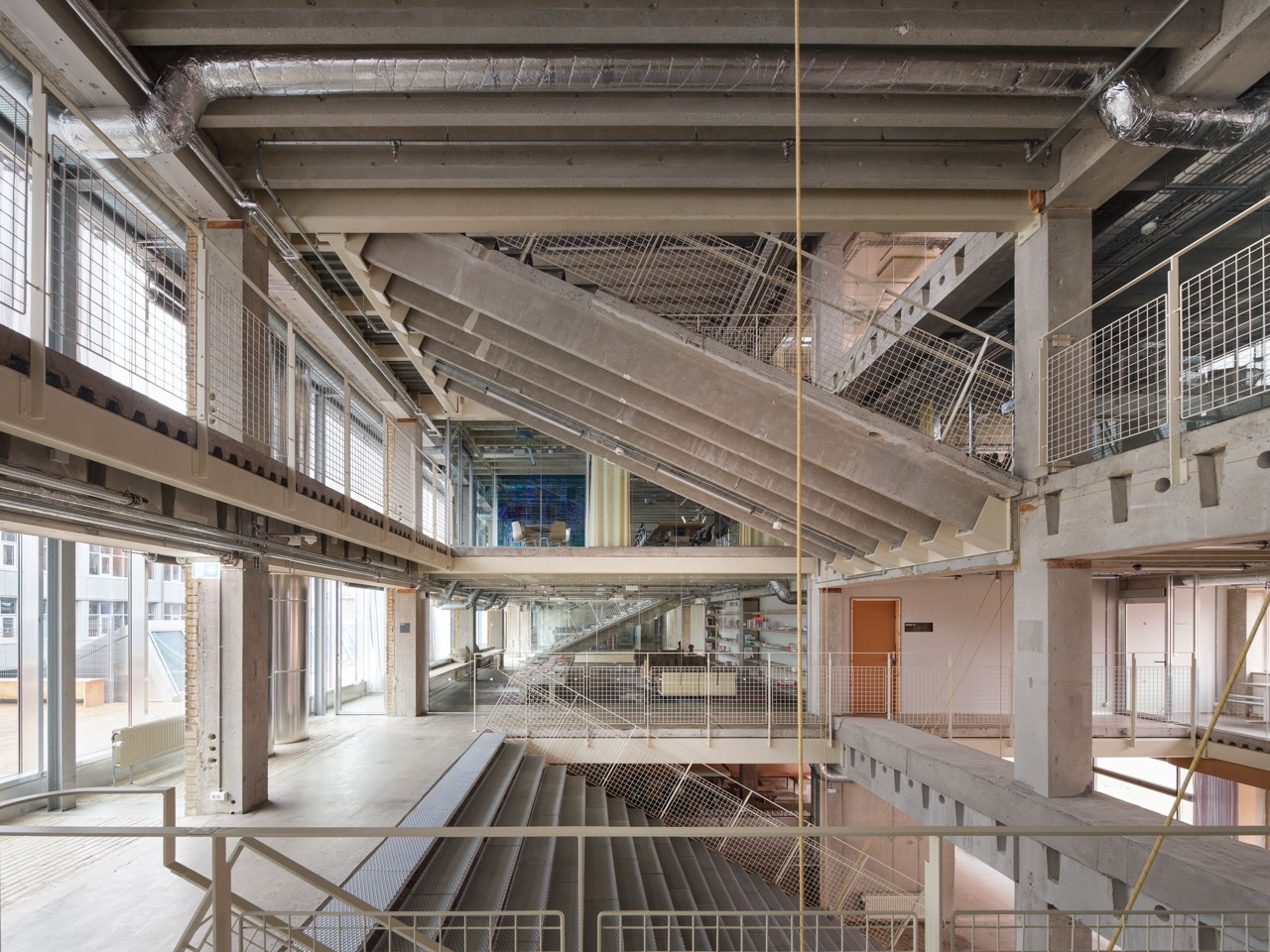
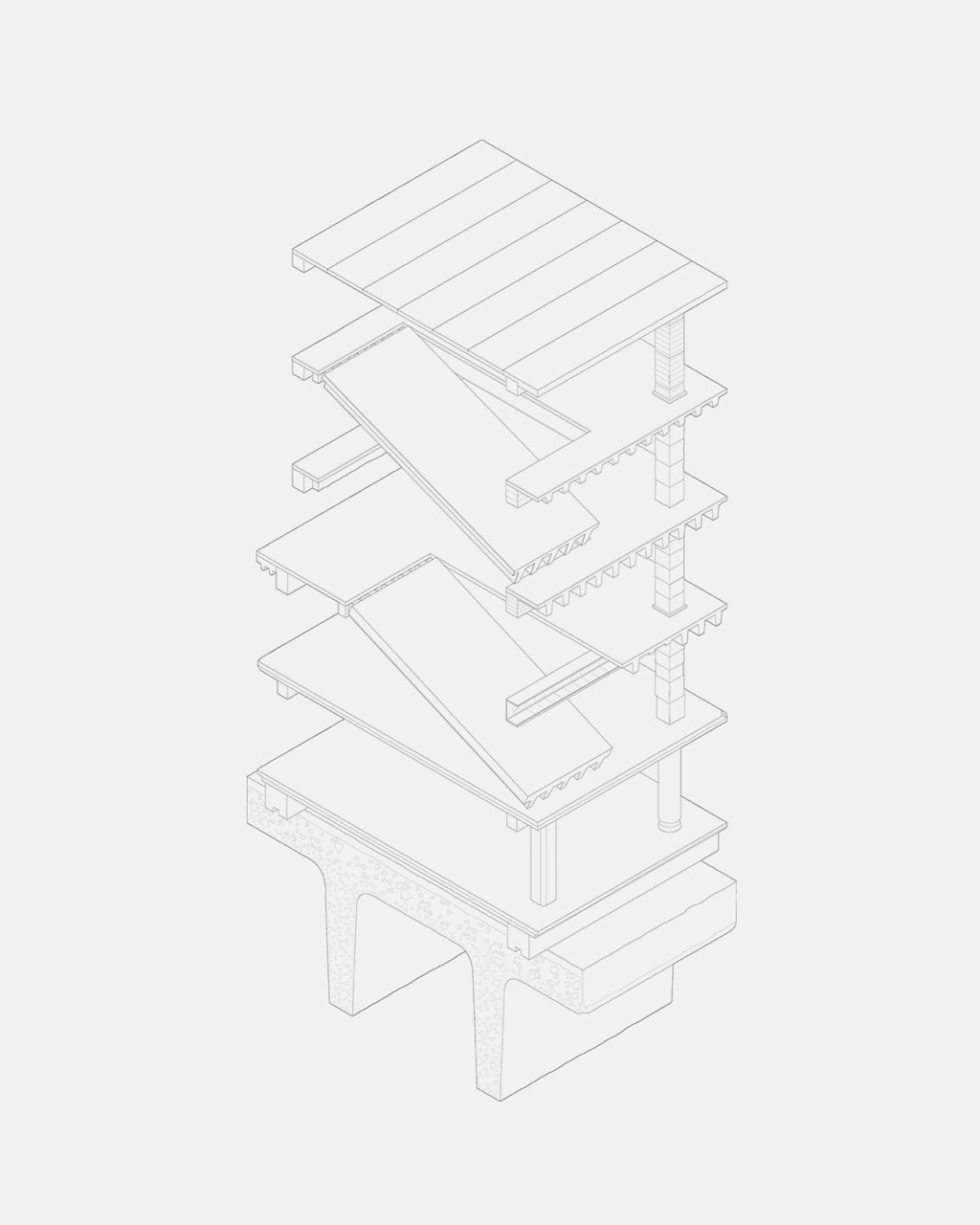
SP In this community hub project, cutting is essential to create connections between levels. By cutting certain slabs, we were able to tilt the concrete surfaces to form stairs, thereby visually and acoustically connecting the spaces while using the building’s own materials. Cutting is both a spatial transformation and a way of extracting resources. In order to open up the space, some brick partitions were cut and levelled to form paving stones for the floor. Constraints also become the driving force behind the project.
A+ Here, the material is reused on the project site itself, whereas transport often accounts for a significant portion of the architectural footprint. It’s also a way of preserving the work of the past.
SP Exactly. It also allows us to cherish the work, not just the material. We use the platform created by past knowledge to imagine new solutions, while retaining historical elements in the building simply because they work and are pleasant. The whole is presented as a flat hierarchy, in which each element is considered equally. Architecture becomes legible as a series of concrete actions, rather than as an object.
A+ But cutting is also destroying.
SP Absolutely. That’s why each cut is carefully considered. Every piece of waste becomes a potential resource. Cutting creates unexpected situations, and that’s precisely where architecture begins: it’s an act of revelation and transformation. The building ceases to be a fixed whole and becomes a set of pieces with which we can play, experiment and invent new configurations.
A+ You often mention joining at the building level, but what about when it comes to larger complexes?
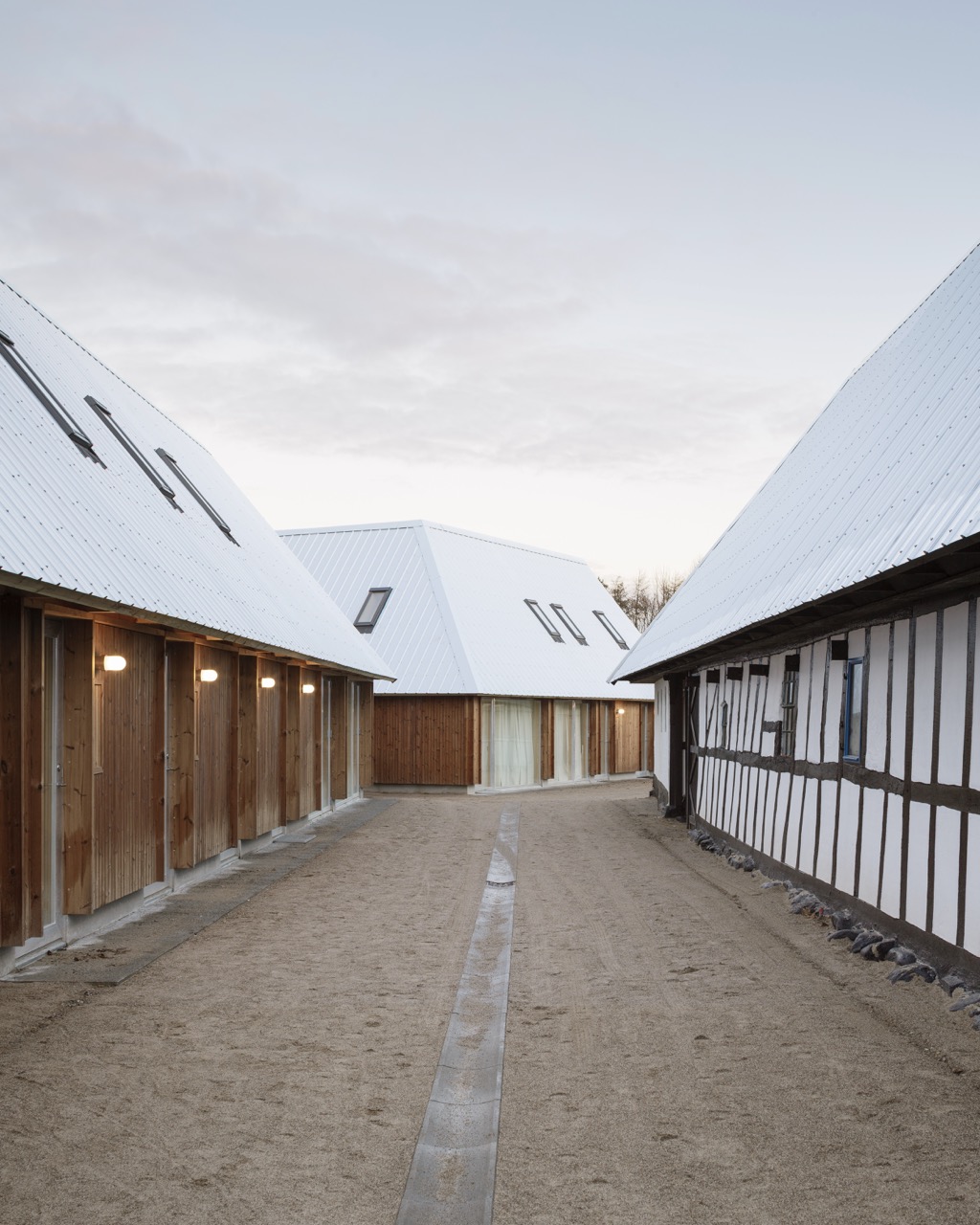
SP In the student village of Aarhus, the challenge was to connect the motifs of an old farmhouse without copying or imitating them. Joining becomes a central tool: it allows elements that were not designed to go together to coexist. Rather than erasing differences, we seek to make them productive. Junctions thus become places of invention, born from the encounter between existing structures and new constraints.
A+ Are these junctions then rather situations of dialogue than of resolution?
SP These are clearly situations of coexistence. In Thoravej 29, for example, the slope of the concrete creates a railing system that springs directly from this negotiation. In House 14a, the new partitions and structures are a direct result of the discrepancies revealed after the ceiling was removed. Each component retains its own logic, while interacting with the others.
The elements do not align perfectly but interact constructively. This results in what I call “playful potentials”: moments when the encounter between elements opens up unexpected possibilities. The junction becomes a place of invention and play, while remaining deeply connected to the materiality and history of the components.
A+ That brings us almost automatically to the theme of stacking. What does the action of “stacking” mean to you?
SP In our project for the Biennale, stacking was very literal, but it’s also a relational strategy: allowing the elements to interact and compose a whole, guided by what already exists. On a material level, certain bricks or blocks naturally lend themselves to stacking, but it’s also a more comprehensive strategy for bringing together existing elements and forming a coherent whole.
A+ As if every element had to be conserved?
SP Exactly. At Thoravej 29, waste materials were organised into piles and became resources for making furniture. Stacking then becomes a fun way to explore the potential of each material. Unless mechanical or health constraints require it, we avoid throwing away any materials; for example, we did have to remove damaged vinyl flooring that was fixed with toxic glue.
A+ When do you agree to revert to casting?
SP As long as materials can remain in their existing form – cut, turned over, stacked or joined – we seek to use them directly. But below a certain scale, it becomes necessary to transform them. Casting then allows us to explicitly reintroduce form and transform these fragments into usable components.
In the Biennale project, this tension was constant. Re-processing certain fragments opened up new possibilities, but also new responsibilities. Casting is more engaging than assembling: we no longer connect, we produce.
A+ So, it’s a more definitive act?
SP Yes. Unlike assembly, casting solidifies a situation and requires the reprocessing to be justified. For a recent project in Finland, the renovation and conversion of the historic stone barn at Saari Manor in Mynämäki into residential spaces for artists, we tested a process for transforming wood waste into lignin-bonded panels without synthetic glue.
These approaches challenge the science of materials and of industrial processes: how can we produce efficiently while allowing the variations and agency of materials to show? While industry tends to crush differences, we are exploring more moderate treatments, where irregularity remains visible. These experiments could inspire new ways of manufacturing, guided not only by efficiency, but also by the inherent properties of the materials themselves.
This article appeared in A+317, published on 30.03.2026.