In the heart of Brussels’ Pentagon district, MDW’s Urban Court housing project is situated in a neighbourhood that has suffered since the arrival of the north-south rail link. Formerly home to small houses and shops, the neighbourhood has seen the rise of numerous office buildings. These new constructions have altered the site’s urban fabric and atmosphere, gradually transforming a mixed-use, working-class and lively neighbourhood into a single-use area that is deserted in the evenings. MDW’s project reintroduces housing, essential for densification, without neglecting communal living spaces, thereby re-establishing a connection with the city.
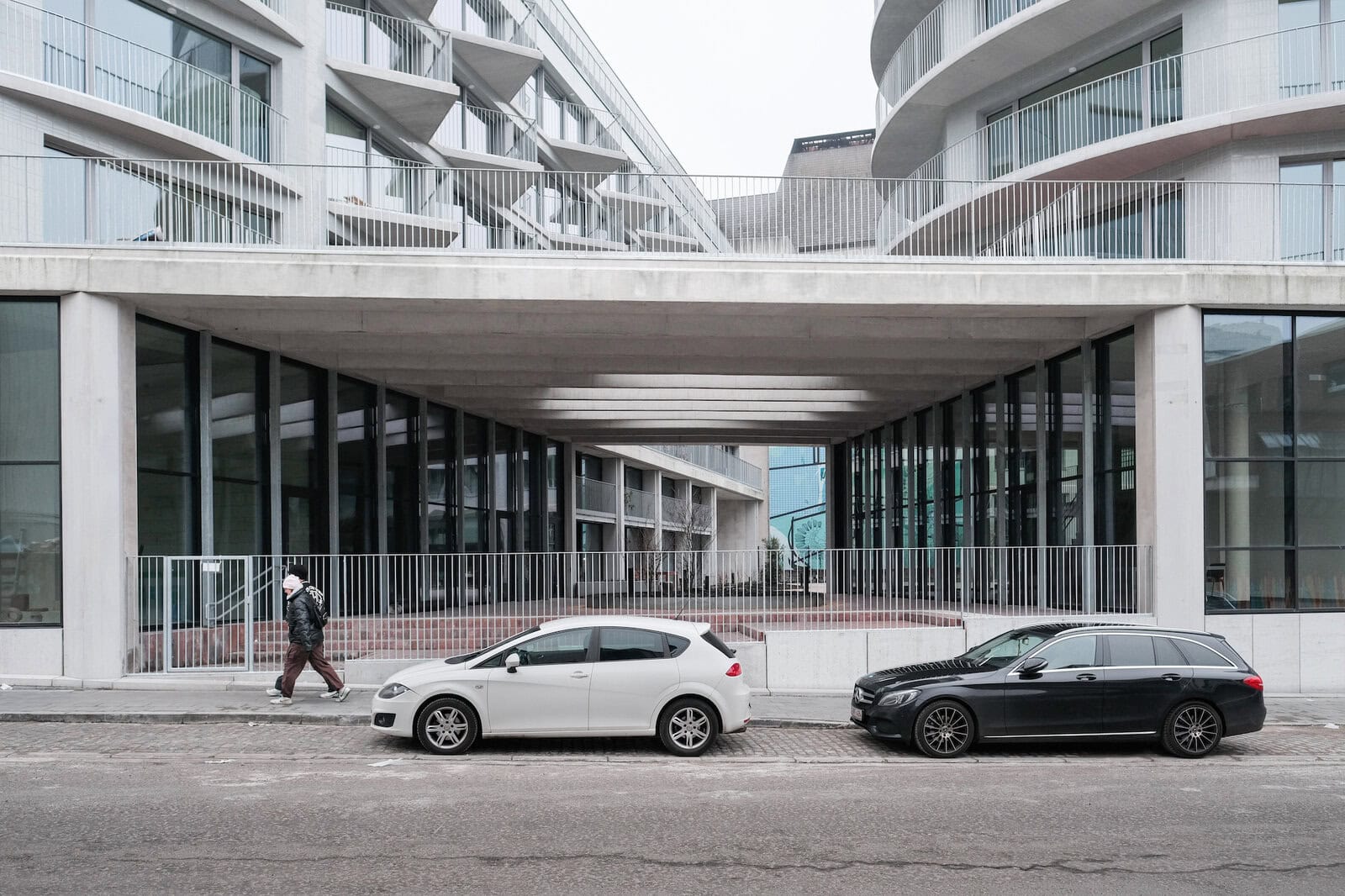
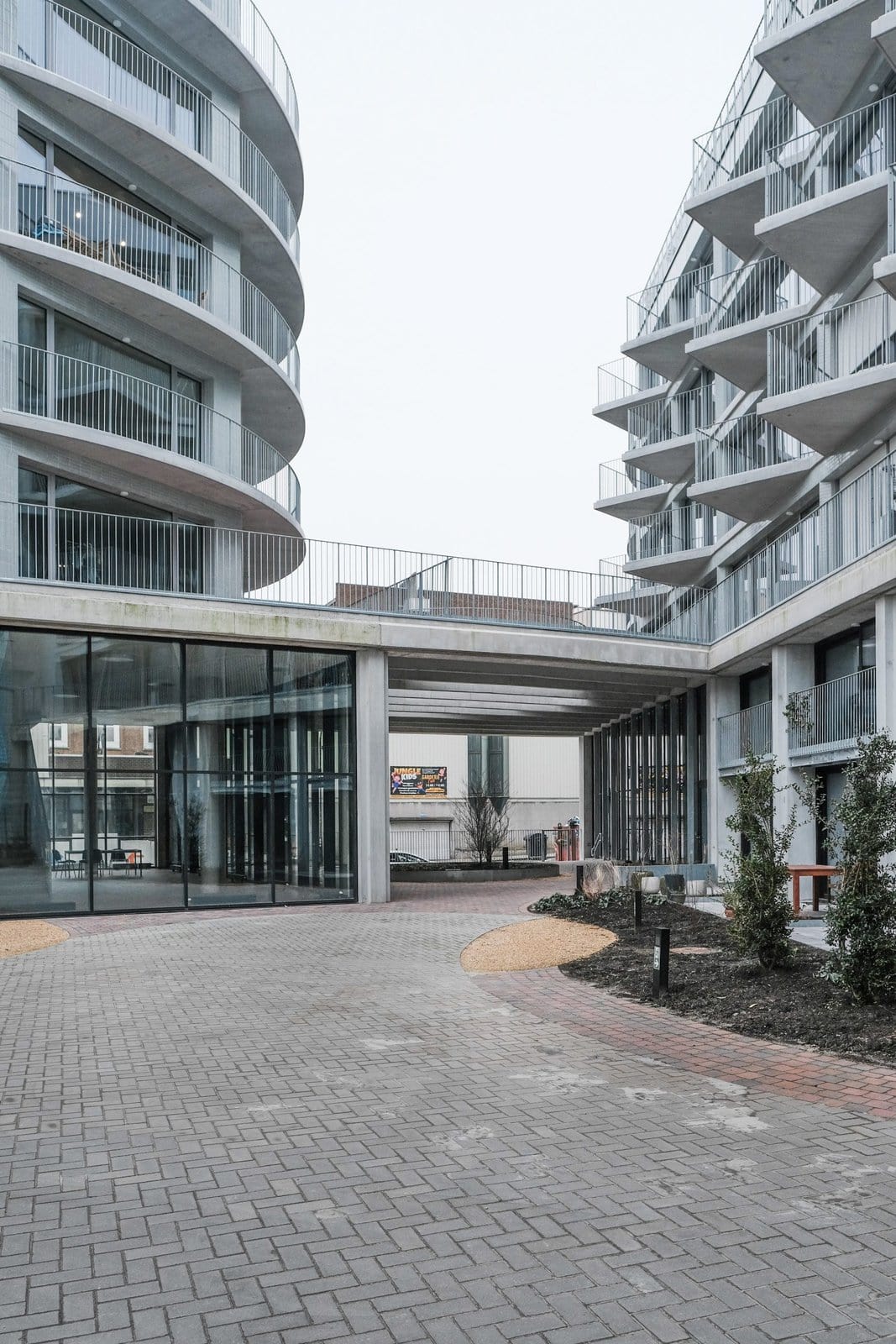
In response to the dense urban fabric, the project aims for positive densification of the site. The key intervention is the opening up of the block towards its shared internal garden. The upper slab of the passageway opening onto the street, which consists of slender concrete beams, features a skylight opening. The connection to the city is thus clear and legible, with a passageway—like a fault line—that offers a potential appropriation of the outdoor space. This choice positions the project on the fringes of this neighbourhood of introverted blocks.
The ground floor, with its flexible spaces—generous in proportion and largely open to the street—offers the potential to accommodate a variety of activities, such as shops, nurseries, offices and professional practices. In this way, it helps to breathe life into the neighbourhood by moving away from the dominance of the car, which currently dictates its atmosphere. This shared base unifies all the building’s volumes. It emphasises the project’s mixed-use programme, defines the building’s profile and anchors it on the slope of Rue aux Choux.
The clear, distinct volumes rise above the base. Each façade offers a coherent response to its interaction with the city. The façades on Rue du Marais, which resemble an alleyway in their proportions, curve, thereby creating varied views for the residents and a sense of variation from the street. These folds create shifting reflections on the sky-blue glazed brick façades, at times diaphanous, at times shimmering.
The project’s aim of reintroducing housing into this Brussels neighbourhood is not achieved at the expense of the quality of public space. The gap, which disrupts the continuity of the project’s base, breathes new life into the neighbourhood. It becomes the urban element that succeeds in liberating the traditional block from its rigid, Cartesian boundaries of enclosed walls and now offers opportunities for the communal space to be embraced.