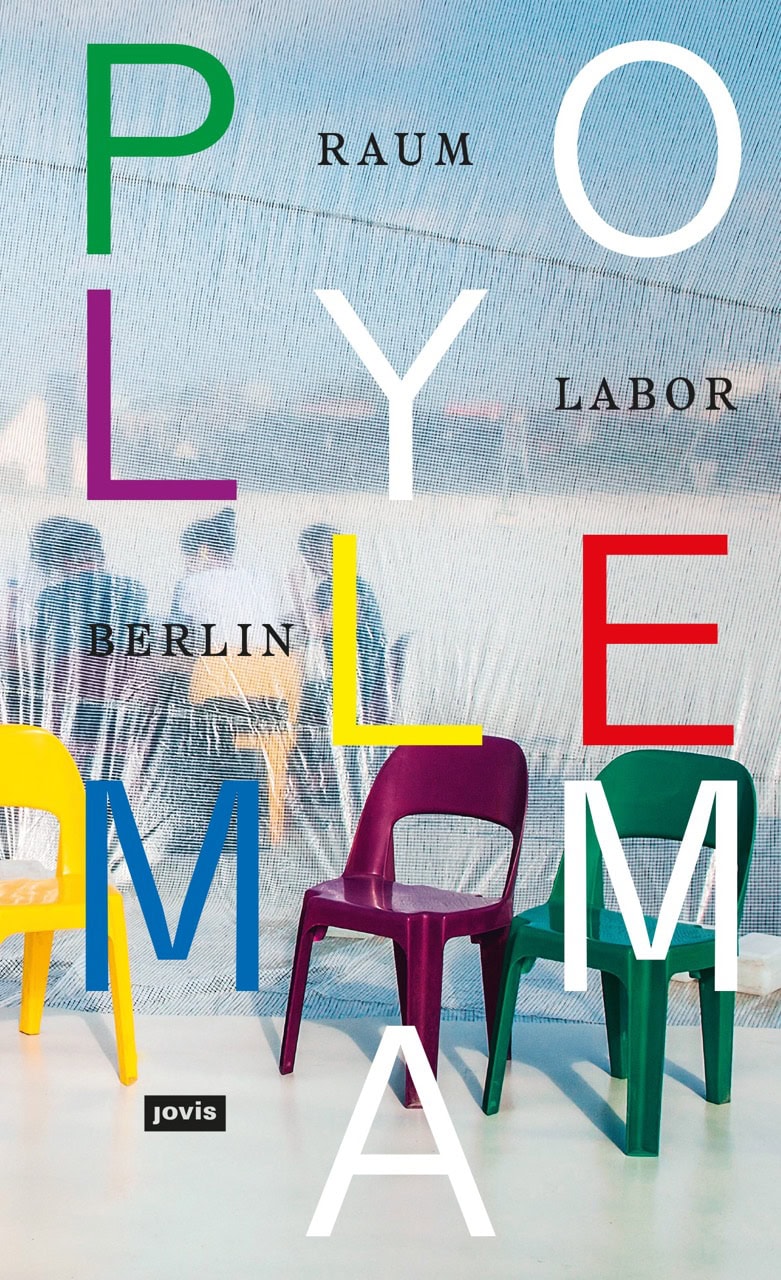
Some 25 years after its inception, raumlabor-berlin (Berlin Space Laboratory), a collective of (now) nine architects, took stock of everything their practice stands for: an exploration of what architecture can do, be, and mean in an urban environment. Their assessment is not a snapshot, but rather a living entity, an organism, which they approach not as a modern doctor, but as an acupuncturist who works on, and above all listens to, the energy channels within that body. The result, Polylemma, is essential reading for anyone concerned with urbanity. In other words, for everyone.
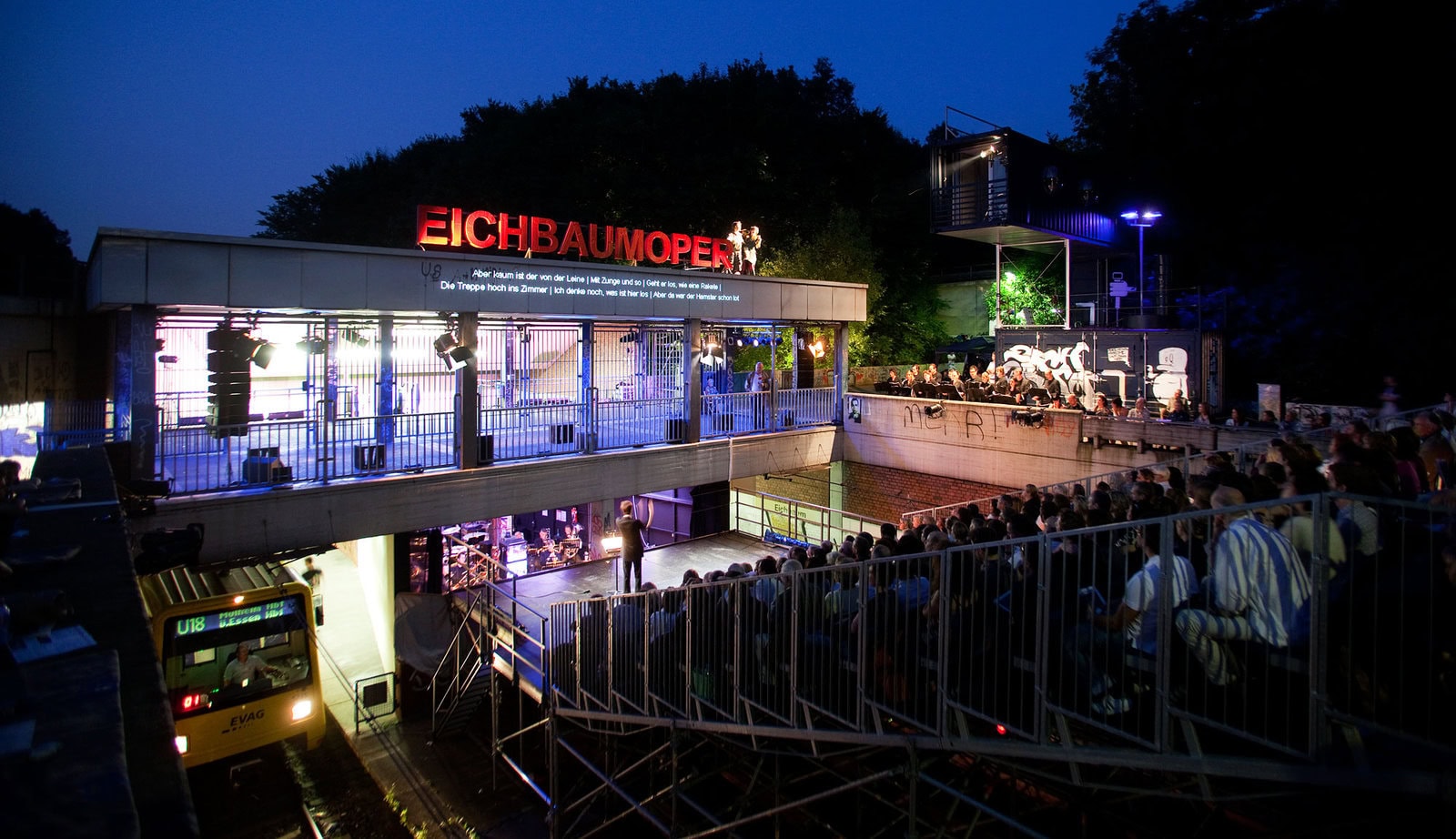
‘Polylemma’ is bursting with projects that may seem mad but have nevertheless always yielded a remarkable outcome. A small but striking example is the Eichbaumoper. A real opera – both a musical work and a building, but in an unlikely location: Eichbaum underground station in Müllheim, North Rhine-Westphalia. This lies right in the middle of a cloverleaf junction on the A40, one of Germany’s busiest motorways. Matthias Rick (2012) was the driving force behind it. It took four years to work with local people from all walks of life to tackle the space, write the music, find singers and musicians, and so on. But they succeeded.
Raumlabor drew inspiration from Werner Herzog’s film Fitzcarraldo, about the man who wanted to build an opera house in the middle of the Brazilian jungle. Eichbaum station, as part of a massive infrastructure that cuts the landscape between Essen and Müllheim in two, is just as absurd a place, a modernist zombie space. There used to be a popular restaurant here under an oak tree, but it had to make way for a motorway and railway line that rendered the site virtually inaccessible. The idea was that an opera might restore something of the old community on both sides of the infrastructure.
With the support of theatres and opera houses in Essen, Müllheim and Gelsenkirchen, Raumlabor built a ‘box’ on site to discuss, plan and work on the opera. This resulted in an opera that told the story of the area’s residents. During the project, the team discovered that young people were using the site to meet up and hang out. Raumlabor then transformed the opera into a boxing ring where rival groups of Poles, Turks, Russians and Germans could face each other in a more friendly manner.
More ideas began to emerge to restore meaning to this place, which everyone had long since given up on, within local life. Raumlabor certainly acted as an architect here, but expanded that concept to the design of a social space tailored to the specific needs of the local population. This single example demonstrates how, for more than 25 years, Raumlabor has been a thorn in the side of urban planning and design, often with resounding success.
Polylemma reflects this, but it is not a report. You can start reading it at any point, jump back and forth, or read the book from cover to cover. A reading guide explains the principle. There are various text formats, such as interviews, project descriptions or more theoretical reflections. In addition, there are hundreds of photographs, drawings and reference projects. The projects are grouped around specific themes such as Unlearning city, Trash, Bubbles, etc. My advice, however, is simply to lose yourself in the book. It will keep you occupied for days and you’ll have plenty of ‘aha’ moments.
Polylemma, raumlabor Berlin. 2024. Softcover, 480 pp. Jovis Verlag, DE. ISBN 978-3-86859-738-7. RRP €46.