Edito
Lisa De Visscher – Editor in Chief
After exactly eleven months of the pandemic, it is difficult to talk of a fresh start, put good intentions into practice, and step into the new year with a light heart. We do want to look ahead with hope, but ultimately remain cautious, glancing back over our shoulders. This is how we detect trends, the evolution of the virus, the development of variants, the impact on our physical and mental wellbeing, and the consequences for people’s living, working and consumption habits. Housing, in particular, comes under pressure during lockdowns. Since March 2020, our homes have suddenly become the place where all aspects of daily life have to take place. As well as a place to sleep, the home is now also an office, a school, a café, a sports centre, a theatre, a cinema, a restaurant or a (virtual) holiday destination. Naturally, this has an impact on the housing market. More than ever, people are yearning for what we usually call quality of living: light, a view, an extra bedroom and access to a usable outdoor space. The house with a garden is more popular than ever, and demand for parks and high-quality public spaces in the city is growing.
Does the coronavirus spell the definitive end of city living? Will the developers have their way after all? I don’t think so. The housing issue is more complex than the outdated dichotomy between city and countryside. It is closely intertwined with affordability, mobility, proximity to amenities and sustainable comfort. That does not alter the fact that the pandemic has put a magnifying glass to the shortage of adequate housing in Belgium, thereby making the dream of home explicitly clear.
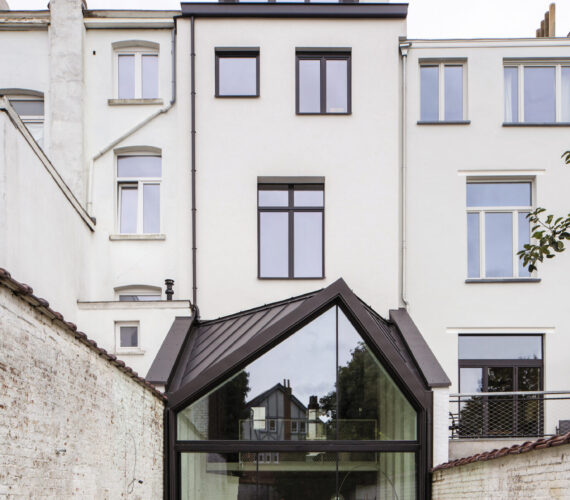
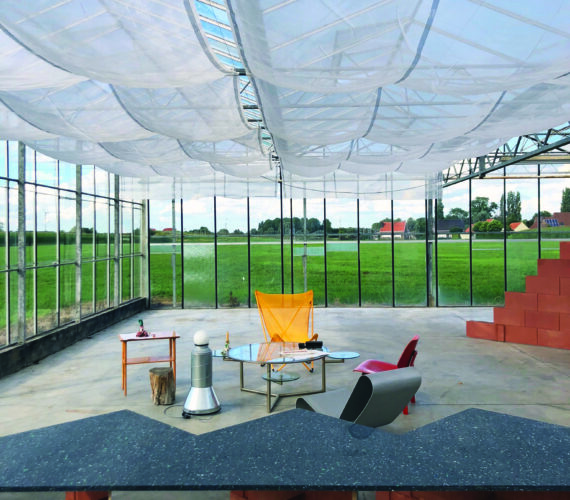
Perhaps the most striking embodiment of that dream of home can be found in the project by Stefanie Everaert (Doorzon) and Theo De Meyer. They designed a ‘retreat’ in a conservatory on a meadow outside the city – extra light, views, workspace and a holiday feeling all in one. The project is a direct response to the coronavirus crisis, unlike most other projects in this issue, all of which were designed long before the pandemic was even on the radar. What connects all the projects is the client’s desire to live differently – in line with ecological, social and economic convictions – and therefore to build differently too. Experimentation serves as the lever for this.
“It is our addiction to instant and automated comfort that must be singled out, and not a way of living that involves change and improvisation,” writes Christophe Van Gerrewey about the house that René Heyvaert built for his brother, an experimental home par excellence. But it could just as easily have been about Rémi van Durme’s ‘built-in-my-backyard-off-the-grid’ house. With this self-built home, he makes us question our ingrained aversion to detached new-builds. Building differently also means different construction partners: Générale realised an ambitious cohousing project in the heart of Brussels in collaboration with a developer. Felt architects investigated how an affordable starter home can grow with its residents, whilst also offering a solution to the challenges of urban living even in its most compact form.
‘Stay in your room’ was a clear measure, but sounded like a hollow slogan to people who have no home. Researchers at KU Leuven experimented with alternative housing typologies as an alternative to the lowest segment of the private housing market, where poor living standards and high energy costs are not offset by low rental costs. They designed new (temporary) forms of housing linked to a social integration programme. The key words here are affordable, mobile and modular. Or how experiments offer a new perspective on housing, especially in times of crisis.
Table of contents
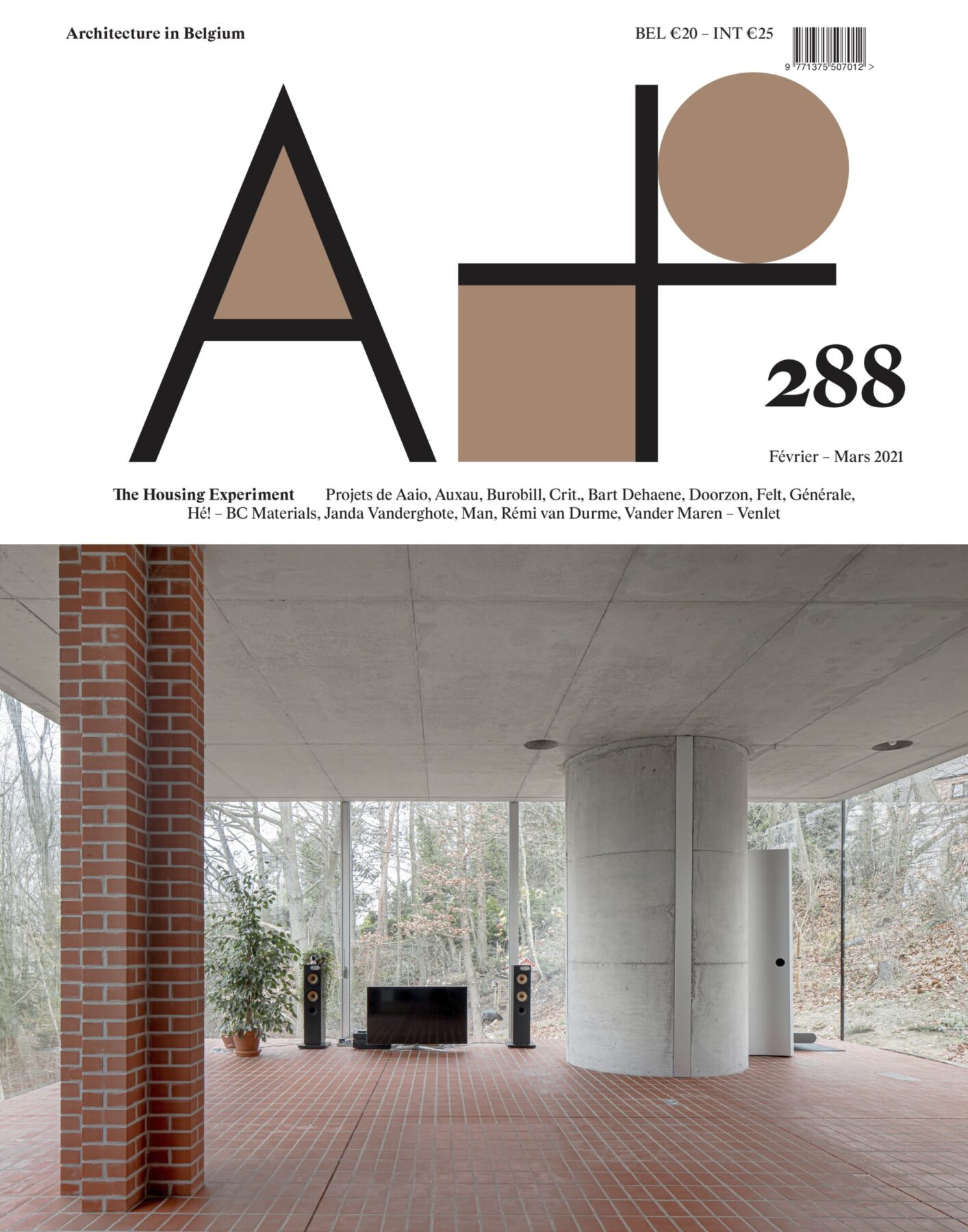
THE HOUSING EXPERIMENT
EDITORIAL – Lisa De Visscher
OP-ED – Gilles Debrun
Philippe Vander Maren – Richard Venlet
Hé! Hanne Eckelmans – BC Materials
Karper, Brussel
Burobill
The city as a side garden, Antwerpen
COMPETITION – Open Call Schrijverswijk, Zwijndrecht
Glenn Lyppens
Precarious housing in Brussels
Aurelie De Smet, Burak Pak, Yves Schoonjans
Rémi van Durme
Lightweight House, Waals-Brabant
Atelier d’architecture iO
Group accommodation, Montegnet
Man architecten
Vinkenhoeve, Elversele
Felt
Touw, Antwerpen
Atelier Janda Vanderghote
Loodsdoos, Gentbrugge
Générale
Spinhayer, Molenbeek
Doorzon
House Michel, Wondelgem
Crit. architects
House Heyvaert, Destelbergen
ACTUA
Mamout Architectes
Lara Molino
JDMA / Altstadt
Lisa De Visscher
Superstudio Migrazioni
Aslı Çiçek
STUDENT
Euregional Prize for Architecture 2020
Lisa De Visscher
Van Hove Prijs 2020
Eline Dehullu
#009
Michiel De Cleene