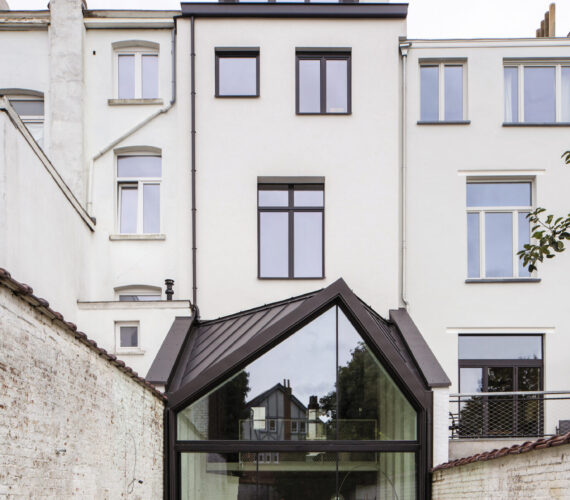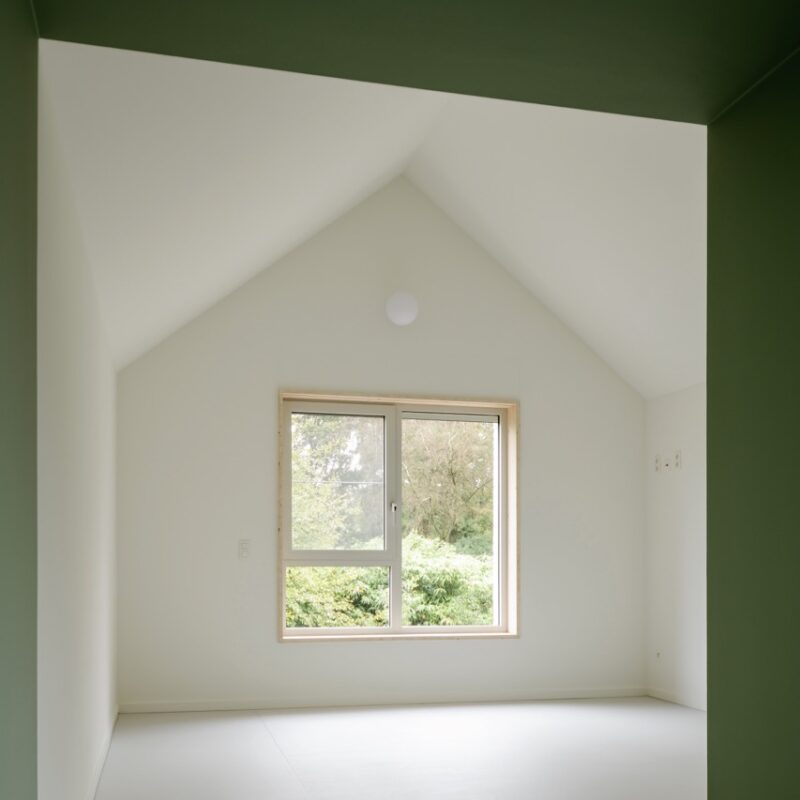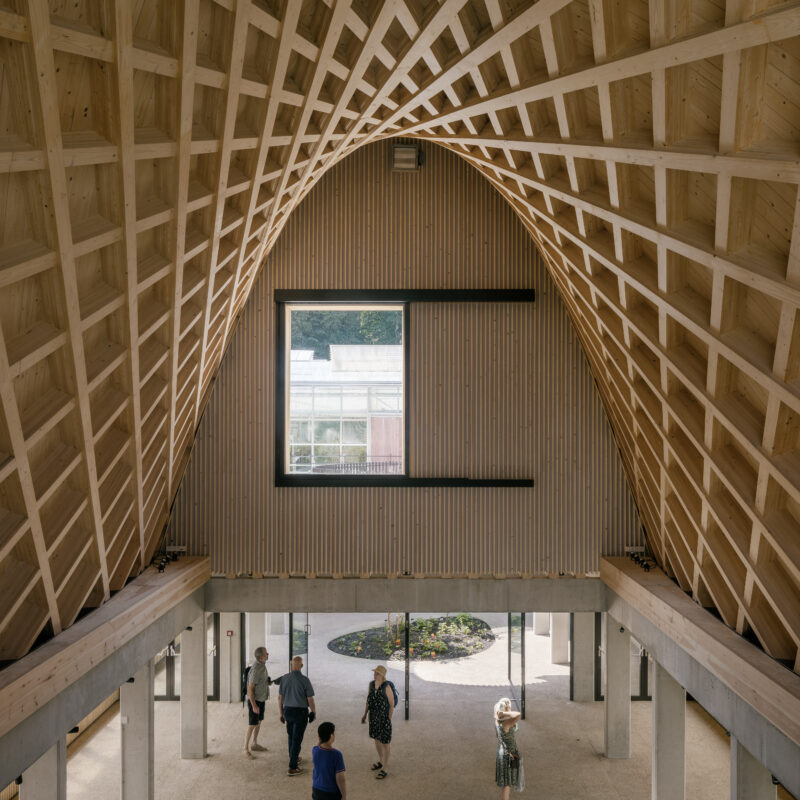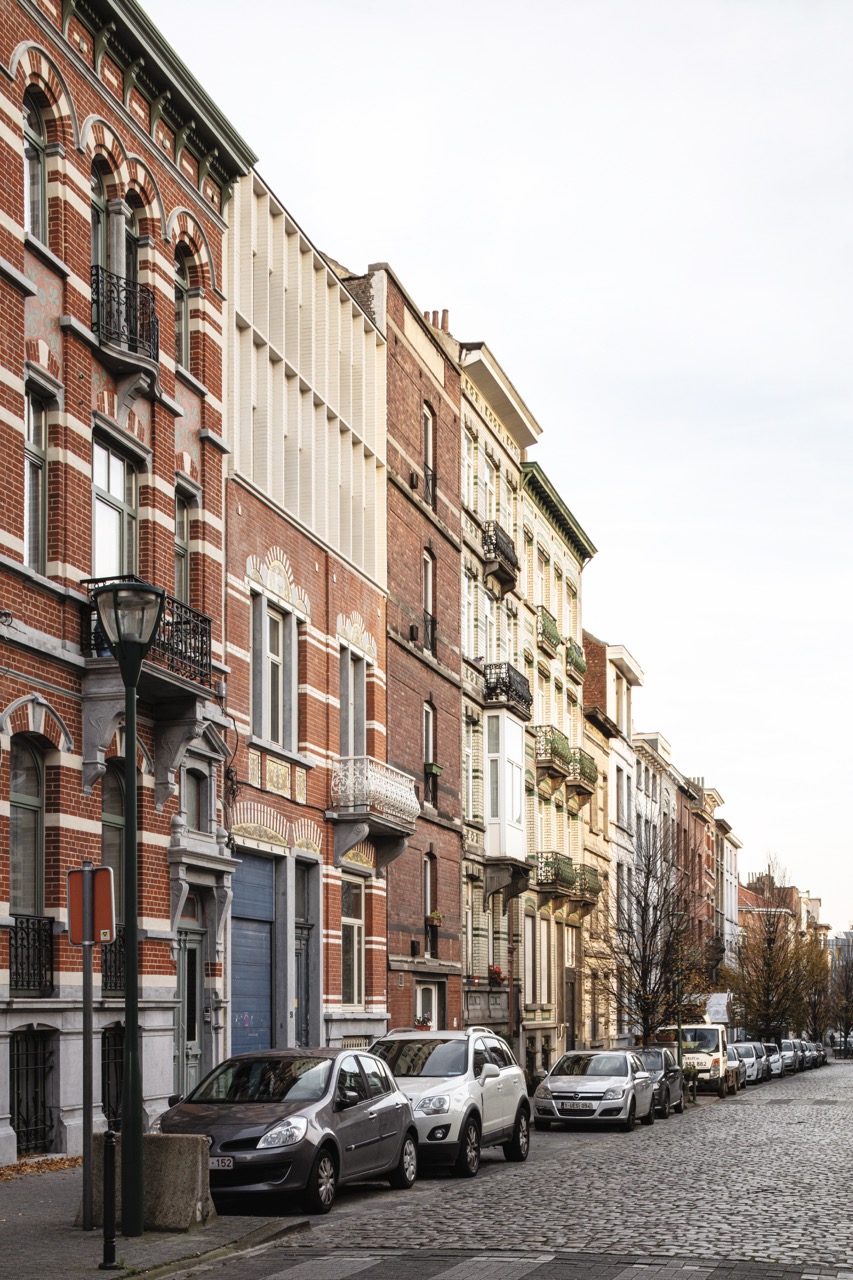
On Karperstraat in Brussels, Hé! architectuur and BC Materials are renovating a house. The renovation focuses on densification, the circular economy and cohousing. The roof structure is a form of urban – and even sexy – eco-friendly construction. It could well become a new textbook example.
The house on Karperstraat, like many Brussels homes, proves to be remarkably resilient. For over a century, they have all undergone one transformation after another. A first generation of architects divided them into flats; the next threw themselves enthusiastically into extensions, with the typical, well-known row of annexes in the back garden. For the past ten years or so, yet another approach has been gaining popularity: adding a new storey to the existing house. This phenomenon of ‘topping up’ makes clever use of the rules of the Regional Urban Planning Regulation (GSV) and is being driven by the increasingly common timber-frame construction. Moreover, Brussels’ already irregular skyline lends itself perfectly to these roof extensions. But above all, they offer a solution to a pressing contemporary problem: namely, how we can densify the city whilst continuing to create sufficient housing for a growing population.