
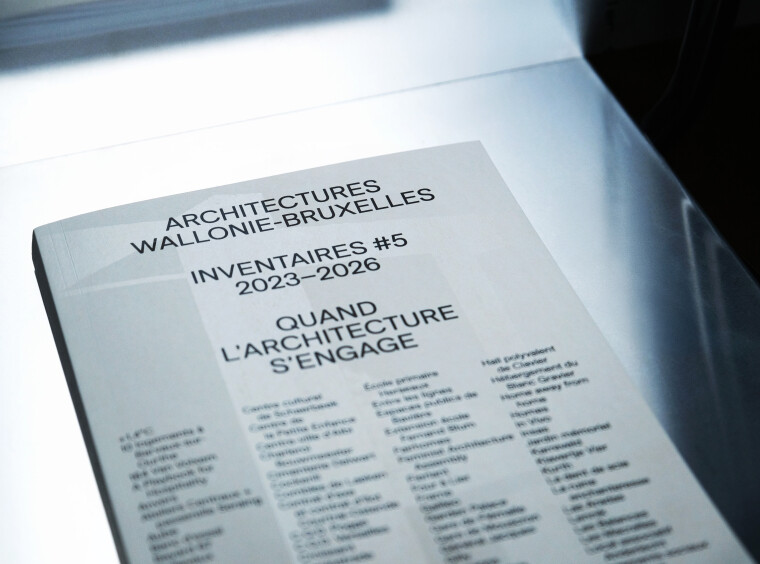
Inventaire #5 – 2023–2026 notes that architecture in Wallonia and Brussels has reached a standard of quality that one could only have dreamed of twenty years ago. According to the five editorial members (Kelly Hendriks, Pavel Kunysz, Gérald Ledent, Virginie Pigeon and Cécile Vandernoot), architects are also redefining their role. Today, the focus is on process, use and meaning rather than on object, form and aesthetics. Although budgetary constraints, rising construction costs and increasing technical requirements are hampering designers, many architects are committed to achieving a valuable, socially and environmentally responsible outcome. The book’s motto, fittingly, is ‘Quand l’architecture s’engage’. Unfortunately, that commitment often demands excessive and largely unrecognised efforts, which is why the editorial team also warns against exhaustion.
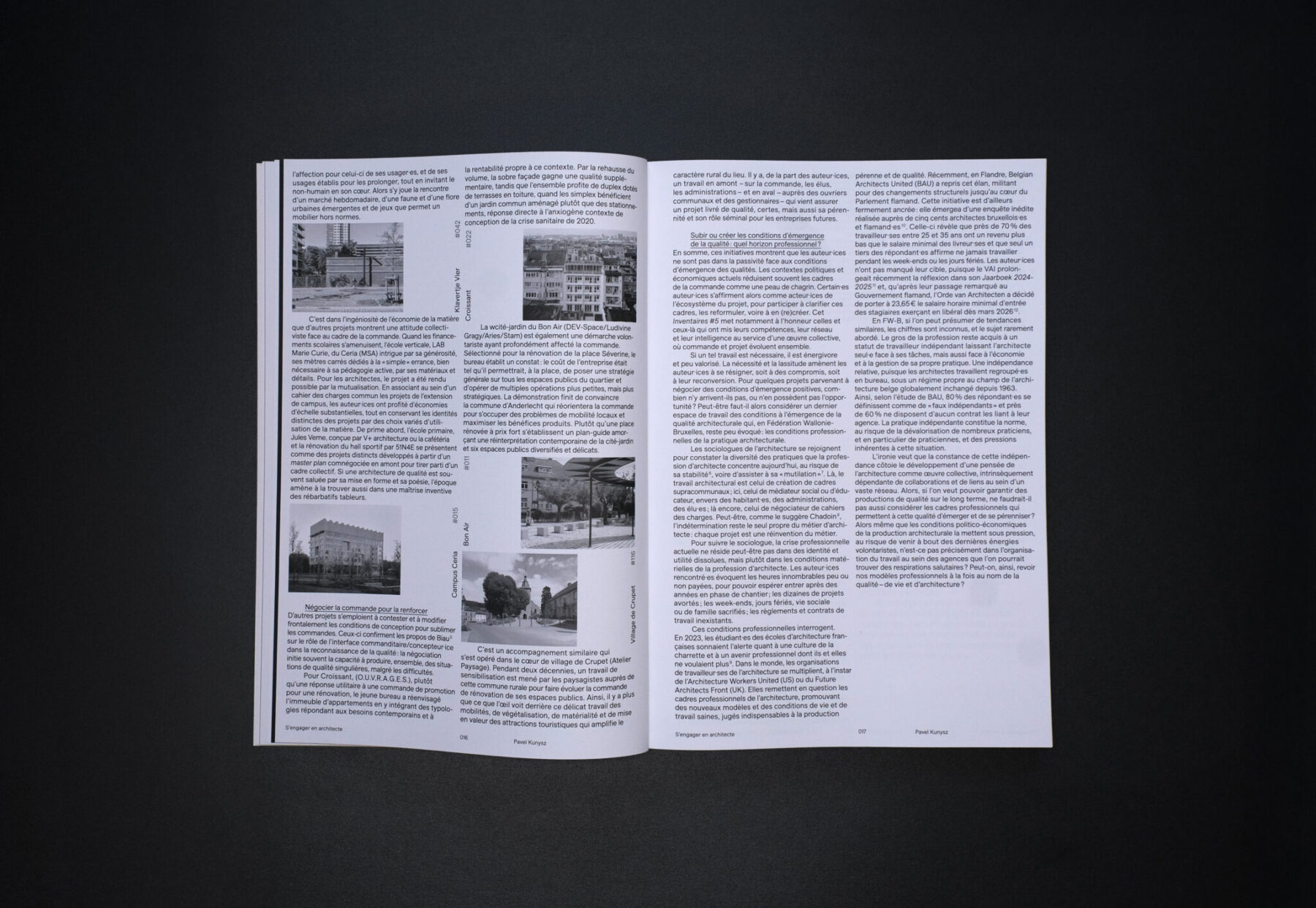
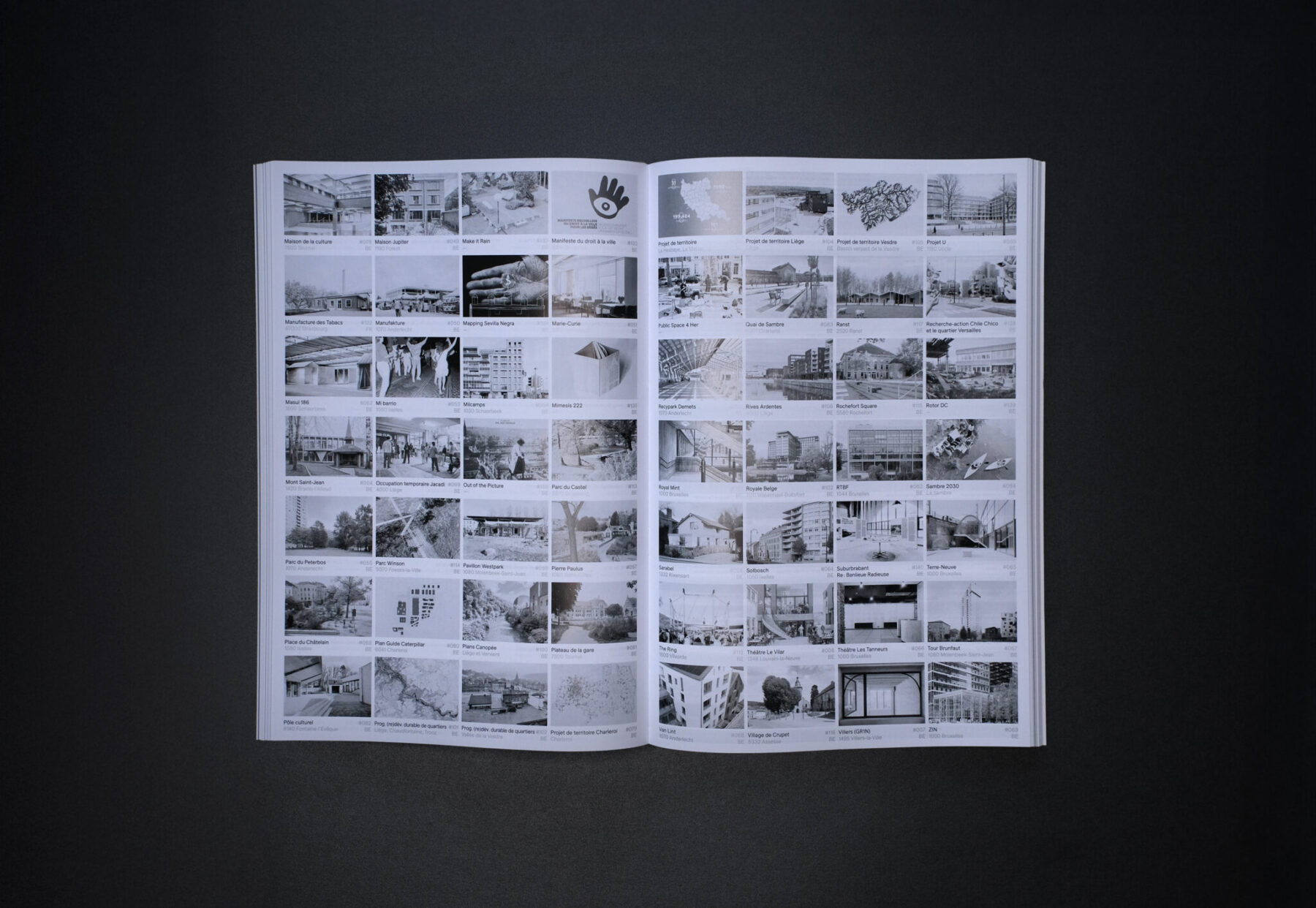
A dozen essays explore the themes that link the selection of 37 projects by 140 designers or teams. These projects are very diverse in nature, ranging from large and small buildings and landscapes to research and social processes initiated by architects.
In S’engarer en architecte: de la commande aux syndicats, Pavel Kunysz advocates a more collective approach. Starting with a stronger (supra-)local policy framework, it also requires collective public consultation. After all, architects can achieve more with less by joining forces, as demonstrated by the expansion of the CERIA campus in Anderlecht.
In Redéfinir les récits hégémoniques, Stéphanie Dadour explores how collaborative practices challenge conventional views of architecture and urban planning by pointing out their political and social significance and formulating alternatives. Maria Anita Palumbo expands on this theme in relier, voisiner, cohabiter. She argues that public spaces are only truly special when they make room for the complexity of a social fabric rather than adhering to rigid functionality.
In Composer avec les défis du logement, Gerald Ledent focuses on the challenges facing the housing sector. He highlights new forms of communal living as a solution, but also emphasises the importance of re-evaluating existing heritage, including offices and factories. He also points out that a new approach to the suburbs represents a huge undertaking for the future.
Het oeuvre van Lacaton & Vassal was een voorloper van de tendens om de structuur van (bestaande) gebouwen open en bloot te tonen. Guilia Marini onderzoekt die in Espaces capables,capacité des espaces. Haar voorbeeld is uiteraard het Grand Palais in Charleroi van AgwA/Jan De Vylder & Inge Vinck. Emeline Curien sluit daarbij aan met Éthiques, esthétiques, cosmoplitiques. Ze stelt vast dat ontwerpers door de keuze van (gerecycleerde) materialen en technieken een emotionele snaar raken, maar ook getuigen van een sterke ethiek.
The work of Lacaton & Vassal was a forerunner of the trend towards exposing the structure of (existing) buildings. Giulia Marini explores this in Espaces capables, capacité des espaces. Her example is, of course, the Grand Palais in Charleroi by AgwA/Jan De Vylder & Inge Vinck. Emeline Curien follows suit with Éthiques, esthétiques, cosmopolitiques, observing that, through their choice of (recycled) materials and techniques, designers strike an emotional chord, whilst also demonstrating a strong sense of ethics.
The beautifully designed book by Esther Le Roy Studio also includes a photo essay by Karine Dana. It shows how residents engage with the architecture discussed here. According to her, architecture thus emerges as a ‘cosa vitale’ rather than a ‘cosa mentale’. The essay confirms that architecture in Brussels and Wallonia has much more to offer than just pretty pictures.
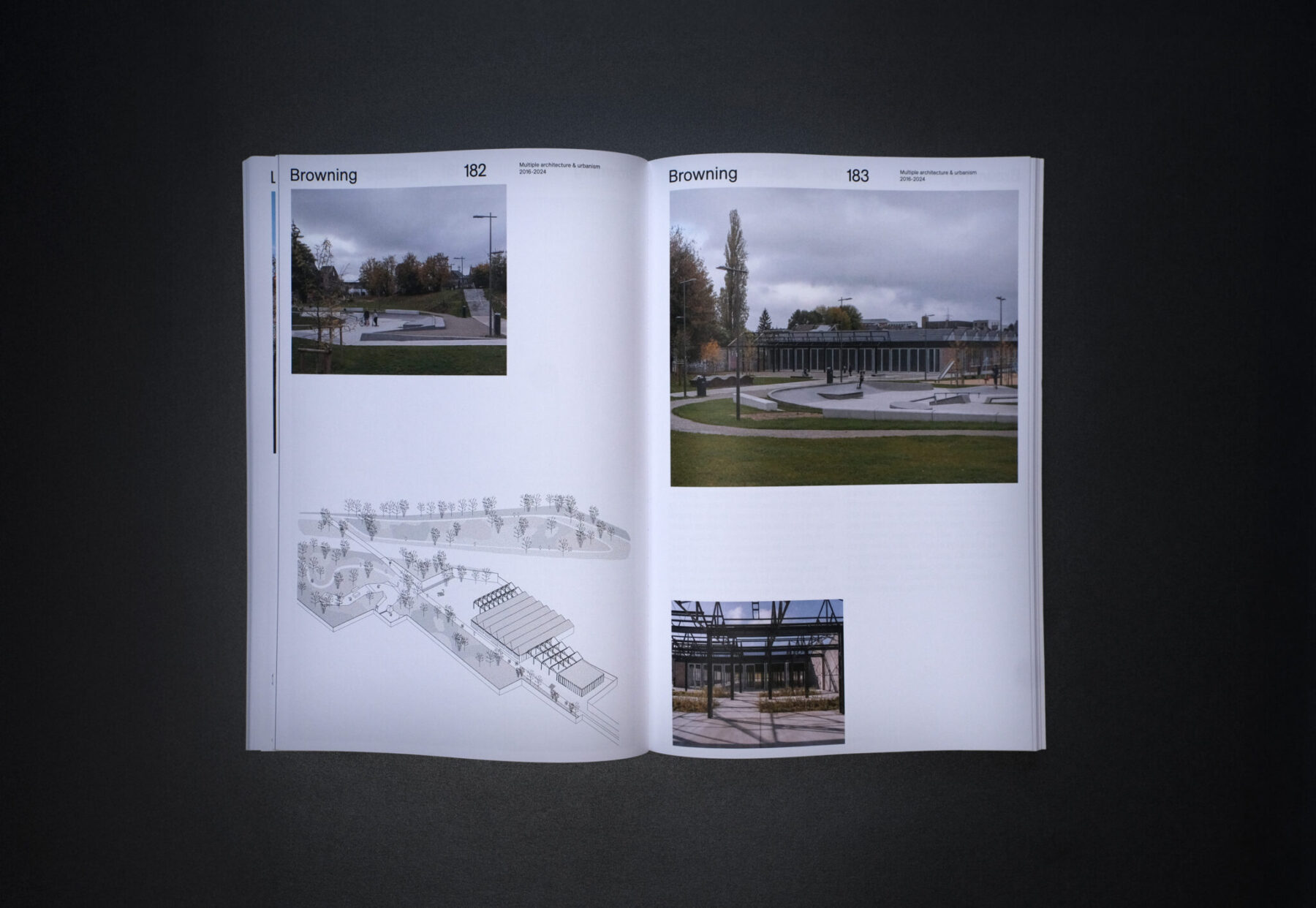
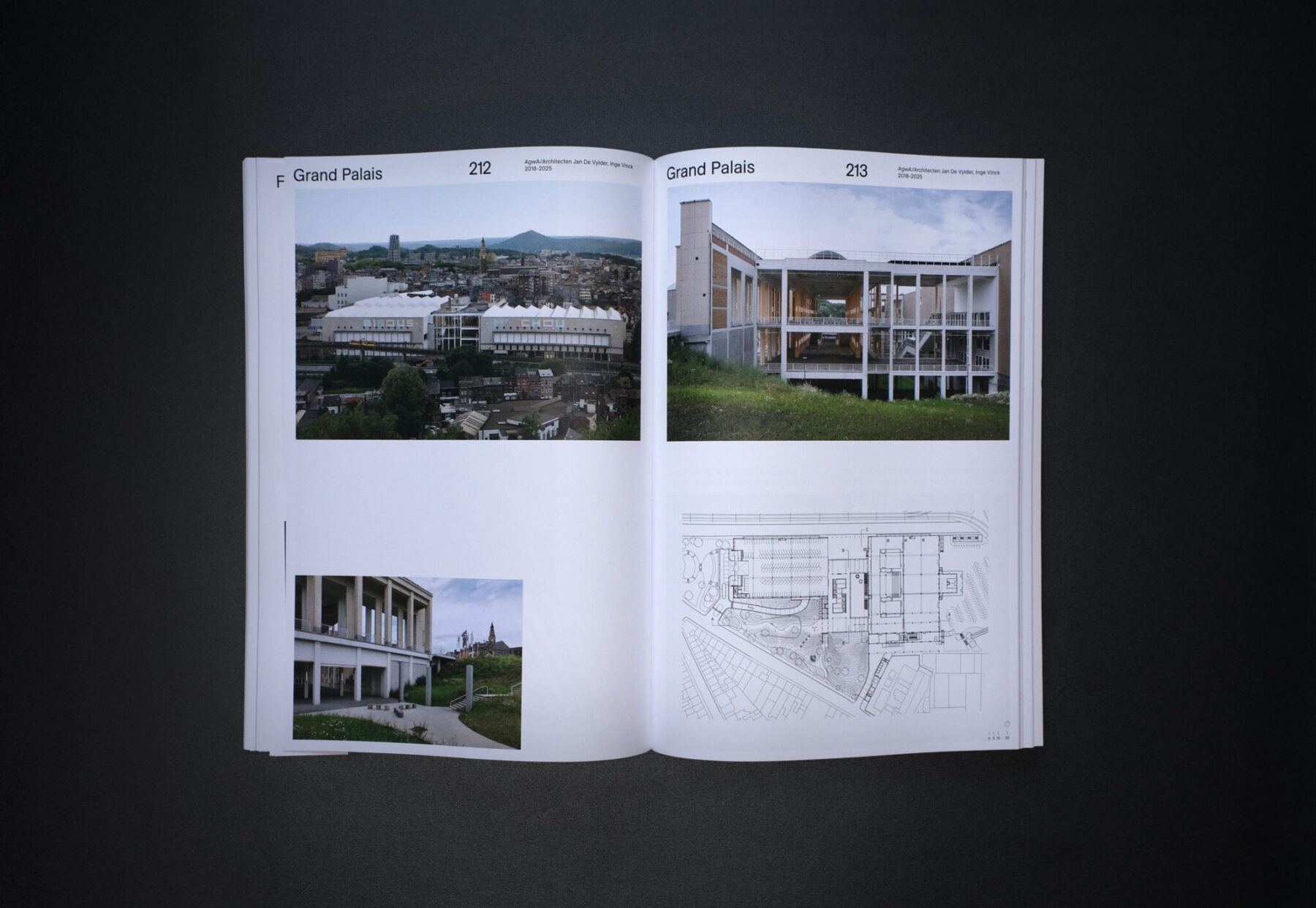
Architecture Wallonie-Buxelles – Inventaires #5 / Quand l’architecture s’engage is a publication by ICA / Fédération Wallonie-Bruxelles – cellule archi, edited by Audrey Contesse. 254 pages + photo essay, ISBN 978-2-930705-55-2.
