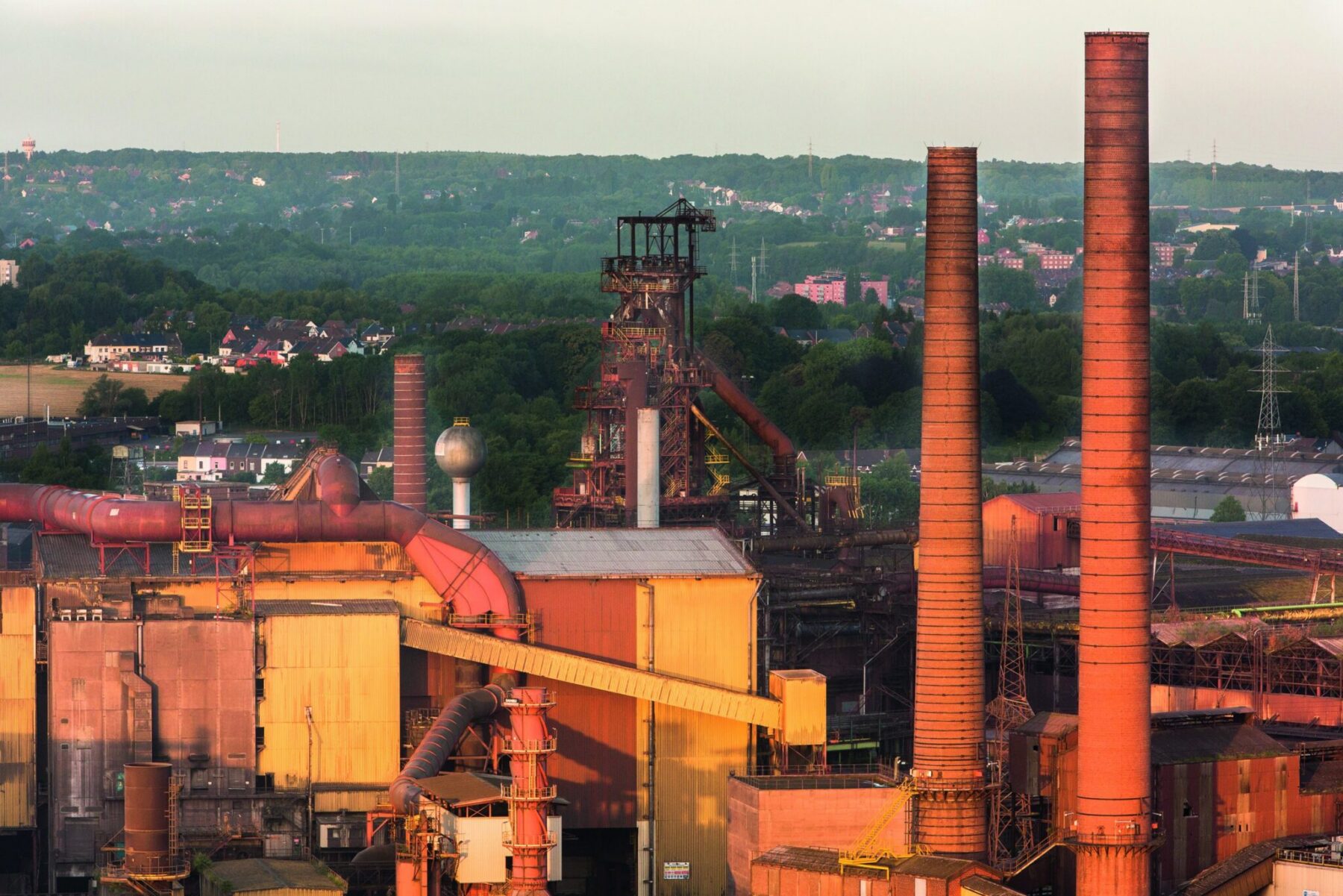
Wallonia has several hundred hectares of disused steelworks sites, which feature major remnants of its industrial history, such as blast furnaces. The regeneration of these areas and the repurposing of these monumental structures go hand in hand with the issue of heritage conservation. The task is complex and requires substantial resources, but other neighbouring steel-producing regions have risen to the challenge with great panache.
As recently as half a century ago, Charleroi, Liège, Athus, La Louvière and Tubize were major centres of pig iron production: day and night, barely concealed by plumes of smoke, colossal factories, dominated by the silhouettes of blast furnaces, transformed ore into metal. As the steel industry shifted to offshore operations, these sites have been shut down over the last few decades. Today, only two remain almost entirely intact: Carsid in Marcinelle and ArcelorMittal in Ougrée. Once the jewels in the crown of Walloon industry, the blast furnaces, now reduced to derelict wastelands, seem more likely to reflect the crisis than to inspire pride. For workers and owners alike, a disused facility must make way for a new venture. For local residents, they were a nuisance. Few people see these forests of steel as a heritage to be preserved, a tangible testament to technical and social history, or even as an anchor for working-class memory, standing tall in the landscape. Too recent to be preserved, these structures from the second half of the 20th century are nevertheless the sole remnants of their kind. The lack of an up-to-date inventory of industrial heritage does little to foster wider recognition.