Details in architecture help to ensure the continuity between design and execution. They maintain a hierarchical relationship of anticipation between the design and construction phases, and as such are instruments of prescription and control. Whether they appear in the space of representation due to the absence of a drawing or in that of the project due to a search for openness, voids are spaces that resist the architect’s control. This photo-essay explores anecdotes about voids where details break free from prescriptive anticipation and come into being through random errors, collaborations, reappropriations and construction systems.
The gap in the façade: the detail that crystallizes the error
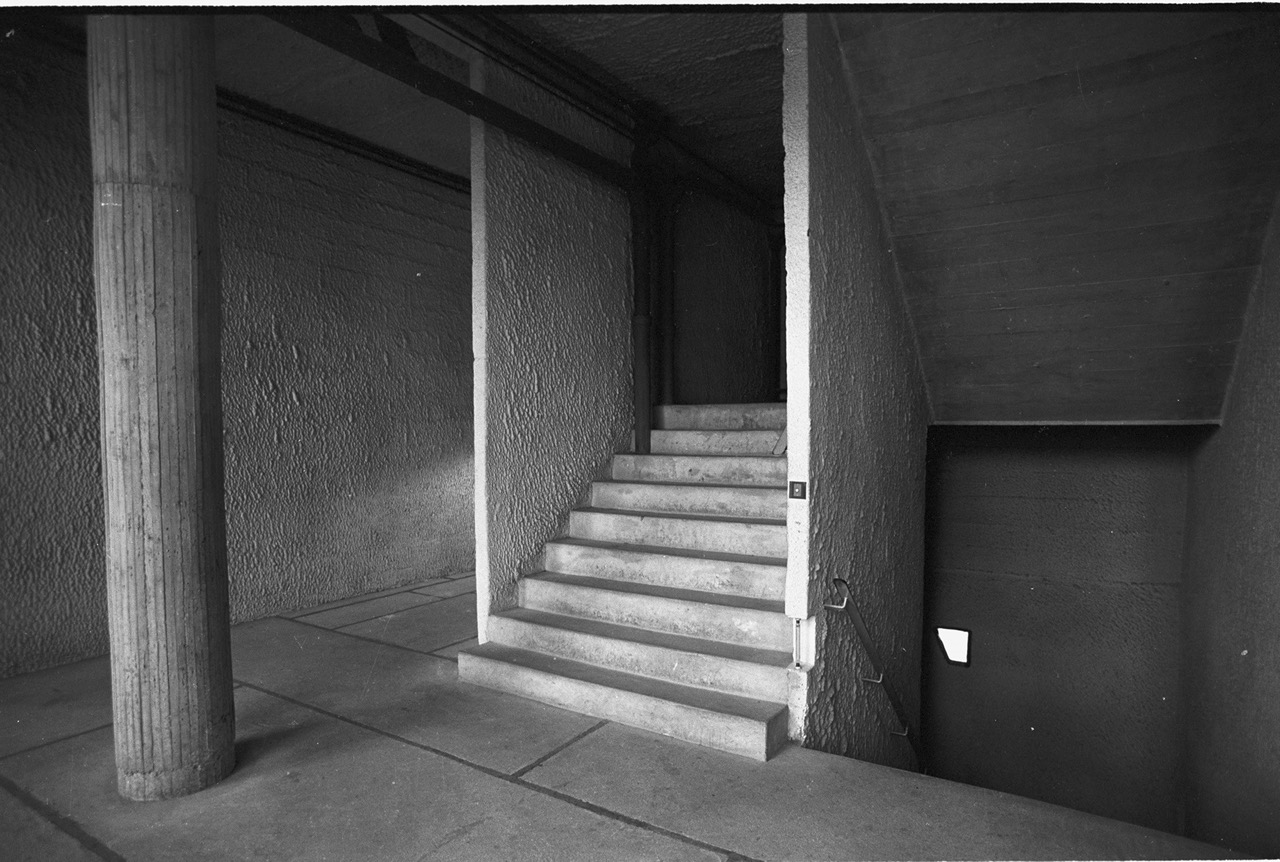
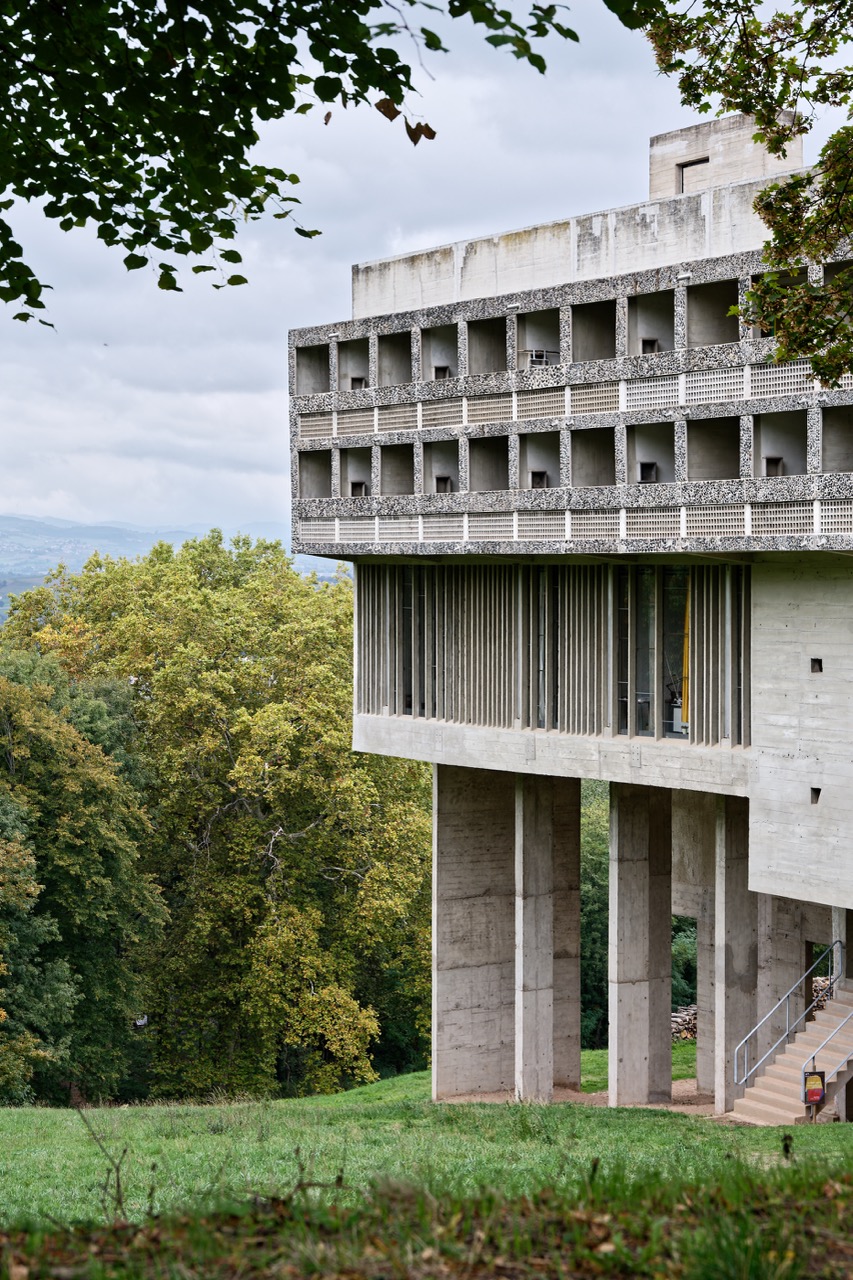
In La fiction constructive, Cyrille Simmonet relates an anecdote concerning the construction of the La Tourette Convent. When he visited the site, Le Corbusier noticed a flaw and wanted to write ‘Man left a trace here’ rather than correct the error. In fact, nothing was written down, but the skylight in question is still there. It is the window above the main entrance. Its unusual trapezoid shape reveals a shift during formwork. It was integrated into the design and possesses the authority of the architect through Le Corbusier’s conceptual gesture. It contrasts with all the other orthogonal and similar skylights to be found throughout the convent.
Postponing the detail until tomorrow
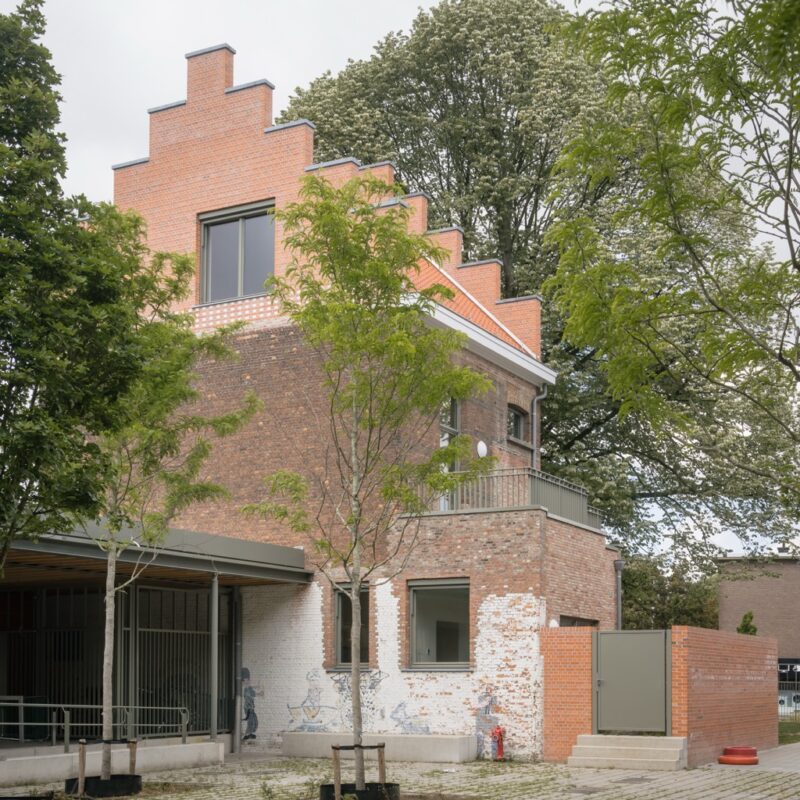
In this elevation, the architect Jules Brunfaut left the detail of the bow windows blank. Instead, he wrote ‘Space for the iron front of the greenhouse. See special drawing’. The architect himself would later add this detail when it became essential. For the time being, he was trying to stabilize the overall elevation and was postponing the details until a later date. Today, it is quite rare not to finalize the entire design at the tender stage. And yet, details have long appeared as projects progress. Here, it is a protruding bow window housing a winter garden, with stained-glass windows created by craftsman Raphaël Evaldre.


The detail postponed then revisited by the present
On this detail by Lisbeth Sachs (1914–2002), we can see the inscription ‘The final design will be defined by the architect (female)’. The detail is postponed until later. This void was seized upon as an invitation to dialogue by the collective of women architects who curated the Swiss pavilion for the 2025 Venice Biennale. The pavilion is a reflection on the notion of authorship that rests on the legacy of Lisbeth Sachs, presented as one of the first Swiss women architects, and asking what the pavilion would look like if she had designed it. The pavilion therefore presents a reinterpretation of her most famous work, the Kunsthalle (1958) on the basis of the void left in this detail. The title of the exhibition pays tribute to this inclusive void.


The detail that adapts to voids: the Balloon Frame as a construction mode for improvisation
Voids also appear in Frank Gehry’s architecture, but this time they are not a detail left for tomorrow, but rather spatialities: Gehry wants to cut, remove and turn the material inside out. In this project for his own family home, as in most of his early works, Gehry used the Balloon Frame construction system. Here, the idea was to surround a modest Dutch bungalow in Santa Monica with a new envelope with voids that create surprising spatialities.


Detail as an improvisation framework
Assemblages out of wood are simple and low-tech, and they absorb all the complexity of the spaces, so much so that when visiting the house, architect Tom Emerson found himself thinking that he might have been able to build it himself. Here, the details seem rather rudimentary and unplanned: it is more a question of structural logic than of specific details.
However, in those rare documents taken from the catalogue raisonné compiled by Jean-Louis Cohen for an exhibition at the Centre Pompidou in Paris, we can nevertheless see that the assemblages have been carefully thought out using plans and cross-sections. The flexibility of the Balloon Frame is therefore a text with voids requiring some knowledge to fill in. Here, details are withheld rather than absent, in a posture that accompanies and enables: it is a text with voids on graph paper.