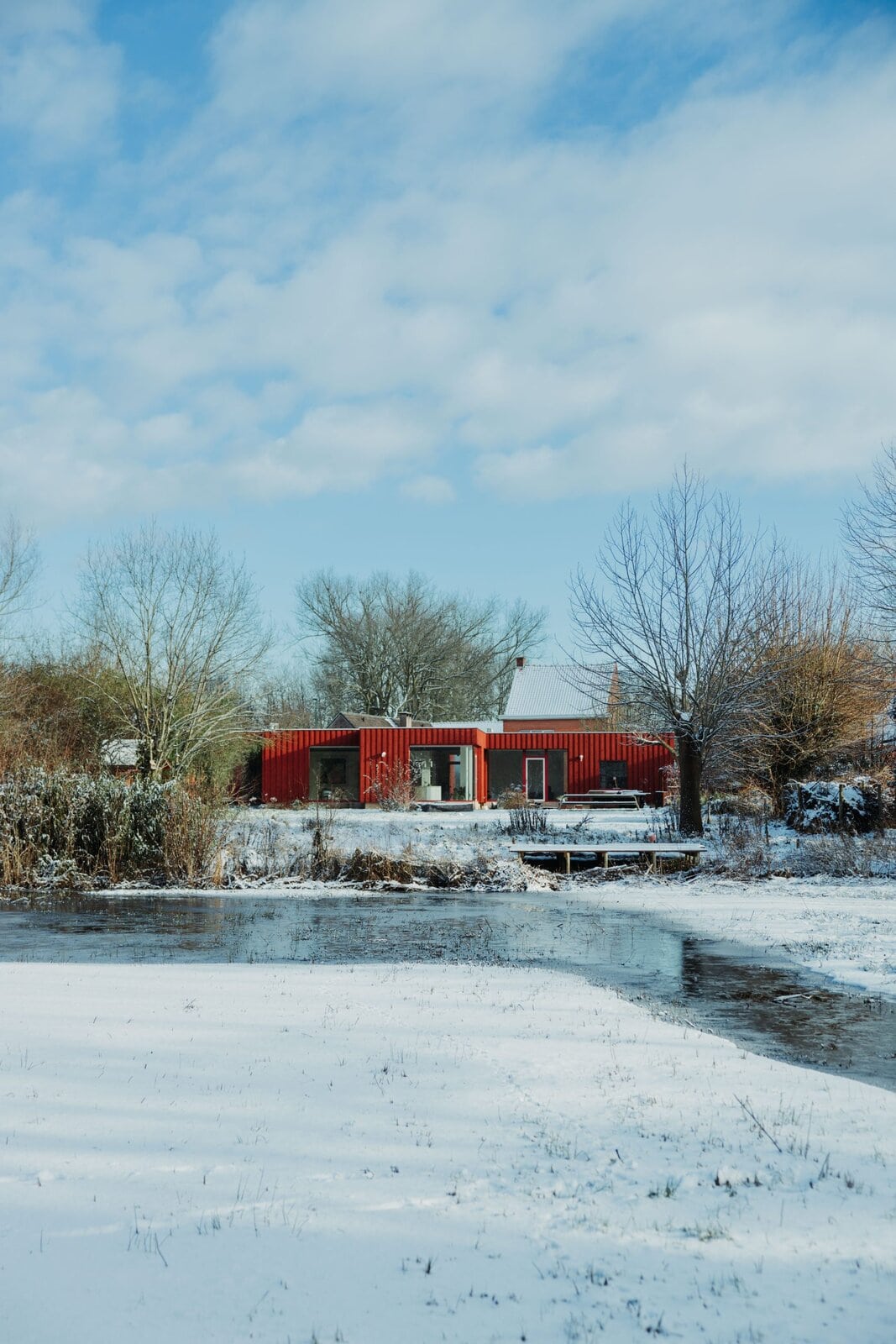
Through a comprehensive renovation, MADAM architectuur has transformed a dilapidated bungalow on the outskirts of Aalst into a fresh, modern home. Its bright red cladding provides a pleasant contrast along the street, striking a perfect balance with the green surroundings. Whereas the house previously sought no interaction with the garden, MADAM’s design fully engages in a dialogue with light and views. In its design, the practice reinforced the existing qualities of the single-storey house and returned to the essence of the structure. What remains is an open-plan home with unobstructed spaces.
Initial analyses of the bungalow revealed a structure with potential. The volume is stepped, giving all rooms a distinctive view of the beautiful garden. At the centre is a patio, which also brings light into the darkest parts of the deep house. To the architects, however, it seemed that the house was negating its greatest asset: the views through the volume towards the garden. “The rectangular living space was small and offered few interesting views to the outside. Moreover, all the windows in the house were low and small.”
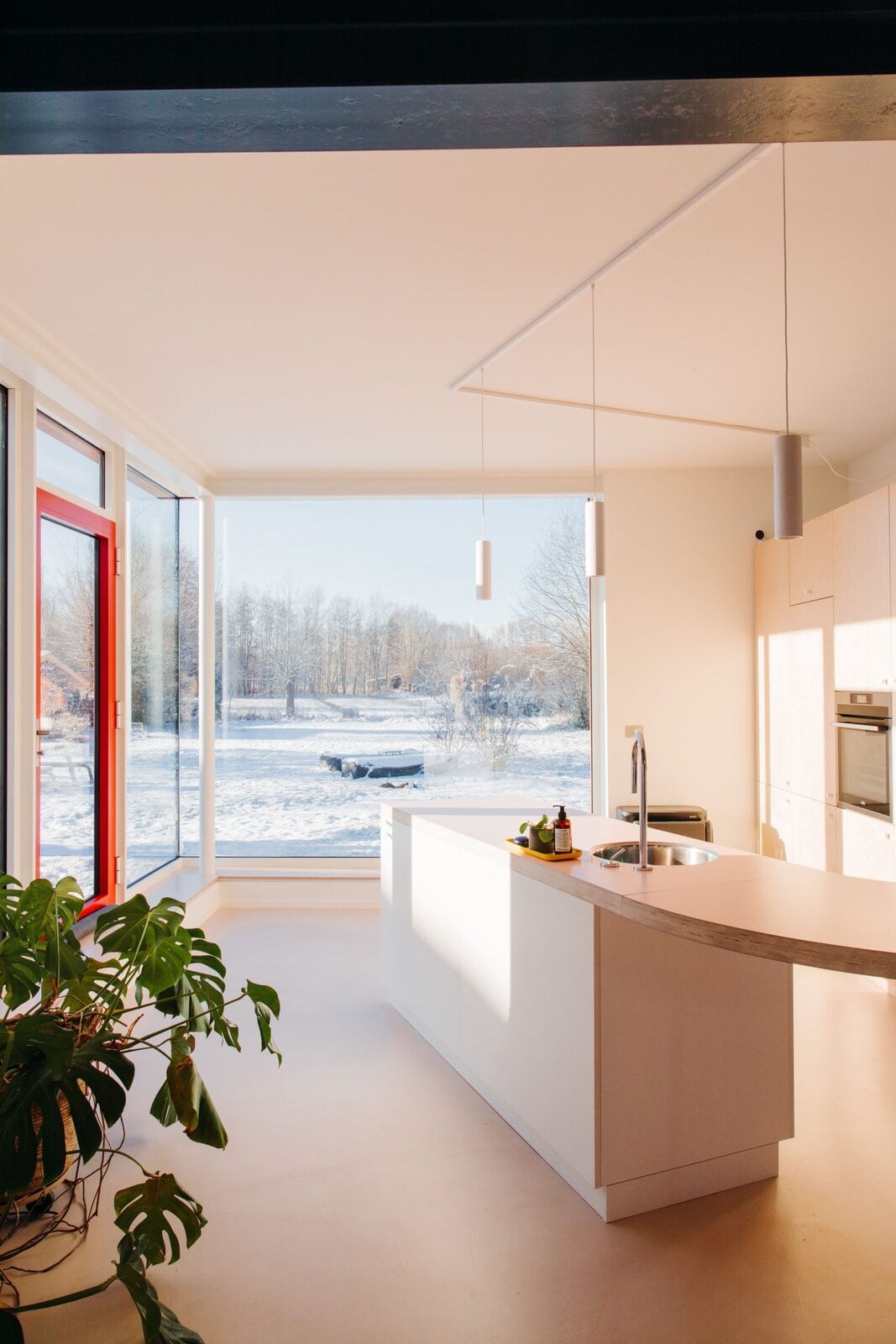
Based on this finding, MADAM transformed the fragmented interior into a single large space. Those entering no longer step into a hallway, but enter a space that is lit on two sides and opens onto the kitchen. Behind it, the large corner window acts as a canvas for the expansive natural landscape. The small living space of yesteryear was significantly enlarged, eventually taking up the entire south-west side of the house, running alongside the terrace and the view of the garden. The living space is a hybrid space that alternates prominent corner areas with more subdued sections, depending on their relationship to the façade and garden. “The aim was to create a large space with different areas offering varied atmospheres.”
As the new living space occupies the former bedrooms, MADAM relocated the new bedrooms to a new extension. This reinforces the character of the jagged villa and offers a sense of security to those using the open-plan space. The bedrooms face north and are modest in scale, like a cell for reflection. The children can retreat there to study, but it is clear that real life takes place in the living space. The patio plays a similar role. In a large, green garden, it might seem superfluous, but it acts as a buffer zone between the bathroom and the living area. It is a true outdoor space, part of the house but without a roof.
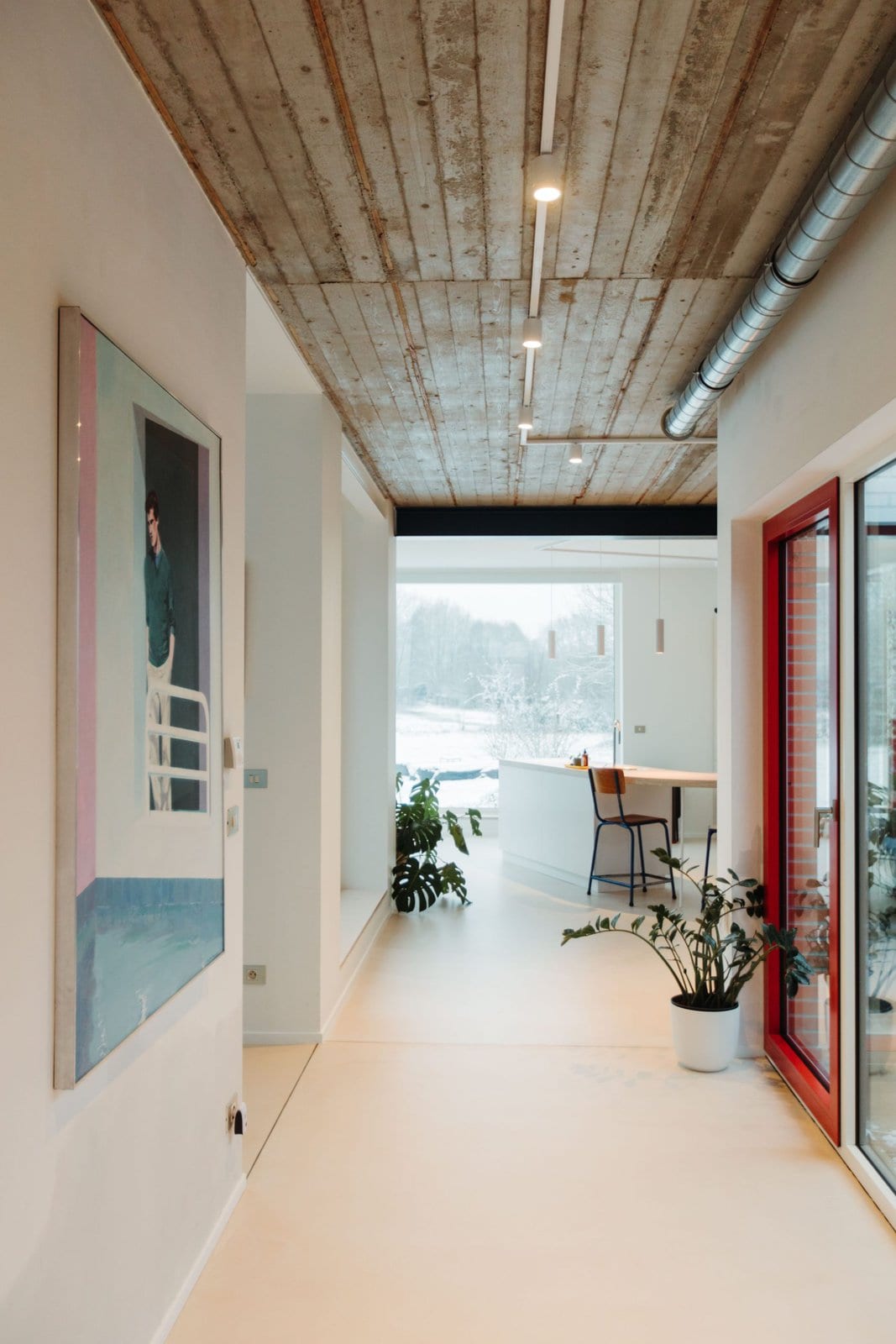
The texture of the wooden cladding resonates sensitively with the surrounding nature, yet its colour stands out strikingly against it. The Falun red, often used in Scandinavia, gives the house the aura of a holiday home. Inside, light colours dominate: those of the poured floor, the white of the walls and the grey of the concrete ceiling. These interact with the external façade and the joinery with its red sashes. Against the ceiling, a network of blue beams marks where walls once stood. Texture also plays an important role indoors. The smooth walls contrast with the rough concrete ceiling, which runs along the main corners of the living space. Between the floor-to-ceiling curtains, the walls are an ideal place to hang art.