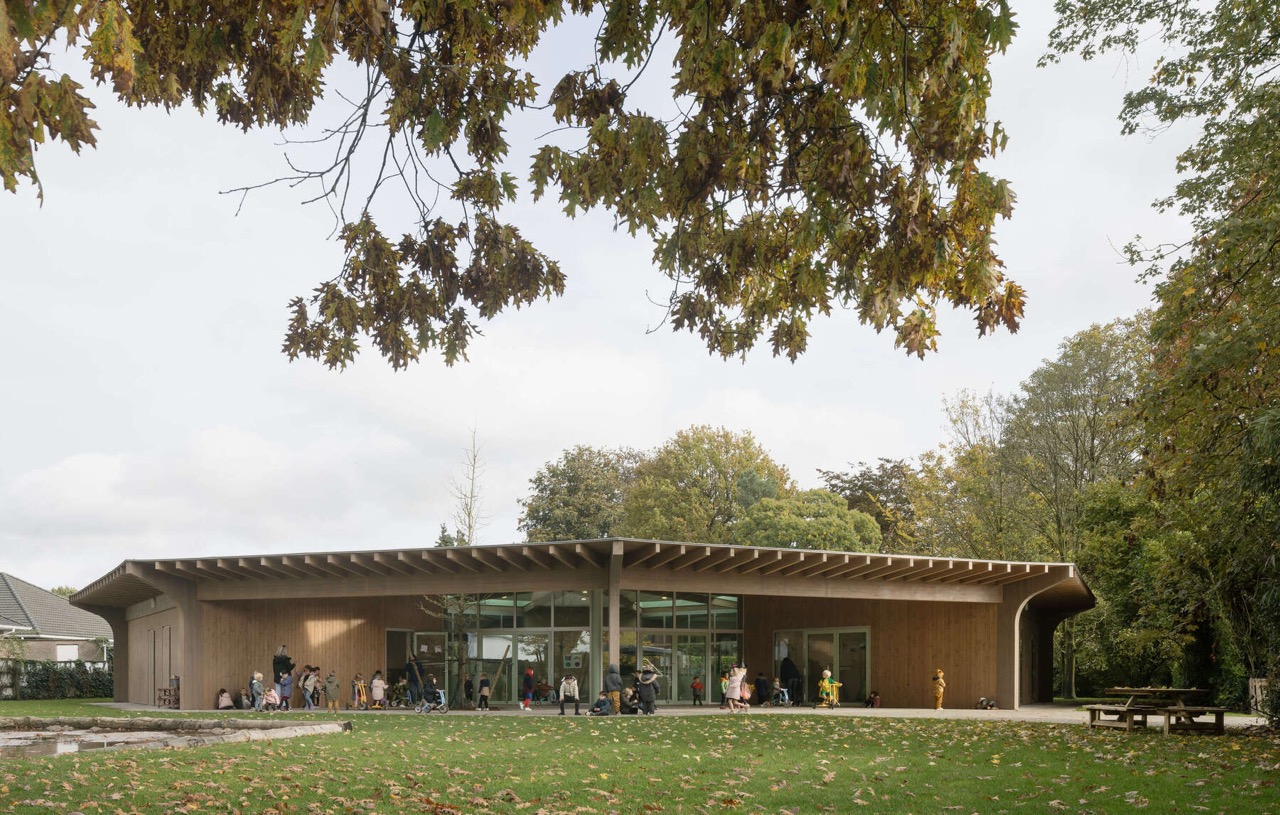
Tucked away on a wooded plot, surrounded by housing developments, stands a nonagonal building which has housed a nursery school since September 2023. This was preceded by an architectural competition organised by the municipality of Aartselaar, which sought a team to demolish the old school dating from 1967 and to design a new building that would, first and foremost, accommodate the school’s increased capacity.
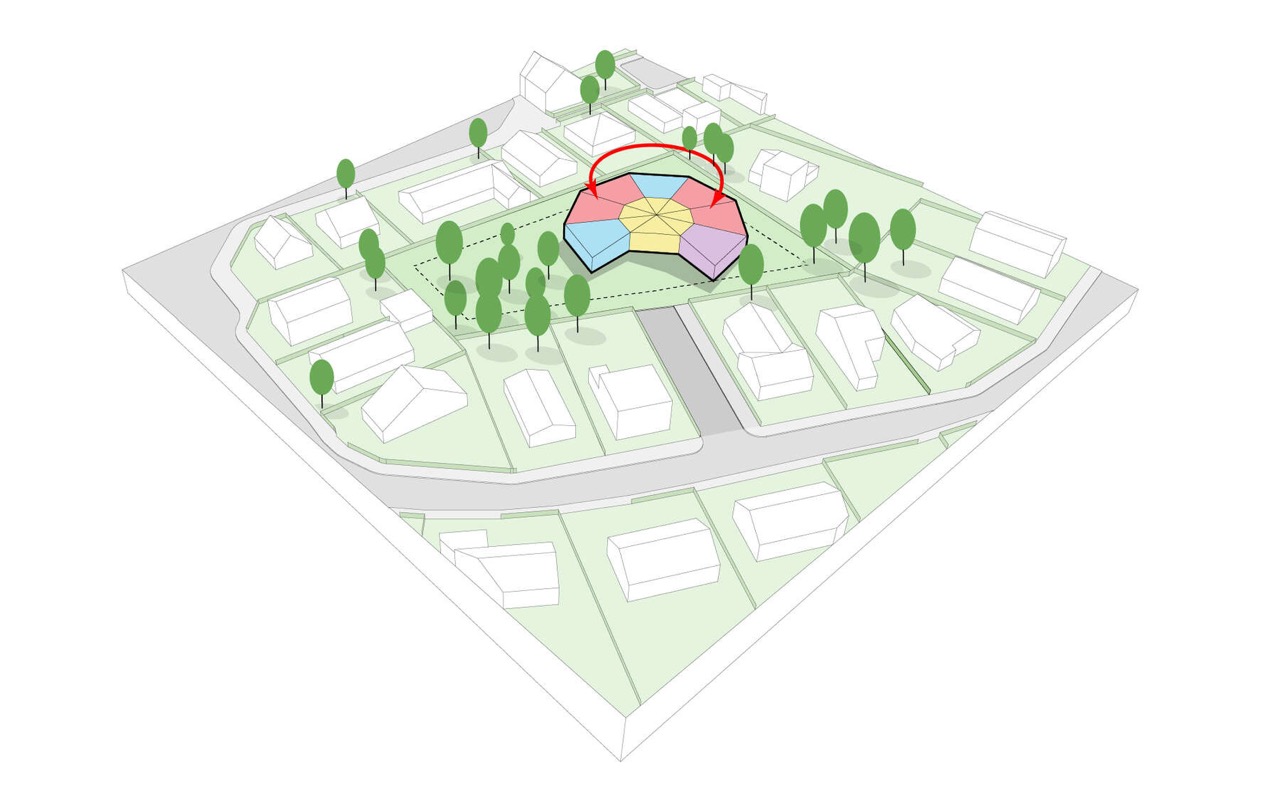
The winning competition design was created by WE-S architects, who responded to the competition brief with a compact geometric volume (or a ‘nonagonal prism’) that accommodates the entire required programme. In its schematic form, the proposal is almost reminiscent of a nonagonal variant of a ‘Trivial Pursuit’ token, in which each segment fulfils a specific function (see attached drawing).
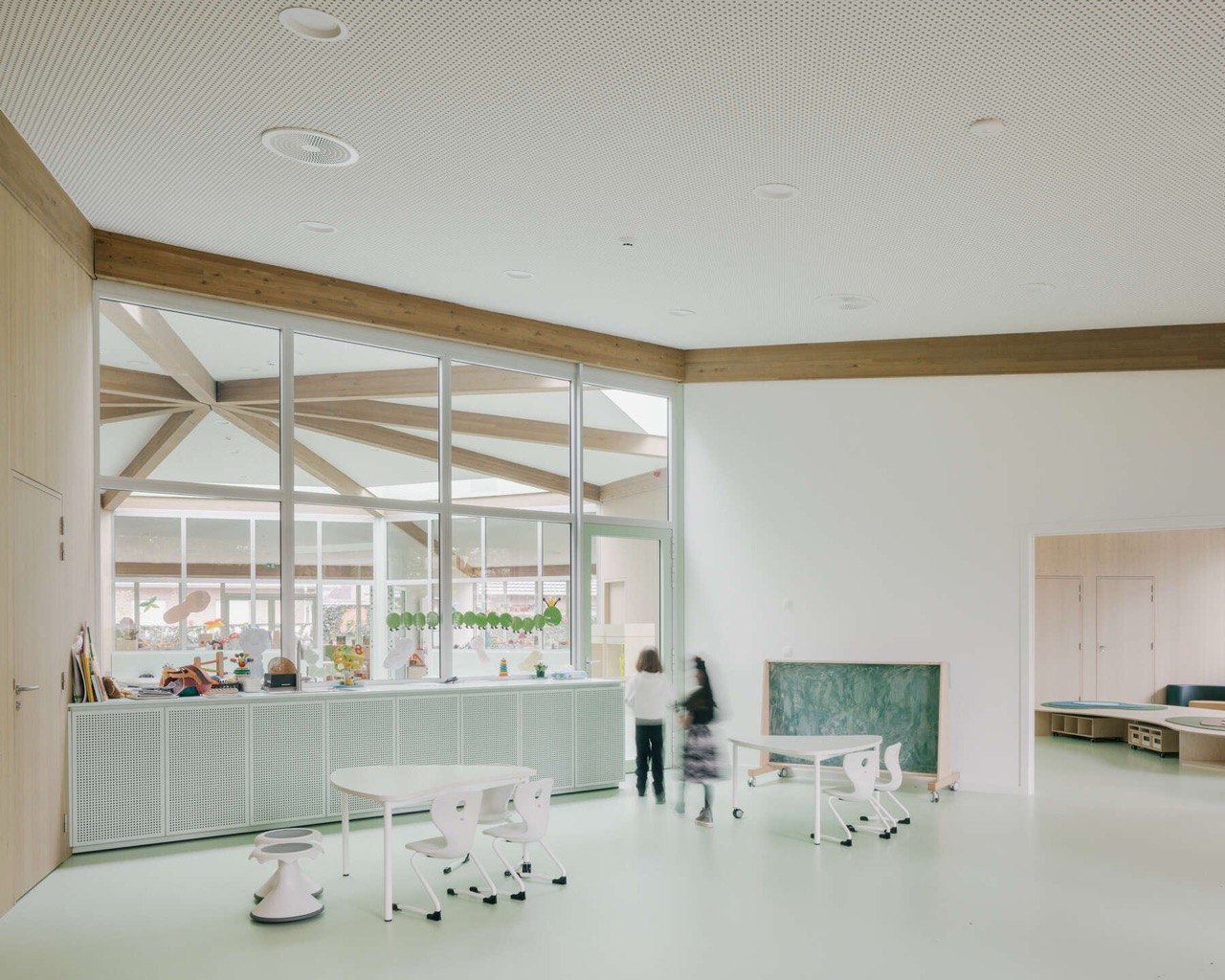
The four required classrooms (the red segments) were divided into two pairs of two classrooms each, with each pair able to be converted into one large classroom by opening the double connecting door linking the two classrooms. Each pair was accompanied by a technical room (the blue sections), which included storage space and toilets. The remaining sections comprise the meeting room (purple) and the central multi-purpose space (yellow), which primarily serves as a circulation hall and refectory. The other ‘missing’ sections, in turn, serve as a covered playground for the nursery children.
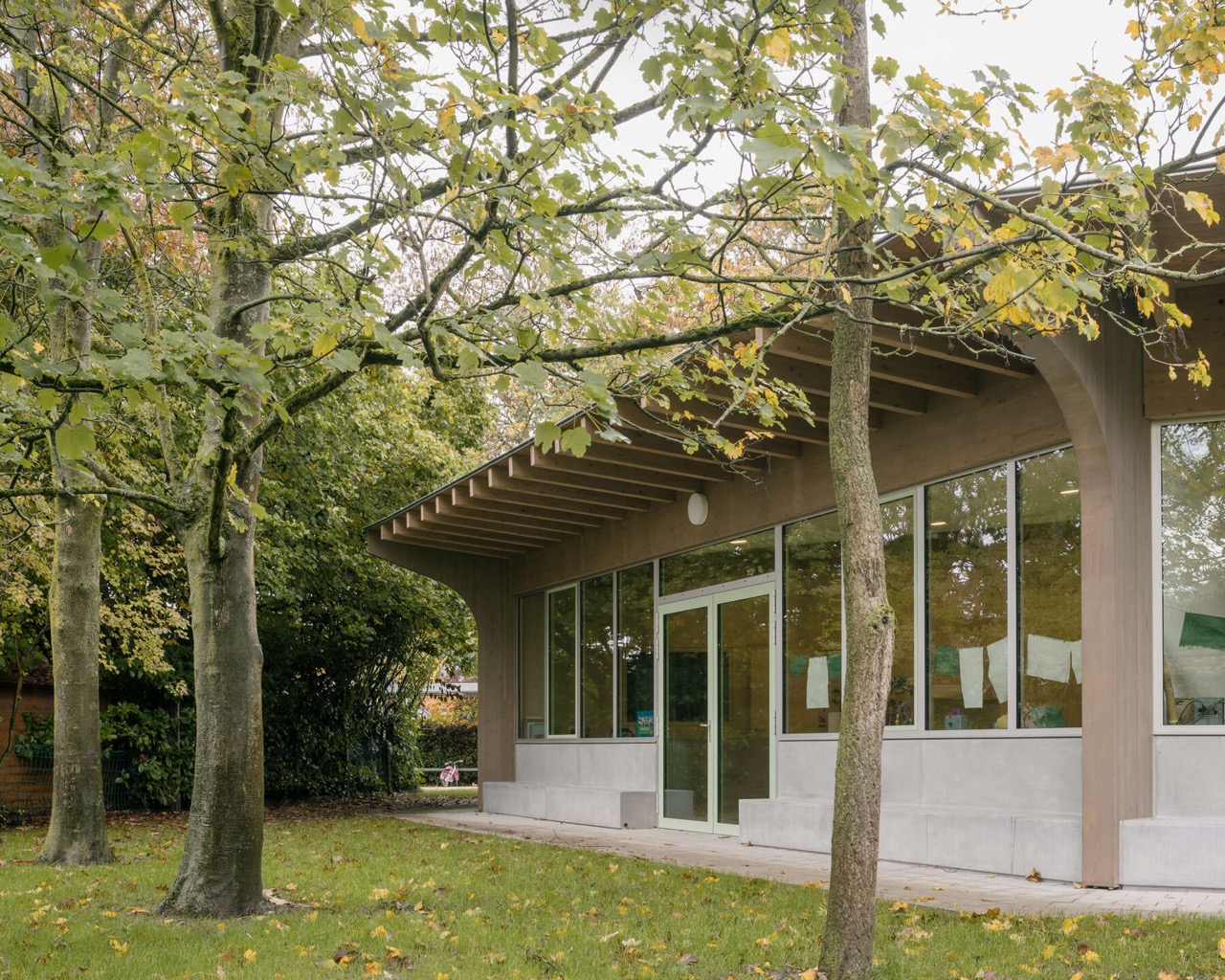
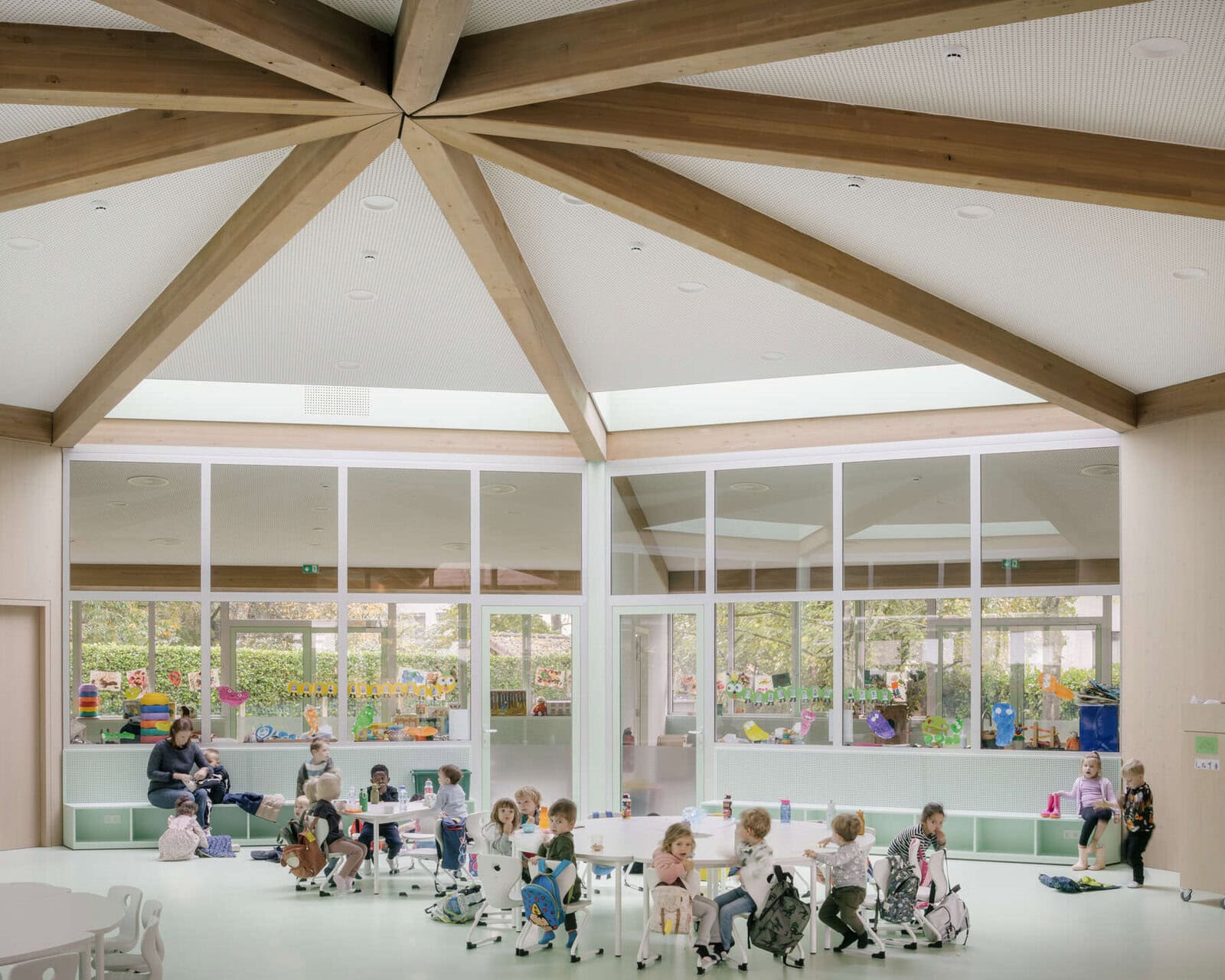
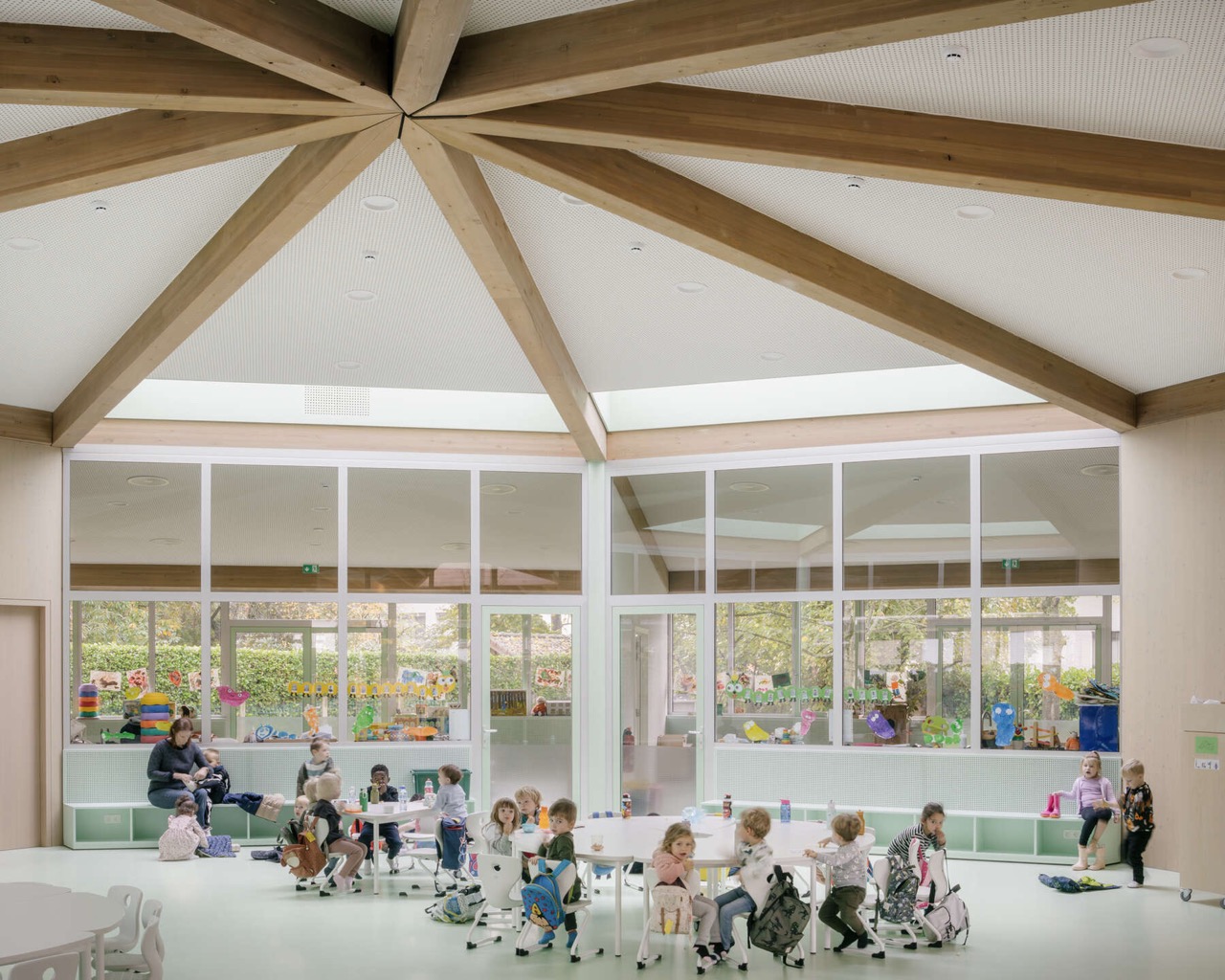
Beneath the school’s zinc roof lies a load-bearing timber frame of laminated trusses, arranged as a tent-like structure, with the beams extending to the outer edges of the building. This unique supporting structure ensures that the classrooms and the central multi-purpose space enjoy a completely unobstructed open space, without interruption from columns or load-bearing walls. Each classroom has internal access to the central multi-purpose space and an external view of the leafy surroundings. The timber structure is also evident in the interior, which, together with the mint-green accents in the furniture and predominantly white surfaces, features a sober colour palette. This ‘low-stimulus’ interior was deliberately designed by the architects on the basis that the nursery children will ultimately add enough colour (and stimulation) to the school themselves.