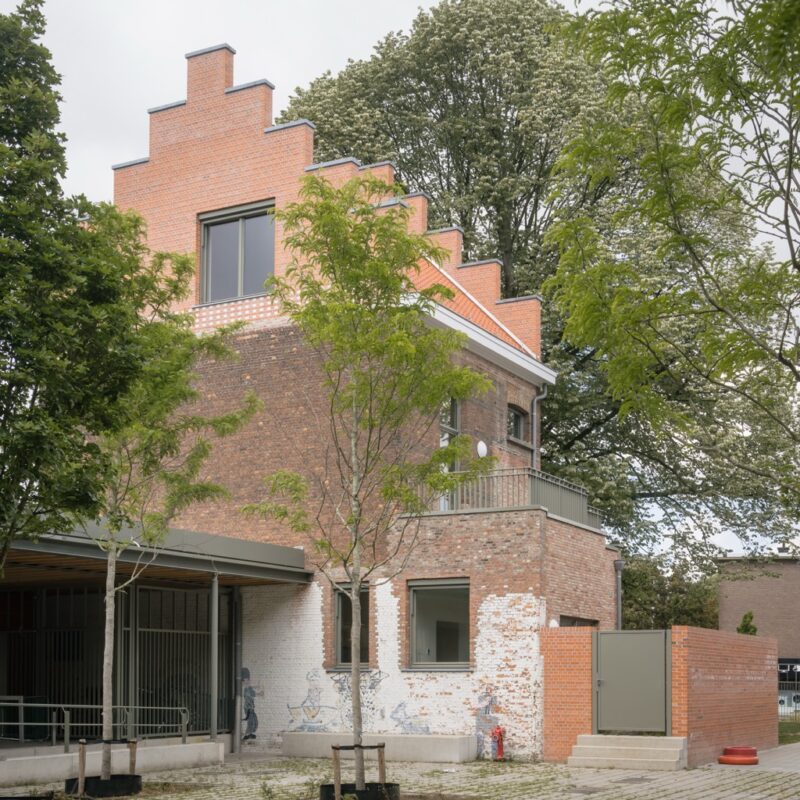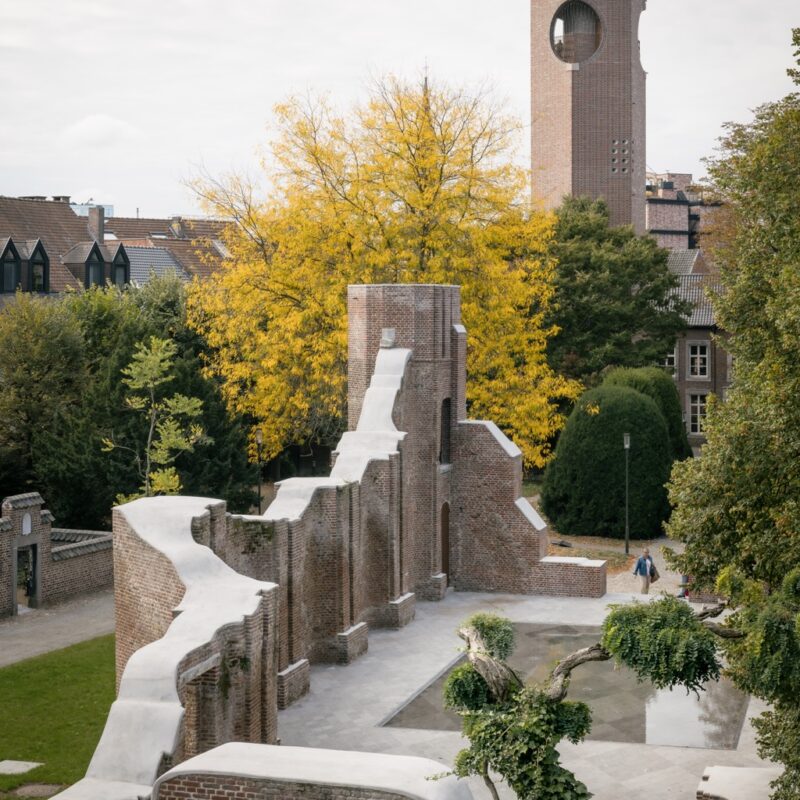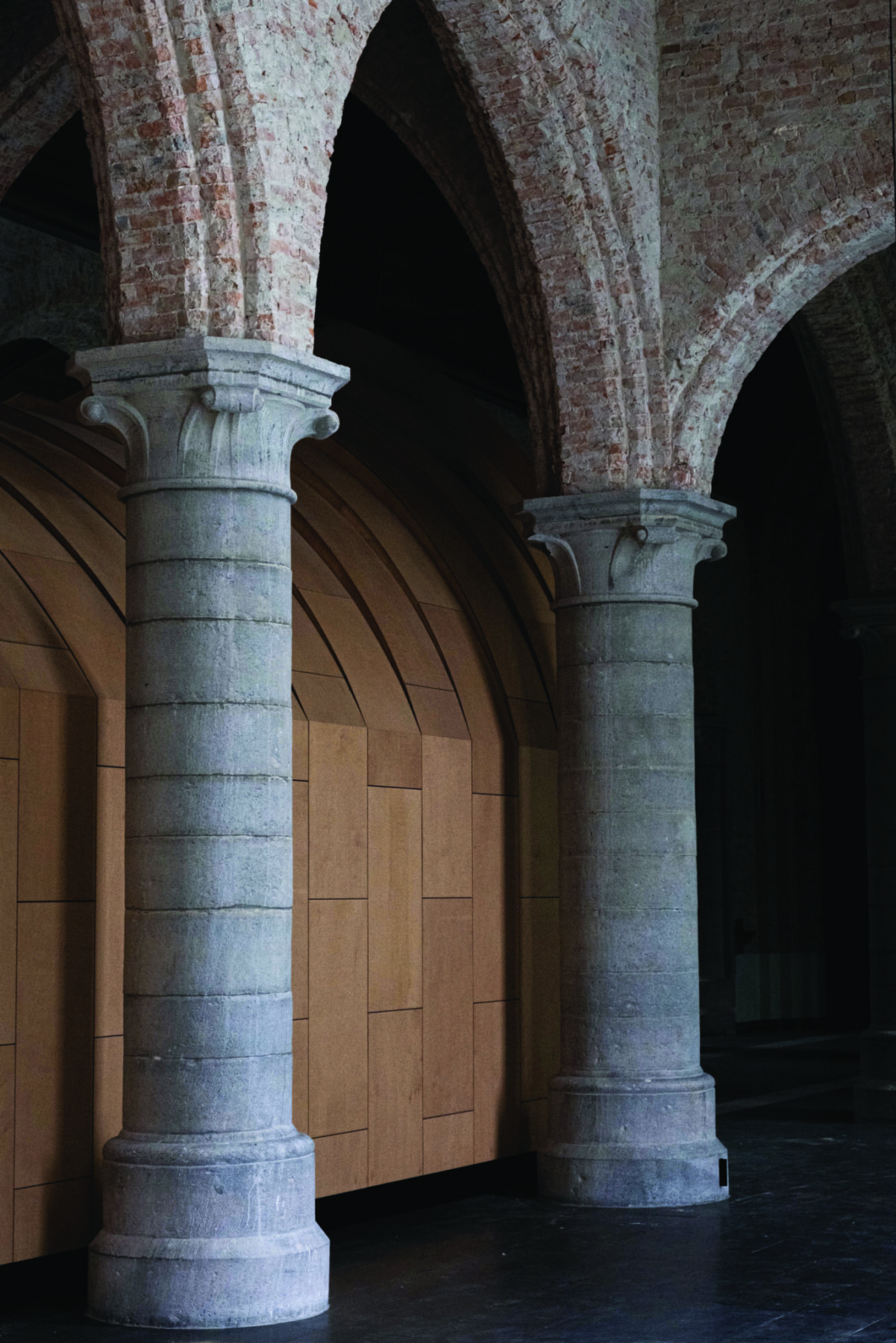
Last year, Flanders’ first urn church opened in Lampernisse, a conversion project by architects Dhooge and Meganck. The idea of transforming a church into a place of contemplation open to everyone every day originated more than ten years ago. The project is a manifesto, if only because it seeks to give a building a different fundamental purpose: to create a material and spatial construction of death. It also recognises death as an emotional phenomenon, and the dead body as an aesthetic and material experience.
Against the endless flat Flemish horizon, spires are reassuring landmarks, spaced apart at intervals of an hour’s walk. This experience, where time and movement coincide with a spatiality that organically links the immeasurable scale of the landscape to places of human proximity, forms part of the approach to the village of silence, Lampernisse. Surrounded by a cemetery and pollarded lime trees, and bordered by a low wall, lies the former Church of the Exaltation of the Holy Cross. With its imposing west tower featuring buttresses and the intersection of a pseudo-basilical early Gothic nave and a three-aisled hall church, it dates back to the thirteenth century.