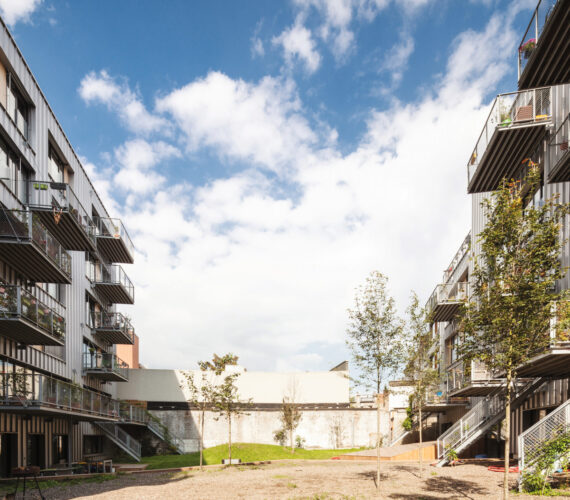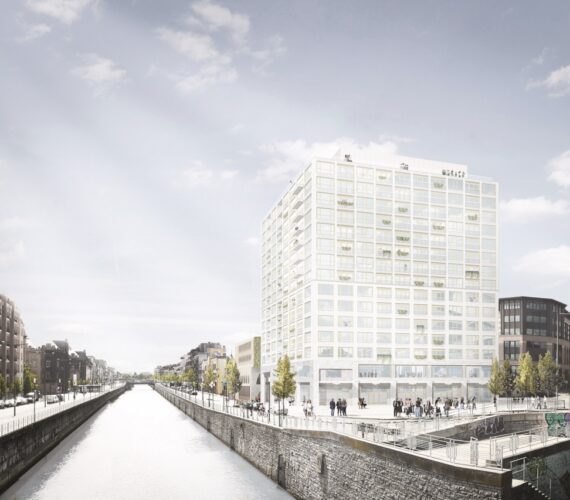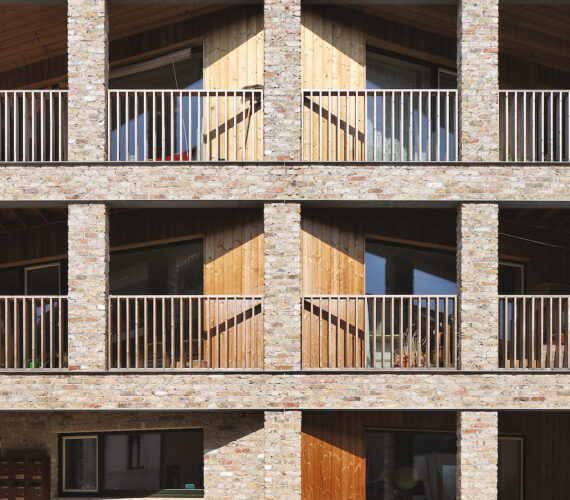
A lot of historical collective housing forms have stood the test of time, while others have tragically failed. How did architectural models evolve along with changing user generations and social models? What has proven to be robust and what hasn’t? On the basis of a few examples of similar typologies – terraced houses connected to an ‘intermediate space’ – this article will attempt to distil a few basic guidelines for the architecture of contemporary collective housing forms.
In 1902 architect Raymond Unwin published Cottage Plans and Common Sense, probably the very first design treatise for collective housing forms. Building on Ebenezer Howard’s Garden City theory, the author puts forward an architectural vocabulary that forms the basis of a sustainable alternative to the dreary living conditions in the city. By linking compact homes to ‘common-pool resources’ – from cricket fields and vegetable gardens to dining areas, wash houses, playrooms and even household help – he believed that more high-quality living in harmony with nature could be made available to a large part of the population. Aware of the social and economic impact of ‘sharing space’, he later devoted an entire chapter in his better-known Town Planning in Practice (1907) to the importance of so-called ‘tenants’ societies’: cooperative associations that had to protect both the qualities of the commons and the privacy of the individual. However, this would not prove essential to the viability of his designs.