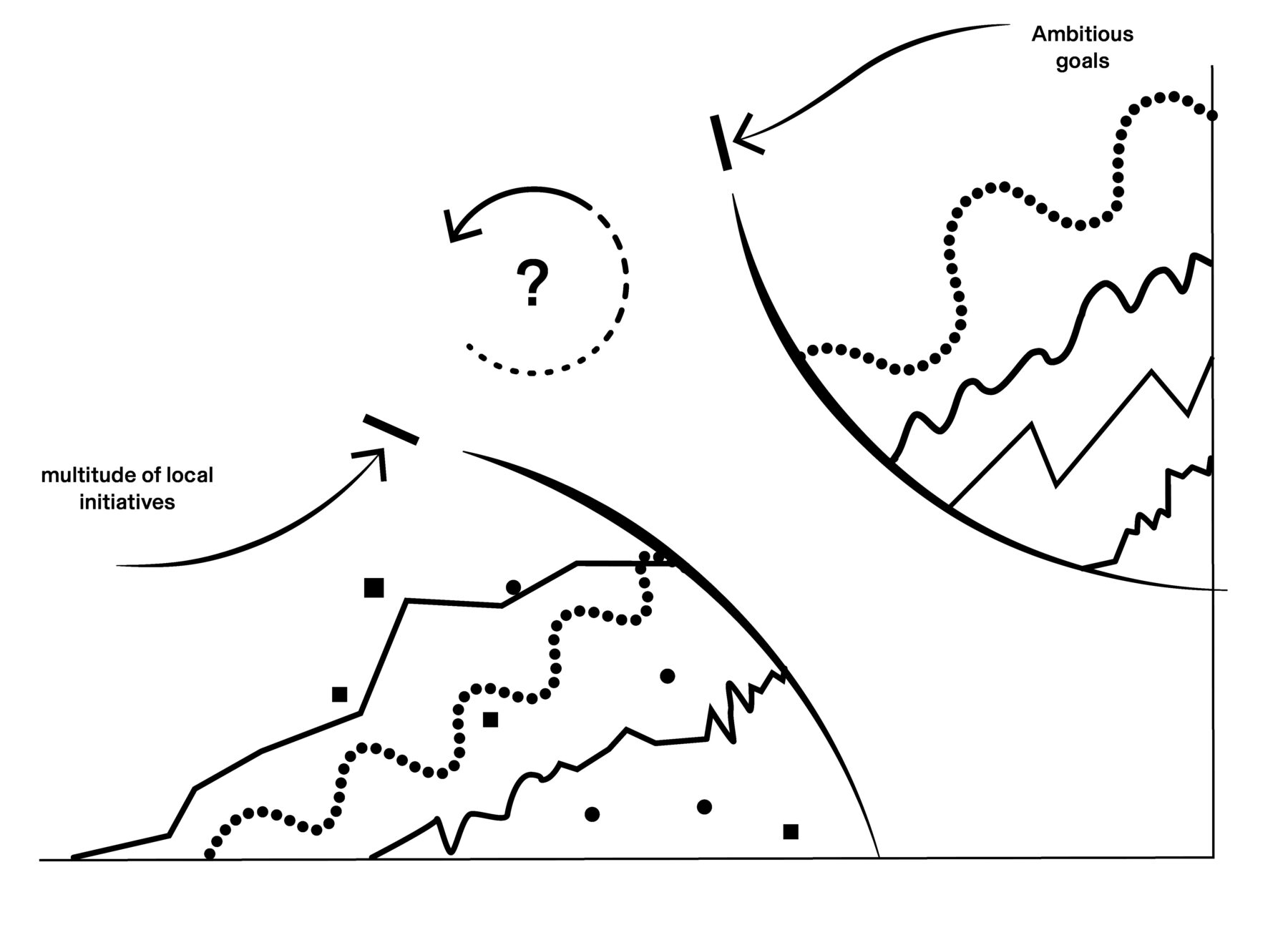
We are facing enormous global ecological and economic challenges these days. Climate change and exponential population growth are putting huge pressure on society. The demand for other forms of housing, working and living is growing, the call for change is becoming louder and louder. The architectural and building practice has evolved in step with this demand for change. But the necessary turnaround is happening too slowly. We need an architectural practice that goes that extra mile, that uses spatial design as a lever to accelerate social transitions. In short, we need an architectural practice that drives change rather than one that adapts to change.
One swallow doesn’t make a summer. One car-free street doesn’t lead to fewer traffic jams or deaths. One low-energy renovation doesn’t make the energy transition affordable. One agro-ecological farm doesn’t make our diet healthier and more sustainable. One caring neighbourhood project doesn’t lead to a more inclusive care system. One make-and-learn hub that gives newcomers access to the labour market doesn’t solve unemployment. Wonderful initiatives are being taken on each of these fronts, but many of them feel like exceptions rather than the rule. The major social goals – in terms of nature and climate, solidarity and affordability, sustainability and economic resilience – seem a long way off. The policymakers formulating long-term objectives often fail to explain what exactly we need to do differently today. There is a missing link: a tremendous gap between where we are now and where we want to be. And we are all wondering how on earth we are going to get there together.
This article appeared in A+287, published on 14.12.2020.