
For its third exhibition dedicated to utopias, the Wallonia-Brussels Cultural Institute of Architecture, in collaboration with the Mundaneum, the CAP and the CID du Grand-Hornu, is taking over the Magasin de Papier in Mons. Until 19 October 2025, ‘Bâtir des fictions’ brings together three projects that explore how we inhabit the world and imagine desirable futures.
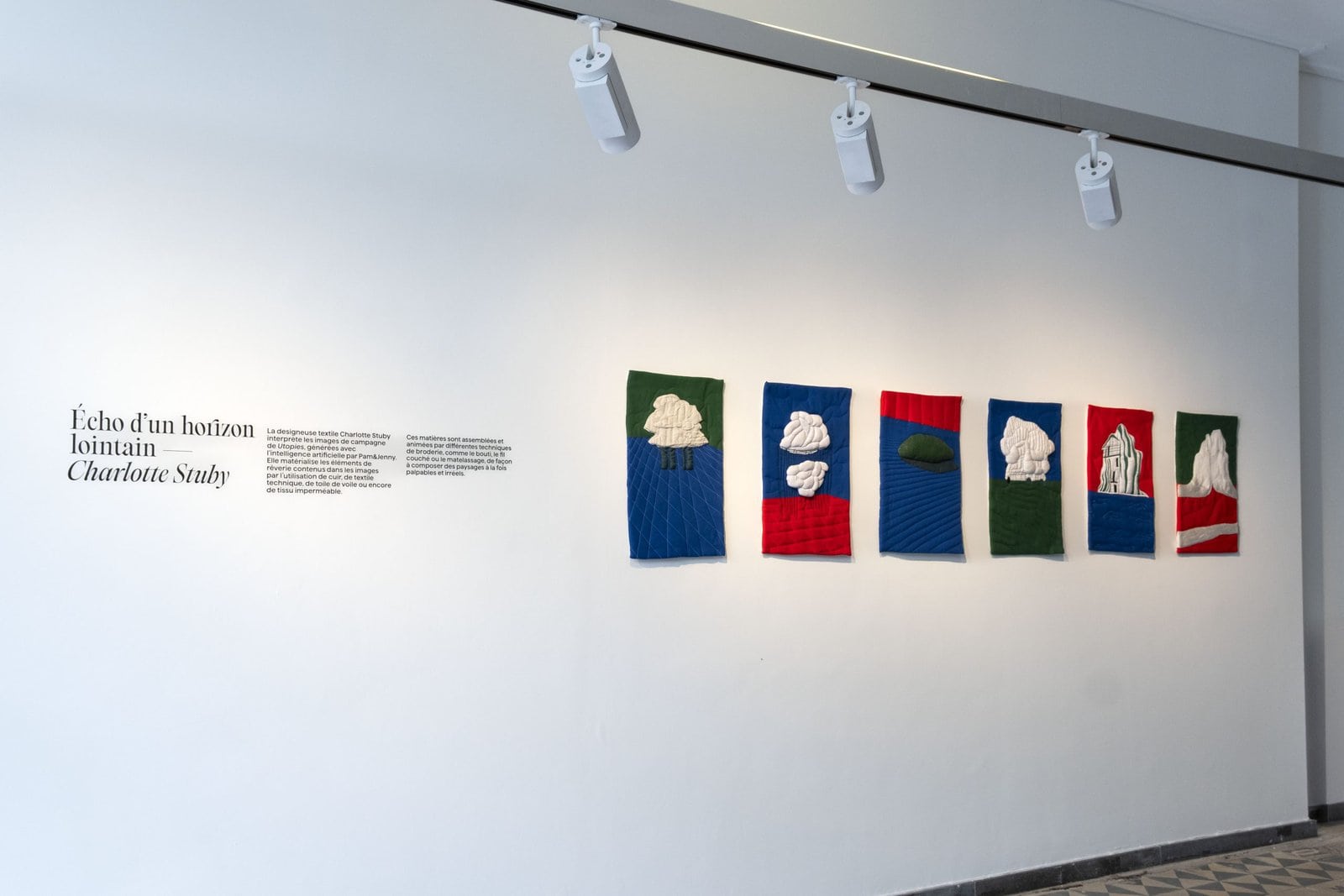
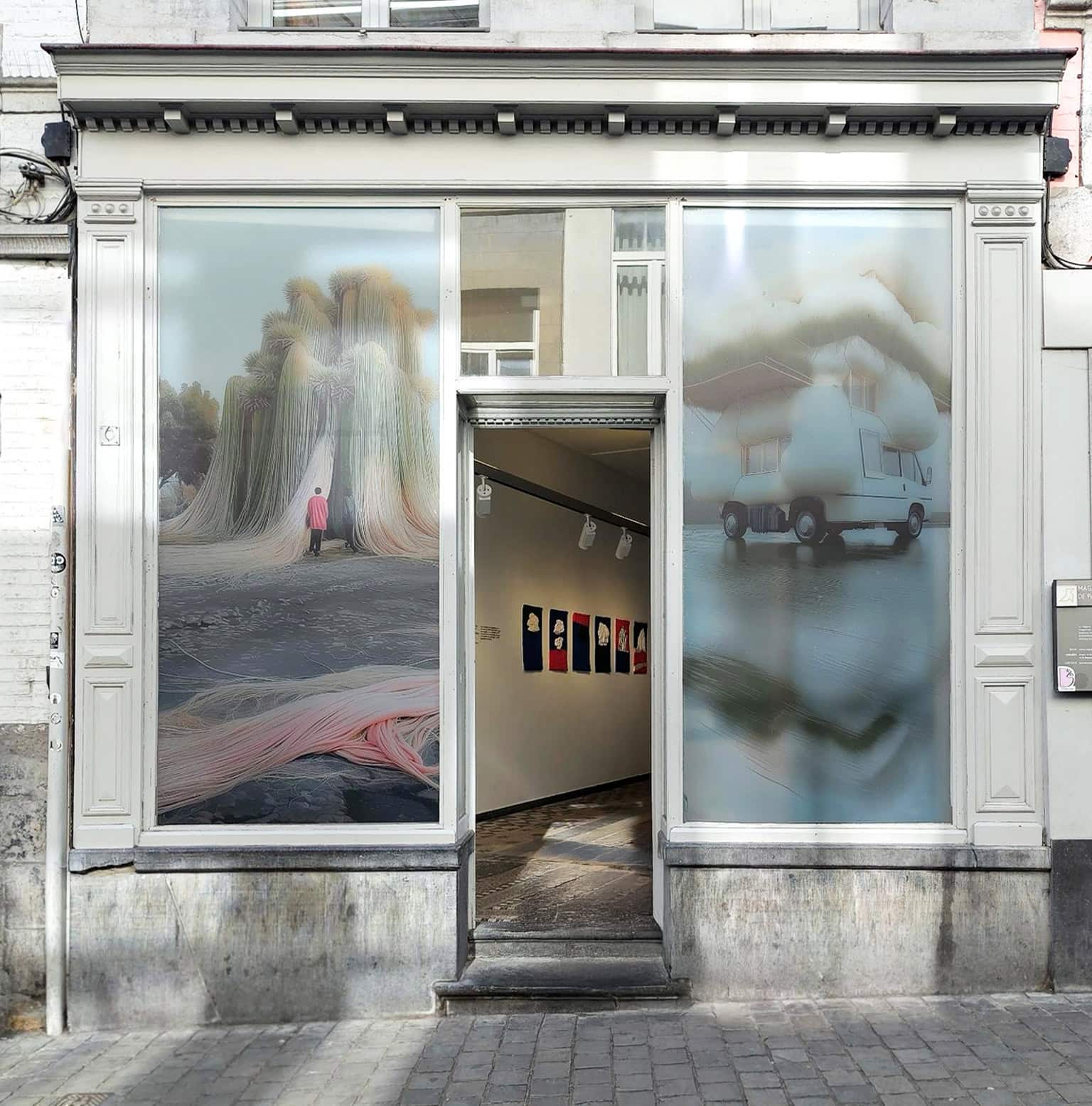
The venue sets the tone. This former paper shop, whose former owner lived in the back rooms, has now been transformed into a gallery. It retains a few traces of its past uses: the large shop window and the uneven tiling in the street-facing room. This atmosphere serves as a showcase for the tapestries by textile artist Charlotte Stuby, who has been invited to reinterpret the AI-generated images designed by graphic designers Pam & Jenny to accompany the ICA’s programme. Two of them cover the entire display window to entice passers-by, but never mind that: it is worlds of stark contrast that unfold inside. The delicate embroidery and intricate textures of the textile works lend a reassuring materiality, a world away from the visual saturation and coldness of digital scenes. Visitors are even invited to touch the works, restoring a sensory and domestic dimension to the imagination.
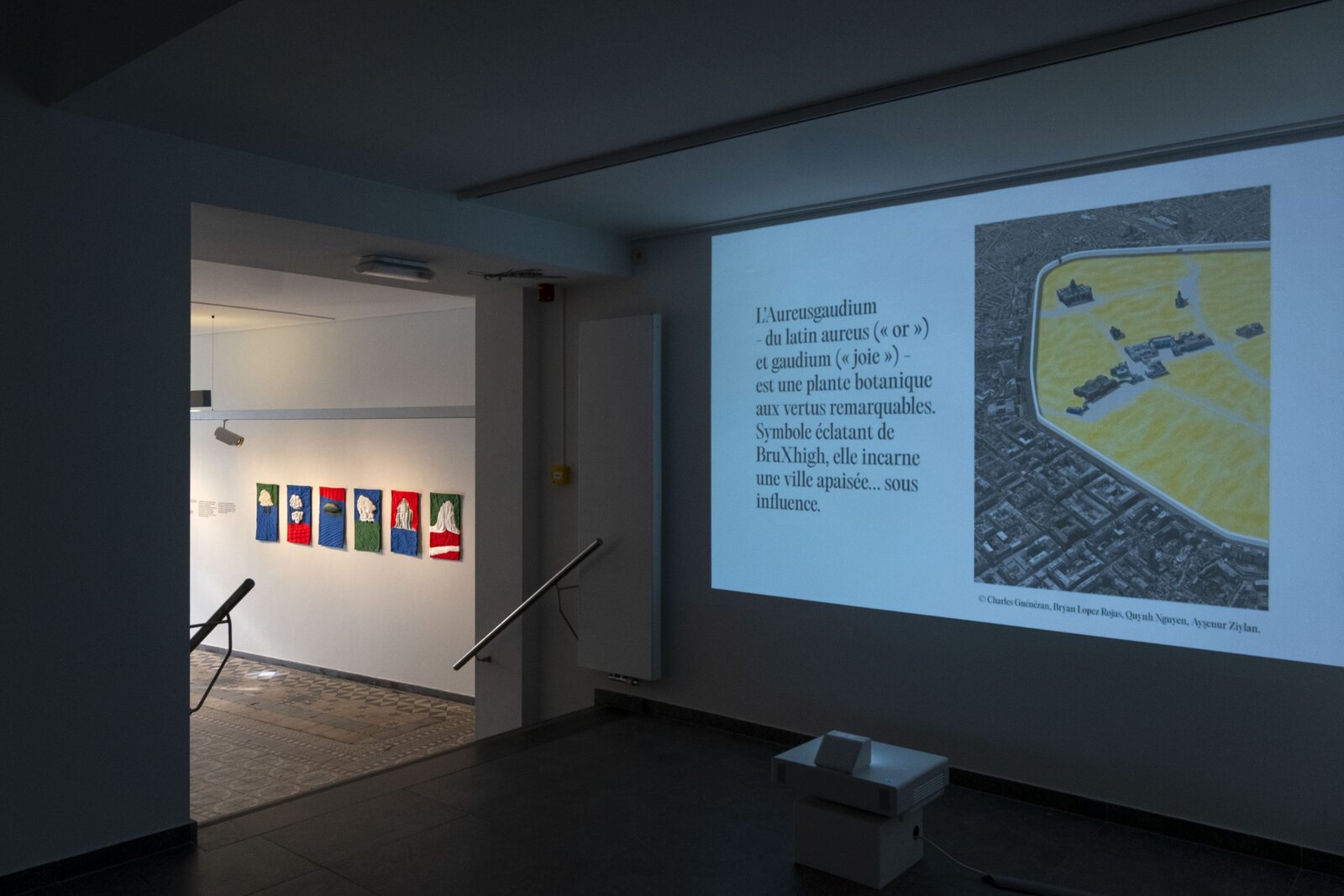
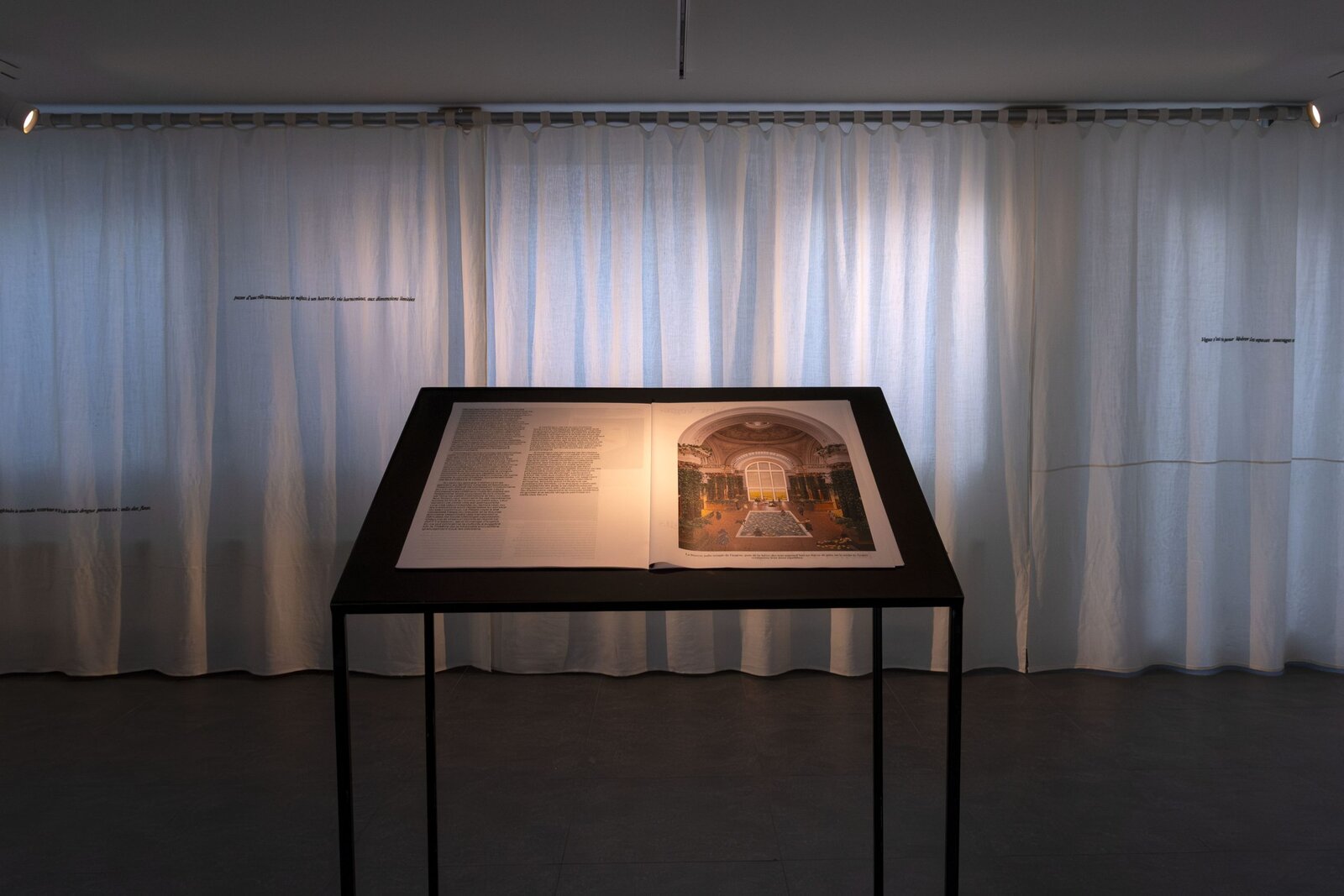
Half a floor higher, the exhibition takes a more textual and reflective turn. The work carried out by Gérald Ledent with his architecture students (LOCI-UCLouvain), enriched by the writing of Aliénor Debrocq, distils ten years of a seminar dedicated to utopias as an educational tool. Through her book *Nos Utopies*, published by CFC, excerpts from which form the basis of a projection and a large-format brochure, the author recreates – by fictionalising them – the voices of students who, far from naive daydreams, have explored utopia as a critical tool, in the spirit of Thomas More. The students’ collages, inspired by Italian radicals, and their introspective narratives echo one another, posing a pressing question: what purpose do utopian imaginaries serve in the training of architects? If they offer fertile ground for thinking about the future beyond established frameworks and constraints, how can their inventive richness be preserved in the face of the harsh realities of life?
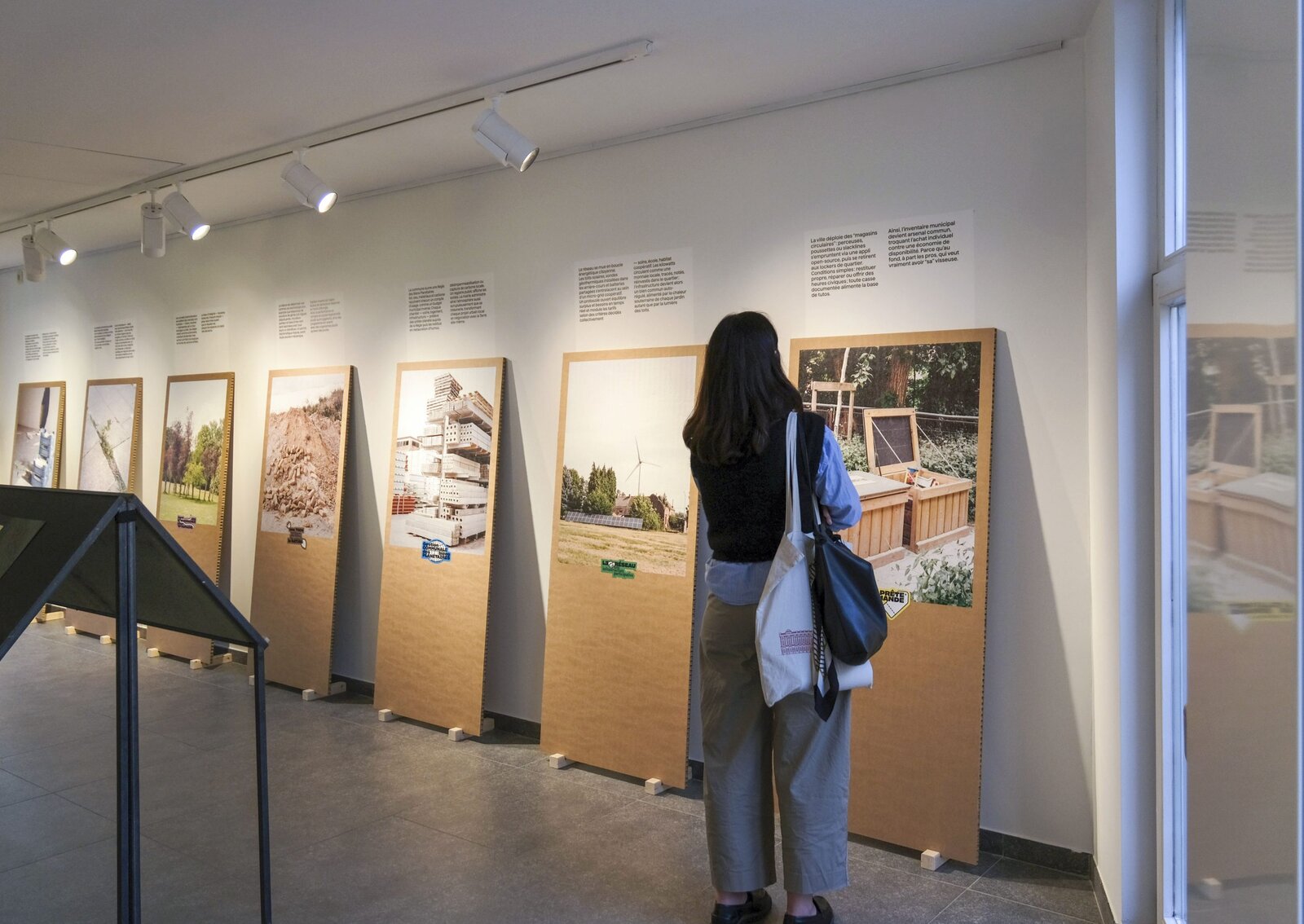
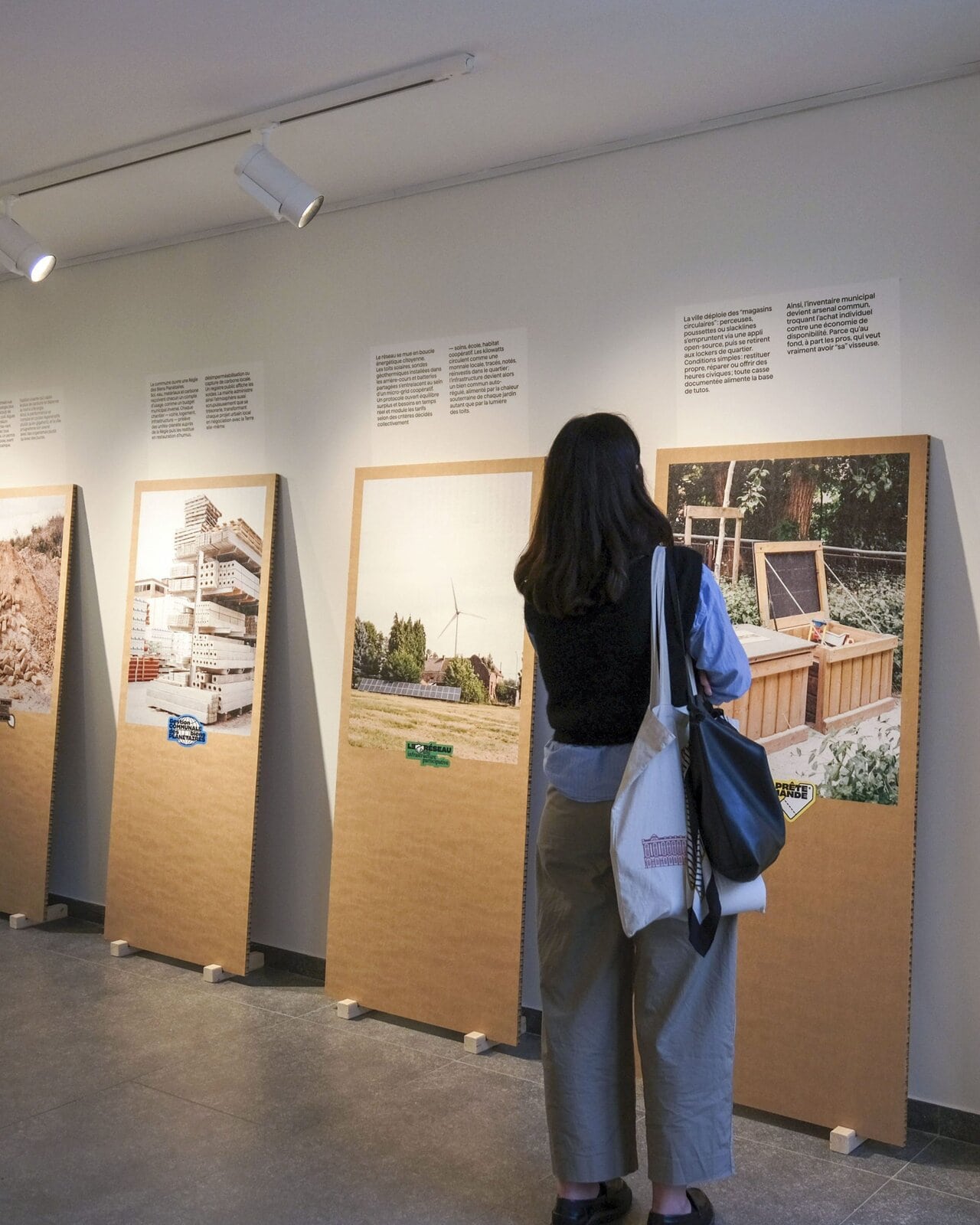
The exhibition concludes on the upper floor with the installation Déjà Vus by the Superworld collective (Maxime Cunin, Thomas Krall) and Séverin Malaud. Twelve images of everyday urban life, accompanied by slogan-like proposals, sketch out an ideal city founded not on a tabula rasa or generative algorithms, but on the meticulous observation of reality. Their proposals speculate on concrete issues such as the circulation of renewable energy or the recognition of rights for non-human entities such as rivers. The dense installation, with its somewhat promotional feel, is nonetheless thought-provoking: what if fragments of utopias already existed right before our eyes, in our daily practices and the spaces we pass through day in, day out?
By bringing together these three approaches – textile and sensory, educational and critical, speculative and pragmatic – Building Fictions explores the plurality of utopias, at the intersection of individual imaginations and collective aspirations. The exhibition does not present a single vision of a dream home, but invites us to connect impressions, gestures and narratives, and to ask ourselves: on what modes of observation and exchange can shared utopias be built?
